

| Key Points | Details to Remember |
|---|---|
| 🍎 Toxic Fruits | Recognize fruits dangerous for dogs |
| ⚠️ Symptoms | Identify signs of poisoning quickly |
| 🚨 Risks | Assess severity depending on the fruit and quantity |
| 💡 First Responses | Act effectively before arriving at the vet |
| 🔍 Prevention | Prevent access to forbidden fruits |
Certain fruits, at first glance appetizing, can turn into traps for your dog. It is better to know them to react quickly in case of accidental ingestion. This article breaks down ten fruits to avoid, the symptoms they trigger, the risks involved, and the urgent actions to take.
Why are some fruits dangerous for dogs ?
Dogs have a metabolism different from ours. While we easily digest certain compounds, their bodies may assimilate them more slowly or transform them into toxic substances. For example, the cyanogenic glycoside in peaches or the natural xylitol in some berries cause sometimes fatal reactions. Additionally, the canine digestive system does not always handle highly concentrated fibers or pits well, which risk intestinal blockage.
Top 10 fruits forbidden to dogs
1. Grapes and raisins
Grapes trigger acute kidney failure in many dogs, regardless of their size. Symptoms appear within a few hours: vomiting, diarrhea, lethargy. Without rapid care, the outcome can be dramatic.
2. Avocado
Persin, a toxic derivative of avocado, causes heart and respiratory problems. Fatty diarrhea and generalized edema are often observed. Even the ripe pulp is not without danger.
3. Cherry (including pit)
Cherry pits contain cyanogenic glycosides. Besides the risk of choking or blockage, the dog may suffer from vomiting, difficulty breathing, and seizures.
4. Peach and apricot
Their pits present the same danger as cherries. The leaves and stems also contain cyanide. You may sometimes see your dog drooling, trembling, and refusing to eat.
5. Passion fruit
Very rich in fibers and acids, it causes violent diarrhea and abdominal spasms. Sensitive dogs sometimes react to only a few pieces.
6. Coconut
The flesh contains medium-chain triglycerides that disturb the canine pancreas. Pancreatitis and vomiting episodes are not rare after ingesting a piece of coconut.
7. Green tomato
Raw tomatoes and their shoots harbor solanine. Excess causes excessive salivation, cold sweats, tremors, and even hyperthermia.
8. Citrus fruits (lemon, lime, grapefruit)
Acidity and essential oils irritate the digestive mucosa and can affect the nervous system. Expect watery diarrhea and cramps.
9. Dates
Extremely sweet, they promote gastric disorders and obesity and can cause blockages if the dog swallows several whole fruits. To learn more about the dangers of dates for your dog, note that you can also offer more digestible alternatives in suitable variants.
10. Service berries
These small blue or black berries contain nitrite. It is better to avoid them: they often cause anemia and breathing difficulties.
What to do in case of accidental ingestion?
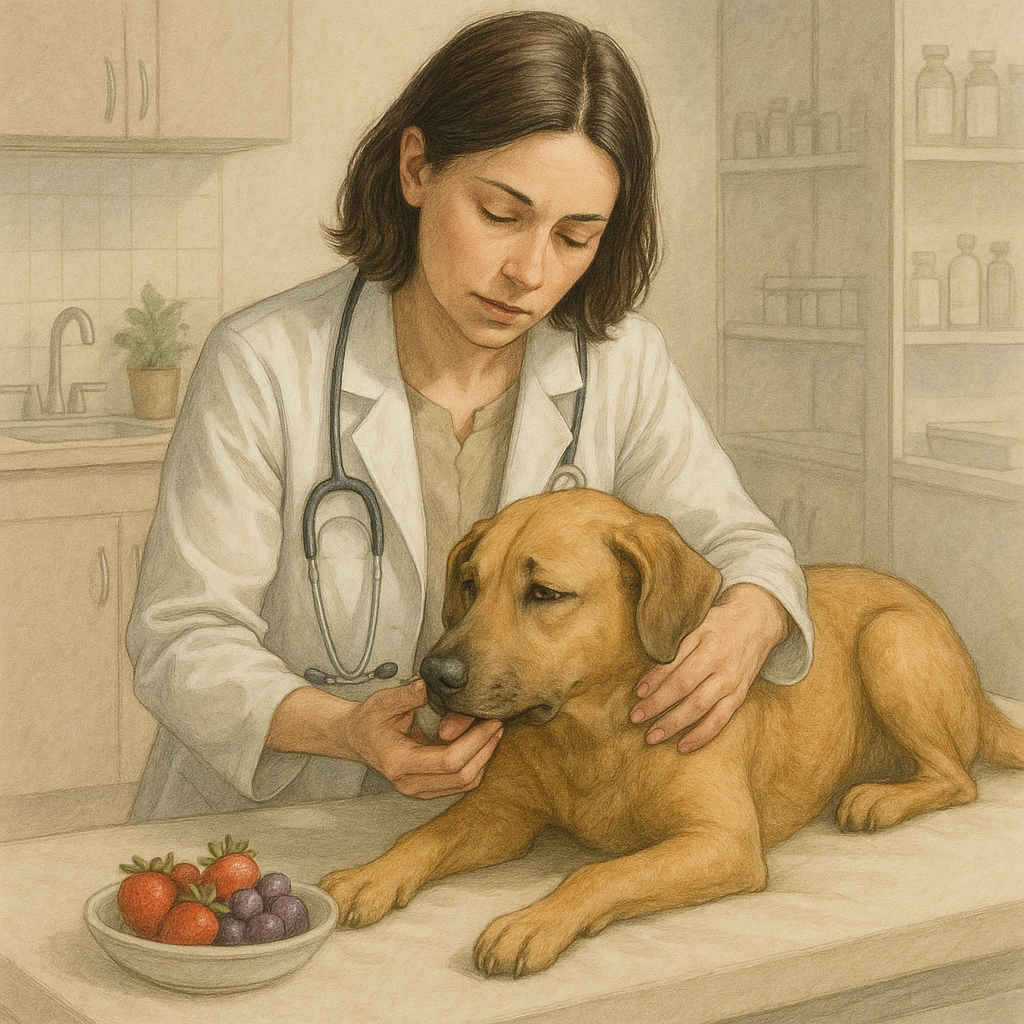
If your dog has gobbled a suspicious fruit, don’t panic: you have a few precious minutes. First, identify the quantity ingested and the type of fruit. Do not try to induce vomiting without veterinary advice, especially if the fruit is acidic or contains pits. Contact a veterinarian or the Animal Poison Control Center immediately (01 49 37 36 36) providing the species, weight, and substance ingested.
- Note the observed symptoms (vomiting, diarrhea, tremors).
- Photograph the fruit or its packaging to assist in diagnosis.
- Do not give milk or oil: this can worsen toxin absorption.
- Keep your dog calm and stress-free while waiting for the consultation.
Prevention and practical advice
Free access to fruit baskets is the main risk factor. Store them out of reach or invest in an airtight basket. During your picnics, watch children or guests who might share a piece without realizing the danger. For a broader view of potentially harmful foods for your dog, our complete guide also lists vegetables, chocolate, spices, and more.
Quick FAQ
My dog ate a cherry pit, what should I do?
Do not force vomiting: contact a veterinarian, specify if he shows respiratory or digestive symptoms.
Can I give unsweetened fruit compote?
It is better to abstain, the concentration in concentrate can irritate the stomach. Prefer treats expressly formulated for dogs.
Are all stone fruits dangerous?
Yes, most contain cyanogenic glycosides. It is better to remove the pits and keep only the pulp, but again, it is better to avoid.
Does the dog always develop symptoms?
Sensitivity varies according to breed and size. Even a small dose can trigger toxic shock in a fragile dog.