


It only takes a moment of inattention for your four-legged companion to venture onto a forbidden piece of food. However, some foods, even harmless to us, can trigger issues in dogs ranging from simple digestive discomfort to life-threatening emergencies. Exploring these dangers, understanding the mechanisms of poisoning, and knowing how to react are essential tools for any vigilant owner.
Main Potentially Toxic Foods
Chocolate and Derivatives
Chocolate remains one of the most feared substances: its theobromine metabolizes very slowly in dogs, causing vomiting, increased heart rate, and even seizures in case of a high dose. The poisoning depends both on the cocoa content (dark chocolate is more dangerous than milk chocolate) and the dog’s weight. A small bar can be enough to endanger a small dog.

Onions, Garlic, and Other Kitchen Allies
Sliced raw or cooked, onions contain sulfur compounds that destroy red blood cells, leading to hemolytic anemia. Garlic, often praised for its antibacterial properties in humans, is no safer for dogs. The first signs may take up to three days to appear: abnormal fatigue, dark urine, pale gums.
Xylitol and Artificial Sweeteners
Found in many industrial products, xylitol induces a massive insulin secretion in dogs, resulting in severe hypoglycemia and liver damage. A few grams can be enough, especially in mint gums or certain candies.
Nuts, Peanuts, and Tree Nuts
Macadamia nuts are particularly problematic, causing muscle tremors and hyperthermia. As for peanuts, they can lead to an excess of poorly digested lipids and may contain toxic molecules depending on their preparation.
Risky Fruits
Some fruits are much more dangerous than one might imagine: grapes, raisins, avocados, or exotic fruits can cause kidney failure or major digestive disorders. Here is an overview of those to avoid:
| Fruit | Risk |
|---|---|
| Grape | Acute kidney failure |
| Raisin | Kidney poisoning |
| Avocado | Pancreatitis |
| Dates | Intestinal blockage |
| Exotic fruits | Various toxins |
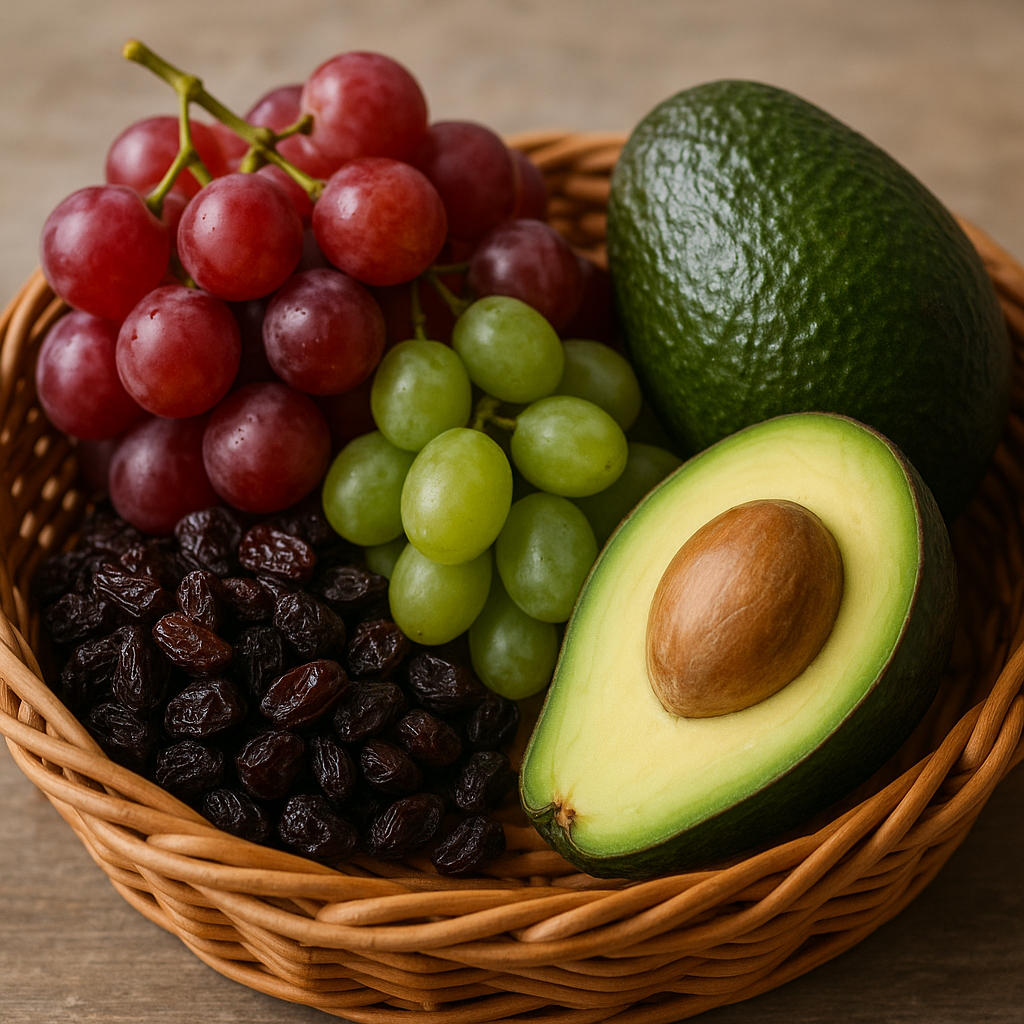
If you want a comprehensive overview of fruits forbidden to dogs, this table offers a condensed view of the observed effects.
Symptoms Indicative of Poisoning
- Repeated vomiting and diarrhea
- Weakness, tremors, or seizures
- Excessive salivation and bluish tongue
- Respiratory or cardiac problems
The speed of onset depends on the food and the ingested dose, but any doubt warrants an emergency consultation.
What to Do in Case of Dangerous Ingestion?
First, stay calm: note the suspected food and the potentially swallowed amount. Do not try to make your animal vomit without veterinary advice, as some foreign bodies or products act as caustics.

Contact your veterinarian or an animal poison control center immediately, describe the situation, and carefully follow their recommendations.
FAQ
My dog ate a small piece of chocolate, should I worry?
Yes, even a small amount can be enough, especially in puppies or small breeds. Contact a veterinarian as soon as possible.
Can I give my dog a piece of avocado if it is well cooked?
Cooking does not neutralize the toxins responsible for pancreatitis. This fruit remains delicate; it is better to avoid it.
What healthy substitutes can I offer in case of a sweet craving?
Opt for compatible fruits (seedless apples, banana in small slices) or treats specially formulated for dogs.