🟢 Explosive Character: The Malinois combines sharp intelligence (ranked among the 5 most intelligent breeds according to Stanley Coren) and inexhaustible energy, requiring a consistent educational framework.
🚀 Positive Reinforcement Training: Food rewards and games motivate this emotionally sensitive dog 3 times better than coercive methods, according to a study by the University of Bristol.
⚠️ Major Pitfalls: Inconsistency in rules and mental under-stimulation generate 78% of behavioral problems reported by dog trainers.
Understanding the Psychology of the Malinois

Belgian Malinois training begins by deciphering its deep nature. Unlike many breeds, this dog transforms boredom into creative destruction: an unattended garden can become its personal excavation site in twenty minutes. Its need for work is similar to that of a high-level athlete – without a clear goal, this energy turns against its environment.
Their emotional sensitivity is often underestimated. A reactive Malinois behavior (excessive barking, jumping) frequently reflects an overload of unchanneled stimuli. Canine neurobiology shows that these dogs produce more cortisol during direct confrontations, hence the ineffectiveness of punitive methods.
The Three Pillars of Balance
- Structured physical activity: 45 to 90 minutes daily walking + targeted exercises
- Cognitive stimulation: Interactive objects, treat searches, new learning
- Social connection: Regular interactions with balanced peers
Ethical and Effective Training Methods

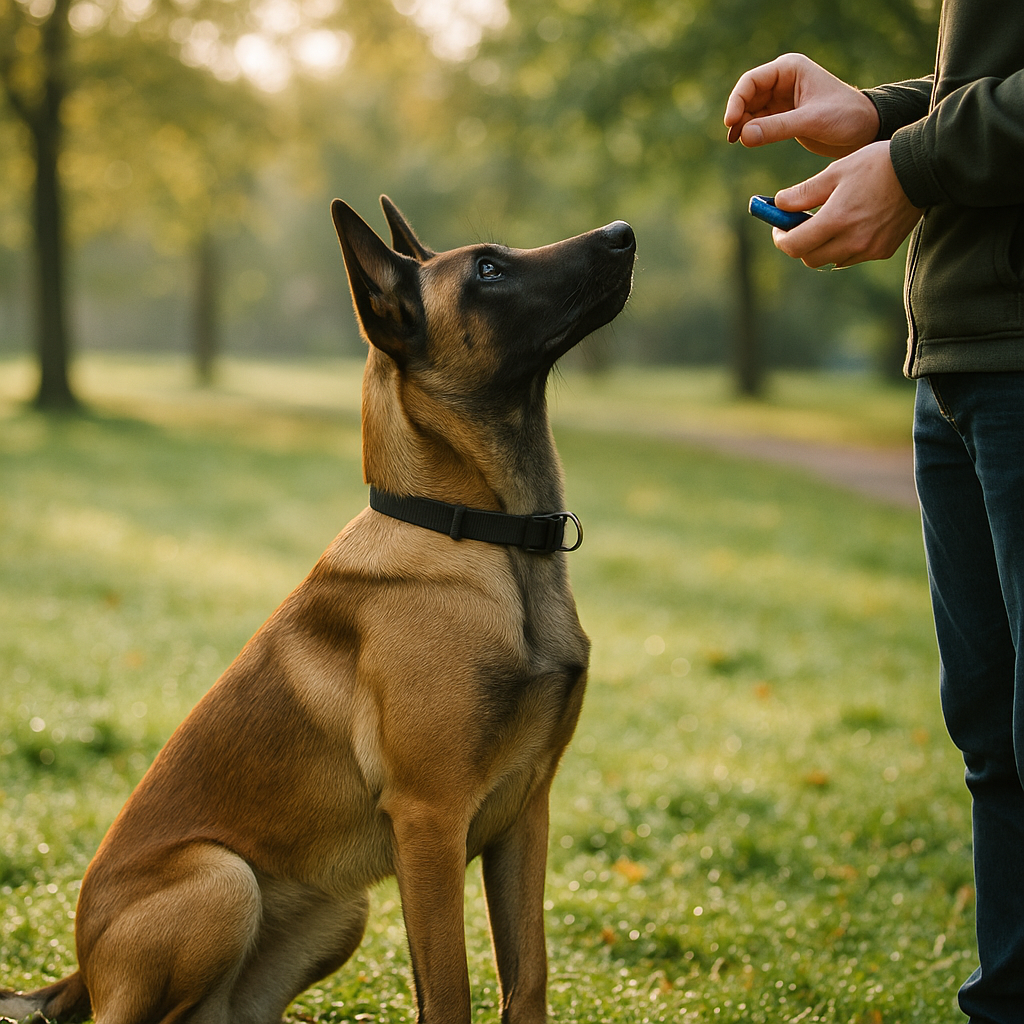
Malinois obedience is achieved through trust, not submission. Contemporary Malinois training favors behavioral marking: a clicker associated with a reward immediately signals the desired action. To teach “stay,” for example:
| Step | Technique | Duration |
|---|---|---|
| Initialization | Reward every 2 seconds of stillness | 3 days |
| Consolidation | Gradual increase of distance | 1 week |
| Generalization | Application in stimulating environments | 2 weeks |
Malinois socialization should begin before 16 weeks according to the Maisons-Alfort Veterinary School. Gradually expose your puppy to:
- Urban noises (subway, car horns)
- Children of different sizes
- Unstable surfaces (grates, slippery floors)
Successfully Recall Despite Distractions
The invisible line method revolutionizes recall training. Using a 10m long line in a secure park, you can let your Malinois explore while maintaining discreet control. Correction is done by a simple change of direction, not by harsh pulling.
“A well-socialized Malinois recognizes 30% more canine communication signals than an isolated individual, drastically reducing conflicts” – Dr. Charlotte Duranton, ethologist
Common Mistakes and Concrete Solutions
Improvisation is the enemy of Belgian Malinois training. Here are three pitfalls documented by behaviorists:
1. Overprotection: Systematically preventing canine encounters creates fear-aggression reactions. Prefer brief interactions (3-5 minutes) with calm dogs.
2. Sessions that are too long: Their maximum concentration rarely exceeds 12 minutes. Three short sessions are better than one exhausting hour.
3. Neglecting the Learning of Solitude: Use distraction toys like frozen Kongs during your gradual absences. The learning of cleanliness follows the same principles of gradual progression.
Adapting Education to the Dog’s Age
A Malinois behavior changes radically between 6 months and 3 years. During adolescence (7-18 months), systematically test commands in new contexts. Many owners believe there is a regression when the dog is simply generalizing its skills.
Signs of a Successful Program
- The dog spontaneously offers learned behaviors
- Visible decrease in vocalizations in frustrating situations
- Quick recovery after stress (return to play in <2 minutes)
Understanding the specificities of the Belgian Malinois Shepherd turns the educational challenge into a rewarding adventure. Their legendary loyalty is earned through guidance that respects their deep nature.
FAQ: Malinois Education
At what age should training start?
From the puppy’s arrival (8 weeks) with 5-minute sessions focused on socialization and self-control.
What rewards should be favored?
Alternate highly motivating treats (dried liver) and verbal/play rewards to avoid food dependency.
My 2-year-old Malinois is uncontrollable, is it too late?
No, but consult a certified dog trainer in positive methods to assess acquired behaviors.