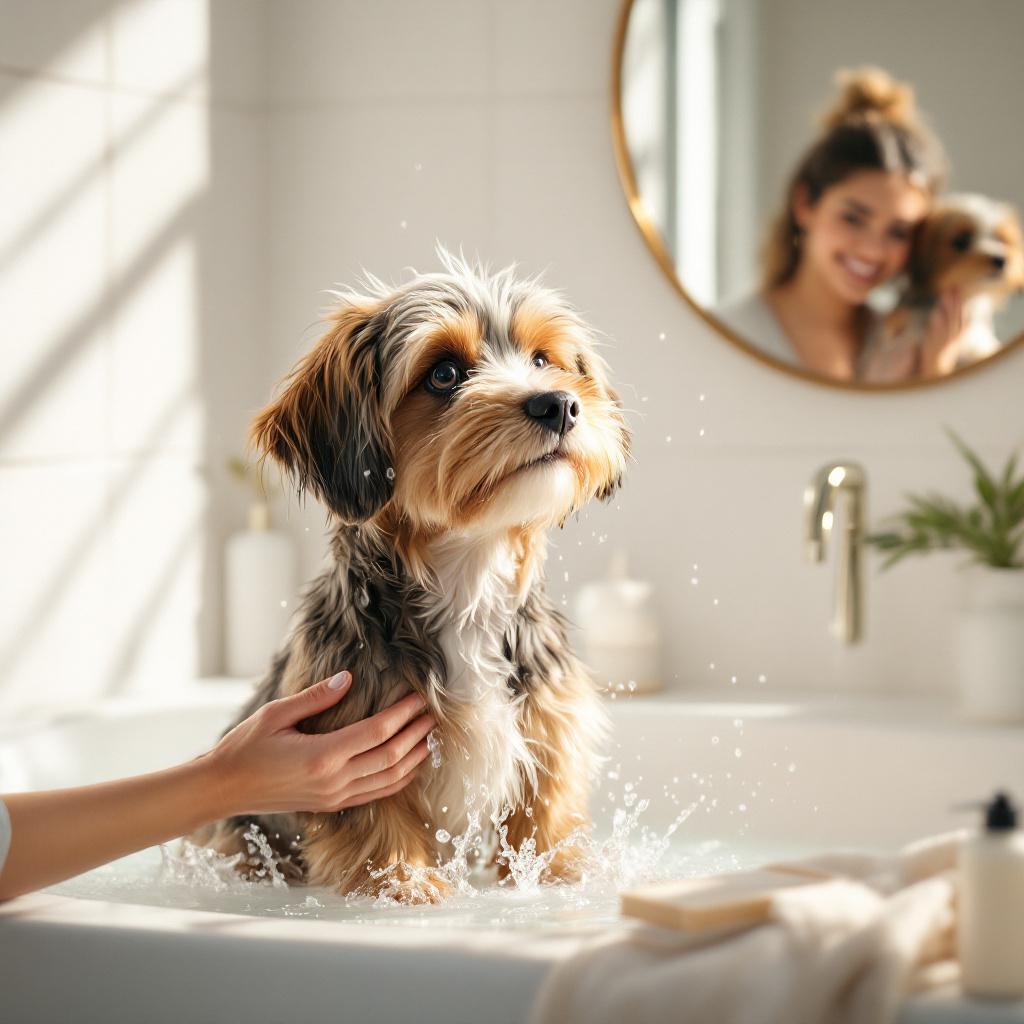

Choosing the right time and method to wash your dog ensures their comfort, skin health, and the shine of their coat. Depending on their coat type, lifestyle, and health condition, the frequency and protocol vary. This comprehensive guide accompanies you step by step, from bath preparation to post-wash care.
Why is bathing essential for your dog?
Beyond the aesthetic aspect, bathing helps eliminate dirt, parasites, and dead cells, while also helping to prevent certain skin infections. A clean coat reflects a healthy dog: air circulation improves, sebaceous glands regain their balance, and the risk of itching diminishes.
How often should you wash your dog?
There is no universal rule, but several criteria determine the ideal frequency. A very active dog or one that spends a lot of time outdoors may require more regular baths than a homebody dog.
According to coat type
- Short hair: a bath every 6 to 8 weeks is generally sufficient, unless your companion often rolls in mud.
- Long hair or double coat: an interval of 4 to 6 weeks helps avoid knots and mats, especially in shepherds or northern breeds.
- Curly hair: these breeds often require more frequent maintenance (every 3 to 4 weeks) to prevent drying out and the formation of hairballs.
According to age and health
A puppy starts its bath training around 8 weeks and requires a gentle protocol so as not to weaken its immature skin. A senior dog or one prone to skin allergies can benefit from adapted products, without harsh fragrances, and thorough rinsing.
Preparing the bath: the secret to a successful session
Good preparation avoids stress and surprises. By anticipating each step, you will create a reassuring environment that will encourage your animal’s cooperation.
Necessary equipment
- A bathtub or a large non-slip basin
- A specific shampoo, chosen according to the coat type
- A soft and absorbent towel
- A brush or grooming glove
- A non-slip mat to prevent slipping
- Treats to reward each step
Favorable environment
The water temperature should remain lukewarm (between 30 °C and 35 °C). Close doors and windows to limit drafts, turn on a lamp if the room is dark, and make sure you can easily reach all the equipment.
Key steps of washing
A clear protocol prevents forgetting important areas and overexerting your dog.
Wet and apply shampoo
Start by gently rinsing, from the neck to the tail, avoiding the head. Then massage a small amount of product in the direction of the hair, focusing on often dirty areas (paws, belly, skin folds). This friction stimulates circulation and dislodges embedded impurities.
Rinsing and drying
Rinse thoroughly until the water runs clear. Any shampoo residue can irritate the skin. Dry your dog with a towel, then, depending on their coat, use a low-power hairdryer at a respectful distance to avoid burning the hair or skin.
Choosing a Suitable Shampoo
Between hypoallergenic, soothing, or antiparasitic formulas, the selection is vast. Turning to a comparison can guide you, but always keep in mind the skin sensitivity and the age of the animal.
| Skin Type | Recommended Formulation | Washing Frequency |
|---|---|---|
| Normal | Mild shampoo without sulfates | 6–8 weeks |
| Dry or flaky | Moisturizing formula with oats | 4–6 weeks |
| Oily | Balancing shampoo with clay | 4 weeks |
| Sensitive or allergic | Hypoallergenic product without fragrance | 5–7 weeks |
Limiting Stress During Bath Time
A stressed dog can develop a lasting aversion to water. To maintain a calm atmosphere:
- Introduce the ritual gradually, without forcing water intake or contact with the showerhead.
- Reward each step to reinforce a positive emotion.
- Identify the signs of discomfort (trembling, panting, attempts to escape) and take short breaks.
- If your puppy panics, a progressive bath in several sessions can be a gentle solution.
Post-Bath Care and Daily Maintenance
After the bath, brush your dog to detangle and distribute natural oils. Regularly check the condition of the coat and ears, where residual moisture can cause infections. Between baths, use a refreshing spray or a damp glove to limit dirt buildup.
Tip: Targeted Maintenance
- Clean the eyes and ears with suitable products.
- Trim the nails to reduce the risk of scratches during drying.
- Check the condition of the paw pads: a protective cream may be necessary in case of dryness.
Key Points to Remember
- Bathing frequency determined by coat type, age, and activity.
- Preparation and controlled environment to limit stress.
- Choice of shampoo adapted to the skin and coat.
- Rinsing and drying techniques essential to avoid irritation and tangles.
- Daily maintenance to prolong freshness between baths.
FAQ
At what age should puppy baths begin?
After the booster vaccination, around 8 weeks, with a very gentle shampoo and a light frequency.
Can I wash my dog every month?
For certain breeds or oily coats, a monthly bath is tolerable. Adapt the product and monitor the skin.
How do I know if the shampoo is suitable for my animal?
Test on a small area, observe the absence of irritation 24 hours later, and favor hypoallergenic formulas if in doubt.
What to do if my dog hates water?
Proceed gently: wet gradually, use water games, and reward every small progress.
Can bathing dry out the coat?
Yes, especially if the product is too harsh. Alternate with moisturizing treatments and space out washes well.
How to effectively dry a thick-coated dog?
After towel drying, use a low-temperature hairdryer while brushing to let air penetrate.
Is it useful to brush before the bath?
Yes, it reduces knots and facilitates the distribution of shampoo, for a more effective rinse.