
| Key Points | Details to Remember |
|---|---|
| 🐶 Definition of the Corgi | Welsh herding dog of small size, known for its unique appearance. |
| 📜 History | Medieval origins linked to Viking invasions and local breeding. |
| 🔍 Varieties | Pembroke and Cardigan: two distinct lineages with clear outlines. |
| 🐾 Characteristics | Long body, short legs, and an alert head carriage. |
| ❤️ Temperament | Affectionate, energetic, and sometimes stubborn, but always endearing. |
| 🛡️ Care | Regular brushing to limit shedding and daily exercise essential. |

Compact and charming, the Corgi is increasingly attracting dog lovers. Originating from a small corner of Wales, it has conquered the world thanks to its atypical appearance and very endearing character. But behind this irresistible face lie stories and sometimes little-known specifics: how to distinguish a Pembroke from a Cardigan? What do their tails, bone structure, or temperament reveal? This guide aims to shed light on these questions by tracing their ancestry, detailing their morphology, and outlining the special care they require. In the end, you will know if one or the other of these breeds fits into your home.
Origins and History of Corgis
Welsh archives mention dogs resembling our Corgis as early as the 12th century. The very etymology – coming from old Welsh “cor” (generally interpreted as weak) and “gi” (dog) – suggests their small size. However, these dogs were never considered toys: they were recognized for their role as herd guardians, capable of muzzling livestock and maintaining order and cohesion in small farms.
Two major waves of influence shaped their lineage. The first dates back to Nordic travelers: by bringing back their herding dogs, sometimes called “vallhunds” in Scandinavia, they introduced fundamentally robust and enduring genes. The second comes from medieval Welsh breeders, who selected size to facilitate handling the animals, while preserving the dog’s muscular hindquarters and agility.
Over time, their very distinctive silhouette aroused the curiosity of British aristocrats. In the 19th century, the Pembroke Welsh Corgi was officially recognized by the British Kennel Club, while the Cardigan retained separate recognition. This division reflects not only differences in appearance but also distinct uses and genetic lineages, each with its own color palette and work preferences.
The Two Main Varieties

Pembroke Welsh Corgi
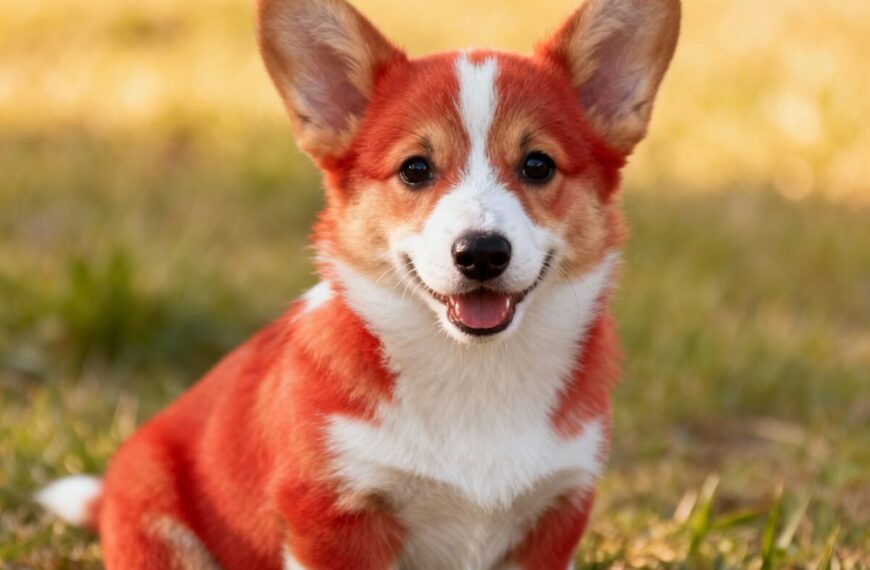
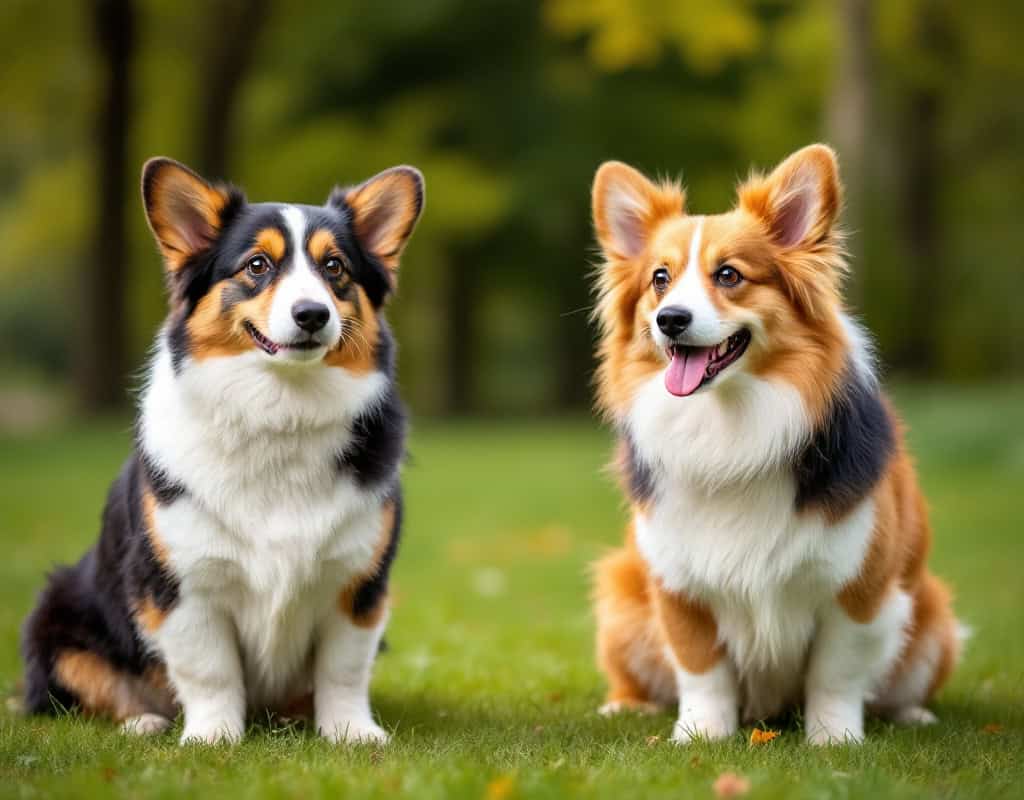
The Pembroke is undoubtedly the more popular of the two. Its slender posture, relatively pointed upright ears, and absence of a tail (generally docked) give it an almost “square” silhouette. Of modest size – between 25 and 30 cm at the withers – it also stands out for its shorter coat and a range of colors from sandy fawn to fiery red, often mixed with white.
Another distinctive trait: the Pembroke appeared in the entourage of the British royal family as early as the 1920s, thanks to Queen Elizabeth II’s affection. Its worldwide spread was accelerated by this royal connection, which explains its current fame and the many lineage variants bred for dog shows.
Cardigan Welsh Corgi
More robust, the Cardigan sports a natural and full tail, often carried low. Its ears are rounder at the base, the head longer, and the chest broader. Colors can include brindle, blue merle, or black and tan, sometimes with surprising marbling.
Originating from Cardiganshire county, it was initially prized for its ability to work on rough terrain and hunt small game. Its heavier build and thick pads make it a more suitable hiking partner than its Pembroke cousin, who prefers faster and lighter tasks.
Physical Appearance and Characteristics
At first glance, the most striking feature of the Corgi is its long body set on surprisingly short legs. This low morphology promotes good stability and quick sitting, without compromising the power of its forelimbs. Both breeds have a solid bone structure, but the Cardigan retains a wider rib cage, sometimes offering superior lung capacity.
The double coat, thick and weather-resistant, requires regular maintenance: the biannual shedding can be spectacular if not brushed two to three times a week. As for size, an adult generally weighs between 10 and 14 kg for the Pembroke, and up to 17 kg for the Cardigan. These variations are measured by height, but also by the breeder’s genetic choice, who may favor lightness or robustness depending on the intended use.
Temperament and Behavior
Make no mistake: beneath their plush appearance lies the temperament of a hard worker. Corgis are curious, lively, and require a stable companion capable of channeling their energy. They can be stubborn, especially when a stimulus – bird, squirrel, or passerby – catches their attention.
The Pembroke generally proves to be more sociable with strangers, while the Cardigan can be slightly wary, maintaining a very organized pack mentality. Within the family, both breeds are excellent playmates, patient with children, but it is advisable to supervise initial encounters to limit any instinctive nibbling intended to control the group.
Care and Specific Requirements
Beyond brushing, each variety deserves an adapted diet: an active Corgi will require kibble rich in protein, while a more sedentary dog will need a controlled caloric intake to preserve its back, often prone to spinal problems. It is not uncommon for overweight to worsen predispositions to dysplasia or herniated discs.
Daily exercises, such as split walks or tracking games, stimulate their mind and prevent boredom. A few training sessions based on rewards refine their obedience without breaking their independent personality. Finally, monitoring the ears and teeth is part of good routine practices, since these areas are regularly used and sometimes neglected by care focused too much on the coat.
FAQ
- What is the main difference between the Pembroke and the Cardigan Welsh Corgi?
- The Pembroke is characterized by the absence of a tail and a lighter silhouette, while the Cardigan retains a long natural tail and a broader chest.
- How to maintain a Corgi’s coat?
- Thorough brushing two to three times a week helps control shedding and stimulates skin circulation.
- Is the Corgi suitable for families with children?
- Yes, its playful and affectionate temperament makes it ideal for households, provided it is offered activities to channel its energy.