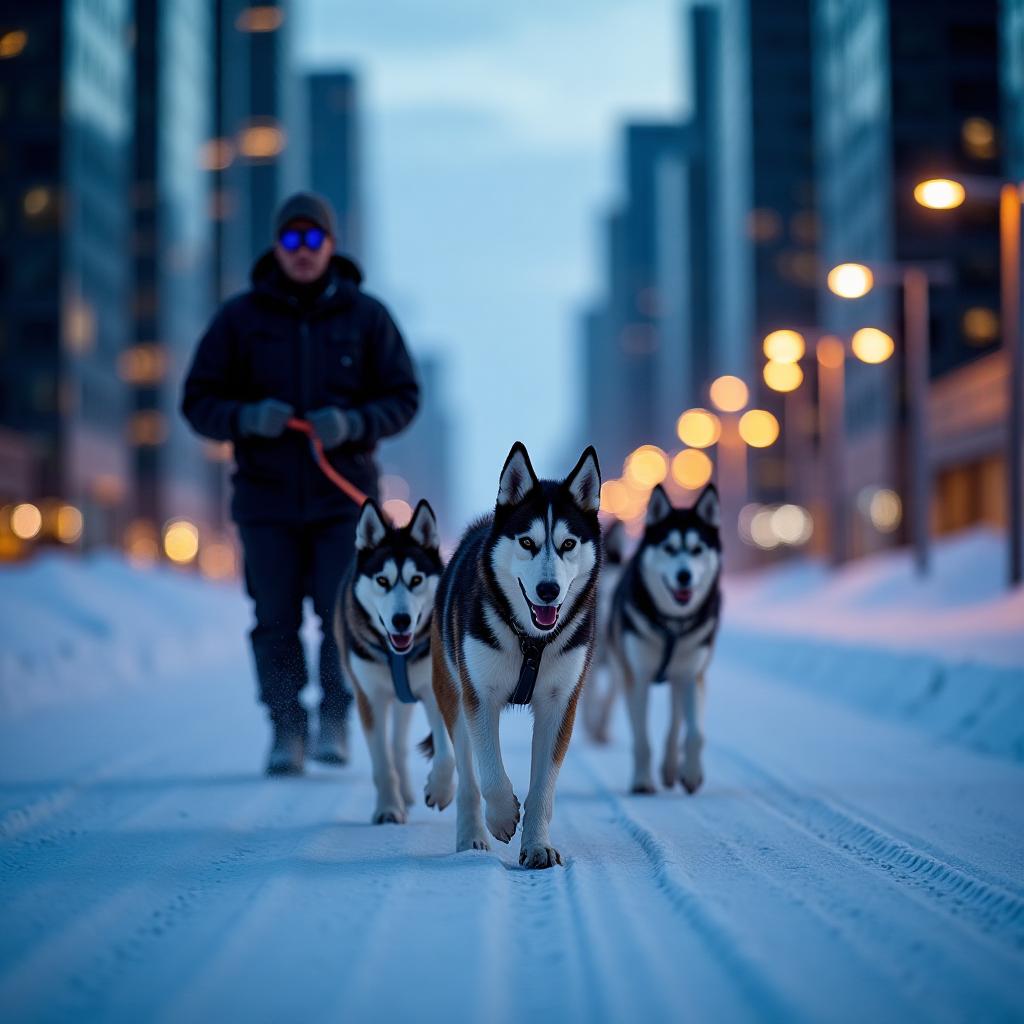

In the city, where snow is often scarce, maintaining the physical and mental fitness of Nordic dogs can sometimes be a challenge. Yet, a savvy musher knows that it is not enough to wait for winter to stimulate their four-legged companions: there is a whole range of off-snow exercises capable of refining their endurance, strengthening their muscles, and channeling their overflowing energy, even on asphalt and sidewalks.
In brief
🏃♂️ Urban cardio: canicross, bikejoring, and stair climbing recreate the pulling effort while protecting the joints thanks to shock-absorbing leashes.
🏋️♀️ Strength and explosiveness: resistance sessions with cart-sled, repeated hill climbs, or light carrying to build the hindquarters and chest muscles.
🧠 Mental stimulation: scent games, interactive puzzles, and hide-and-seek with objects stimulate the search instinct and prevent boredom.
🚦 Urban safety: reflective vest, well-fitted harness, and marked routes reduce risks and facilitate coexistence with pedestrians and traffic.
Why train off-snow?
When the white coat disappears, many mushers slow down, exposing their dogs to a decline in fitness and boredom. However, muscle building, endurance, and cognitive stimulation are worked on all year round. Between snow sessions, exercises in the city help avoid overweight, strengthen the stride, and maintain the musher-dog bond. Better yet: they develop agility, a valuable asset to face the most demanding trails from the first snowfall.
Essential equipment for the city

The adapted harness
Similar to the one used in canicross, the harness must distribute the pulling force over the chest without compressing the shoulders. Choose a padded, stretchable model with a dorsal or pectoral attachment point depending on the intended exercise. A harness that is too loose causes chafing, too tight hinders breathing.
The shock-absorbing leash
On asphalt, every jerk is transmitted to the dog’s back. A leash equipped with an internal elastic or a braided section softens these jolts. It protects the spine and improves comfort, especially during sprints or stair climbs.
Safety equipment
- Reflective vest and LED lights to be visible at dawn or dusk.
- Anti-chafing sleeves or protective boots in case of abrasive surfaces.
- Training whistle and clicker to communicate clearly without shouting.
Cardio exercises in urban environments
Canicross on roads and trails
Take a mixed route, alternating asphalt and forest paths, to simulate varied terrain. The idea is to vary pace and incline: 10 minutes of warm-up at a moderate pace, followed by faster intervals of 1 to 2 minutes, then recovery by trotting. Watch out for slippery street corners and potholes to avoid sprains.
Bikejoring session
Equip your bike with a dedicated mount, attach the shock-absorbing leash, and set off for an urban loop. Rather than continuous effort, include sprint segments (15–20 seconds) followed by easy pedaling. Intermittent effort develops explosiveness and preserves the dog’s stride length.
Muscle strengthening and plyometrics
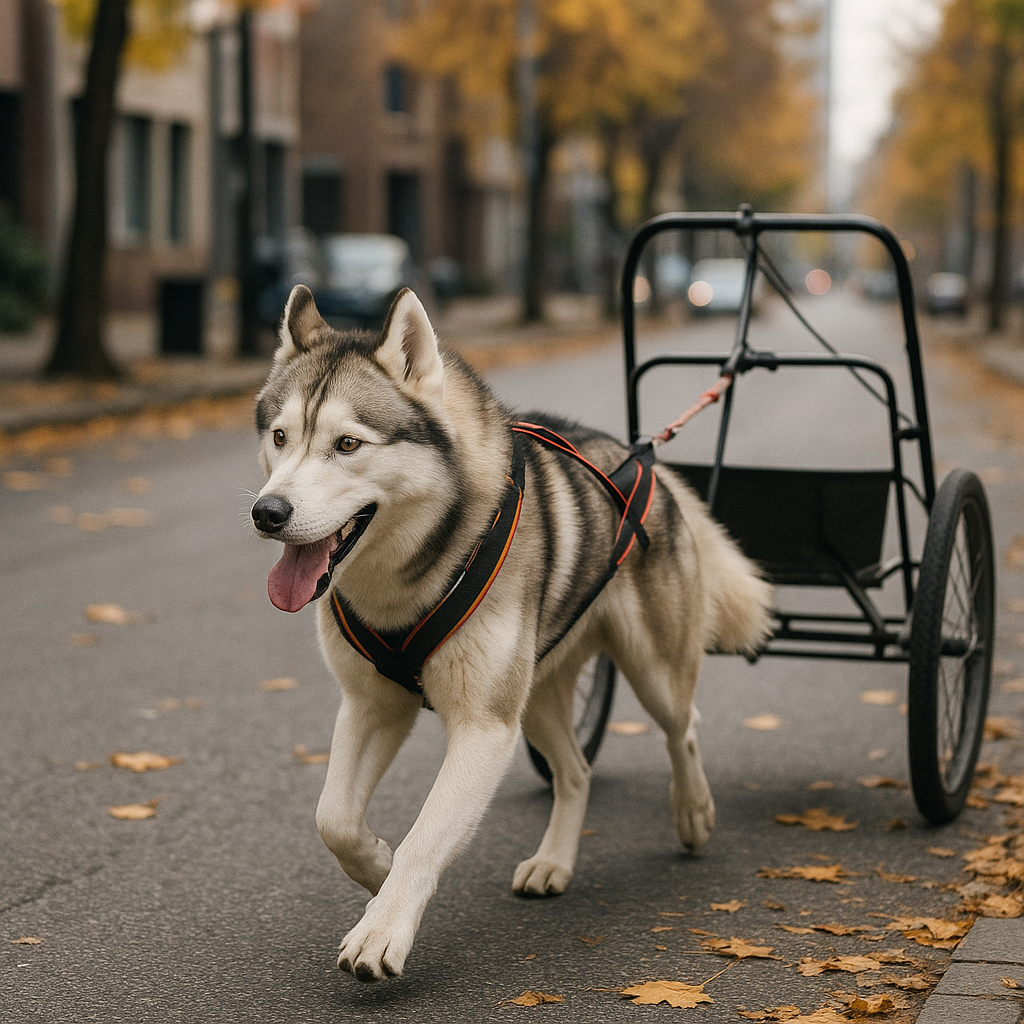
To sculpt the muscles of the hind legs and spine, you can attach a small light trailer behind the dog. Gradually increase the weight or resistance by installing modular bags. Climbing artificial slopes (stairs or urban embankments) complements this approach by working on the push phase.
Musher tip: alternate five climbs of 100 m at a sustained pace with walking descents to preserve the joints.
Mental and olfactory stimulations
A northern dog enjoys solving puzzles. Take advantage of benches, urban tree trunks, or riverbanks to organize scented object caches. Simply sniffing a repeated trail boosts confidence and reduces stress in unfamiliar environments.
- Cones to be navigated in a specific order.
- Food puzzles fixed on a non-slip base.
- “Find the treat” games hidden under overturned bowls.
Create a balanced weekly program
| Day | Main exercise | Duration |
|---|---|---|
| Monday | Canicross (interval training) | 45 min |
| Tuesday | Strengthening (hills and resistance) | 30 min |
| Wednesday | Mental stimulations | 20 min |
| Thursday | Bikejoring (endurance) | 40 min |
| Friday | Active rest (slow walk) | 30 min |
| Saturday | Mixed exercise (urban small train) | 50 min |
| Sunday | Free play (secured area) | 60 min |
Safety and precautions
Before each session, check the condition of the paw pads: concrete surfaces can cause abrasions. Adjust hydration according to the temperature. In case of heat, favor morning or late time slots. And above all, respect the dog’s physical condition: a slow progression is better than a sudden stop due to injury.
FAQ
How often should my northern dogs train off-snow?
Ideally 4 to 5 times a week, varying intensity and type of exercise to avoid monotony and prevent injuries.
Can bikejoring be replaced by other activities?
Yes, a two-wheeled kart or an all-terrain scooter offer a similar experience, provided the dog pulls smoothly and the line absorbs jerks.
What signs indicate excessive fatigue?
Heavy panting at rest, decreased appetite, and slight limping. If in doubt, consult a veterinarian for a muscular and joint assessment.