| Key Points | Details to Remember |
|---|---|
| 🐕 Origin | Ancient British hunting dog |
| 🌀 Coat | Tight and shiny curls |
| 🏃 Activity | High energy, needs channeling |
| 🧠 Temperament | Sharp and independent intelligence |
| 🛁 Maintenance | Regular brushing to avoid tangles |
| 💬 Training | Positive and consistent training |
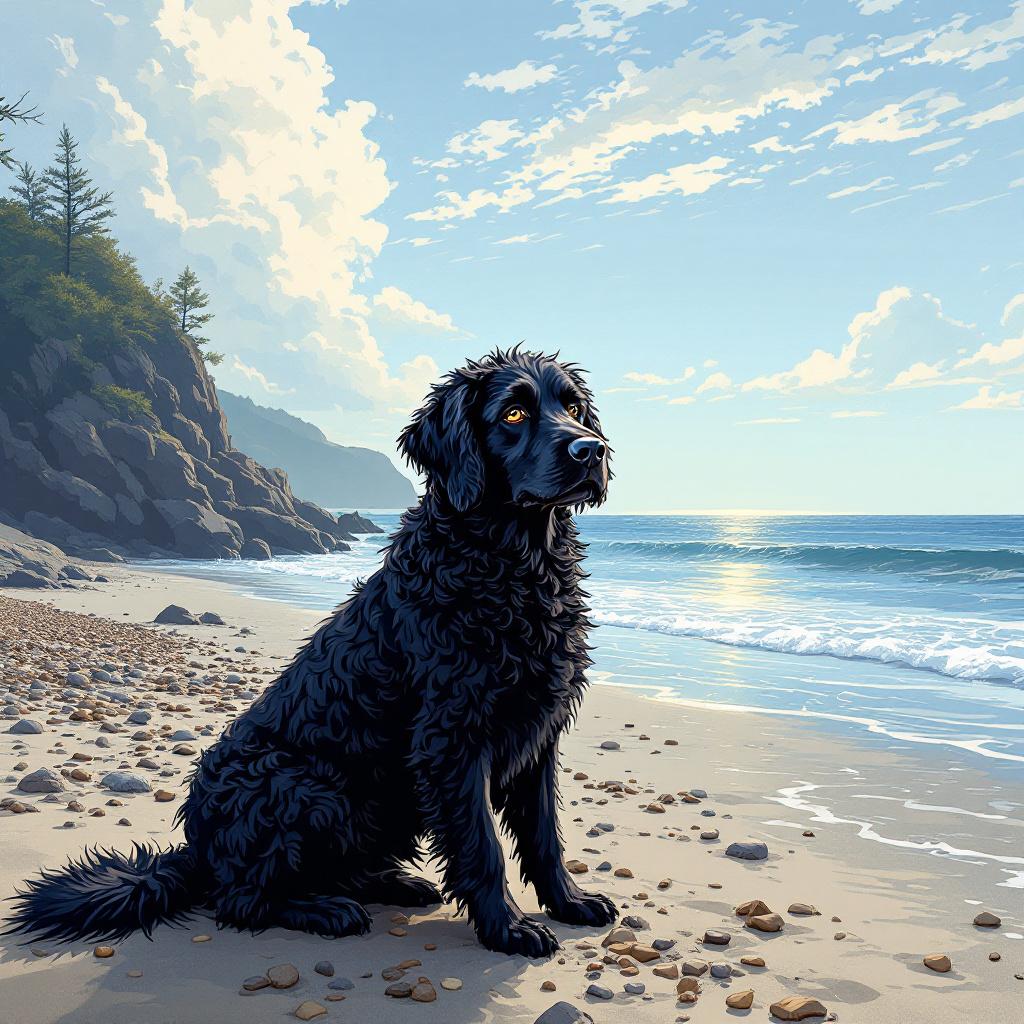
The Curly-Coated Retriever immediately catches the eye thanks to its tight, dark curls, but it especially charms with a rare enthusiasm for large breeds. Born to track game and waterfowl, it combines the robustness of an athlete with the affection of a loyal companion. One might think its aristocratic appearance is just superficial, yet every aspect of its character and needs deserves a detailed look: coat care, boundless energy, overflowing intelligence… Follow the guide to understand how to welcome this dog that is not quite like the others.
History and Origins of the Curly-Coated Retriever
Birth of a Resilient Breed
At the end of the 19th century, British hunting masters were looking for a retriever capable of facing marshes and ponds with vigor. By crossing various water dogs and local pointers, they shaped a mastiff with a particular elegance: the Curly-Coated Retriever. Its ancestors had not only to retrieve game; they had to do so quickly, discreetly, and with resistance to bad weather. This utilitarian origin explains why even today, its physical needs remain higher than those of most more “domesticated” retrievers.
Evolution and Modern Standard
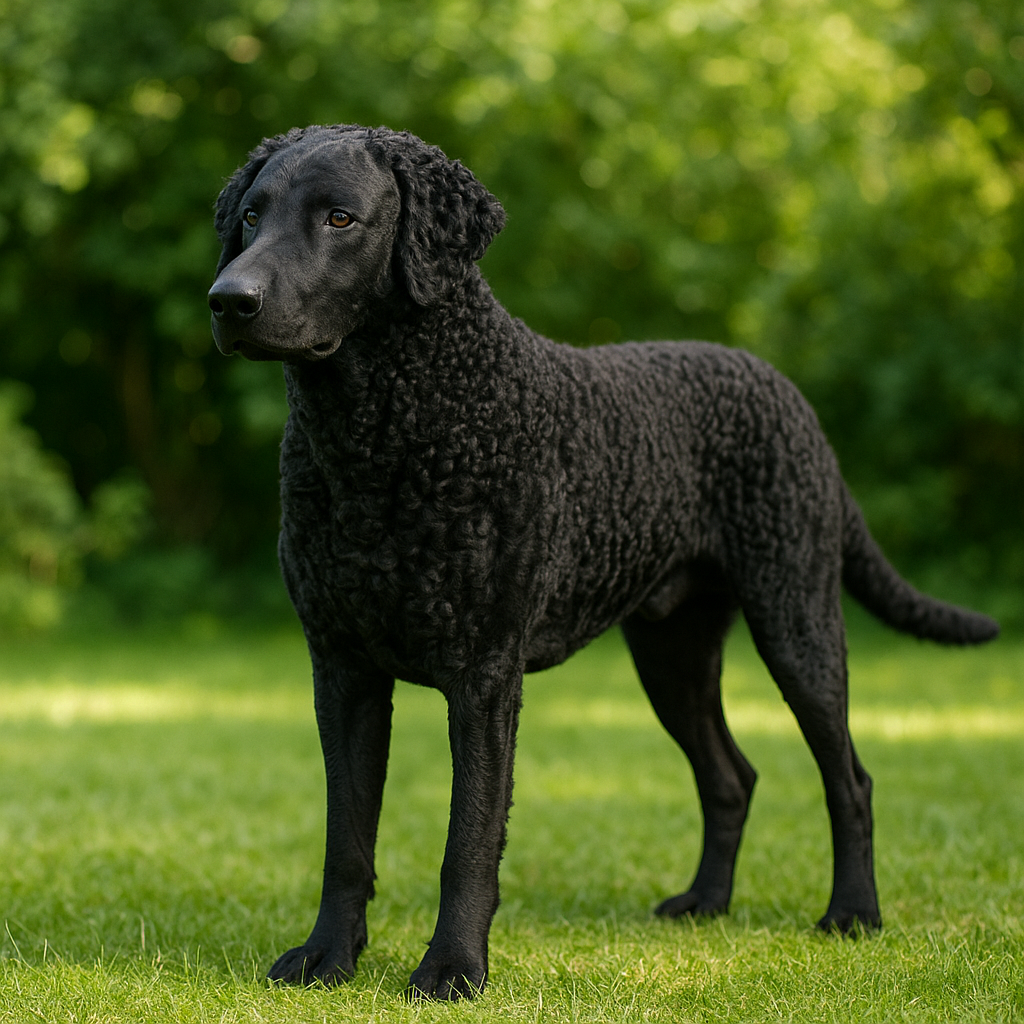
The official standard, accepted as early as 1860, describes a tall dog with a lean and muscular body, a strong muzzle, and a straight back. The true signature is its curly coat, dense but not woolly. Sometimes in shows the aesthetic aspect is refined, but for a knowledgeable enthusiast, the essential lies in field performance and unfiltered personality. It should be noted that a well-balanced Curly-Coated combines a noble appearance with a certain sobriety: no superfluous movement.
Characteristic Coat and Care
Structure of the Curls
Unlike smooth coats, the Curly-Coated’s curls form thanks to a dense undercoat and a thick top coat. Each “spiral” is born from genetics, concentrates a protective film, and resists cold water. It’s a bit like a natural raincoat: water slides off the strands without penetrating to the skin. If you touch it, you feel a firm and elastic texture, almost rubbery. It’s fascinating, but to keep this structure intact, trimming must be minimal: just a few touch-ups around the ears and feet, the main work is done by brushing.
Care, Brushing, and Baths
Weekly brushing is done with a wide-toothed slicker brush, to dislodge leaves, grass, and small insects before they accumulate into stubborn knots. Between sessions, a metal comb allows reaching the base of the curls without deforming them. For bathing, a mild shampoo is used, followed by a conditioner to nourish. The ideal? Let it air dry, without a hairdryer, so each curl regains its natural volume. See for yourself: a well-groomed Curly reflects light like polished leather.
A Lively and Versatile Temperament
Hunting Instinct and Curiosity
This retriever has a secret ingredient: an unquenchable thirst for exploration. When following a trail, nothing stops him; his olfactory memory rivals that of the best trackers. In a garden, he marvels at every insect, every new scent. Clearly, he is not a sedentary lap dog. He expresses his enthusiasm with noisy demonstrations, even clumsy when he jumps to catch a ball or rolls in the grass. Rest assured: this overflowing energy can be channeled through varied activities.
Behavior in the Family
At home, despite his size, he is gentle with children. In the living room, he can play for hours without tiring but also demands calm phases. Where some retrievers allow themselves an almost nonchalant laziness, our curly one bubbles with energy. In case of long absence, he prefers human or canine company to solitude: moral support is not a luxury for him. You may sometimes hear him growl, especially if he feels frustrated or isolated: it’s his language, not a sign of aggression.
Training and Socialization
Learning Strategies
The Curly-Coated Retriever learns quickly, but at his own pace. If you insist too much, he may shut down or pretend to ignore. The key? Positive reinforcement: praise, small treats, and games. For him, repeated failure is quickly discouraging. It’s better to break sessions into parts, multiply successes, and mix up the routine. For example, combining obedience exercises with an agility course or a water game reveals his versatility and gives him a sense of mission.
Interaction with Children and Other Animals
In a family environment, early socialization is favored. Expose him to varied stimuli: urban noises, friends of all kinds, unusual smells. With cats, encourage distant curiosity rather than impulsive chasing: an overly excited dog will see a cat as prey. However, well channeled, he can live in perfect harmony. Abrupt introductions should be avoided, and each should be allowed to get used to the other under supervision.
Physical Activity and Mental Stimulation
Adapted Exercises
An unstimulated Curly lacks landmarks and can become destructive. Two daily 30-minute walks are a minimum, complemented by more intense sessions: swimming, canicross, tracking. In the water, he excels: his curls dry quickly and his powerful swimming style recalls his origins as a waterfowl retriever. On land, an agility course or a “nose work” (scent games) combine physical effort and thinking.
Games and Hydration
He loves to retrieve, whether it’s a puck, a frisbee, or a floating stick. Each game reveals his tireless character. Favor short, intense sessions, punctuated with breaks. Another often neglected point: hydration. When he’s bursting with enthusiasm, he may forget to drink. An automatic flow fountain or a wall-mounted waterer encourages him to stop and refresh himself, especially since his sticky coat retains heat in summer.
Frequently Asked Questions
What is the lifespan of the Curly-Coated Retriever?
Generally, he lives between 10 and 12 years, sometimes longer if following a suitable activity program and quality diet.
Is this dog suitable for beginners?
He can be a challenge for a novice, especially because of his energy and independent character. It’s better to already master the basics of dog training.
Does the coat require a lot of care?
Weekly brushing and occasional bathing are sufficient. No daily detangling, but diligence to avoid knots.
Is he compatible with apartment living?
Provided he benefits from regular outings, intense play sessions, and spaces to run. In the absence of a garden, outdoor activities will need to be multiplied.