
As you might expect, a stressed dog doesn’t always recover with just a simple walk. Between thunderstorms, separations, and visits to the vet, anxiety can manifest in a thousand ways: trembling, panting, excessive licking… Fortunately, canine massage presents itself as a gentle and accessible solution. Through this tutorial, we guide you step by step to establish a relaxation ritual that soothes your companion without taking up all your free time.
Why massage helps canine anxiety
The link between touch and well-being
Touch, in dogs, triggers the release of oxytocin, that famous “happiness hormone” that calms stress. In reality, massage could be compared to a soft chord played on the strings of the nervous system. When you gently stroke the skin or apply light pressure, the skin receptors transmit a calming signal to the brain. The result: muscle tension relaxes, heart rate slows down, and the dog’s mind returns to the present moment.
When and where to practice
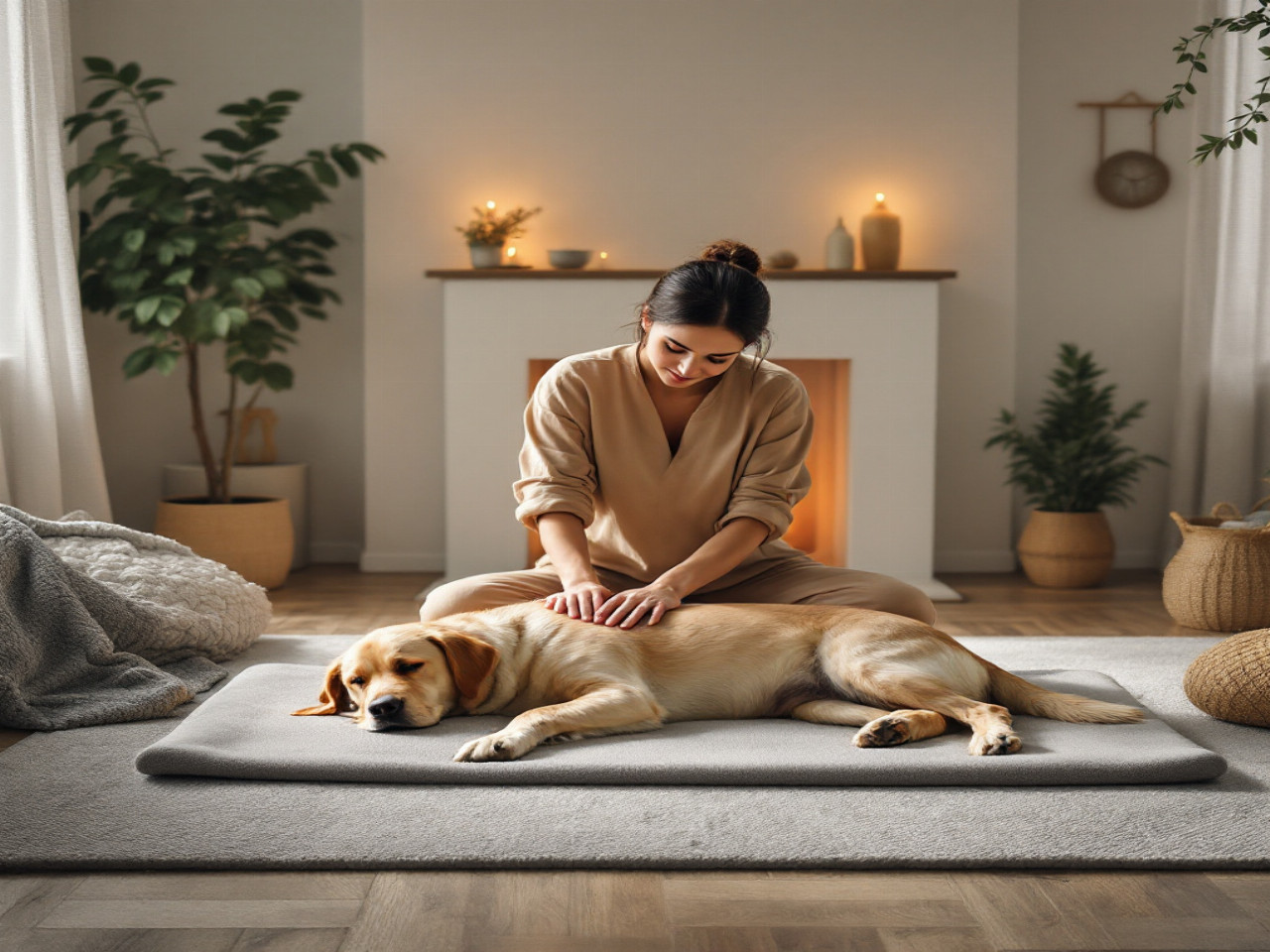
First of all, choose a quiet moment, away from street noise or loud TV. Ideally, settle in a cozy space — a thick rug, a soft basket, or even your bed if your dog is used to it. Provide a comfortable temperature and play soft music if you want to go for the “four-legged spa” level. The goal is to associate this moment with something pleasant. With some regularity (two to three times a week), your dog will eventually anticipate this session as a cozy break.
The 5 essential movements
Movement 1: Gentle stroking of the neck
Place your hand at the base of the skull and slide your fingers toward the shoulders applying light, almost caressing pressure. The neck is an area full of tension – especially in breeds with a broad chest or dogs that pull on the leash. The idea is to feel, under your fingers, the muscular resistance and encourage it to gradually give way. Allow 1 to 2 minutes, breathing deeply to infuse your own calm into your companion.
Movement 2: Light compression of the shoulders
Place your two thumbs on each side of the spine, just behind the neck, and gently press inward. Can you feel the trapezius muscles? Work slowly, in small circles, then spread the pressure outward. This technique stimulates blood circulation and promotes toxin elimination. If your dog closes its eyes or yawns, it’s a good sign: it is relaxing.
Movement 3: Kneading the back
The back, from the base of the neck to the tail, forms a key tension line. Imitate a baker’s gesture by kneading dough: fingers and palms alternate to grasp the muscles in small areas without ever forcing. This action resembles a gentle “sports massage”; it is ideal after an active walk where your dog maintained a steady pace. Count 2 to 3 minutes for each 10 cm segment.
Movement 4: Rolling the thighs and hips
For this step, have your dog sit or lie on its side. Slide your thumbs under the thigh, then roll the skin and muscles between thumb and forefinger, as if you were shaping clay. This method restores flexibility to the hind limbs and relieves tensions accumulated during jumps or wild runs. Make sure your dog always keeps an eye on you: it’s the best indicator of its comfort.
Movement 5: Stimulation of the paws
We don’t think about it enough, yet the paws are full of nerve endings connected to stress. Gently press each toe by pulling it slightly, then perform a mini-kneading on the area between the pads. This sequence is a perfect bonus to end the session, as it encourages the dog to fully relax. If several light strokes on the belly follow, you are concluding a 5-star massage.
| Movement | Duration | Target Area | Benefit |
|---|---|---|---|
| Neck effleurage | 1–2 min | Base of the skull, shoulders | Releases cervical tension |
| Shoulder compression | 1–2 min | Trapezius muscles | Improves circulation and relaxation |
| Back kneading | 4–6 min | Dorsal spine | Eliminates toxins, warms up |
| Thighs/hips rolling | 3–5 min | Hind limbs | Flexibility, relief |
| Leg stimulation | 2–3 min | Entire legs | Overall soothing |
Practical tips for a successful massage
- Before the session: make sure your dog has relieved itself and is not thinking about its next meal.
- The atmosphere: dim lighting, chill-out music, and why not a diffuser with essential oils (lavender suitable for animals) in low doses.
- The touch: favor the fingertips, more sensitive than the palm to detect tensions.
- The duration: a total of 10 to 15 minutes is enough, test your patience before theirs.
- The progression: always start with the back and finish with the legs to avoid overstimulating your dog.
- Regularity: a bi-weekly ritual creates a soothing routine; in the long term, it’s a game changer.
If your dog shows skin irritations or patches due to repeated stress, take a look at this guide to recognize signs of food allergies in dogs. An inappropriate diet can contribute to its general discomfort. → Discover the guide.
FAQ – Frequently Asked Questions
My dog moves too much, how can I reassure him?
Start with some gentle approach strokes on the back or flank, without pressure. Let him feel your hands, create soft eye contact. As soon as he becomes still, begin the massage. It’s a mirror game: your calm directly affects his behavior.
At what age can massage be started?
Puppies can already benefit from light effleurage from 8 weeks old. Adjust the pressure according to size and build, remain very gentle on still fragile bones. For seniors, favor circular movements to maintain joint flexibility.
Does massage replace physical exercise?
Not at all! Massage is an ideal complement to release tension, but it does not substitute for walks, play, or mental stimulation. Think “exercise + relaxation” for a balanced dog.
My dog growls, is that normal?
A single growl may simply indicate local discomfort. Reduce pressure, change area, or take a break. If the growling persists or is accompanied by aggression, consult a veterinarian or behaviorist before continuing.
Do I need to follow professional training?
Most owners will learn by practicing, provided they stay attentive to the dog’s signals. However, if you want to become a certified canine masseur, make sure the training covers anatomy, pathologies, and contraindications.