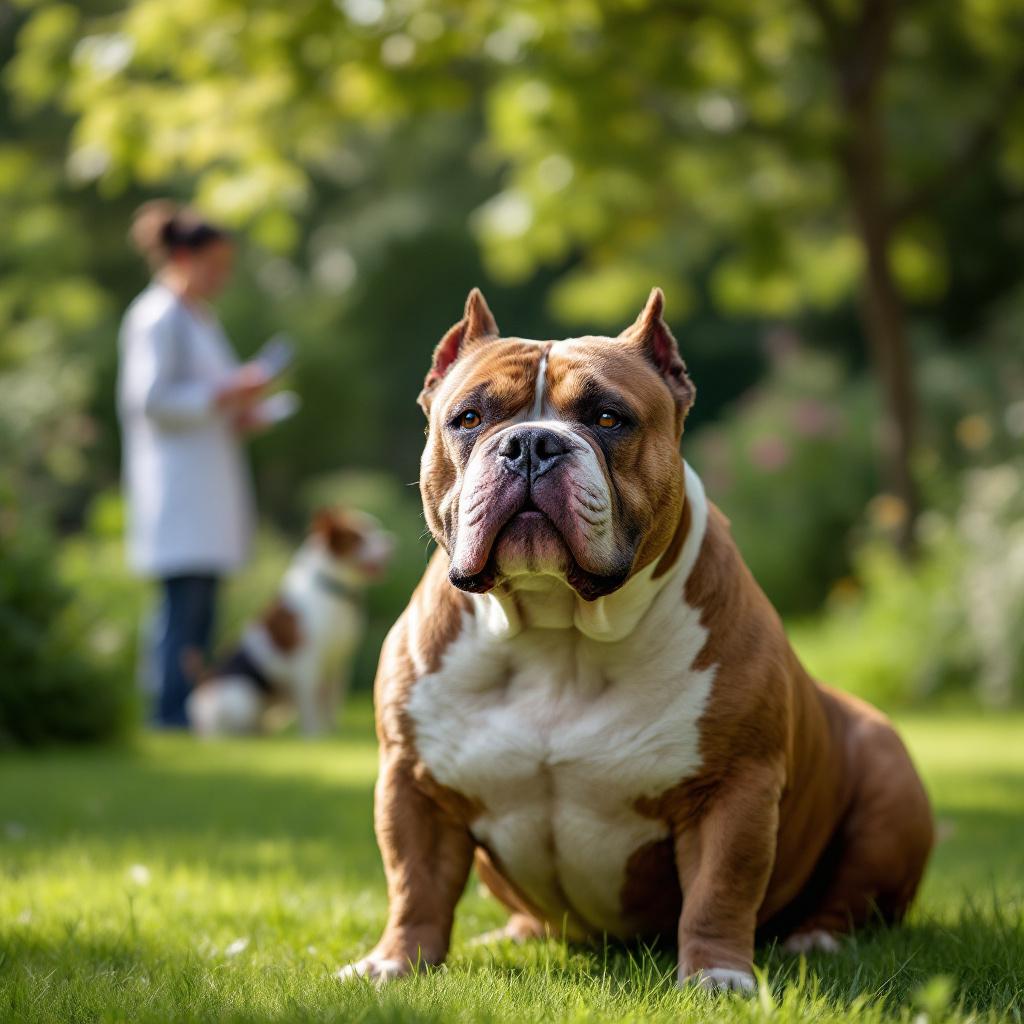
With its imposing build and friendly gaze, the American Bully XXL attracts many enthusiasts of powerful dogs. But behind the muscular silhouette sometimes lie specific vulnerabilities. Between stressed joints, cardiac predispositions, and skin sensitivities, every breeder or owner must understand the health stakes to act proactively. This article explores the most frequent conditions in this gentle giant, before detailing best practices to prevent them.
The Specificities of the American Bully XXL and Their Impact on Health
The American Bully XXL is not just born big: its skeleton, musculature, and metabolism reflect a selection where volume takes precedence. This results in a robust bone structure but sometimes subjected to heavy strain from a very young age. A puppy that is too heavy or too active may experience slowed or deformed growth. Conversely, an overweight adult will suffer additional pressure on the joints and heart.
Beyond size, the brachycephalic morphology (short muzzle) of some individuals also exposes them to respiratory difficulties and thermoregulatory disorders. Not to mention the thickness of the skin, often prone to irritations or infections if not regularly maintained.
Hereditary Predispositions and Conformation
Breeders favor XXL-sized lines, but this can exacerbate hip or elbow dysplasia, already common in molosser breeds. The choice of sires, ideally screened via official radiographs, largely determines the risk. Even when the parents are healthy, too rapid growth or nutritional deficiencies can trigger joint pathologies.
The Importance of Monitoring from Puppyhood
In the first weeks, a tailored exercise program—neither too intense nor too light—ensures balanced bone development. The veterinarian can propose progressive radiographic assessments, particularly for the hips. Without this monitoring, it becomes difficult to correct a conformation defect before it crystallizes into chronic pain.
Condition No. 1: Joint Disorders
For a companion often weighing more than 50 kg as an adult, every step heavily stresses the hips and elbows. Joint pathologies are therefore common and can appear as early as 6–8 months.
Hip Dysplasia
This malformation of the acetabulum and femoral head results in progressive stiffness and variable lameness. At an advanced stage, osteoarthritis is observed, with sharp pains when standing or climbing stairs.
To limit the risk: monitor body condition score, avoid excessive jumping exercises before 12 months of age, and favor soft ground rather than concrete.
Elbow Dysplasia
Less publicized, elbow dysplasia manifests as a front leg lameness, sometimes intermittent. It results from uneven development of the three ossification centers of the ulna. Early screening allows for less invasive management (physiotherapy, occasional anti-inflammatory treatment).
Osteoarthritis
Often secondary to dysplasia or an old trauma, osteoarthritis is characterized by morning stiffness and reluctance to move. The use of chondroprotective agents (glucosamine, chondroitin) and hydrotherapy sessions can significantly improve quality of life.
Condition No. 2: Heart Problems
The muscle mass of the American Bully XXL relies on a large heart. Some bloodlines develop cardiomyopathy or aortic stenosis which, if not detected early, can lead to fainting and abnormal fatigue.
Dilated Cardiomyopathy
The wall of the left ventricle thins, reducing ejection force. Early signs include exercise intolerance and resting tachycardia. An annual echocardiogram after 2 years allows monitoring of wall thickness and blood flow.
Aortic Stenosis
Narrowing of the aortic valve generates turbulence, perceived as a heart murmur during auscultation. If the stenosis is severe, medical treatment or, in rare cases, surgery may be considered.
Condition No. 3: Dermatological Disorders
The epidermis of the American Bully XXL is exposed to folds and friction, creating an ideal environment for bacteria and fungi.
Skin Fold Dermatitis
Accumulation of moisture and dirt between skin folds causes redness, odors, and itching. Daily cleaning with lukewarm water followed by careful drying will put an end to these discomforts.
Food and Environmental Allergies
Recurring itching may stem from unsuitable kibble or domestic allergens (pollen, dust mites). A dietary elimination process and, if necessary, an allergy assessment by a specialized veterinarian quickly identify the source.
Condition No. 4: Respiratory Difficulties
Some individuals have a brachycephalic profile, even mild, which complicates air exchange. In hot climates or during intense exertion, noisy breathing and rapid exhaustion are observed.
Brachycephalic Syndrome
Narrowing of the nostrils, elongation of the soft palate, or eversion of the laryngeal ventricles result in permanent snoring and an increased risk of heat stroke. Prevention: avoid walks during hot hours, maintain optimal weight, and if necessary, resort to corrective surgery.
Global Prevention Strategies
Beyond specific diseases, a holistic approach makes all the difference. Nutrition, exercise, veterinary monitoring, and living environment are all levers to strengthen the health of your BullY XXL.
- Adapted nutrition: favor foods rich in omega-3 and quality proteins, without excess carbohydrates.
- Controlled activity: short but frequent sessions, on low-impact surfaces.
- Regular check-ups: at least one cardiac and joint check-up every year.
- Skin care: inspection and cleaning of folds, ear care to prevent otitis.
- Weight management: monthly weighing and adjustment of rations to avoid overweight.
To nuance these considerations, one can look into the debate around the American Bully XXL, wondering whether it is really a true family dog or an overrated animal, and adapt choices according to temperament and living environment.
FAQ
At what age should the first signs of dysplasia be monitored?
The first symptoms often appear between 6 and 12 months. X-rays at 8 months can confirm or rule out the diagnosis.
How to choose the best kibble for my Bully XXL?
Opt for a formula rich in omega-3 fatty acids, animal proteins, and without excess cereals. A glance at the ingredient list, avoiding artificial additives, guides your choice.
Should I fear heat strokes?
Yes, especially if your dog has a brachycephalic profile. Plan outings early in the morning or late in the day, and always provide a source of fresh water.
How often should hydrotherapy be done?
A monthly session may suffice, but the optimal protocol depends on your dog’s joint and cardiac condition. Ask your veterinarian for advice.
Is dentistry a weak point in this breed?
Large dogs sometimes accumulate tartar more quickly. Regular brushing and annual visits to the veterinary dentist are recommended.