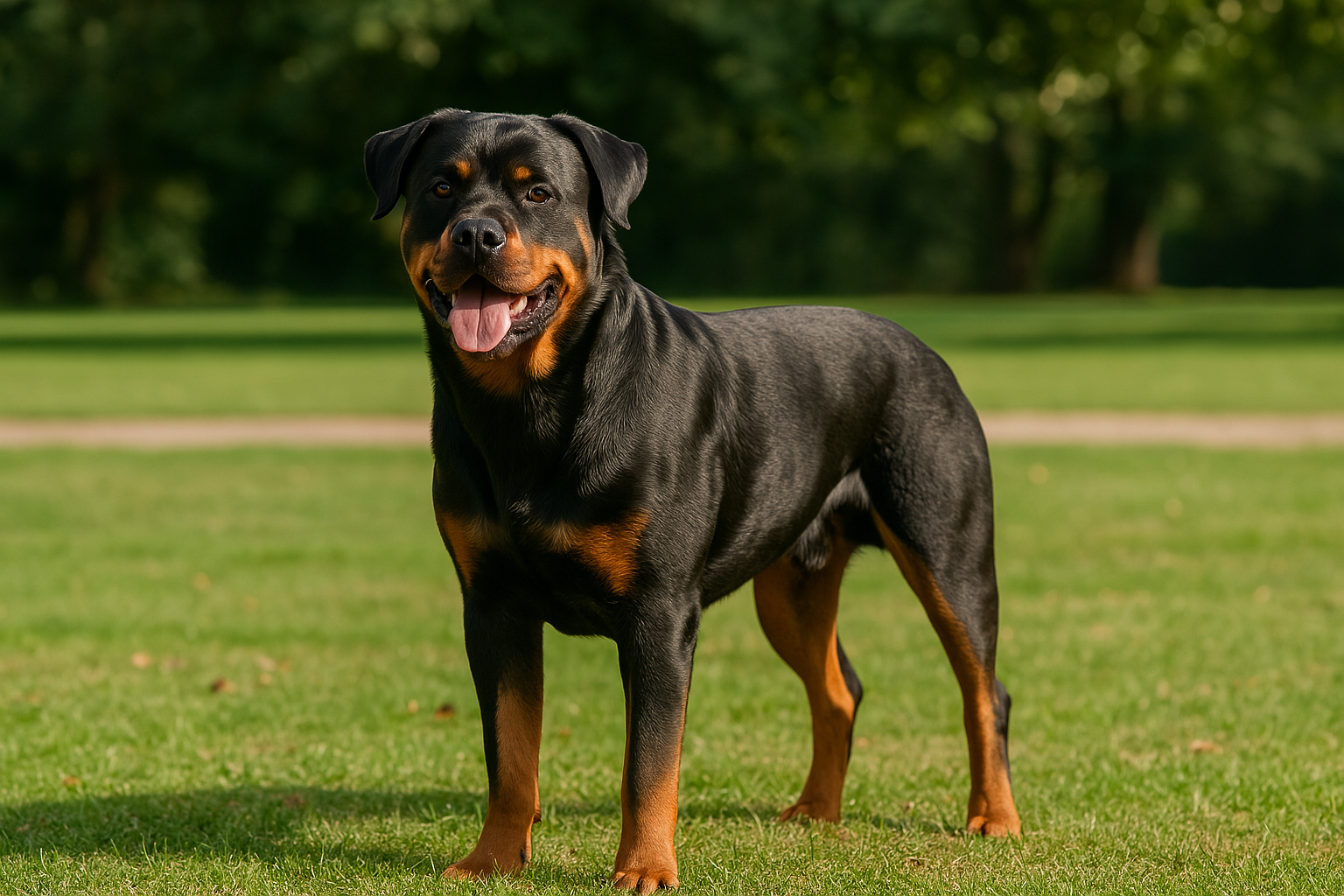

The Rottweiler, often nicknamed “Rottie,” is a powerful and imposing dog, with a history closely linked to protection and livestock. Originating from Germany (Rottweil), it is now appreciated for its great loyalty, courage, and potential as a guard dog. Behind its mastiff-like appearance, however, hides a tender companion very close to its family. Let’s dive into the world of this giant with a big heart!
General Presentation
The Rottweiler is a large dog (male: 61-68 cm at the withers, female: 56-63 cm), weighing between 35 and 50 kg, or even more for some massive individuals. Its coat is short, black and tan, with a muscular build and a powerful jaw. Historically, it was used to guard and escort livestock to the market, thus protecting its master’s property.
Classified as a guard and protection dog in many countries, it requires solid training and good socialization. Its life expectancy is around 9 to 12 years, depending on the lines and care provided.
Character and Behavior
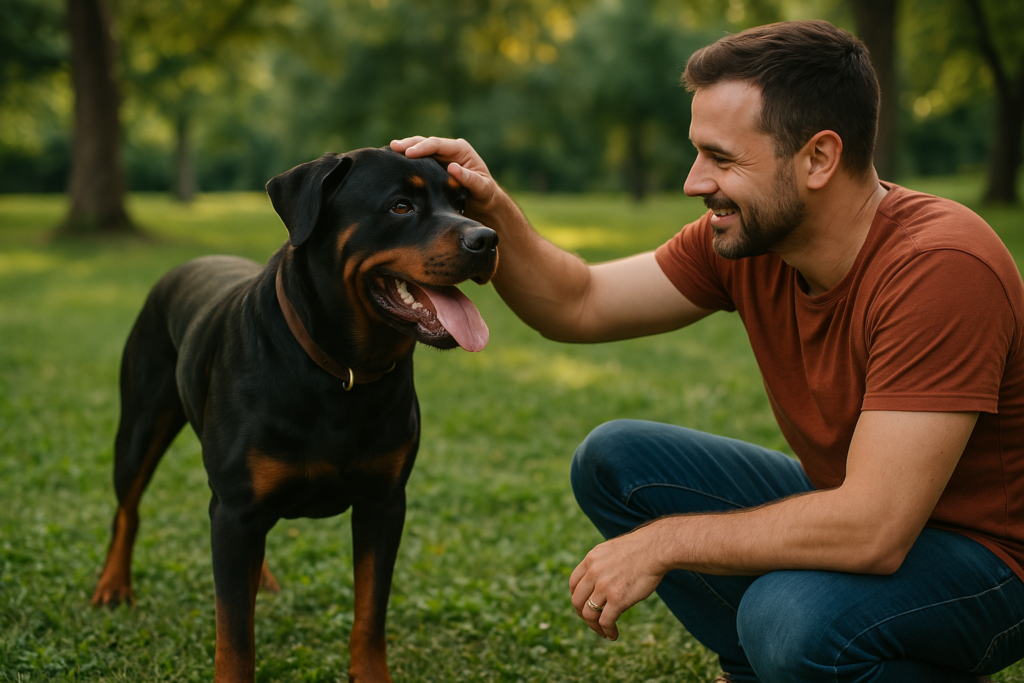
The Rottweiler is known for its loyalty, vigilance, and protective instinct. It is close to its family and can be extremely affectionate, often loving cuddles. Naturally calm and thoughtful, it does not bark for nothing, preferring to observe before acting.
If properly trained and socialized, it is sociable with strangers, although intimidating due to its size. Otherwise, it could develop exaggerated mistrust or defensive aggression. It is not a dog to be placed in just any hands, as it needs a benevolent but firm authority, avoiding any deviation.
Did you know? The name “Rottweiler” comes from the town of Rottweil, in Germany, where these dogs once worked to escort and protect livestock (and the money from sales) from thieves.
Physical and Mental Needs
To remain balanced and avoid boredom, a Rottweiler needs:
- Dynamic walks (2-3 per day), jogging, or active play sessions
- Obedience and work exercises (tracking, defense, etc.)
- Mental stimulation: object search, protection commands, or agility
- Social encounters: learning to tolerate other dogs and varied situations
A sedentary Rottie can quickly become “apathetic” or, conversely, generate hyperactivity if its energy is not channeled.
Health & Genetic Predispositions
The Rottweiler, like many large breeds, presents certain vulnerabilities:
| Problem | Symptoms | Prevention |
|---|---|---|
| Hip or elbow dysplasia | Limping, stiffness, difficulty getting up | Serious breeding, moderate exercise when young, weight control |
| Osteosarcoma | Bone pain, persistent limping | Early screening, veterinary monitoring |
| Heart problems (CM) | Shortness of breath, fainting | Regular cardiac ultrasounds |
Rigorous breeding, combined with proper nutrition and reasonable exercise during growth periods, significantly reduces the risk of these pathologies.
Recommended Diet
The Rottweiler has a hearty appetite, and its growth is rapid as a puppy. Therefore, you should:
- Choose “large breed” kibble rich in quality proteins
- Adjust the ration according to its age and weight (check dosage tables)
- Divide meals (2 times a day, or even 3 for a puppy) to avoid stomach torsion
- Monitor its weight, as overweight worsens dysplasia and joint problems
A well-fed Rottie, without being overfed, will have harmonious musculature and good endurance.
Coat Care / Grooming
With its short and dense coat, the Rottweiler is easy to maintain:
- Weekly brushing to remove dead hair and distribute natural oils
- Occasional bath (every 2-3 months) or when dirty
- Check ears and nails, especially if very active
- Watch out for ticks and fleas, especially if you live in a rural area
A quick brush after each walk can be useful to remove dust or detect possible parasites.
Favorite Activities
- Obedience and training: he loves to learn, especially if it is consistent and motivating
- Canicross or jogging: an excellent way to expend energy as a duo
- Defense sports (ring, RCI): if you have the proper training, he can excel
- Agility (at an appropriate level): despite his size, some Rotties take a liking to it
Ideal for What Type of Owner?
The Rottweiler requires an available owner, with at least some knowledge or willing to train in canine education. He is powerful, protective, and must be supervised to express the best of his qualities (loyalty, affection, courage).
He is not suited for novices who do not have time to devote to him, nor for a sedentary lifestyle. However, if you are ready to share activities, games, and consistent training, you will discover a dog of exemplary loyalty, very close to his family.
Recommended Products
To pamper your Rottweiler:
- “Large breed” kibble: formulated for musculature and joints
- Sturdy harness or collar: a wide collar avoids pressing too much on the neck
- Durable toys: balls, ropes, bite toys to satisfy his powerful jaw
- Parasite protection: ticks, fleas, especially if in a rural environment
Note: a sufficiently strong leash and an ID tag with contact details are also recommended, in case of escape.
FAQ & Anecdotes
Is the Rottweiler classified as a dangerous dog?
In France, it is classified in category 2, which imposes certain obligations (possession permit, muzzle in certain places, etc.). This varies according to the country. It also depends on the individual dog’s education and behavior.
Is it a good family dog?
Yes, if well socialized and trained, the Rottie is adorable with children (under supervision) and very protective of its home. It often shows clinginess and seeks cuddles.
Historical anecdote
The Romans are said to have already used ancestors of the Rottweiler to escort their herds and guard their military camps during their invasions in Germania, thus laying the foundations of the breed.
In short, the Rottweiler is a powerful, calm, and incredibly loyal dog that requires an experienced owner or one willing to invest in providing solid training and exercise. Between its qualities as a guardian and its tenderness for its family, it fulfills those who seek a partner who is both protective, intelligent, and affectionate. Are you ready to welcome this wonderful big-hearted molosser?