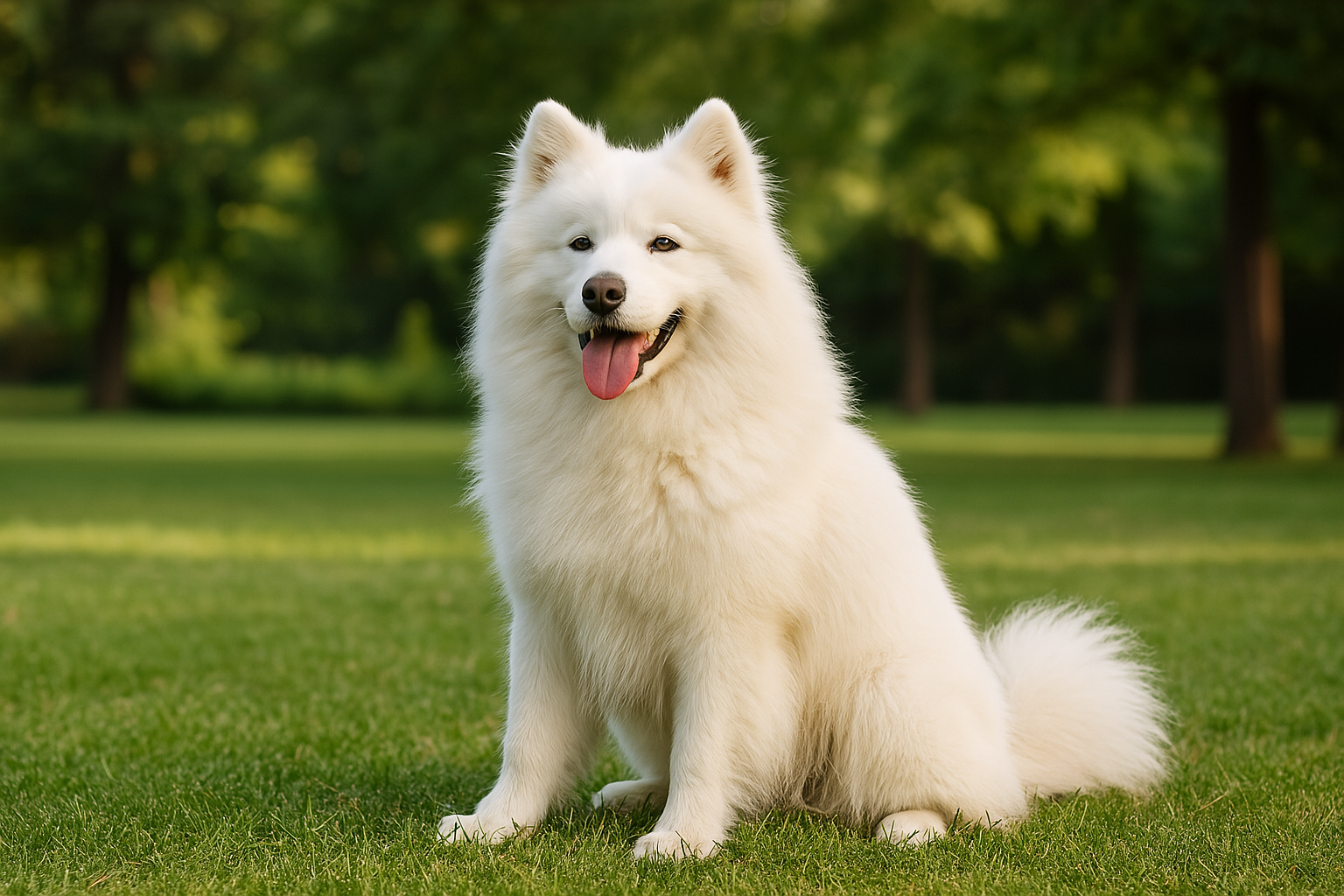
The Samoyed is one of those Nordic dogs that immediately catch the eye: its thick white fur, characteristic “smile,” and playful expression make it a charming companion. Originating from Siberia (among the Samoyed people), it was once used for sled pulling and guarding reindeer herds. Today, it appeals to lovers of gentle, affectionate dogs who enjoy outdoor activities. Let’s dive into the polar world of this “white cloud” on legs!
General Presentation
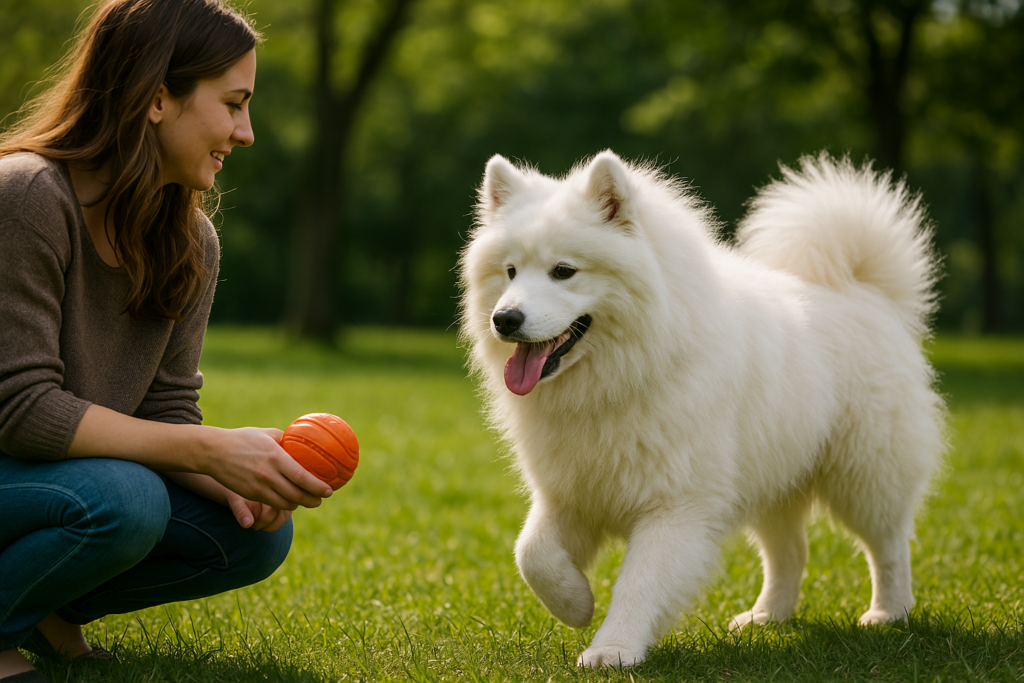
The Samoyed is a medium-sized dog (about 50 to 60 cm at the withers) weighing between 20 and 30 kg, depending on sex and build. Its white, sometimes cream, coat consists of a dense undercoat and a longer outer coat, giving it that much-appreciated fluffy appearance. Its dark sparkling eyes, black muzzle, and small erect ears enhance its “living plush toy” look.
Originating from Arctic regions, it was used by the Samoyed people as a sled dog, herder, and even hunting dog. Its life expectancy generally ranges between 12 and 14 years, or more if given proper care.
Character and Behavior
Renowned for its kindness and sociability, the Samoyed is often described as a “smiling” dog. It loves being in contact with its family, gets along well with children, and is quite friendly with strangers. It can therefore make a poor guard dog, although it may bark to alert of an intruder.
However, be mindful of its independent streak inherited from its Nordic origins. It likes to take initiative and can occasionally be stubborn. Positive training, based on rewards, helps channel its energy and brings out the best of its desire to please.
Did you know? The Samoyed is sometimes nicknamed “Nature’s Smile” or “Smiling Sammy” in English-speaking countries, thanks to the naturally curved expression of its lips.
Physical and Mental Needs
Like many Nordic dogs, the Samoyed has a strong need to expend energy:
- Long daily walks (at least 1 hour), hikes, running, or canicross
- Mental stimulation: obedience, learning tricks, search games
- Family life: it hates prolonged solitude, having lived in a pack
- Suitable environment: too warm a climate can bother it, it prefers coolness
Without sufficient exercise, it can become a barker, dig in the garden, or seek other ways to burn off energy. It’s best to set aside time to entertain it!
Health & Genetic Predispositions
The Samoyed is generally robust, but may have certain sensitivities:
| Problem | Symptoms | Prevention |
|---|---|---|
| Hip dysplasia | Limping, stiffness, difficulty getting up | Moderate exercise during growth, responsible breeding |
| Eye problems (cataract, PRA) | Decreasing vision, cloudy eyes | Ophthalmologic monitoring, genetic testing |
| Diabetes (rare but possible) | Excessive thirst, weight loss, fatigue | Veterinary check-ups, appropriate diet |
It is also important to monitor their diet to avoid overweight, which can worsen joint problems. And obviously, be careful of heat strokes if you live in a hot region.
Recommended Diet
The Samoyed, an active and enduring dog, requires quality kibble rich in protein:
- Premium “active dog” or “sport” kibble, ensuring the right balance of fats/proteins
- Divide into 2 daily meals to avoid stomach torsion (though less common than in some large breeds)
- Ensure fresh water is available at all times, especially in hot climates
- Limit treats that are too fatty or sugary
If you practice pulling sports in winter, adjust their ration accordingly (they burn more calories to warm up and pull).
Coat Care / Grooming
The Samoyed has a thick coat with a dense undercoat that sheds heavily:
- Brush 2 to 3 times a week (or even daily during shedding periods)
- Occasional bath (every 2-3 months) or when very dirty
- Avoid shaving: their coat protects them from cold as well as heat
- Watch areas where mats form (behind the ears, belly, etc.)
During shedding periods (spring and autumn), hairs can literally cover the house. A good vacuum cleaner and a suitable comb/undercoat rake will be your allies to manage this “white storm.”
Favorite Activities
- Pulling: sledding, skijoring, canicross, bikejoring… ideal for a northern dog
- Hiking: they love walking, especially in cool climates
- Search games: sniffing, digging, looking for treats in the snow
- Obedience and tricks: they can learn, even if they have an independent streak
Ideal for What Type of Owner?
The Samoyed is suited for people ready to commit real time, outings, and grooming. If confined in an apartment without exercise or left alone all day, they can become barkers, destructive, or escape artists.
On the other hand, if you love outdoor activities, snow, hiking, and intensive brushing doesn’t scare you, you will love the company of this warm dog, always happy to accompany you on your adventures.
Recommended Products
For a happy and well-equipped Samoyed:
- “Active dog” kibble: to support their energy and muscle mass
- Shedding brush/rake: essential to remove the undercoat during shedding periods
- Pulling harness: canicross, sledding, etc. so they can exercise their northern instincts
- Cooling mat: useful in summer if you live in a hot region
Tip: A good vacuum cleaner (or robot vacuum) can become your best friend, given the amount of hair shed.
FAQ & Anecdotes
Is the Samoyed a good guard dog?
He is rather friendly by nature, so not the best guardian. He can alert by barking, but remains more sociable than wary of strangers.
Does he really shed a lot?
Yes, especially during shedding periods (spring and autumn). Prepare for rigorous maintenance and almost daily brushing to remove the undercoat.
Polar anecdote
Samoyeds sometimes used their dogs as “heated blankets,” because their coat provides excellent insulation. That’s why they love to sleep cuddled up against their owners!
In short, the Samoyed is a cheerful, endearing Nordic dog always ready for adventure, requiring plenty of exercise and regular grooming. If you love snow, sled sports, and long walks, you will adore the bond with this smiling “white wolf.” Ready to embrace polar life with this warm canine cloud? ❄️