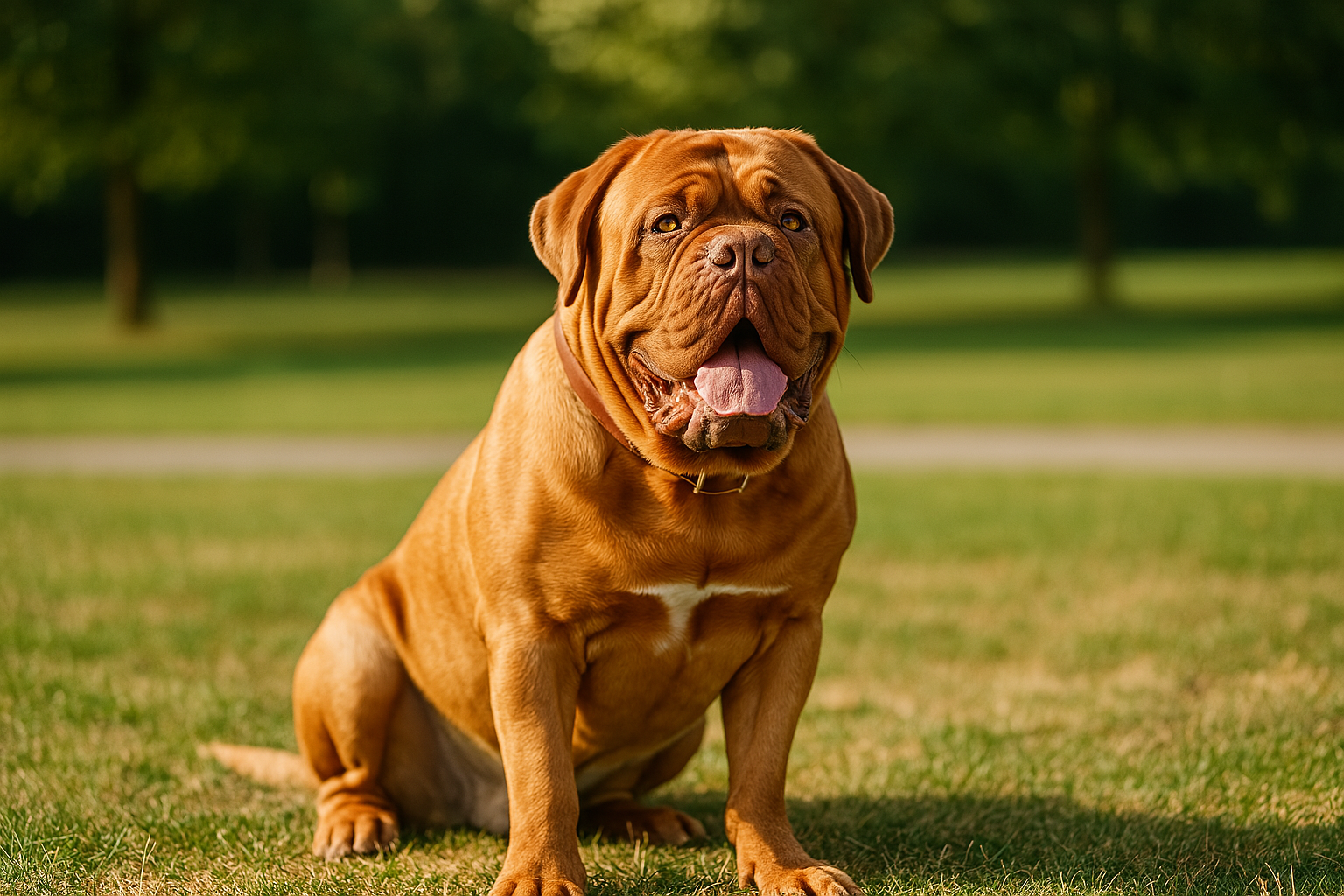

The Dogue de Bordeaux is one of the oldest and most impressive French mastiffs. With its imposing size, wrinkles on the head, and a slightly grumpy look, it might intimidate… but in reality, it is a giant with a tender heart, extremely loyal to its family. Originating from the Southwest of France, this warm giant long served as a guard dog, for defense, and even for fighting in the past. Today, it is appreciated as a protective and gentle companion, for those who know how to meet its needs. Let’s discover this unique “French mastiff”!
General Presentation
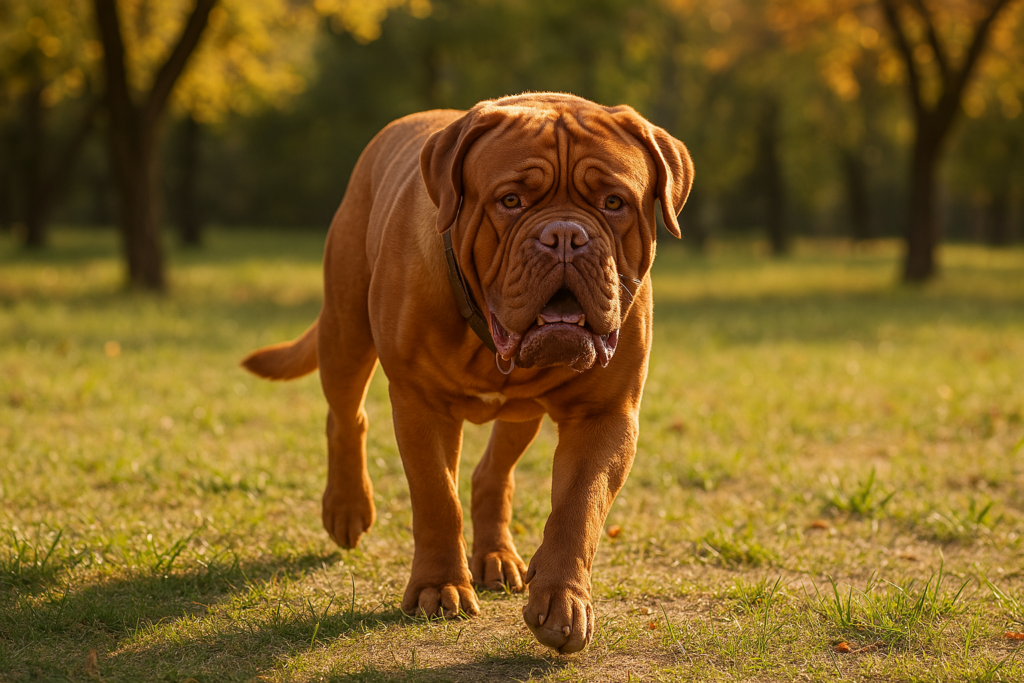
The Dogue de Bordeaux is a large mastiff, measuring between 58 and 68 cm at the withers, with a weight that can reach from 45 to over 60 kg. Its short coat ranges from light fawn to mahogany fawn, always solid, and its muzzle can be masked (black) or not. Its broad head, with multiple wrinkles, and drooping jowls give it a very recognizable appearance.
Historically, it was used for guarding properties, defense, and even for dog fighting in a bygone era. Today, it is appreciated for its quiet strength, loyalty to its home, and role as a good guardian. Its life expectancy is about 8 to 10 years, which remains average for a mastiff.
Character and Behavior
Under its tough-guy appearance, the Dogue de Bordeaux is actually a calm and affectionate dog, attached to its family. It is protective by nature, readily deterring intruders by its mere presence. However, it is rarely aggressive without reason, preferring to observe before taking initiative.
It can be a bit “clumsy” and loves cuddle sessions, even if it takes up a lot of space on the couch. If well socialized, it can get along with other dogs, but a strong personality requires early socialization to avoid rivalry or excessive dominance.
Did you know? The Dogue de Bordeaux is often called “French Mastiff” in English-speaking countries, highlighting its French origins and its relation to mastiff-type molossers.
Physical and Mental Needs
Despite its massive build, the Dogue de Bordeaux is not a high-level sporting dog. However, it enjoys:
- Regular walks (2-3 per day), without excessive jogging or jumping
- A yard or garden to relax and watch the surroundings
- Moderate play sessions: tug-of-war, ball throwing, etc.
- Basic obedience exercises to maintain attentiveness and bonding
It needs to feel its family close. A Dogue de Bordeaux isolated or too often alone can become depressed, bark, or try to escape to seek company.
Health & Genetic Predispositions
Like many large dogs, the Dogue de Bordeaux is prone to certain health issues:
| Problem | Symptoms | Prevention |
|---|---|---|
| Hip or elbow dysplasia | Limping, stiffness, difficulty getting up | Serious breeding, moderate exercise during growth |
| Cardiomyopathy | Shortness of breath, fatigue, fainting | Regular heart check-ups, genetic selection |
| Gastric torsion | Discomfort, swollen belly | Divide meals, avoid exercise immediately after eating |
Slow and controlled growth (no excessive exercise before the end of growth) is recommended to preserve its joints. Also, be careful with high temperatures, as its short muzzle can make breathing more difficult in hot weather.
Recommended Diet
The Dogue de Bordeaux, a large dog, must receive an appropriate diet:
- Premium “large breed” kibble, with a good protein balance
- Divide into 2 daily meals to limit the risk of gastric torsion
- Avoid letting him run or jump within half an hour after eating
- Monitor weight gain, as he can quickly become overweight if too sedentary
Sufficient hydration (water always available) is essential, especially in hot weather.
Coat Care / Grooming
The Dogue de Bordeaux has a short, thick coat, easy to maintain:
- Weekly brushing with a rubber glove or a soft brush
- Occasional bath (every 2-3 months) or if very dirty
- Cleaning of facial folds (if any) to prevent moisture buildup
- Checking ears and nails, especially if little natural wear
Drooping lips can produce some drool, especially when he drinks or drools with pleasure. A small cloth handy is sometimes useful.
Favorite Activities
- Leisurely walks: he enjoys walking at a moderate pace
- Tug games: tug rope, or even a small bite if trained
- Basic obedience: he is not hyperactive but likes to please
- Cuddle times: he loves closeness, even if he weighs heavily on the lap!
Ideal for What Type of Owner?
The Dogue de Bordeaux suits people wanting a protective, calm, and present dog, capable of providing the necessary space (ideally a house with a garden, although he can adapt to a large apartment if taken out often). He requires a minimum of kind firmness in training, without harshness.
He is not made for long intense sports sessions (such as sustained canicross), nor for a too hot environment or an owner absent all day. If he receives the attention, presence, and walks he needs, he is a faithful and balanced companion.
Recommended Products
For a happy Dogue de Bordeaux:
- “Large breed” kibble: supports growth and joints
- Harness or wide collar: a collar that is too narrow would be uncomfortable for this massive neck
- Elevated bowl: to limit strain on his neck during meals and reduce (a little) the risk of torsion
- Durable toys: balls, ropes, because he has a powerful jaw
Tip: a large comfortable basket or an orthopedic mattress can relieve his joints.
FAQ & Anecdotes
Is the Dogue de Bordeaux classified as a dangerous dog?
In France, it is not automatically classified in a category, but it can be if it is not LOF (French Origins Book). Check local legislation. Education and socialization are essential anyway.
Is it a good guard dog?
Yes, it is deterrent by its size and protective instinct. It is not necessarily aggressive but will defend its home if needed. It remains an affectionate dog on a daily basis.
Hollywood anecdote
The film “Turner & Hooch” (1989) featured a Dogue de Bordeaux named Hooch, helping to popularize the breed with the general public.
In summary, the Dogue de Bordeaux is an imposing French molosser, calm and ultra-loyal, requiring consistent education and a suitable environment (space, presence, walks). With attentive care (nutrition, prevention of joint problems), you will discover in him a great protector with a big heart, as deterrent as gentle towards his loved ones. Ready to welcome this canine monument made in France?