
Are you looking for a dog to share your family life? A gentle, playful, and tolerant companion, capable of interacting calmly with children? You are not alone. Many families dream of this unique bond between a child and their dog. But you need to choose the right breed, and above all understand the needs of each. This guide helps you see clearly, with practical advice and a top 10 based on temperament, robustness, and gentleness.
🧠 What criteria for a dog suitable for children?
An “ideal dog for children” doesn’t really exist. But some breeds tick more boxes: patience, emotional stability, low reactivity, physical robustness (so as not to get upset at the slightest bump), and of course, a playful temperament without being hyperactive. We look for a dog that accepts sometimes clumsy gestures, is not possessive of its toys, and enjoys interacting… without feeling threatened. All this, without going to the opposite extreme (a dog that is too apathetic or unresponsive to the environment can be just as problematic). The dog must be sufficiently balanced to respond to children’s liveliness while maintaining a calm and controlled spirit. It is not so much the breed that determines harmony, but education, interactions, and respect for boundaries, both for the dog and the child.
🏆 Top 10 ideal breeds for families

| Breed | Qualities with children | To watch out for |
|---|---|---|
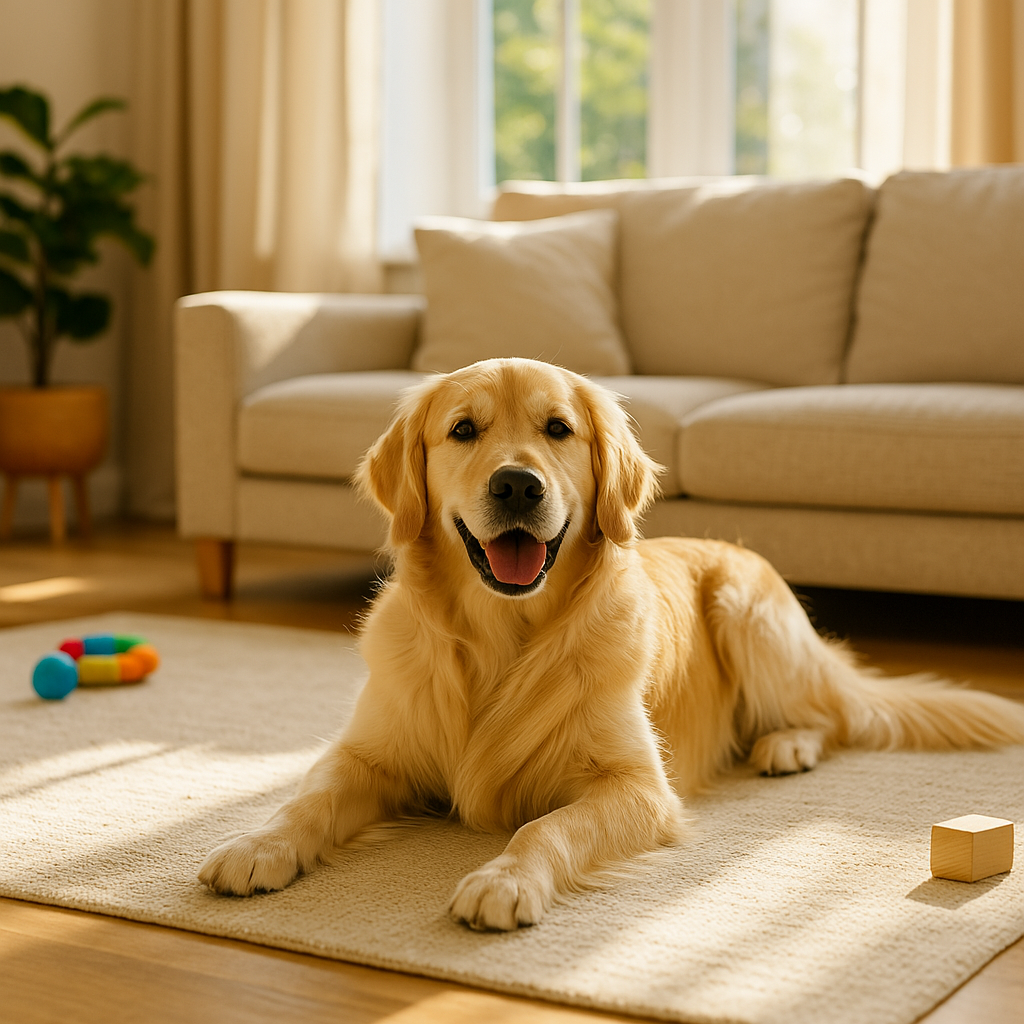
| Golden Retriever | Very gentle, playful, tolerant | Can become clingy if lacking attention |
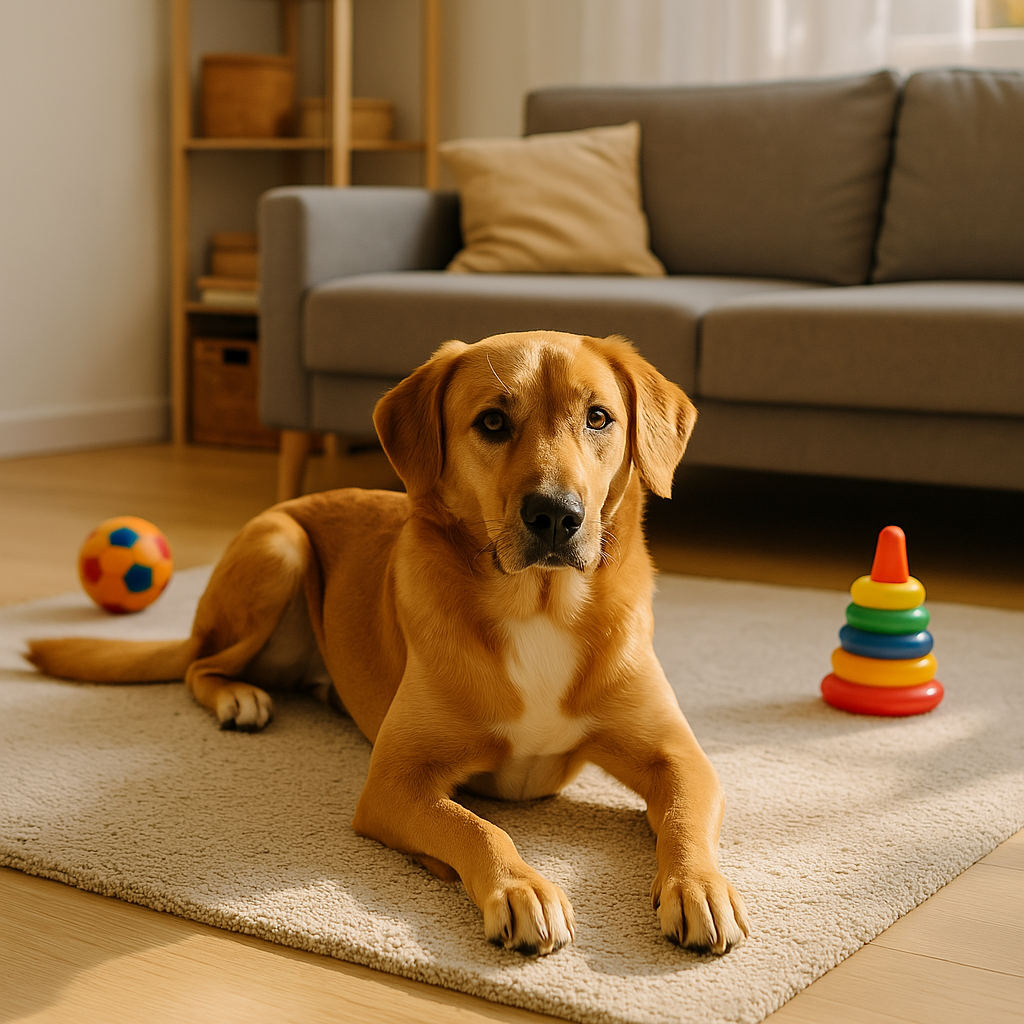
| Labrador | Friendly, enthusiastic, robust | Needs significant daily exercise |
| Australian Shepherd | Protective, very intelligent | Can herd children if bored |
| Cavalier King Charles | Calm, very affectionate | Heart fragility to monitor |
| Bichon Frisé | Playful, suited to small spaces | Can be a barker if bored |
| Boxer | Exuberant but very affectionate | Needs training to avoid being too “rough” |
| Beagle | Curious, robust, friendly with everyone | Stubborn, needs olfactory stimulation |
| Collie | Very gentle, calm, attentive | Requires significant coat maintenance |
| Irish Setter | Energetic but sociable | Can be a bit spirited for very young children |
| Poodle (miniature or medium) | Intelligent, hypoallergenic | Needs regular interaction |
This top 10 is indicative. Every dog is an individual. A poorly socialized Golden can be fearful, a very calm Beagle can also exist. But these breeds are statistically more compatible with a lively family life.
🏡 Tips for successful cohabitation
A dog, even the most patient in the world, is not a stuffed animal. For a beautiful relationship to develop, children must be educated too. Teach them not to disturb a sleeping dog, never to pull its ears, not to squeeze it against them if it doesn’t want to. Create a safe space where the dog can retreat. Involve children in care (filling the bowl, brushing gently…), this strengthens the bond. And above all, always be present: no dog/child interaction should happen without supervision. It is essential to teach children to recognize signs of stress or discomfort in the dog (growling, tense posture, withdrawal). This allows the animal to feel safe, and children to develop mutual respect with their four-legged companion.
🚫 Common mistakes to avoid
- Choosing a “cute” breed without doing research: a husky is not meant to live locked up in an apartment with young children
- Letting children manage alone: an adult must always supervise
- Punishing the dog if it growls: it is often a warning signal, not aggressive behavior
- Overprotecting the dog or the child: this prevents the relationship from developing naturally
❓ FAQ
What is the gentlest breed with children?
The Golden Retriever often tops the list thanks to its tolerance, love of humans, and natural calmness. But every dog has its own personality.
Is a small dog preferable with young children?
Not necessarily. Small dogs are sometimes more fragile, and therefore more likely to react poorly to clumsy handling.
Is a garden necessary to have a dog with children?
No, but time must be devoted to outings, play, and physical/mental exercise. An apartment is not a problem… provided the daily routine is adapted.
🗣️ Testimonial
“Our Labrador grew up with our two daughters. He has always been incredibly patient, even when they were small and clumsy. Today, they read him stories at night… and he stays lying down listening like a big brother.” — Amandine, 37 years old
🔚 Conclusion
A dog can become a wonderful ally for your children: a confidant, a playmate, an emotional pillar. But this requires real work in support and understanding. The choice of breed is a starting point, but it is education, the relationship, and supervision that make all the difference. Choose with your heart… and your head. 🐕👧👦
💞 Dog + child = winning duo for emotional development
A dog can become much more than just a play companion: it is an ally in the child’s emotional development. Through the relationship with a dog, the child develops empathy, learns to decode non-verbal signals, discovers respect for living beings, and experiences responsibility. Moments of tenderness as well as conflicts (the dog refuses to play, withdraws) are opportunities to learn to manage emotions. Numerous studies show that children living with a dog develop superior social skills, better stress management, and a greater ability to concentrate. The dog becomes a mirror of the child’s emotions, helping them better understand their own feelings and those of others.
🐾 Puppy or adult dog: what to choose for a family?
The puppy is often seen as “more malleable”. This is true, it adapts to the environment, grows up with the children. But it also needs a strict educational framework, constant supervision, and… a lot of energy. A puppy jumps, nibbles, sometimes destroys things, wakes up at night. Conversely, an adult dog, especially one from a shelter or foster family, may already have acquired cleanliness and socialization codes. Provided you choose well, an adult can be a calmer choice, especially if you are looking for a companion who is already balanced. It can also adapt more quickly to new habits, family dynamics, and a calmer environment. It all depends on the needs and expectations of the family members.
🔍 What if breed wasn’t the most important factor?
We often talk about the “ideal breed”… but the truth is that the success of living together between a dog and a child depends mainly on education, environment, and the adults’ ability to manage the relationship. A calm dog but poorly stimulated can become reactive. An energetic dog but well understood can thrive with a very active child. The individual temperament, the dog’s past experiences, and the family dynamics matter as much, if not more, than the pedigree. That is why it is essential to take into account the dog’s specific needs, its behavior, and the commitment you are ready to offer. The education and attitude of the owners will have a much stronger impact than the simple “ideal breed.”
In short, choosing a breed can guide you… but it is love, patience, and common sense that write the real story. 🐕❤️👶