| Key Points | Details to Remember |
|---|---|
| 🐉 Origin | Ancient China, companions of emperors |
| 🎩 Appearance | Long coat, lion’s mane, proud bearing |
| 💼 Temperament | Proud, attached to its home, protective |
| 🛁 Care | Daily brushing, eye and fold care |
| ⚕️ Health | Prone to respiratory and eye problems |
| 🏡 Adaptation | Apartment living, needs attention |
| 📅 Life expectancy | 12–15 years with regular monitoring |

Between shadow and light of Chinese imperial history, the Pekingese stands out by its royal appearance and assertive character. More than just a pet, this small dog surrounded the emperor of the Qing dynasty, becoming a symbol of prestige and spiritual connection. Today, its unique charm attracts lovers of compact silhouettes and princely attitudes. Let’s explore together the origins, distinctive traits, and ideal conditions to welcome a worthy representative of this canine heritage.
History and Imperial Origin
The cradle of the Pekingese is located in the Forbidden City, where every animal was considered a messenger between the human world and the celestial empire. Ancient engravings and accounts from Buddhist monks mention dogs with long manes, revered in temples as guardians of sacred secrets. Some historians suggest they may descend from Tibetan dogs, while others mention a cross between Spitz and small dogs from northern Chinese tribes.
“It is said that the mere gaze of a Pekingese was worth more than an army, as it inspired a mix of respect and fear.”
When Western colonization lowered the Forbidden City, these dogs gradually left their royal status to join Victorian Europe, especially after the Second Opium War. British officers brought some specimens back to London, where they caused a sensation in aristocratic salons. Their miniaturized size and sumptuous coat quickly made them precious companions.
Appearance: a small silk coat

Silhouette and proportions
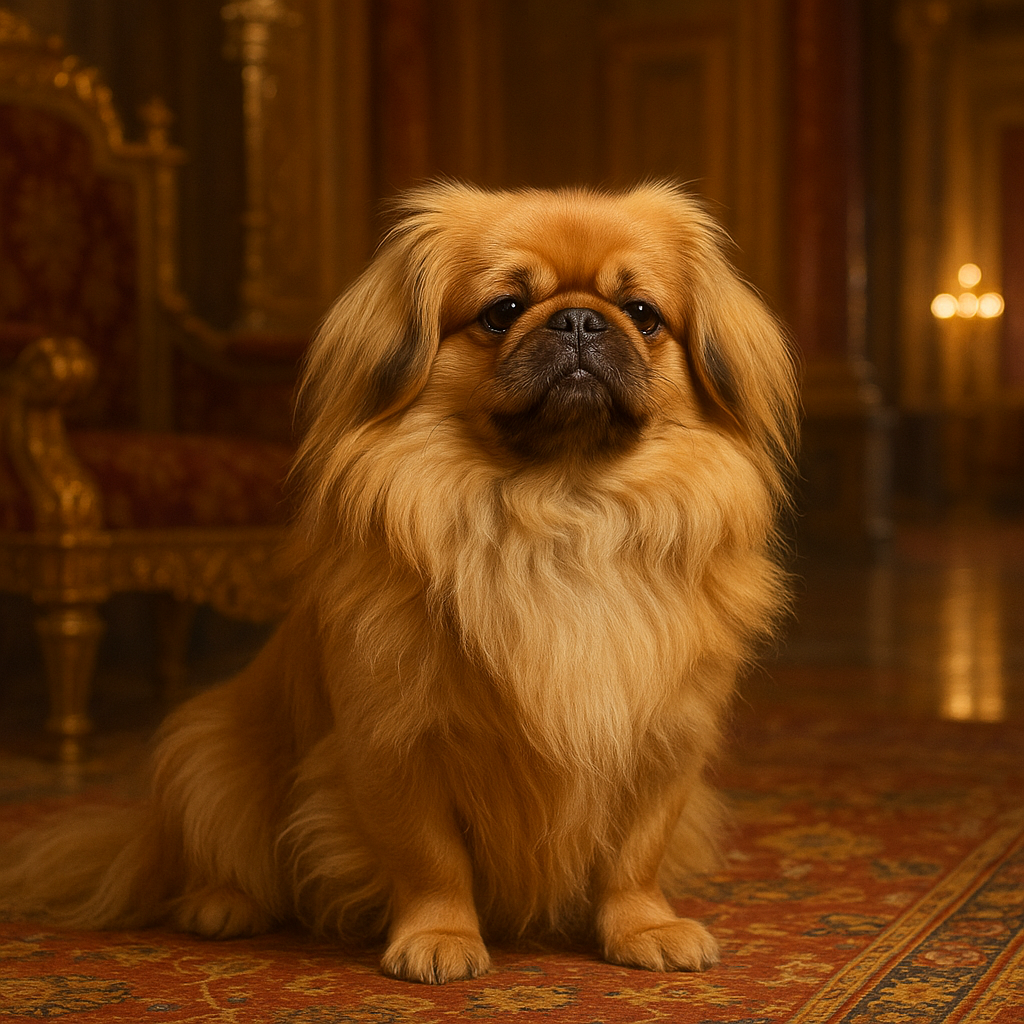
Weighing less than 7 kilos on the scale, the Pekingese has a compact silhouette and low stance. Its head carriage, raised and proud, gives the impression of a miniature lion. The mane circles the neck and extends over the shoulders, like a coat draping the body. Its dark, wide, and expressive eyes punctuate a short, flattened muzzle, typical of the breed.
Coat and Colors
The coat combines softness and density, requiring regular brushing to avoid tangles. Various shades are found: fawn, brindle, black and tan, white and tan. The brindle pattern, with its shades accentuating the dorsal line, is highly sought after. In some dogs, a white edging frames the head, like a touch of celestial brilliance.
Temperament and Regal Character
It is easy to imagine a Pekingese on a silk cushion, so much does it love comfort. However, do not confuse laziness with indifference: this dog remains very vigilant and does not hesitate to bark at an intruder. Its attachment to the family is sincere, even exclusive. Gentleness blends with arrogance, creating this fascinating balance between tenderness and dignity.
- Loyalty: it chooses one or two favorite owners.
- Resilience: it tolerates solitude quite well if it remains limited.
- Defender: it alerts the household at the slightest noise.
- Discretion: it prefers a cozy living room to a too vast space.
Comparison with Other Toy Breeds
More reserved than the Chihuahua and less hyperactive than the miniature Jack Russell, the Pekingese often finds a happy medium. Its haughty appearance contrasts with the liveliness of a Yorkshire, while its sometimes distant character differs from the Cavalier King Charles, who is more prone to continuous displays of affection.
Daily Care
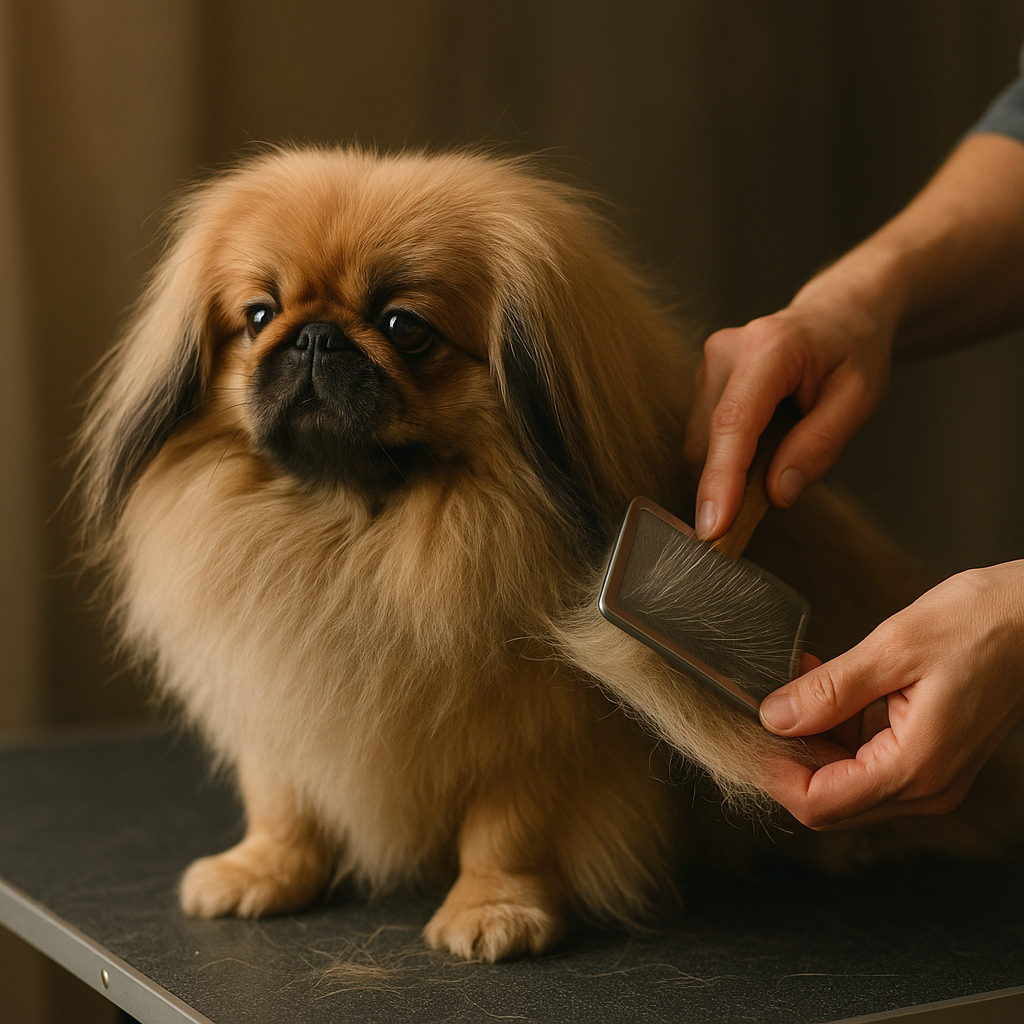
Maintaining this luxurious coat requires a real ritual. Ideally, you should brush your companion every day, paying special attention under the hair to avoid hairballs and keep the skin healthy. Eye and facial fold care are just as essential: a gentle cleaning with a cotton pad soaked in warm water is enough to prevent irritations and infections.
- Cleaning facial folds: daily, with an appropriate product.
- Complete brushing: at least three to five times per week.
- Trimming hair between the paw pads: once or twice a month.
- Ear check: to prevent ear infections.
- Dental hygiene: regular brushing or dental treats.
Health: Vigilance and Regular Monitoring
The brachycephalic structure of the Pekingese leads to respiratory risks: loud snoring, intolerance to heat or exertion. The bulging eyes require increased surveillance. Corneal ulcers or dry eye can appear, especially if debris remains trapped in the folds. A biannual veterinary follow-up, including respiratory and ophthalmological exams, will reduce complications.
| Problem | Frequency | Prevention |
|---|---|---|
| Brachycephalic syndrome | Common | Limit exertion, air conditioning |
| Keratitis | Moderate | Regular eye cleanings |
| Patellar luxation | Occasional | Orthopedic monitoring, moderate jumping |
| Skin infections | Moderate | Ensure folds stay dry |
Adoption: Welcoming a Mini Dignitary
Choosing a serious breeder or a specialized association remains essential. Pekingese puppies must grow up in a clean environment, socialized from their first weeks. You will recognize a quality breeding by the cleanliness of the premises, the availability to answer questions, and the possibility to observe the mother with her litter.
- Always ask for a health check-up: veterinary certificates, genetic tests.
- Plan to purchase soft-bristle brushes and accessories suitable for small sizes.
- Anticipate eye exams, often mandatory for pedigree validation.
- Organize a gradual arrival: a cozy, quiet corner to facilitate adaptation.
FAQ
Is the Pekingese suitable for apartment living?
Yes, its small size and calm temperament adapt perfectly to limited living space. However, it requires playtime and short but regular walks.
At what age does grooming start?
From the puppy’s arrival, get it used to gentle brushing. A few minutes per session is enough to establish a positive, stress-free routine.
What budget should be planned for annual maintenance?
Expect between €400 and €700 per year for quality food, hygiene products, veterinary visits, and eye care advice.
Does the Pekingese bark a lot?
It remains vigilant and may bark during unusual events, but socialization work reduces these behaviors.
How to manage respiratory problems?
Avoid intense exertion, high heat, and maintain an ideal weight. Specialized veterinary follow-up can offer treatments or interventions if necessary.