
| Key Points | Details to Remember |
|---|---|
| 🐾 Origin | Developed in South Carolina for marsh hunting |
| 🟤 Coat | Color uniform chocolate and bronzed shades |
| 🏊 Abilities | Excellent swimmer and water retriever |
| 👪 Character | Affectionate, sociable and good family companion |
| ⚕️ Health | Monitor hips, eyes, and ears; screening recommended |
| 🎯 Use | Versatile: hunting, companionship, and dog sports |

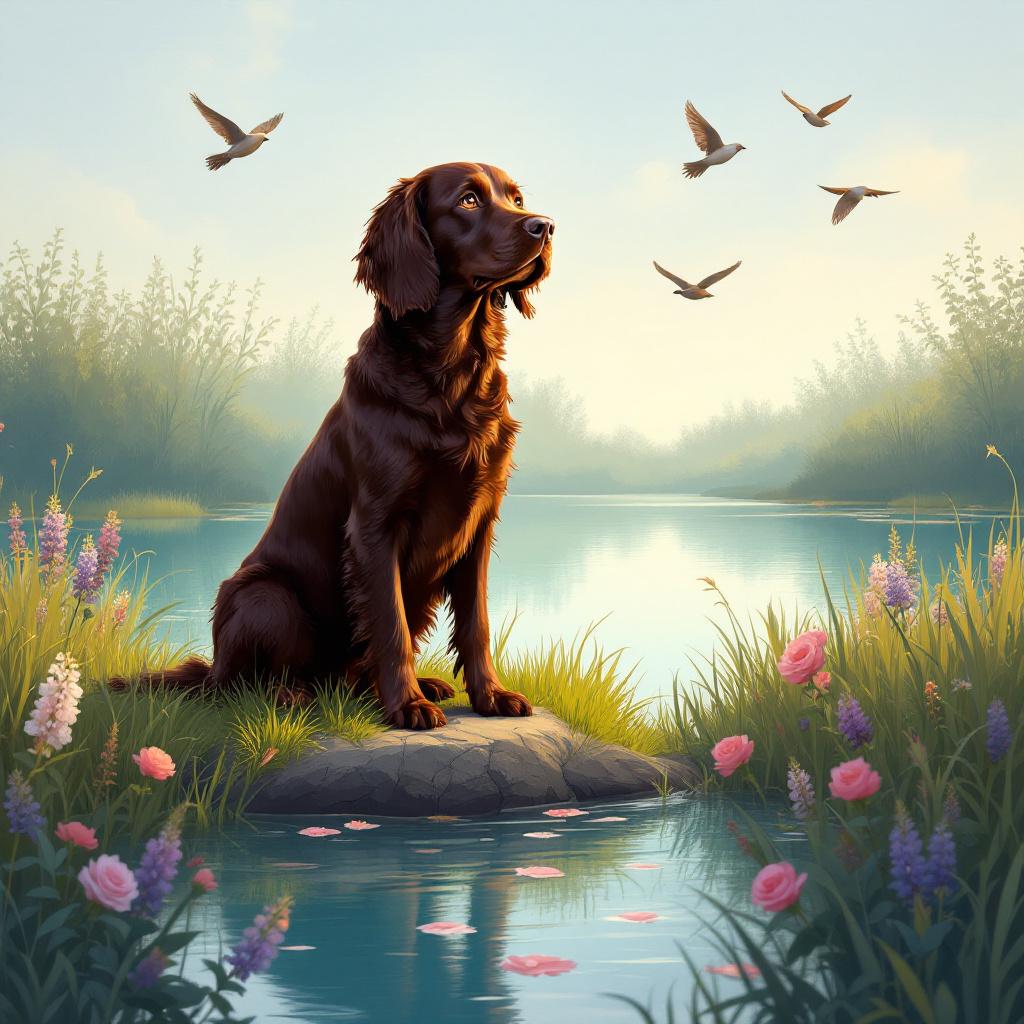
The Boykin Spaniel carries a name that evokes water, marshes, and waterfowl hunting: it is sometimes rightly called “the chocolate marsh retriever.” This compact, brown dog was shaped by practical needs — to find, flush, and retrieve in wet areas — but it has also won homes for its warmth and energy. Here I offer you a complete portrait: history and morphology, temperament, exercise needs, training advice, common health issues, and tips for daily life with this often little-known breed outside the United States.
History and Origin: How a Marsh Dog is Born
The Boykin Spaniel was born in the southeastern United States, in the decades following the Civil War. Local hunters sought a dog capable of working in wet conditions, slipping through dense vegetation, and retrieving birds over long distances. By crossing spaniels and other local lines, breeders sought a compact pointing and retrieving dog, clever and resilient. The result was a breed adapted to marshes and small game, then also adopted as a family dog. Official recognition by kennel clubs, notably the AKC, came much later, when the breed crossed the borders of its region of origin.
Appearance and Standards: Silhouette, Coat, and Particularities

General Morphology
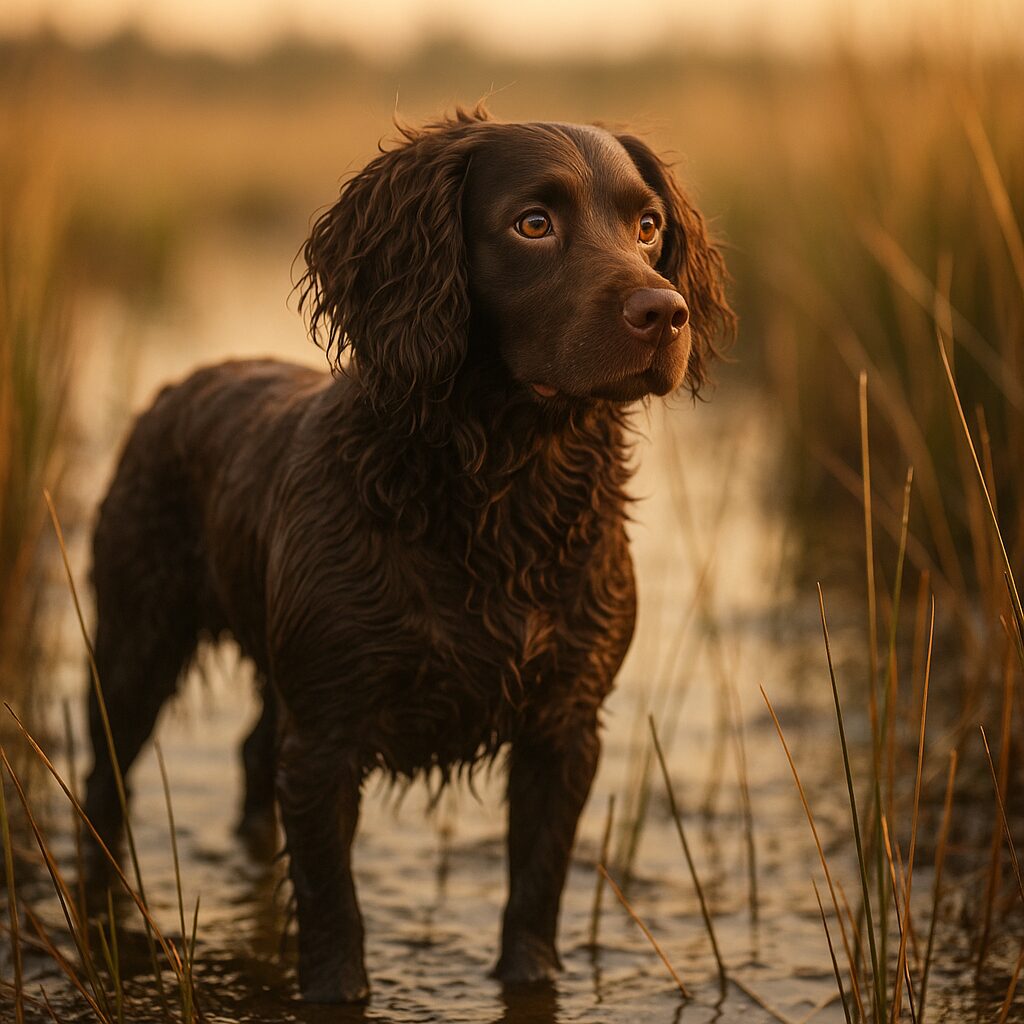
The Boykin is medium-sized, generally heavier than tall, with a robust but elegant bone structure. Its silhouette suggests endurance rather than pure speed: a solid trunk, well-muscled limbs, and a chest broad enough to endure long outings in cold water. Drooping ears and expressive eyes reinforce its affectionate character.
Coat and Color
The dominant color is a warm brown, from deep chocolate tones to lighter shades leaning toward bronze. Some variations exist, but the palette remains in brown tones; the coat may be slightly wavy, water-resistant, and sufficient to protect the dog in brush. The hair around the legs and ears is often denser, forming moderate fringes.
Temperament: Why It Is Appreciated in Family and Work
The Boykin combines a working energy and a marked affection for humans. It is naturally sociable, rarely aggressive, and enjoys the presence of its family. At work, it shows tenacity and focus; at home, it seeks contact and enjoys learning. This mix makes it a versatile dog, but also demanding — lack of exercise or boredom can lead to destructive behaviors. The key is to offer a balance between physical and mental stimulation.
Compatibility with Children and Other Animals
Those who live with a Boykin often describe great patience with children: he enjoys participating in games, following family routines, and tolerates clumsiness if education in respect is present. With other dogs, he is generally cooperative, especially if he has been socialized early. However, hunting instincts can manifest when faced with small pets not accustomed to dogs.
Education and Training: Effective Methods
The Boykin responds well to positive reinforcement. Food rewards, toys, and vocal praise work better than correction. His willingness to please allows him to quickly learn basic commands and retrieving behaviors, but consistency and patience are required: short, varied, and regularly spaced sessions yield the best results.
Retrieving Work and Water Stimuli
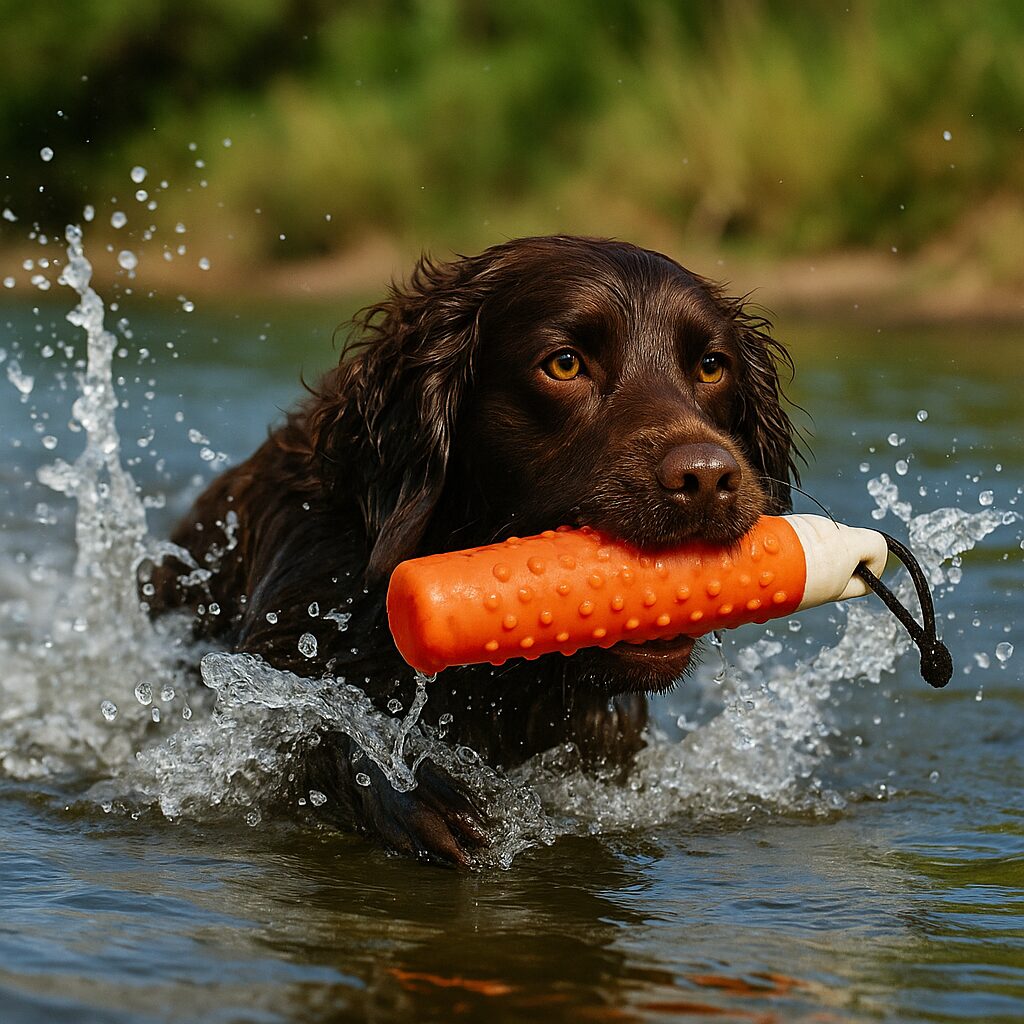
If you want to harness his retriever talents, incorporate retrieving exercises in aquatic environments early on: throwing floating objects, recall with reward, directed search. Water games satisfy his natural need and build confidence. Be sure to progress gradually if the puppy is not immediately comfortable in the water; some prefer gentle learning with a solid support point.
Socialization and Energy Management
Begin socialization from the first weeks: noises, people, dogs, cars. Expose the puppy to varied situations to avoid fear in adulthood. Regarding energy, plan at least one hour per day of intense activity (running, swimming, retrieving games) and additional cognitive moments (tracking games, memory exercises).
Health and Prevention: Monitoring and Screening
The Boykin is generally robust, but some predispositions exist. Drooping ears favor infections; repeated exposure to water requires regular checks. Recommended examinations include orthopedic assessments (screening for dysplasia), eye exams to detect hereditary conditions, and regular veterinary follow-up for cardiology and shoulder if necessary.
Common Conditions
- Ear problems related to moisture: frequent cleaning and monitoring.
- Hip dysplasia and patellar luxation: screening before breeding.
- Hereditary eye conditions: periodic ophthalmological tests.
- Overweight if activity decreases: adjust diet to exercise level.
Practical Veterinary Advice
Before any breeding, request health certificates of the breeders (hips, eyes). Vaccinations, antiparasitics, and good dental hygiene complete prevention. If you live in a cold region, control immersion time in icy water; conversely, in hot areas, monitor dehydration and external parasites.
Daily Life: Housing, Feeding, and Grooming
Housing and Adaptation
The Boykin adapts to the home as long as he gets enough exercise. A small garden allows for freedom breaks, but lack of activity makes him anxious. In an apartment, the key is to multiply outings and organize playful sessions to compensate for the limited space.
Feeding
Feed him according to his activity level: a quality kibble factory with a good proportion of protein supports his energy expenditure. Periods of hunting or intense exercise require an adapted caloric intake. Avoid excessive rations: a functional silhouette is the best guarantee of long-term health.
Grooming
The Boykin needs regular but low-maintenance care: weekly brushing, special attention to fringes and ears, occasional baths after muddy outings. Clipping is minimal; let the coat provide natural protection.
Who is this dog for? Possible scenarios and pitfalls
The Boykin suits active households: hunters, sporty couples, families who enjoy outdoor activities. He excels when he has a mission or structured activities. On the other hand, he is not ideal for a sedentary person or someone absent for long hours. Problematic behaviors — chewing, barking — often appear when activity is lacking or the dog suffers from mental boredom.
Quick comparison with some related breeds
| Criterion | Boykin | Labrador | English Springer |
|---|---|---|---|
| Size | medium-compact | larger | variable, light |
| Energy | high | high | high |
| Activity preference | water & marsh | water & retrieve | hunting on land |
| Maintenance | moderate | low to moderate | moderate to high |
Practical advice for adoption and responsible breeding
Choose a breeder who performs health screenings and can show the parents. Ask to see the environment where the puppies live, observe their behavior: a balanced puppy explores, plays, and returns to humans. If you opt for an adult dog, check his activity level and history. Finally, consider the annual costs: quality food, veterinary fees, water equipment, and time dedicated to exercise.
FAQ
What is the average age of a Boykin?
The lifespan is generally around 10 to 13 years, variable depending on genetics, exercise, and quality of care provided.
Is it a good dog for apartment living?
Possible if you compensate with intense daily activities: long walks, swimming, retrieving games, and mental stimulation. Without this, the Boykin will suffer from confinement.
Does he shed a lot?
Shedding exists but is not excessive. Weekly brushing is sufficient to limit hair in the house and keep the coat in order.
Is the Boykin easy to train for hunting?
Yes, he quickly learns specific retrieving and stop commands, especially with progressive and consistent training focused on reward.
Practical summary: checklist for future owners
- Check health tests of breeders (hips, eyes).
- Plan at least 1 to 2 hours of daily exercise.
- Establish an ear cleaning routine after swimming.
- Schedule water play sessions to exploit his retrieving instinct.
- Choose a transparent breeder who socializes puppies early.