The Malinois, this ball of energy with a piercing gaze, captivates with its intelligence and loyalty. But behind its legendary robustness lie vulnerabilities specific to the breed. As an owner, understanding your canine companion’s health issues is not optional – it is a vital commitment. This article deciphers recurring medical problems, from dysplasias to skin allergies, and provides you with veterinary strategies to anticipate rather than cure.
🦴 Hip/elbow dysplasia affects 15-20% of Malinois: radiological screening is essential before 2 years old. The OFA study shows that working lines are less affected than show lines.
🌿 Atopic dermatitis concerns 1 in 4 dogs: controlling the environment (mites, pollens) and adapting hypoallergenic diet reduce 70% of flare-ups according to the ESVD.
💉 Vaccination protocol: annual booster mandatory against distemper and parvovirus, responsible for 30% of juvenile mortality in breeding.
👁️ Progressive retinal atrophy: CERF genetic test recommended from adoption – this degenerative disease leads to total blindness in 2 years without early intervention.
Common Health Problems in the Malinois
The intensive selection of this breed for police or military work has accentuated certain genetic predispositions. Contrary to popular belief, their endurance masks anatomical and immune weaknesses that need to be known.
Hip and Elbow Dysplasia
This hereditary joint malformation causes limping and early arthritis. Scans reveal that 65% of cases appear before 18 months. Warning signs? Reluctance to jump or climb stairs, or a “rabbit-like” gait.

Prevention is based on three pillars:
- Avoid intense exercise before 12 months (jumps, running on hard surfaces)
- Maintain an optimal weight (overweight = +40% joint pressure)
- Supplement with chondroitin/glucosamine from growth onwards
The study conducted by the Orthopedic Foundation for Animals shows that rigorous breeding programs reduce incidence from 22% to 7% in three generations.
Dermatitis and Skin Allergies
Their short coat hides hypersensitive skin. Compulsive itching (often between the toes or on the ears) generally signals:
| Cause | Symptoms | Solution |
|---|---|---|
| Environmental allergies | Licking paws, recurring ear infections | Desensitizing immunotherapy |
| Bacterial pyoderma | Pustules, localized hair loss | Targeted antibiotic therapy + medicated shampoos |
| Demodicosis | Bald patches in “woolly clumps” | Long-term antiparasitic treatments |
“80% of Malinois dermatitis cases have a dietary component. Transitioning to single-protein kibble (duck or kangaroo) significantly improves skin condition” – Dr. Lefèvre, veterinary dermatologist.
Hereditary Eye Diseases
Progressive retinal atrophy (PRA) is a silent killer. Without apparent pain, your dog first loses night vision before total blindness. DNA testing allows screening from 8 weeks. Another threat: juvenile cataracts, visible to the naked eye by a milky pupil.
Effective Prevention Strategies
Protecting your Malinois requires a proactive approach well before symptoms appear. Informed owners save up to 70% on their veterinary bills thanks to these measures.
Mandatory Vaccination Schedule
Boosters are not optional. The core vaccination includes:
- Parvovirus: responsible for fatal intestinal hemorrhages within 48 hours
- Distemper: 50% mortality rate in unprotected puppies
- Rubarth’s hepatitis: less common but rapid onset
Add leptospirosis if your dog hunts or swims in ponds – this bacteria kills more than road accidents according to the animal WHO.
Veterinary Visits: Ideal Frequency
Biannual check-ups are optimal for this breed. During the consultation, emphasize:
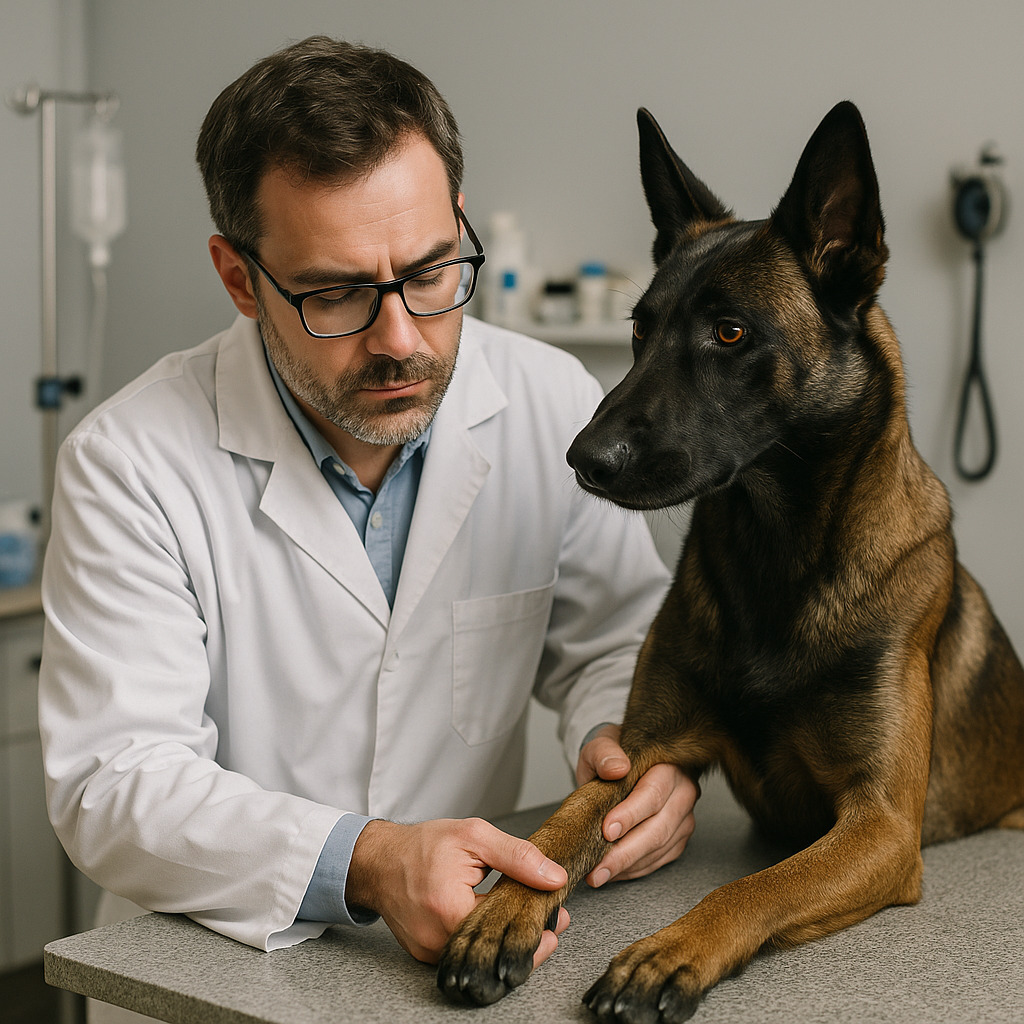
1. Thorough palpation of the joints
2. Otoscopic examination (their upright ears catch debris and parasites)
3. Dental check (tartar causes heart infections)
Between two visits, weigh your dog monthly: a weight gain of 500g may indicate hypothyroidism.
Recommended genetic screenings
Investing in DNA tests prevents future tragedies. Laboratories like Antagene offer comprehensive panels including:
- The MDR1 mutation (sensitivity to dewormers)
- Degenerative myelopathy (canine equivalent of ALS)
- Arrhythmogenic ventricular dysplasia (sudden death)
These results guide the veterinarian in their prescriptions and alert breeders to improve bloodlines.
Daily care for optimal health
The record longevity of 14 years reached by some Malinois is no accident. It results from a rigorous lifestyle adapted to their unique metabolism.
Feeding: traps to avoid
Their sensitive stomach poorly tolerates sudden changes. Prefer:
- Two split meals rather than one large meal (prevention of gastric torsion)
- High-energy kibble (>30% protein) to support their activity
- Omega-3 supplements (salmon) to lubricate their stressed joints
Beware of “grain-free”: an FDA study links them to dilated cardiomyopathies in active breeds.
Coat maintenance: professional technique
Their double coat requires weekly brushing with a steel slicker brush. During seasonal shedding (spring/fall), increase to 3 sessions of 15 minutes to:
- Avoid mats of undercoat that suffocate the skin
- Stimulate blood microcirculation
- Distribute the naturally protective sebum
Baths? Maximum every 2 months with a pH-neutral shampoo. Their skin produces a lipid film that excessive washing destroys.
Smart exercise against stress
An under-stimulated Malinois develops obsessive disorders (tail chasing, excessive licking). Balance relies on:
| Activity | Frequency | Health benefit |
|---|---|---|
| Cardio exercise (running) | 45 min/day | Prevents obesity and arthritis |
| Cognitive games (flirt pole) | 20 min/day | Reduces anxiety by 60% |
| Bite training | 2x/week | Strengthens neck and jaw |
“Their need to work is visceral. Without a mission, their immune system weakens – it’s physiological” – Canine trainer specializing in shepherd breeds.
Emergency signs requiring immediate consultation
Some seemingly trivial symptoms hide serious pathologies. React without delay if you observe:
Abnormal behaviors
An apathetic Malinois is a major warning sign. Also:
- Sudden refusal to jump or climb on the couch
- Unusual aggression when touching a specific area
- Excessive panting without effort (pain or fever)
Critical physical symptoms
These signs justify a visit to veterinary emergency:
- Pale or bluish gums (anemia or shock)
- Repeated projectile vomiting (risk of gastric torsion)
- Dark “cola-colored” urine (leptospirosis or piroplasmosis)
Always keep the animal poison control center number handy – their curiosity leads them to ingest toxic products (antifreeze, rodenticides).
FAQ: Malinois Health
At what age does dysplasia appear in the Malinois?
The first symptoms often appear between 6 and 18 months. But early radiological signs can be detected as early as 4 months by a veterinary orthopedic specialist.
What annual budget should be planned for veterinary care?
Count on €600-800/year including vaccines, parasite prevention, and consultation. Add €150 for health insurance covering hereditary pathologies – essential for this breed.
My Malinois scratches often, is it serious?
If scratching exceeds 5 times/day or causes lesions, consult. A skin allergy test (about €120) will identify environmental or food triggers.
Can gastric torsion be prevented?
Yes: avoid exercise 1 hour before/after meals, split food into 2 portions, use an anti-gulp bowl. Preventive gastropexy (stomach fixation) reduces risk by 95%.
How to choose a serious breeder for a healthy puppy?
Demand hip x-rays (certified OFA or FCI), annual eye tests of the parents, and genetic results. A good breeder will show you their breeding dogs and their living conditions.