
| Key points | Details to remember |
|---|---|
| 🐶 Definition and origin | The Miniature Schnauzer is a dwarf variety of the Schnauzer, the result of German selection in the 19th century for rodent hunting. |
| 🧠 Intelligence and vigilance | Its expressive gaze masks a lively and protective temperament: a true little mustached guardian. |
| 🎓 Education and learning | Responds perfectly to training based on positive reinforcement, consistency, and variety of exercises. |
| 🛁 Grooming and appearance | Regular brushing and careful trimming preserve its harsh coat and emblematic mustaches. |
| 🏃 Physical activity | Needs 20 to 40 minutes of daily activity to stay balanced and avoid boredom. |
| ❤️ Health and longevity | Life expectancy: 12–15 years. Watch for pancreatitis and eye conditions. |
| 🍽️ Feeding and nutrition | Favor kibble rich in proteins and fibers, adapted to its weight and energy level. |
The Miniature Schnauzer fascinates with its neat appearance and that mischievous look typical of its bushy mustache. One might think it is a living toy, so much its modest size contrasts with its strong character presence. A true sentinel, it watches over its home attentively, without falling into excessive distrust. You will be charmed by its intelligence and adaptability: from city apartments to countryside walks, it always finds its place, provided its exercise and affection needs are met.
Origins and History of the Miniature Schnauzer
In the mid-19th century, German breeders decided to miniaturize the standard Schnauzer to create a farm dog capable of hunting rats and mice. By crossing Schnauzers with dwarf breeds, they obtained a lighter subject, quick to slip into attics and stables. Quickly, this “dwarf variant” won over households despite its primary utilitarian function. Its name, Schnauzer, comes from the German word “Schnauze,” meaning muzzle – a nod to the mustache so characteristic of its elegant silhouette.
Far from being confined to the role of pest hunter, it shone at dog shows from the end of the 19th century. Collectors were then eyeing its sturdy coat and assertive personality. Today, the Miniature Schnauzer remains a prized companion dog for its mix of liveliness, loyalty, and presence. In Europe and America, it has even influenced the standards of neighboring breeds, demonstrating that its small size does not diminish its great adaptability.
Character and Temperament
A Vigilant Guardian’s Nose
Make no mistake: beneath its silky fur hides a true sentinel. The Miniature Schnauzer will alert you at the slightest unusual noise, without resorting to aggressiveness. It has a strong voice, readily barking to warn, then knows how to calm down once the situation is assessed. This behavior makes it a valuable ally for city dwellers who want a discreet but effective alert. However, it will be necessary to temper its reactions: targeted training will help it distinguish a real intruder from a simple visiting mail carrier.
Socialization and Family Bond
Friendly and curious, this dog forms a strong bond with each member of the household. One might think it chooses a favorite, but in reality, it enjoys a game in duo with children as much as a tender session with the elders. Originally a pack dog, it naturally feels integrated into its human family. Boredom and loneliness are its worst enemies: leave it a canine companion or invest time in activities to preserve its emotional balance.
Education and Socialization
Learning Methods and Tips
The Miniature Schnauzer learns quickly, provided it is given a consistent framework. Training sessions should remain short (10 to 15 minutes) to avoid boredom. Varying exercises – heel walking, sit, recall – maintains its attention and stimulates its intellect. You can introduce tasty rewards (special treats) or playful ones (ball games) to positively reinforce each success. The key is not to yield to an overly authoritative tone, as this dog values mutual trust and responds better when it understands the meaning of each command.
Avoiding Boredom and Frustration
Lack of stimulation often leads to rodent-like behavior… but this time, inside your home. Chewing and excessive barking indicate an excess of energy. To channel it, vary exploration supports: improvised agility courses in the garden, toys to hide for tracking games, or even a few frisbee rounds outdoors. The idea is to engage its nose, liveliness, and playful spirit all at once. You will see, when it has a task, it truly flourishes.
Maintenance and Routine Care
Grooming and Breed Cut
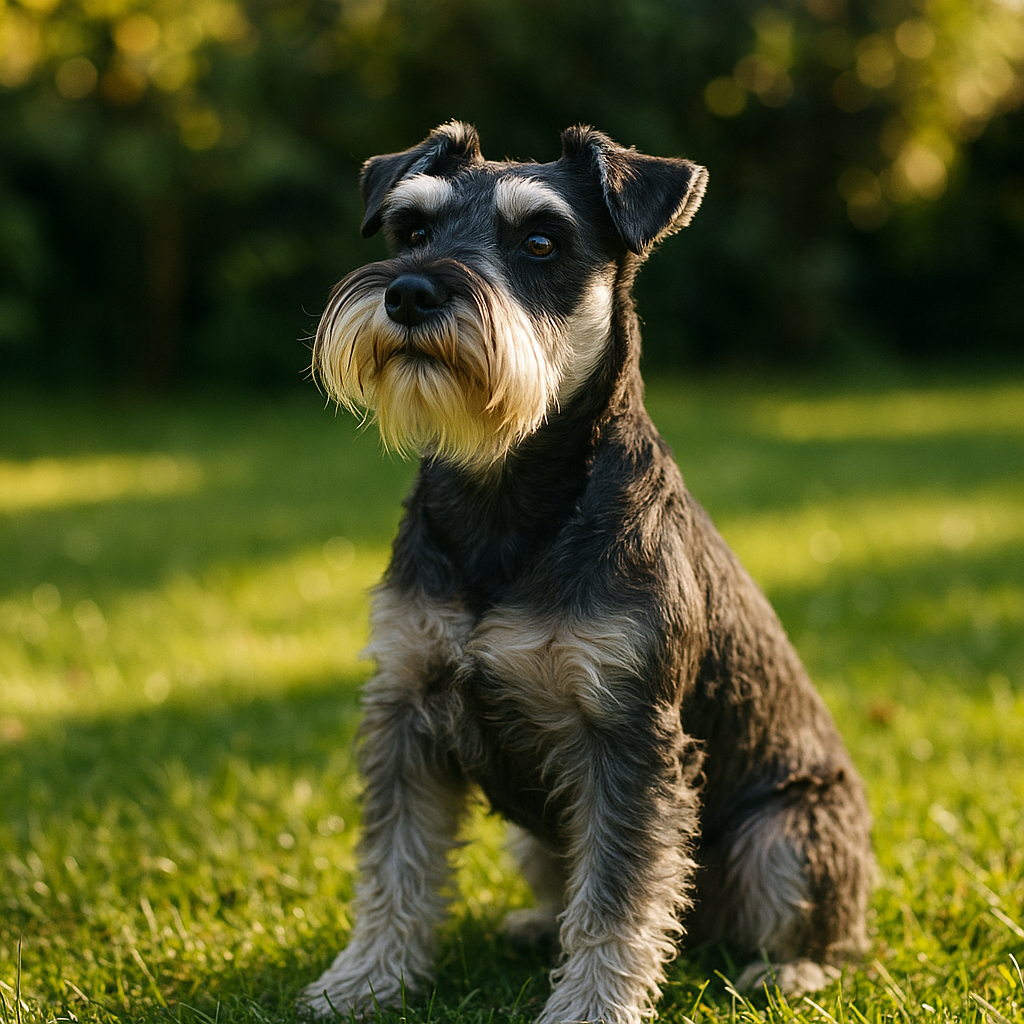
The Miniature Schnauzer’s coat hardly sheds, but it requires regular maintenance to preserve its hard and compact appearance. Weekly brushing is sufficient, complemented by a trim every two to three months if you aim for the breed’s aesthetic. The famous bushy eyebrows and beard require a bit of patience: gently detach the hairs, untangle underneath, and trim according to the contours of the muzzle. Also watch the ears: a light cleaning prevents infections, especially if he likes to splash around in wet grass.
Health and Nutrition
While this dog offers good robustness, certain predispositions deserve your vigilance. Pancreatitis, often linked to a diet that is too fatty, can occur without an adapted diet. Therefore, favor high-quality commercial food or a balanced homemade diet, in agreement with your veterinarian. The eyes, due to their prominent size, are also sensitive: rinse them gently after dusty walks. Finally, do not underestimate regular check-ups, as early screening always facilitates care.
Physical Activity and Mental Stimulation
Suitable Canine Sports
It is not uncommon to see Miniature Schnauzers in agility or obedience rally. Their size makes them particularly agile, with a low center of gravity that guarantees good stability. If you want to introduce them to these activities, start with small hurdles and gradually increase the challenge. A session supervised by a dog club will offer a safe environment and the opportunity to interact with other owners, which also benefits your companion’s socialization.
Intelligence Games and Scent Challenges
Originally, these dogs hunted rodents thanks to their keen sense of smell. You can exploit this ability by hiding treats in interactive toys or around the house. Tracking games stimulate their natural instinct and provide beneficial mental exercise. By varying textures and increasing complexity, you maintain their motivation over the long term. Result: a happy dog, healthily tired, and less prone to nuisance behaviors.
FAQ about the Miniature Schnauzer
- How often should a Miniature Schnauzer be groomed? For routine maintenance, weekly brushing and a professional trim every two to three months are sufficient.
- Is it suitable for families with children? Yes, it is an affectionate and patient companion, provided the younger ones are taught to respect it.
- How much daily exercise does it need? At least 20 minutes of active walking, complemented by stimulating play.
- What health issues should be monitored? Mainly pancreatitis and eye conditions; regular veterinary follow-up prevents complications.
- What is the price of a Miniature Schnauzer puppy? Depending on pedigree and breeder, expect between €1,000 and €1,800 for a quality specimen.