| Key Points | Details to Remember |
|---|---|
| 🐕 Breed | Name and origin of the English Pointer |
| 🎯 Role | Pointing dog and hunting companion |
| 💪 Temperament | Energetic, social, and determined |
| 🏋️♂️ Needs | Daily exercise and mental stimulation |
| 🧴 Maintenance | Moderate grooming and regular health monitoring |
| ⚖️ Adaptation | Family or countryside life, provided it is stimulated |
The English Pointer, sometimes called the “stop sprinter,” fascinates with its rhythmic elegance and infallible hunting nose. Its slender silhouette, combined with a temperament blending spiritedness and docility, makes it an essential partner in driven hunts. However, owning such a four-legged athlete requires a subtle balance between sustained physical activity, firm training, and moments of bonding. This article unpacks its origins, hunting skills, character, and offers concrete tips for living harmoniously with this game enthusiast.
Origins and Evolution of the Breed
In the 18th century in Great Britain, breeders sought to combine speed and the ability to mark a stop in front of game. They crossed hounds, notably Greyhounds and other sighthounds, with continental retrieving dogs. The goal? To obtain a dog capable of spotting game both quickly and with a static posture that avoids scaring the prey. Quickly, the Pointer stood out for its airy gait and pointed technique, inspiring many enthusiasts across Europe since then.
From the Hunting Field to Dog Shows
While its primary destiny remains hunting, the Pointer also conquered dog shows. At the end of the 19th century, dedicated competitions highlighted its ideal conformation: straight back, deep chest, sturdy forelimbs. Judges evaluated not only its appearance but also its “tempo,” that distinctive way of covering ground with a regular stride. Thus, the Pointer established itself as an aesthetic and functional reference.
Physical Characteristics and Temperament
It takes just a brief glance to recognize a Pointer: its sculpted head, expressive eyes, saber tail carriage, and tricolor or black and white coat. Muscles are defined beneath the fine skin, reflecting contained strength and remarkable endurance.
A bipolar temperament?
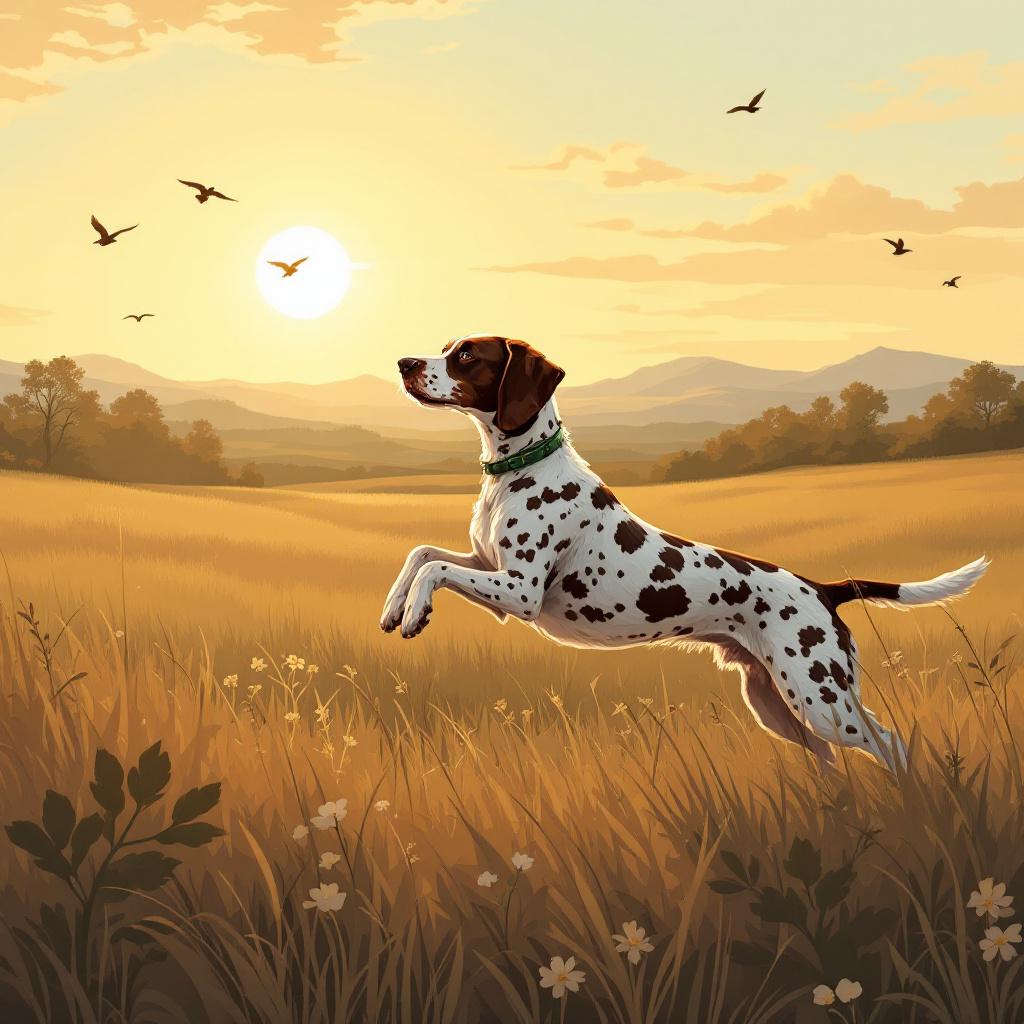
At first glance, the Pointer always seems alert, ready to leap. In reality, it is a balance between energy and gentleness. When introduced early to family life, it shows affection, even cuddly, towards children. But as soon as it spots a bird, its gaze freezes, its posture stiffens, and it enters its pointer mission. This sudden switch requires patient training, based on reward and consistency, so that it obeys the recall or release command.
The Pointer in the hunting field
Its reputation as a pointing dog comes from its ability to spot prey and then freeze in an imperative posture, a clear signal for the hunter. Birds — pheasants, partridges, or ducks — then become more accessible.
Adapted hunting techniques
- Walking in a line: the dog stays close to the hunter, methodically sweeping the cover.
- Reverse hunting on horseback: the dog precedes the hunter, flushes out and points, before the weapon disposes of the game.
- Water hunting: some dogs tolerate immersion to retrieve shot birds, although they are not true water dogs.
Each method requires adapted training and targeted positive reinforcement. Sessions in varied terrain (brush, open areas, wetlands) allow the Pointer to develop flexibility and confidence.
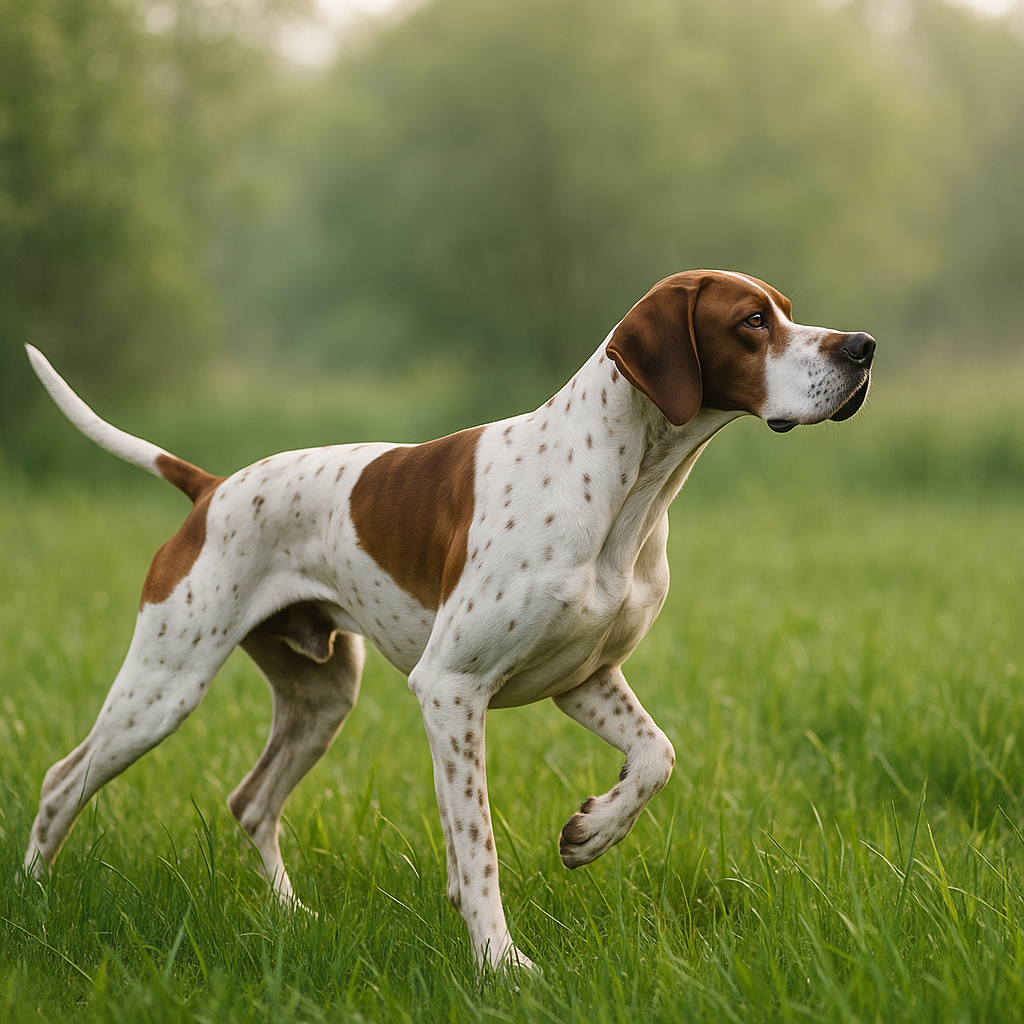
During a hunting day, the Pointer simultaneously deploys speed and precision. Its keen nose picks up clues invisible to the naked eye, while its instinct dictates the exact point without scaring the prey. It is this subtle balance that enchants regular shooters.
Education and training
Learning recall and pointing on command is the core of the training. Above all, a relationship of trust must be established without ever resorting to excessive force.
Key steps
- Early socialization: exposing to sounds, humans, and canine companions to avoid pathological fear.
- Leash initiation: the Pointer likes to cover great distances, but leash training prevents uncontrolled romps.
- Basic commands: “sit,” “lie down,” “heel,” before moving on to “stop” and “recall.”
- Positive reinforcement: toys and treats increase the desire to please the owner, especially if rewards are varied.
Some owners choose specialized “hunting” training, where professionals simulate game actions to accustom the dog to react in a real context.
Health and specific care
The Pointer’s life expectancy is around 12 to 15 years. Common concerns include hip dysplasia, recurrent ear infections, and eye conditions. Regular veterinary check-ups, combined with a balanced diet, reduce risks.
Prevention plan
“A dog in motion remains a healthy dog,” breeders often advise.
In practice, orthopedic assessments are scheduled every 2–3 years. Grooming remains moderate: weekly brushing is enough to keep the coat shiny and control skin circulation. Ears should also be dried after every wet outing to prevent infections.
Daily Life and Coexistence
The Pointer is not made for city life only. While it can acclimate to an apartment, it will demand an hour of running outdoors every day and intelligence games to avoid boredom. In the countryside or in a house with a garden, it finds the ideal space to express its fiery temperament.
Practical Advice
- Set up a comfortable basket close to the family: social bonding is essential.
- Alternate active phases and quiet times: a mentally exhausted Pointer settles down more easily.
- Organize playdates or meetings with other hunting dogs to maintain its sociability.
- Vary routes and stimuli (scents, obstacles) to keep its interest.
FAQ about the English Pointer
- At what age should training start? From 8 weeks old, with short sessions (5–10 minutes), to avoid mental fatigue.
- Does the Pointer bark a lot? Rather quiet, it rarely uses its voice except in hunting situations or frustration.
- What is the best diet? A diet rich in animal proteins, adapted to its activity level, with controlled carbohydrate intake.
- Can it live with other animals? Yes, provided it is socialized early, as its hunting instinct can awaken if it has not been accustomed.
- Is a garden necessary to welcome it? A garden is an asset, but an active owner who goes out regularly can compensate for the lack of outdoor space.