| Key Points | Details to Remember |
|---|---|
| 🐾 Definition | Hunting dog with a sociable and lively temperament |
| 🏔 Origin | Bred to flush game in wet terrains |
| 🔍 Scent | Searches and follows trails with precision |
| 🎾 Activities | Canine sports and stimulating games recommended |
| 🧠 Training | Gentle learning, positive reinforcement essential |
| ❤️ Health | Monitoring of hips, eyes, and weight |
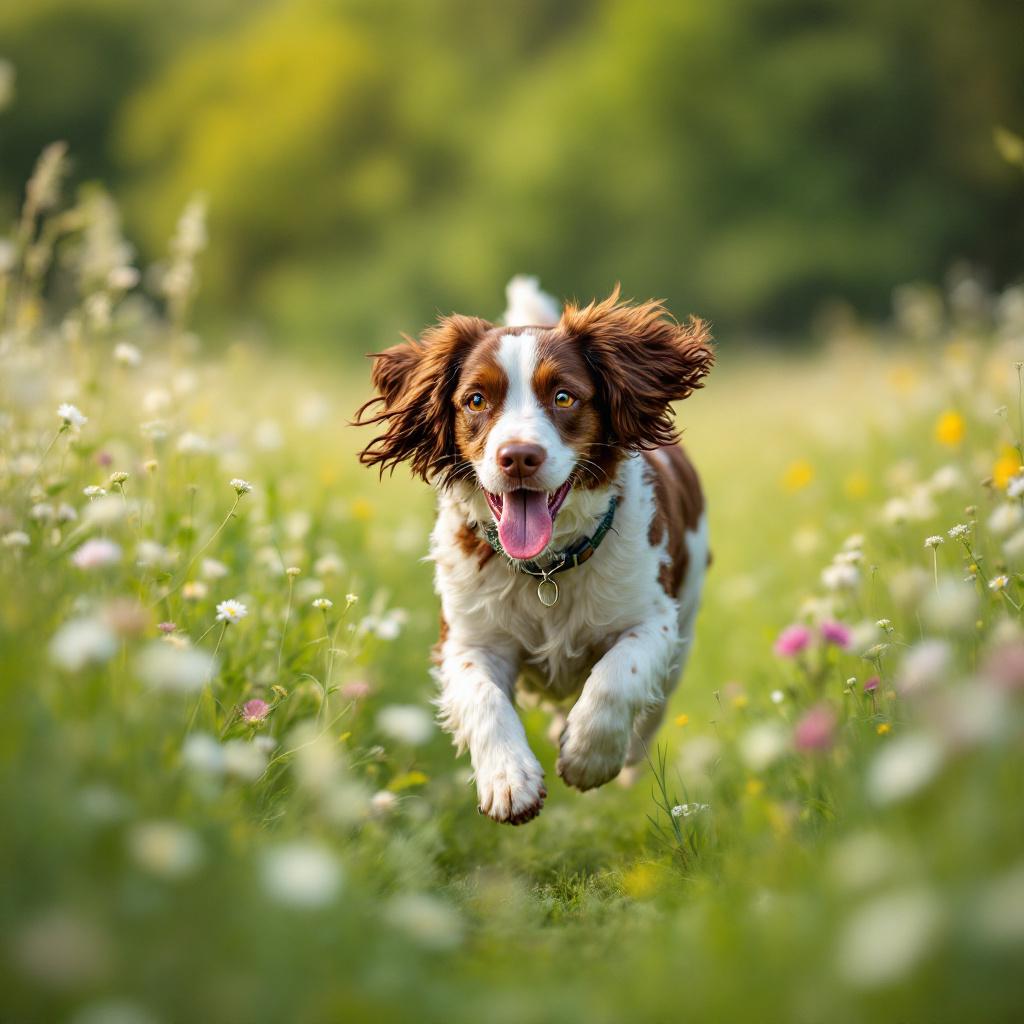
The English Springer Spaniel evokes the image of a tireless companion, always ready to dash into the thickets, nose to the wind. Beneath this pleasant appearance hides a dog with a formidable scent, forged through English hunts. Today, it appeals as much to dynamic families as to canine sports enthusiasts. So, how to understand its needs, reveal its potential, and preserve its health? Follow the guide to dive into the world of this joyful and versatile athlete.
Origins and Evolution of the Breed
In the 19th century, in Great Britain, they sought a dog capable of “springing,” that is, flushing game for armed hunters. The English Springer Spaniel gradually distinguished itself from its cousin the Welsh Springer Spaniel by its more varied coat and more slender appearance. Initially, it was used to mark waterfowl in marshes, where its resistance to bad weather and passion for water became undeniable assets.
From Aristocracy to Modern Households
Quickly appreciated by the English gentry, this spaniel won the hearts of families from the interwar period. Its balanced character, both gentle with children and lively at work, allowed its spread beyond the exclusively hunting circle. In France, from the 1960s, the first imports enabled the emergence of lines dedicated to shows and others oriented towards practical search.
A Sunny and Balanced Temperament
Lively, sociable, and affectionate, the English Springer Spaniel lives each moment intensely. Its zest for life often manifests in bounding paws, sparkling eyes, and insatiable curiosity. However, in truth, it is not just a clown: it is a dog endowed with excellent memory, capable of concentrating for a long time on a trail or an obedience exercise.
Relationships and Socialization
For him to thrive, it is important to expose him early to different environments: busy roads, household noises, canine encounters, and even equine ones. Without this gradual socialization, his energy can turn into excessive excitement, sometimes difficult to channel. Conversely, a clear framework and regular walks will strengthen his confidence and emotional availability.
The Expert’s Nose: How to Harness It?
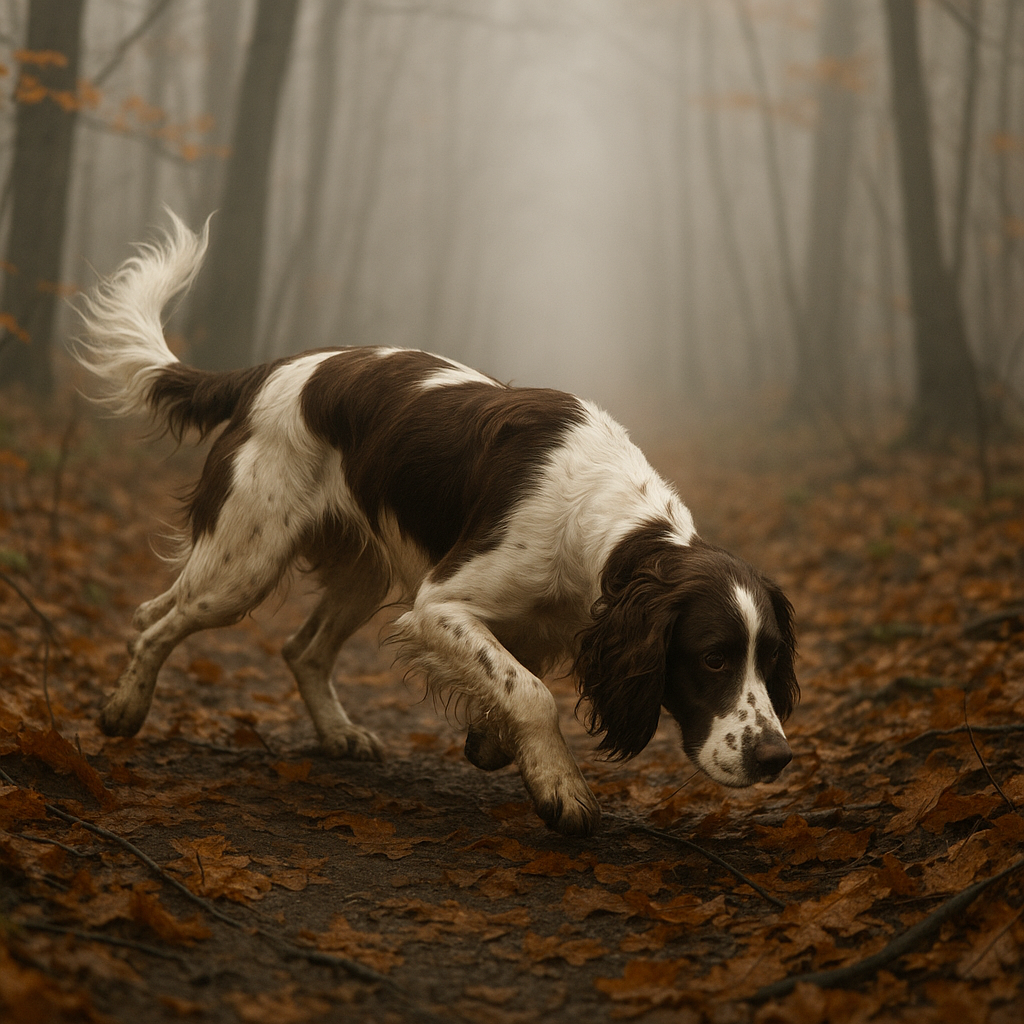
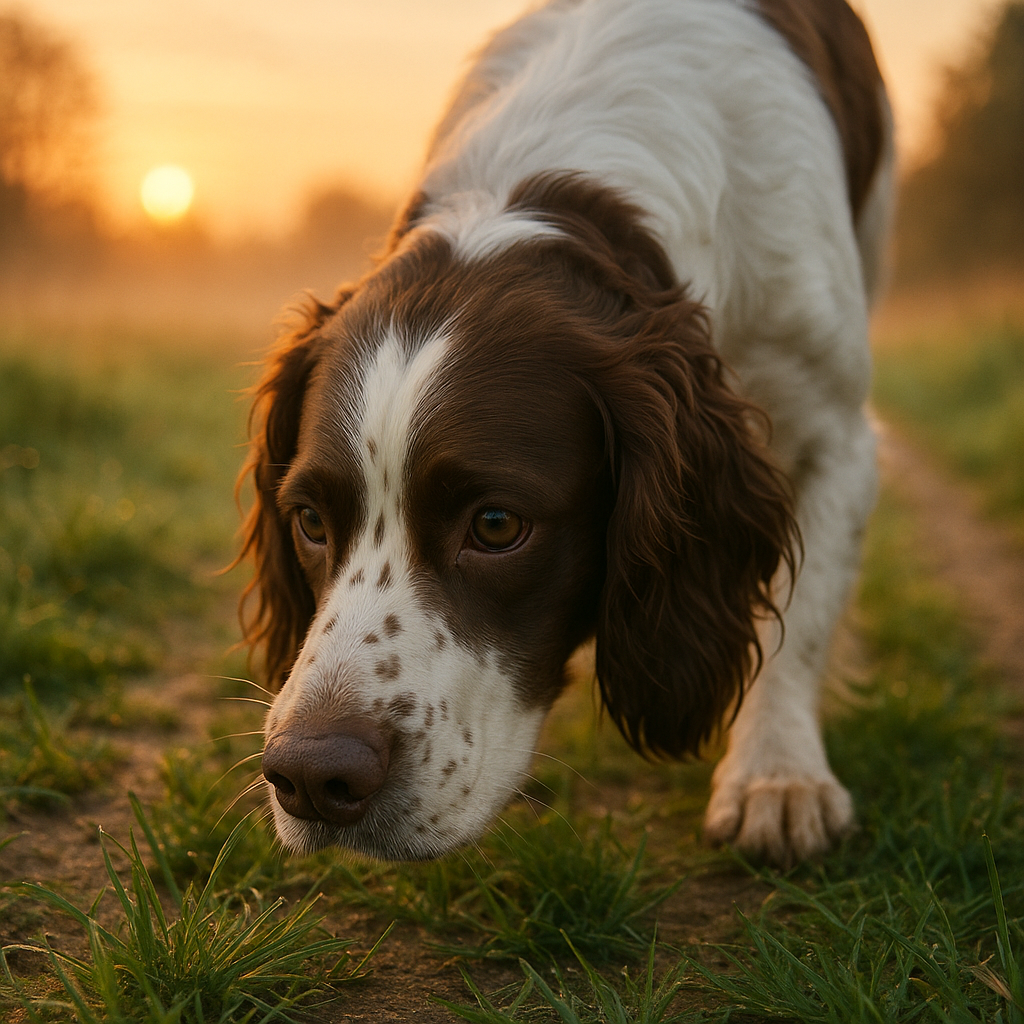
The English Springer Spaniel’s nose is keen, capable of detecting a trail several hours old. His slightly longer hair on the legs protects his nose when he searches through bushes. Whether for legal hunting or current disciplines like tracking, this dog excels as soon as he is allowed to put his olfactory sense into action.
Introduction to Tracking and Scent Rally
No extreme conditions are needed: starting in your garden is enough. Place treats along a winding course, leave a stuffed rabbit lying around, then invite the dog to “follow the trail.” Very quickly, this exercise stimulates his intelligence and channels sometimes turbulent energy. Well conducted, scent rally becomes a bonding ritual, a privileged moment where the dog reveals himself at his best.
Training and Daily Life
His friendly temperament should not overshadow the importance of structured training. The systematic use of positive reinforcement — clicker, treats, caresses — ensures stress-free progress. Basic commands (sit, stay, heel) are worked on in short sessions, to avoid boring this very receptive dog.
- Consistency: always use the same words for each command.
- Enjoyment: turn learning into a game to avoid routine.
- Variety: mix obstacle courses, tracking, and obedience to stimulate the mind.
Managing His Energy Daily
Without sufficient physical exercise, he will compensate with vocalizations, digging objects, or even destroying furniture. Two long walks a day, complemented by a tracking session or a fetch game, are a minimum. In an apartment, it is important to organize a precise schedule: an activity slot in the morning before you leave, a second upon your return.
Health and Care
Quite robust, the English Springer Spaniel is not exempt from some hereditary vulnerabilities. The key lies in preventive care and regular veterinary follow-up.
| Aspect | Practical Advice |
|---|---|
| Hips | Screening X-rays before breeding |
| Eyes | Annual check-up with a canine ophthalmologist |
| Ears | Weekly cleaning to prevent ear infections |
| Coat | Brushing twice a week to limit tangles |
Recommended Activities
Beyond hunting and tracking, this dog finds fulfillment in many disciplines:
- Agility: his dynamism and flexibility make him a prime candidate.
- Flyball: fast races and team relays, ideal for his sociability.
- Hospital therapy: gentleness and empathy allow him to comfort patients.
- Feather hunting: waterfowl and grouse, to reconnect with his origins.
FAQ
What is the ideal age to start tracking?
From 6 months old, with a very short course and plenty of rewards to maintain the enjoyment of the exercise.
How long does an agility session last?
At the beginning of training, 10 to 15 minutes is enough; gradually extending up to 30 minutes to work on speed and endurance.
What diet should be favored?
A ration rich in quality proteins, divided into two meals a day, supplemented by a moderate intake of carbohydrates and omega-3 for the skin and coat.
Is the English Springer Spaniel suitable for children?
Absolutely, as long as meetings are supervised and the animal receives firm but kind training.
How to prevent ear infections?
Regular cleaning with a neutral pH product, combined with thorough drying after each swim or tracking session in water.