| Key points | Details to remember |
|---|---|
| 🐕🦺 Definition | North American hunting dog specialized in tracking and nocturnal pursuit. |
| 🎯 Specialty | Detects and follows scents over long distances, even at night. |
| 🔊 Voice | Deep and modulated voice, used to signal the trail to the handler. |
| 🏃 Abilities | Endurance, speed and very keen sense of smell for work on varied terrain. |
| 🧑🏫 Training | Early socialization and consistent training to channel energy. |
| 🩺 Health | Monitoring of ears, joints and weight throughout life. |
The Bluetick Coonhound fascinates with the rare combination of an unrelenting nose and a voice that carries. It is often imagined as that spotted dog, capable of tracking game after nightfall and keeping the handler informed with a modulated voice. This portrait aims to go beyond the romantic image to offer a practical and nuanced view: who this dog really is, what it can truly do, what constraints it imposes daily, and how to train it to become a reliable companion both in the forest and in domestic life.
Origins and historical role
Born from a crossbreeding of hunting dog lines imported from Europe and reworked in the United States, the Bluetick is designed for a precise task: locating and following prey, often raccoons, at night. Its olfactory sense, endurance, and especially its ability to emit a distinctive voice when it has found and marked a trail have been selectively bred. In North American hunting communities, it plays both a technical and cultural role: signaling, holding the trail, and through its voice, telling a story to the handler.
Why this name?
The term “bluetick” refers to the coat, marked with bluish spots on a white background; “coonhound” indicates its specialty against raccoons (“coon”). Together, these elements describe a dog both visually recognizable and assigned a very concrete mission.
Physical appearance and coat: robustness and contrast
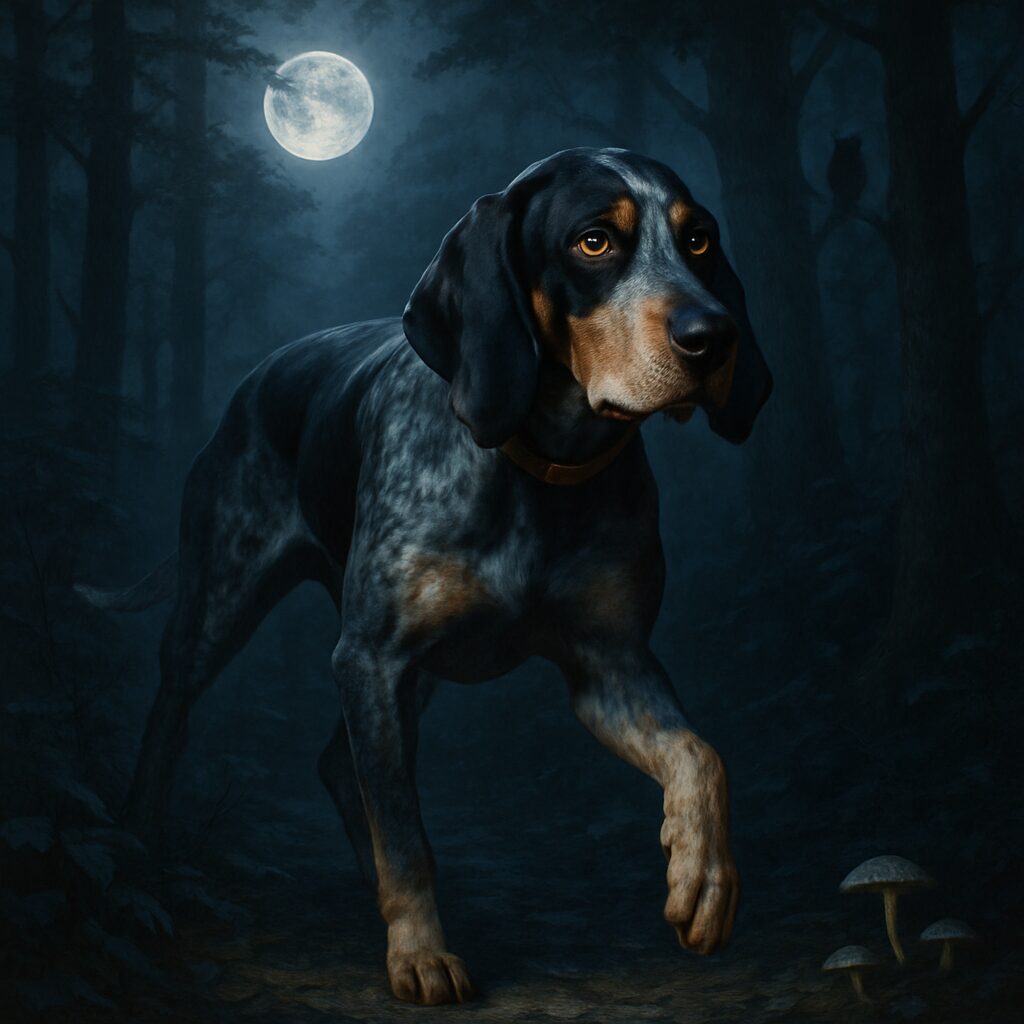
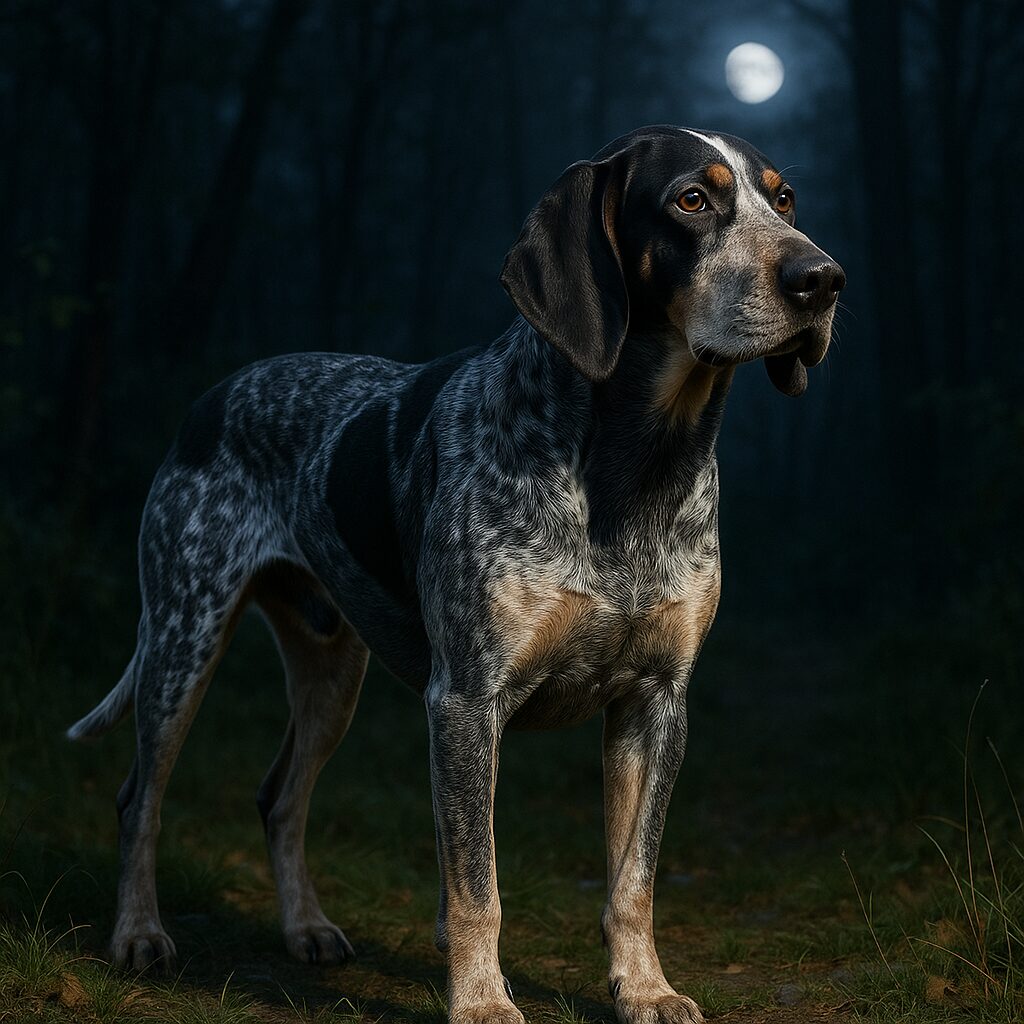
The Bluetick presents an athletic silhouette: solid bone structure, well-defined muscles, and a chest wide enough to support a large lung capacity — necessary for prolonged effort and voice. Its tricolor coat combines white, black, and shades of marbled blue; the spots create an almost camouflaging pattern that allows it to blend into the underbrush at night.
| Characteristic | Current standard |
|---|---|
| Height (males) | 56–69 cm |
| Height (females) | 53–66 cm |
| Weight | 25–36 kg |
| Coat | Bluish spots, sometimes black dots and tan markings |
Distinctive features
The long drooping ears, powerful muzzle, and expressive eyes contribute to its appearance that is both serious and endearing. In the field, its head carriage and posture betray concentration: nose to the ground, tail raised, smooth but determined gait.
Temperament and voice: a two-sided character
The Bluetick combines great independence with marked loyalty. On the hunt, it makes decisions in the field — following a trail, abandoning a false track — and this requires mutual trust with the owner. At home, it can be affectionate and sometimes playful, but it retains a degree of autonomy that makes it poorly suited to households seeking a dog constantly glued to their side.
The howl, a true signature
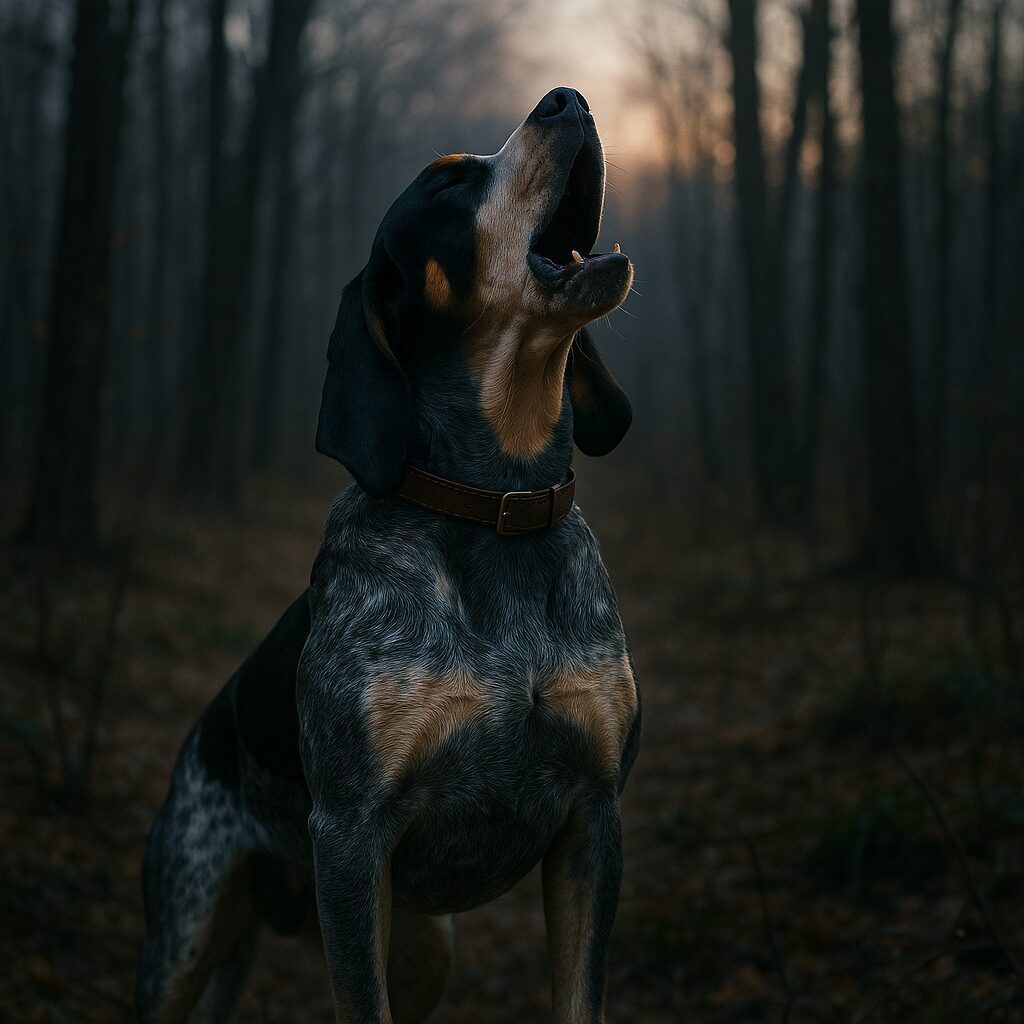
Its howl is less high-pitched than that of some other hunting dogs; it is deep, modulated, capable of varying in intensity depending on the situation. It is not just a noise: it is coded information for the handler — length of the trail, distance, state of excitement. Understanding this song requires experience, and hunting teams learn to read these variations as one reads a language.
Tracking abilities, day and night
The Bluetick excels especially in nocturnal pursuit. Its nose detects traces that the eye no longer sees, and its powerful breathing allows it to keep going for hours on end. On difficult terrain — undergrowth, ravines, wetlands — it maintains its efficiency, which explains its usefulness for demanding hunters.
- Endurance: it pursues tirelessly over long distances.
- Adaptability: it adjusts its pace according to the terrain and olfactory clues.
- Independence: it often works at a distance from the handler.
Working techniques
On fresh tracks, it follows in a straight line; on older tracks, it adopts more cautious gaits and vocalizes to signal uncertainty. Some handlers prefer dogs that “stay close,” others value the dog that “takes initiative”: the Bluetick belongs rather to the second category.
Education and socialization: structure without breaking the spirit
Educating a Bluetick requires coherence and consistency. The main challenge is not the dog’s intelligence, but its motivation: its interest is focused on scent more than on human reward. It is therefore necessary to learn to associate your commands with reliable consequences — treats, toy, calm return — and to practice exercises that reinforce recall despite olfactory distractions.
- Early socialization: gradual exposure to other dogs, people, and environments.
- Recall: targeted training in enclosed fields, coupled with highly attractive rewards.
- Obedience work: short but frequent sessions to maintain attention.
Practical Tips
Do not punish after the fact: if the dog has followed a trail, suddenly taking away its freedom creates confusion. Prefer clear signals and smooth transitions between “work” and “rest.” Finally, include mental activities — scent games, obstacle courses — to channel its energy when hunting is not possible.
Health, Hygiene, and Longevity
Overall robust, the Bluetick remains sensitive to common issues in medium-sized dogs: ear infections related to floppy ears, hip dysplasia in some lines, and a tendency to gain weight if exercise is lacking. Regular veterinary check-ups and orthopedic screenings during routine visits help anticipate these risks.
| Health Point | Recommendation |
|---|---|
| Ears | Clean regularly and check for signs of infection |
| Joints | Check mobility, limit excessive jumping |
| Weight | Adjust diet and activity to avoid obesity |
| Vaccinations and Screening | Follow the veterinary schedule and screen early |
Living with a Bluetick: Environment, Activities, and Constraints
This dog requires space and time. An apartment without regular outings will make it unhappy; the ideal solution remains a house with a yard and long, stimulating daily walks. If you work long hours, plan a structure: doggy daycare, dog walker, or morning and evening exercise sessions. Otherwise, expect to hear its howl when it detects an interesting scent in the neighborhood.
Examples of Suitable Activities
- Long hikes on varied trails.
- Organized tracking games (trails to rebuild at home).
- Canine sports based on scent and endurance.
Quick Comparison: Bluetick vs Other Coonhounds
Compared to some lighter or more vocal coonhounds, the Bluetick offers a compromise between vocal power and endurance. It is not the calmest, but it stands out for its tenacity and deeper voice, often preferred for long nocturnal chases.
FAQ — Frequently Asked Questions
Is the Bluetick good with families?
Yes, with appropriate socialization and sufficient activity. It is loyal and affectionate, but its tracking instinct can make it less attentive in the presence of strong scents.
Can it be kept in the city?
It is possible if you compensate with intensive outings and olfactory stimulation; without this, it may develop undesirable behaviors.
Is it noisy?
It howls when working or detecting something interesting; it is not a constant barker, but its howl carries and can be considered disturbing in dense areas.
Practical Summary for Adopting a Bluetick
Before any adoption, assess your ability to provide time, long outings, and consistent training. Favor a responsible breeder or an association that will inform you about the lineage and behavioral history of the dog. Finally, prepare to learn how to “read” its howl: it is a dialogue more than a simple sound.
Resources and Implicit Conclusion
The Bluetick Coonhound remains a dog with character, valuable for those seeking a hardworking and vocal dog. If you enjoy hunting, scent tracking, long night hikes, and the bond born from shared work, you will find a loyal partner in him. If your lifestyle is sedentary and your patience limited, consider a breed less demanding in olfactory stimulation.
Detailed FAQ
- What age does a Bluetick reach? Generally 10–12 years, depending on the care provided.
- What is the annual maintenance cost? Depends on veterinary care and activity, but plan for quality food, vaccines, parasite prevention, and regular visits.
- Is the Bluetick suitable for children? Yes, with supervision and clear rules: he enjoys company but does not like being disturbed during rest.