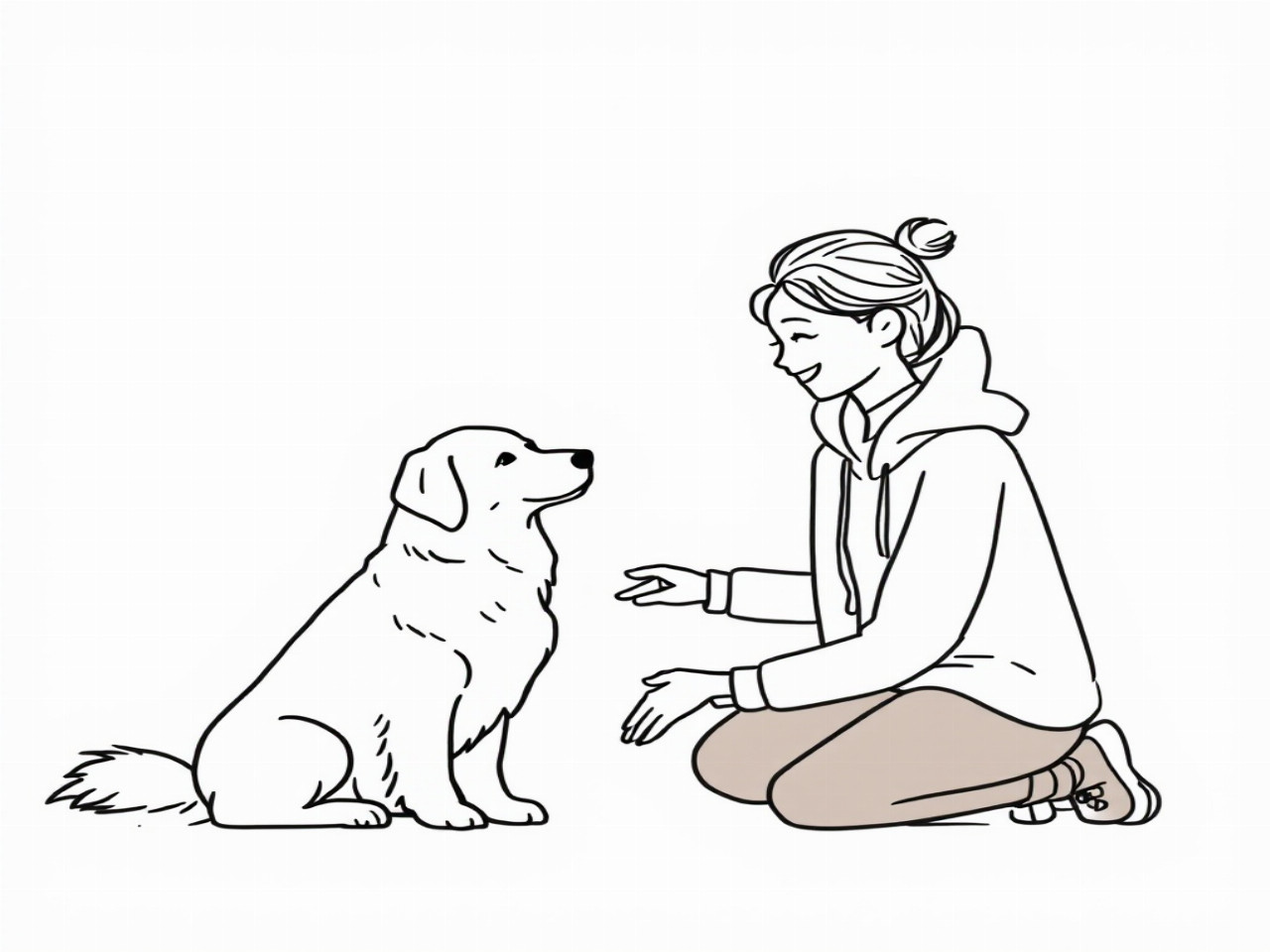

In just a few minutes a day, you can turn a mundane interaction into a true moment of complicity with your dog. The “give paw” exercise is not just a fun trick: it strengthens mutual trust, channels their energy, and lays the foundation for clear communication. Here is a detailed guide to carry out this learning in 4 steps, without stress or confusion.
Why teach your dog to give its paw?
You might think it’s just a simple circus trick, yet this little gesture serves serious educational purposes. First, it requires your companion to focus their attention on you, which is valuable when external stimuli distract them. Then, it establishes the idea of a task to be performed in exchange for a reward, an essential principle of positive reinforcement. Finally, it is a friendly and rewarding moment for both, perfect for building a strong bond.
Prerequisites before starting
Some preparations are necessary beforehand to prevent the exercise from turning into a nightmare. Here’s what you need:
- Attractive treats, cut into small pieces to avoid saturation.
- A clicker or any other sound marker if you have one, to reinforce the precision of the learning moment.
- A calm environment, without constant traffic or too many visual distractions.
- A handful of patience: every dog progresses at their own pace.
| Equipment | Role | Tip |
|---|---|---|
| Treats | Positively reinforce the action | Prefer very tasty pieces (cheese, dried meat) |
| Clicker | Precisely mark the correct behavior | A simple “Yes!” can suffice if you don’t have a clicker |
| Target (designator) | Allows directing the dog’s attitude | A small stick or an adhesive dot on your hand |
The 4-step tutorial
Step 1: Arouse curiosity
Start by presenting your palm, slightly closed, at your dog’s nose level. The treat, held in your hand, will encourage them to sniff, scratch, or press their nose against your fist. The idea: for them to understand that an interaction with the tip of their nose triggers an interesting result. If you have a clicker, mark this precise moment to clarify the correct action.
Step 2: Reinforce the touch
When your dog brushes your hand (even with their nose), that’s already a success. Immediately open your hand and offer the treat, while saying a keyword like “Paw”. Repeat this ritual five to eight times over several short sessions of two to three minutes, spacing out the learning phases to avoid mental saturation.
Step 3: Turn the brush into a lift
With repetition, some dogs will eventually lightly tap your hand with their paw. The “pigeon-toed” will soon turn this gesture into a more deliberate solicitation. When the time comes, clearly associate the paw lift with the keyword: say “Paw” at the exact moment the paw rises. Clicker or “Yes!” punctuate the act and open the way to the reward.
Step 4: The convenience of the gesture
Once the lift is acquired in a static position, diversify the situation: sitting, standing, with a change of direction… Test the command in a real situation, without a visible treat, so your dog understands that it is a deliberate gesture, not a coincidence. Always offer the reward, but alternate treat / petting / kind word to vary the pleasures and maintain engagement.
Pro tips and warnings
Every dog has their temperament: some are very greedy, others more picky. Adjust the size of the treats so they don’t get bored, vary textures (kibble, pieces of dried meat, apple slices). Don’t give in to pressure: if your companion hesitates, give them a break, then return to a simpler exercise, like asking for a sit.
“Positive reinforcement is not just about rewarding: it’s about building a climate of trust where the dog spontaneously offers the right behavior.”
- If attention drops, shorten the session.
- Avoid treats in the middle of a meal to maintain enthusiasm.
- Always link the keyword to the gesture, without hesitation.
Examples of difficulties and solutions
| Problem | Why it gets stuck | How to fix it |
|---|---|---|
| Distracted dog | Too dynamic environment | Choose a quieter spot or work early in the morning |
| No touch | Fear of contact or lack of motivation | Start by initiating a touch on the target, then bring the target closer to the hand |
| Lifts paw without word | The word/gesture association is not clear | Reintroduce the clicker at the moment of the gesture and say “Paw” |
Additional: strengthen your methods
Would you like to deepen positive reinforcement? Our list of methods to correct barking is full of tips that integrate harmoniously with this tutorial. It shows how to combine clicker, social rewards, and command variations to progress without constraint.
FAQ
My dog takes too long to understand, is that normal?
It’s quite common. Some dogs hesitate with this unusual contact. Reduce the pressure, reinforce every small progress (even the brushing of the nose), and break the sessions into very short moments.
Can I use this technique with a puppy?
Yes, provided you keep it playful and do not exceed two minutes per session. The puppy has limited attention, it learns better in small repeated steps throughout the day.
Is the clicker essential?
No, a clear vocal signal (“Yes!”, “Bravo!”) can replace the clicker. The important thing is to precisely mark the moment when the paw comes into contact with your hand.
How to maintain this trick in the long term?
Continue to vary the types of rewards: petting, quick games with a toy, high-quality treats. A regularly maintained behavior never falls into oblivion.