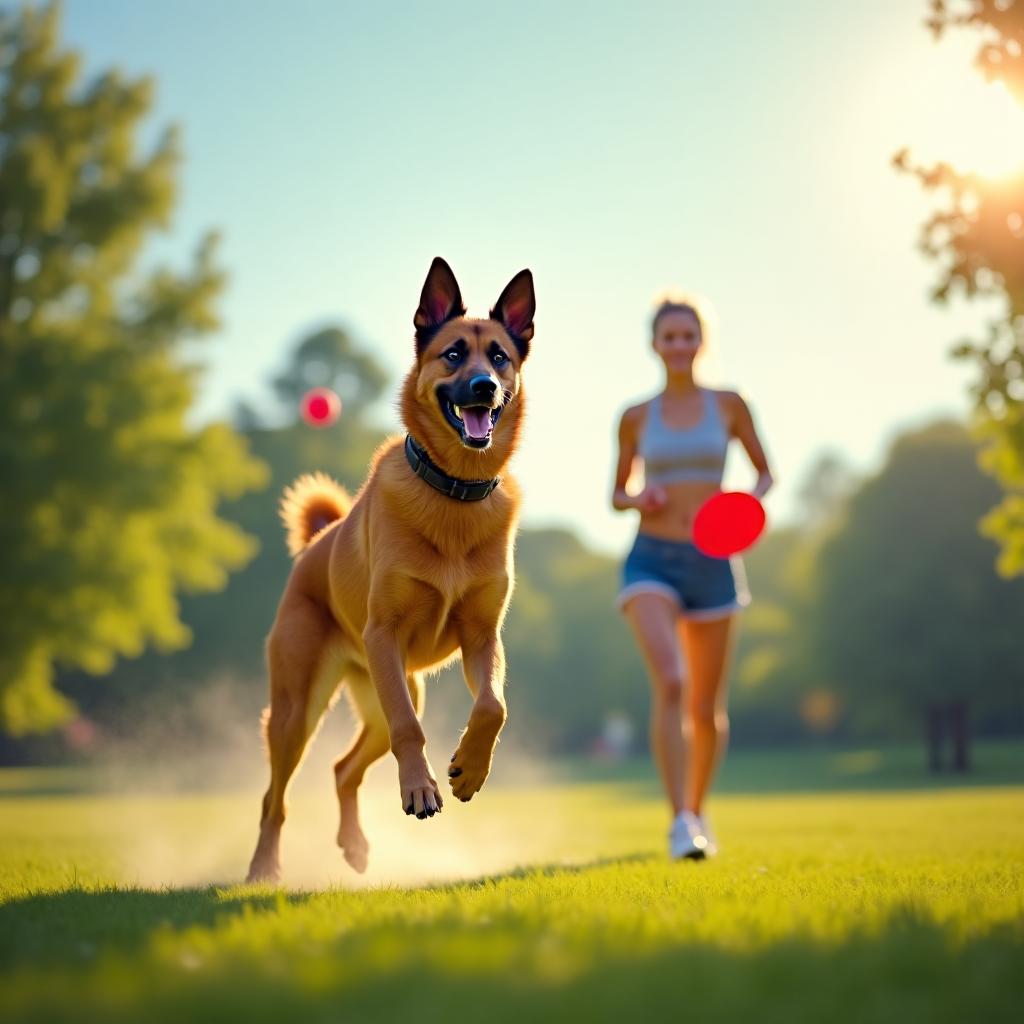

The Belgian Malinois Shepherd, an iconic working dog breed, possesses phenomenal energy and sharp intelligence that require a suitable outlet. Without structured activity, this bundle of muscles and neurons can develop destructive behaviors – the infamous “Malinois malaise.” Fortunately, several sports disciplines transform this raw power into master-dog complicity. Let’s explore how agility, obedience, tracking, and sport biting meet their innate needs while strengthening your relationship.
In brief
⚡ Malinois agility harnesses their natural agility: a timed obstacle course burns 500+ calories in 20 minutes while sharpening their focus. Dog clubs offer introductions from 12 months old.
🧠 Mental stimulation is as crucial as physical exercise: 30 minutes of tracking or rhythmic obedience equals 2 hours of jogging for their hyperactive brain.
🛡️ Sport biting (RCI or ring) channels their biting instinct safely: thanks to strict rules and appropriate equipment, less than 0.5% of participants show inappropriate behavior outside training.
⚖️ Balance physical and mental expenditure: an ideal weekly program alternates 2 intensive sessions (working dog sports) and 5 short cognitive play sessions at home.
Malinois Agility: When Speed and Precision Merge
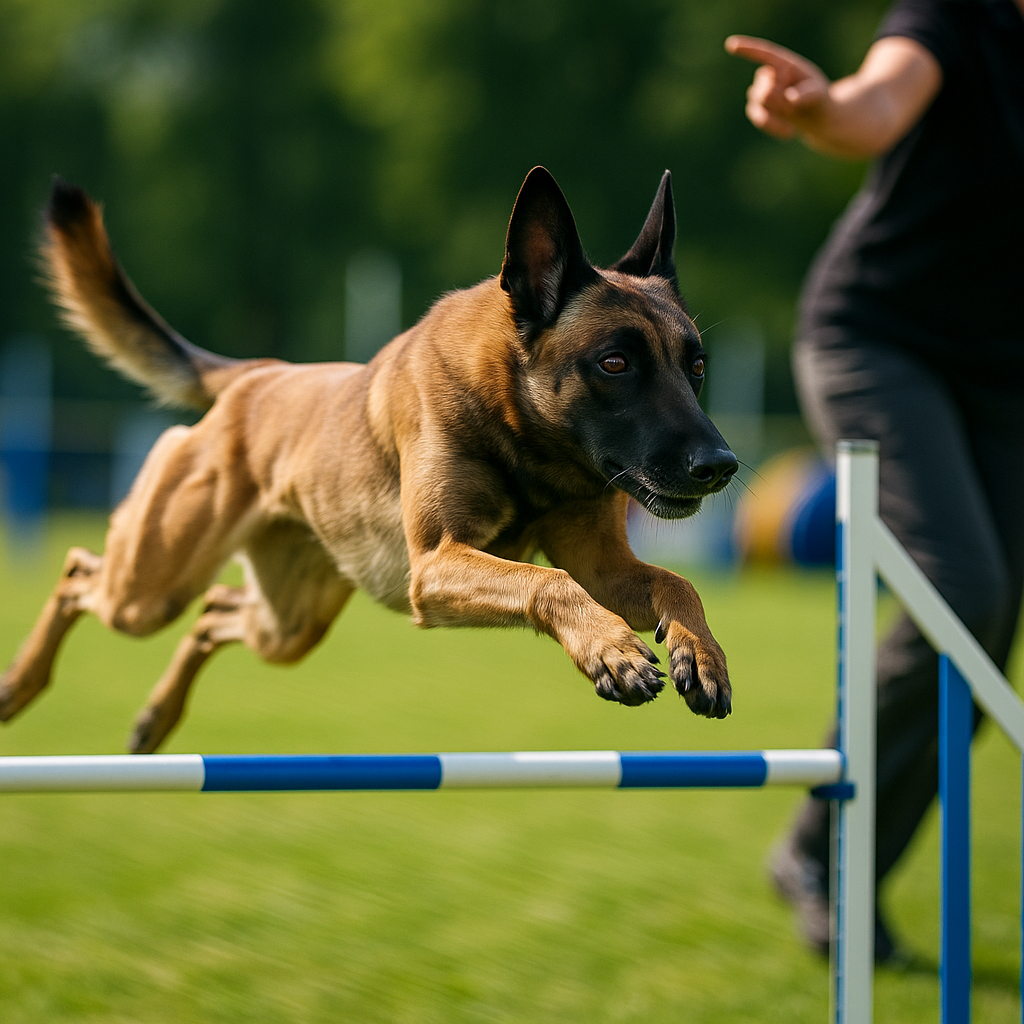
Imagine an Olympic slalom skier crossed with a high jumper – that’s your Malinois on an agility course. This discipline, born in the 1970s in the United Kingdom, turns challenges into pure canine pleasure. Contrary to popular belief, it’s not a wild race but a constant body dialogue. The dog learns to decipher your micro-gestures: a shoulder shrug for the seesaw, a bent knee for the tunnel.
Unexpected Benefits Beyond Exercise
Besides the obvious calorie burn, agility develops a rare skill: managing failure. A Malinois who misses a jump learns to literally and figuratively bounce back. A study from the University of Budapest shows that dogs practicing agility have 40% fewer compulsive behaviors (tail chasing, excessive licking). The key? Short sessions (15-20 min) but ultra-focused where every success triggers an immediate reward – kibble or favorite toy.
Essential Equipment to Get Started
No need for an Olympic-sized garden! Start with 3 accessories:
- A foldable soft tunnel (from €8 at pet stores)
- Slalom cones spaced 2m apart
- A ground bar replacing the hurdle
The trap to avoid? Linking obstacles without breaks. Alternate 3 minutes of effort and 5 minutes of free play. Your dog assimilates better when learning stays playful.
Rhythmic Obedience and Tracking: Mental Gymnastics for Malinois

If agility exhausts the body, obedience and tracking strengthen the mind. These exercises for Malinois exploit their herding heritage – the ability to anticipate movements and track subtle clues. In rhythmic obedience (or “dog dancing”), you transform basic commands into a fluid choreography set to music. The “side step” becomes a waltz, the “turn” turns into a pirouette.
| Discipline | Ideal Frequency | Equipment | Required Level |
|---|---|---|---|
| Rhythmic Obedience | 3x/week (10 min) | Clicker, target | Beginner |
| Tracking | 2x/week (20 min) | Harness, 10m leash | Intermediate |
| Utility Search | 1x/week (30 min) | Personal objects | Advanced |
Tracking: Awakening Their Detective Nose
Your Malinois sniffs the ground during your walks? He’s a born tracker! Unlike purebred bloodhounds, their technique combines smell and sight. Start with “Ariadne’s threads”: lay a line of treats over 5m, then hide one at the end. Gradually increase complexity: right angles, changing surfaces (grass → concrete), or aging the track. In official competition, dogs find an object over 800m² in less than 15 minutes – proof of their formidable efficiency.
“A Malinois on a tracking trail is like a child solving a puzzle: every discovery sparks a gleam in their eyes. It’s the best prevention against destructive boredom.” – Marc, dog trainer for 20 years
Sporting Bite Work: The Controlled Art of Biting
Often misunderstood, sporting bite work (RCI, French Ring, or Mondioring) structures their primal instinct. Contrary to popular belief, it does not increase aggressiveness – a study by the SCC on 2,000 dogs confirms this. The secret? Strict rules: the dog bites only on command, immediately releases on signal, and works with a decoy wearing padded gear.
The 3 Pillars of the Discipline
- Inhibitory Control: learning to bite hard without piercing (measured pressure)
- Extreme Obedience: stopping an action immediately despite excitement
- Discernment: reacting only to the designated threat
Starting alone is risky. Turn to clubs affiliated with the Société Centrale Canine, where certified instructors guide every step. Progression follows stages: soft sleeve → padded arm → full suit.
Daily Stimulation: Small Games, Big Effects
Outside of structured sessions, simple mental stimulation for dogs helps maintain their balance:
- The snuffle mat: hide 10 kibble pieces in a fringed mat (20 minutes of guaranteed occupation)
- The “find it”: name a toy hidden in a room
- The puzzle box: kibble dispenser to manipulate with paws or muzzle
These activities tap into their need for “useful work,” inherited from shepherding fields. According to ethologist Alexandra Horowitz, 15 minutes daily reduces excessive barking by 60%.
Balancing Physical Exertion and Recovery
Exercising your Malinois does not mean exhausting them. Excessive intense exercise causes tendon injuries or oxidative stress. Watch for these warning signs:
- Excessive panting 10 minutes after effort
- Sudden refusal to jump a low obstacle
- Paradoxical nighttime restlessness
Always schedule 48 hours of rest after a bite work or agility competition. Favor low-impact sports (swimming, canicross on soft terrain) to protect their joints. And don’t forget: a nap in the sun after exercise is an integral part of their well-being!
FAQ: Canine Sports with a Malinois
At what age should you start canine sports with a Malinois?
Obedience and tracking can start as early as 4 months. Wait until 12 months for agility (jumping) and 18 months for bite work, to allow their joints and inhibitory control to mature.
Can my Malinois practice multiple disciplines?
Absolutely! Many will excel by combining agility in the morning and tracking in the afternoon. Just be sure to alternate the demands: do not combine two jumping activities in the same day.
How to choose between RCI, Ring, or Mondioring?
French Ring emphasizes defense, RCI pure obedience, and Mondioring includes unpredictable obstacles. Try all three during open house days at clubs – your dog will guide you by their preferences.
Can you practice without aiming for competition?
Yes, the majority of practitioners are amateurs! The important thing is shared enjoyment. Adapt exercises to your level: a homemade agility course brings as much joy as a championship.