
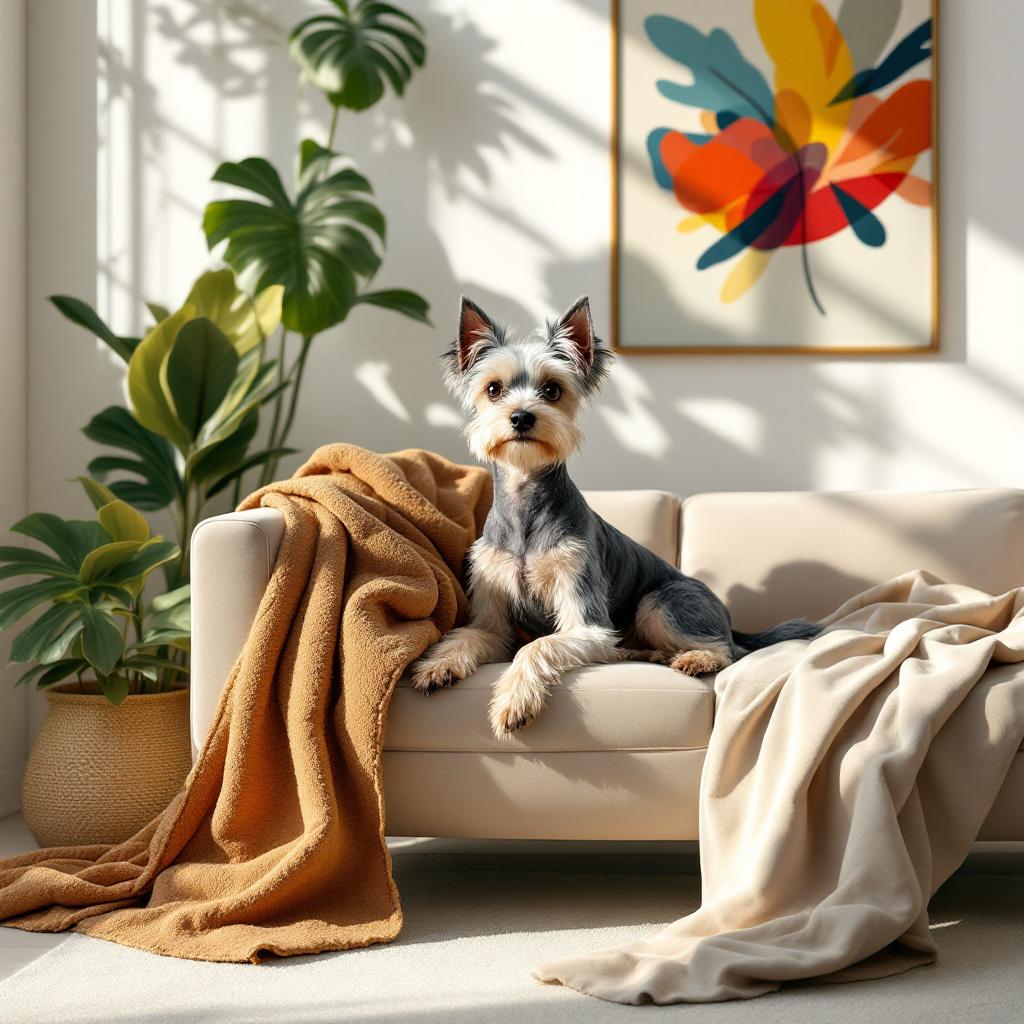
| Key Points | Details to Remember |
|---|---|
| 🐶 Definition | Small-sized dog with a lively and gentle character. |
| ✨ Unique Style | Hairless skin and silky tufts on head and paws. |
| ❤️ Temperament | Affectionate companion and playful, with an intense bond with its owner. |
| 🛀 Specific Care | Daily sun protection and hydration necessary. |
| 🍖 Nutrition | Balanced diet rich in essential fatty acids for the skin. |
| ⚕️ Health | Regular veterinary follow-up for teeth and skin. |

It is often said that the Chinese Crested looks like a living sculpture, so sophisticated is its appearance. In reality, this little hairless dog is as much a fashion phenomenon as a true companion with specific needs. Between its little-known history, its endearing character, and the delicate care required by its lack of hair, this guide immerses you in the world of this fashionable and tender canine.
Origins and Evolution
It is sometimes thought that the Chinese Crested comes from China, but its history is more complex. Illustrations from the 16th century already mention hairless dogs in Mesoamerica, probably later introduced to Europe via Spanish ships. However, great explorers discovered it off the African and Asian coasts, where its natural depigmentation protected it from parasites. It was only in the 19th century, when Chinese sailors gave it to European officers, that it received its true name. Its different forms — hairless and long-haired — result from careful selection carried out by breed enthusiasts.
The Duality: Hairless and Powderpuff
Two varieties are distinguished: the Hairless, recognizable by its soft and smooth skin, and the Powderpuff, entirely covered with fine down. One evokes a futuristic look, the other plays the role of a living plush toy. Yet, it is the same genetic heritage; only a recessive gene triggers the full coat. This diversity charms both lovers of bold silhouettes and those seeking an easy-to-live urban dog.
Physical Characteristics
With a weight often under 5 kg and a height not exceeding 33 cm, the Chinese Crested falls into the toy category. Its flat skull, lively eyes, and large erect ears give it a mischievous look. For the Hairless, the skin may show varied patterns: spots, dots, pink or dark areas. As for the Powderpuff, its fur is silky, sometimes curly, and requires regular brushing to avoid knots.
The Fashionable and Assertive Look
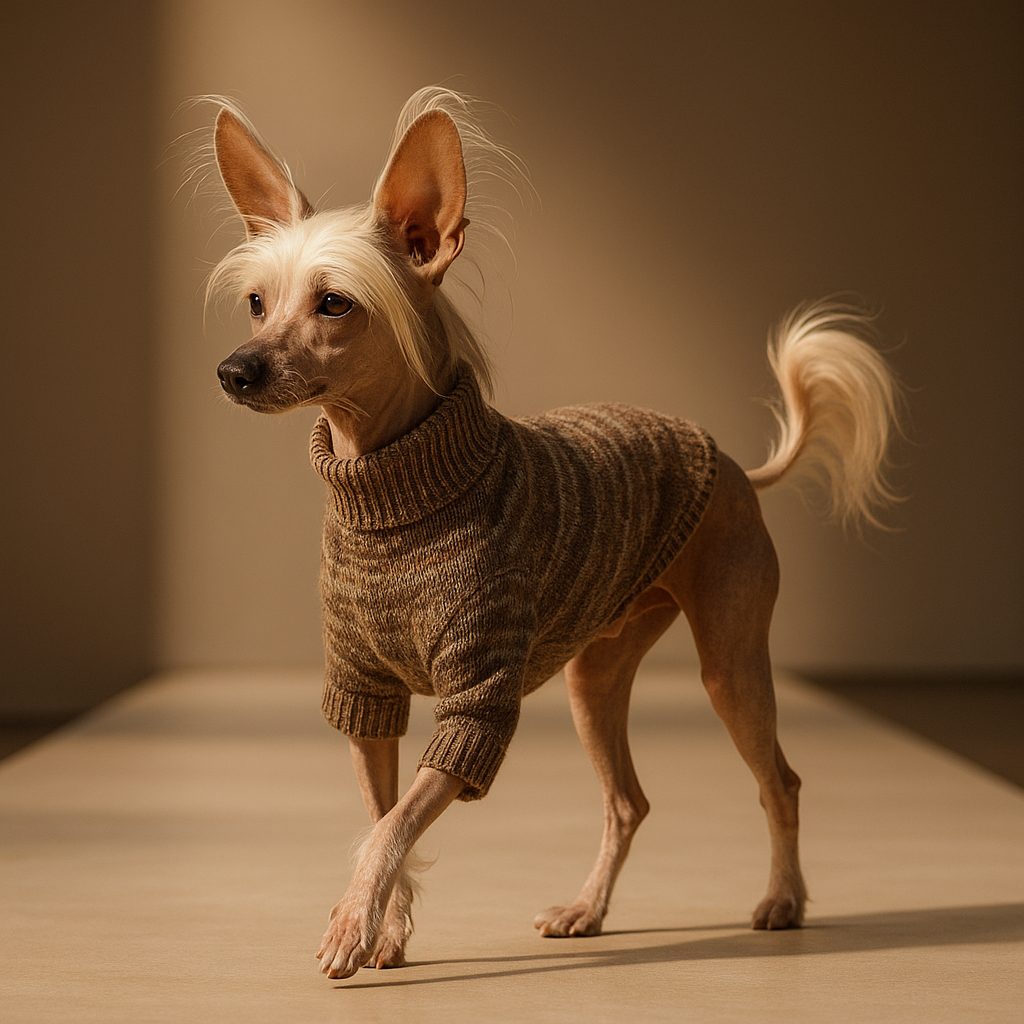
While some owners appreciate the minimalist and almost “architectural” aspect of the Hairless, others like to dress this little dog in pretty sweaters. On canine runways, it serves as a trendy muse for fashion designers. Its lack of undercoat prevents shedding but requires covering it in winter and, counterintuitively, in summer to protect against UV rays. This paradox makes the Chinese Crested a true fashion accessory in its own right.
Temperament and Behavior
The sociability of this dog often surprises: shy with strangers, he transforms into a tireless confidant with his owner. It quickly becomes clear that he demands human presence, not only to keep warm but also to build a strong bond. Curious and sometimes mischievous, it is not uncommon to see him pilfer a slipper or watch the horizon from the couch, like a little urban explorer.
- Intelligence: he learns quickly, but training is best done through play.
- Affection: he cuddles easily, hates prolonged solitude.
- Alertness: he signals a stranger’s presence without becoming aggressive.
Daily Care and Maintenance
Without a protective coat, the Hairless’s skin requires a special routine. Brushing remains light, limited to the down on the head and paws. However, hydration is crucial: a suitable cream is applied once or twice a week to prevent dryness and cracking. Dog sunscreen becomes essential as soon as temperatures exceed 20 °C.
« When I adopted Lily, a little Chinese Crested, I was first fascinated by her lack of hair. Very quickly, I understood that her skin required as much attention as a baby’s. » – Caroline, breeder
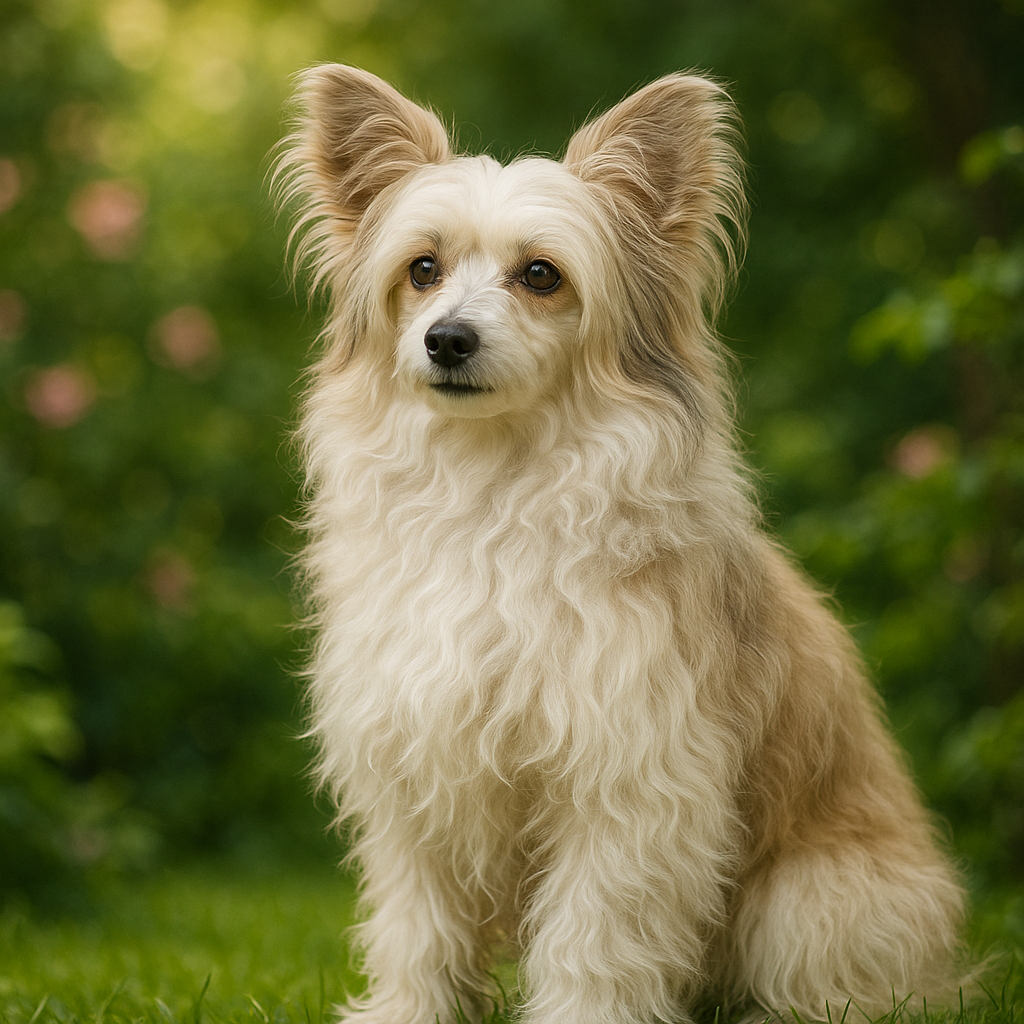
For the Powderpuff, daily brushing prevents matting. A light trim every two months helps maintain an airy coat. Bathing is limited to a gentle cleanser, followed by careful drying to avoid irritating the skin. Finally, regular checks of teeth and nails complete this routine to ensure comfort and good posture.
Health and Life Expectancy
Potentially prone to dental diseases — as its incisors may be missing or grow backward — it often benefits from orthodontic care or extractions. Dermatological conditions manifest as redness or crusts when hydration is neglected. Despite these vulnerabilities, the Chinese Crested can live 12 to 14 years, provided a regular veterinary protocol is followed.
| Risk | Prevention |
|---|---|
| Dermatitis | Moisturizing creams, sun protection |
| Dental problems | Daily cleaning, appropriate brushing |
| Chilliness | Insulating clothing, warm bedding |
| Skin allergies | Avoid harsh products, hypoallergenic diet |
Adopting a Chinese Crested
At a reputable breeder, the pedigree, the health of the parents, and a recent veterinary certificate will be examined. Shelters and associations sometimes take in adults seeking a caring home — an ethical option to give a second chance to these often misunderstood dogs.
- Check compatibility with your lifestyle (temperament requires presence).
- Prepare the environment (blankets, suitable sweaters, canine sunscreen).
- Plan a budget for dermatological and dental care.
FAQ
Is the Chinese Crested hypoallergenic?
Its bare skin reduces shedding, which can decrease allergic reactions. However, dander remains a potential allergen. Regular maintenance and a clean environment are essential to limit risks.
Can it live outdoors?
In winter or cold weather, its skin lacks insulation. Without appropriate protection, the risk of hypothermia is real. It must live indoors or under a well-heated shelter and wear insulating clothing.
Which diet should be favored?
A diet rich in omega-3 and omega-6 fatty acids promotes skin health. Foods rich in quality proteins also support the vitality and musculature of an active small dog.
Is it easy to train?
Rather intelligent, it responds well to gentle methods based on positive reinforcement. Short, varied, and playful sessions maintain its interest and strengthen your bond.
What budget should be planned?
Beyond the purchase price, expect about €500 per year for dermatological care, clothing, specialized food, and veterinary follow-up.