| Key Points | Details to Remember |
|---|---|
| 🐕 Definition | Powerful and enduring scent hound. |
| 📍 Origin | German descent, developed in North Carolina. |
| 🏋️ Physical Characteristics | Muscular, solid bone structure, medium size. |
| ❤️ Temperament | Brave, loyal, good guardian. |
| 🎯 Use | Mainly for big game hunting. |
| 🛁 Care | Regular brushing and daily exercise. |

The Plott Hound is often associated with being an tireless companion of the Carolina forests, capable of tracking game over long distances. In reality, it is not just a hunting dog: its strong character, attachment to family, and robustness make it a versatile partner. Let’s dive into its world = understand its history, morphology, temperament, and requirements to know if this courageous dog will fit your lifestyle.
History and Origin of the Plott Hound
Transatlantic Roots
The Plott Hound traces its origins to German bloodhounds, brought to the United States by Johannes Plott around 1750. At the time, these dogs already had a solid reputation as trackers. Upon arriving in North Carolina, their breeding was refined to withstand the hot and humid climate while maintaining exceptional endurance. The Plott family, committed to preserving the characteristic dark coat, rigorously selected each litter to pass on courage and tenacity.
Development in North Carolina
In Carolina, hunting conditions were demanding: rugged terrain, dense vegetation, and formidable game such as the black bear. The Plott Hound thus established itself against these challenges. By the end of the 19th century, the breed had earned its official recognition, with a standard focused on musculature, solid bone structure, and the ability to pursue for long hours without faltering. Today, its direct lineage continues to represent this tradition of robustness.
Physical Characteristics
General Appearance
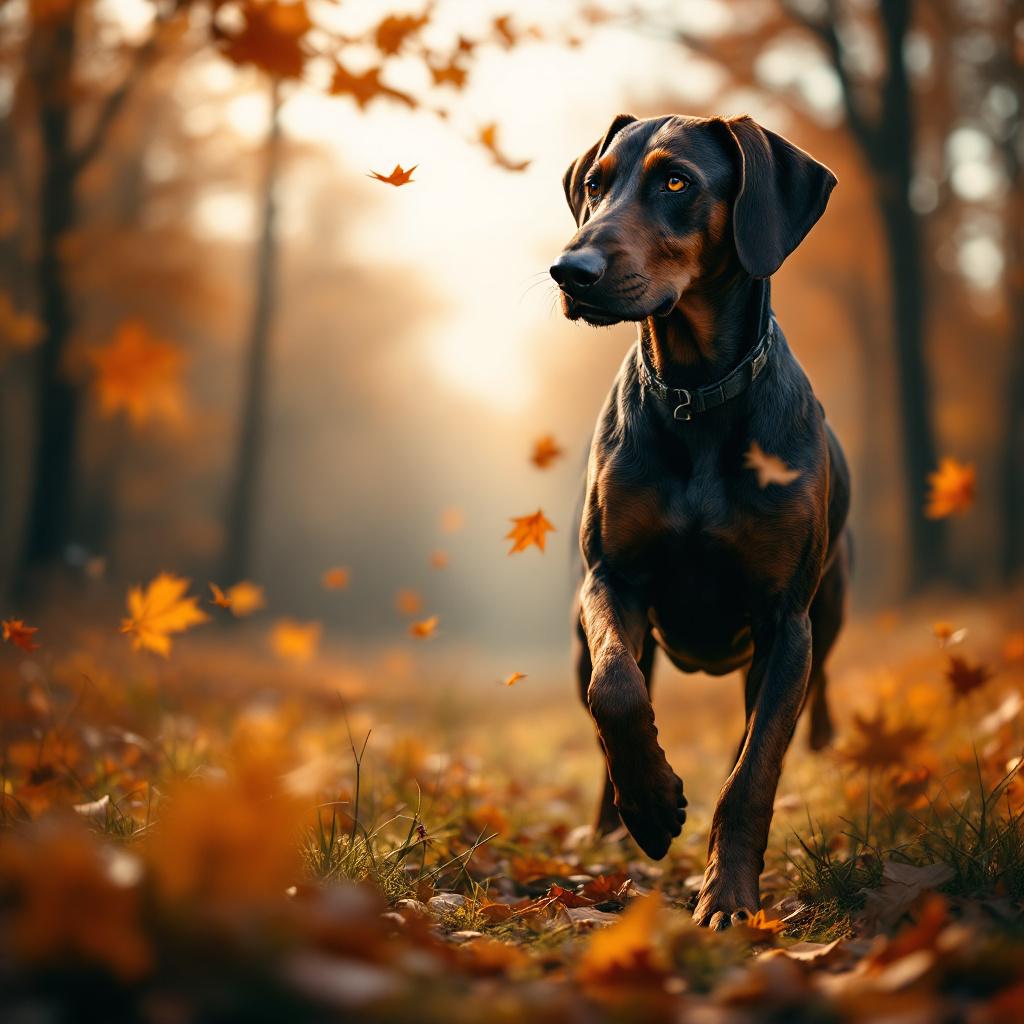
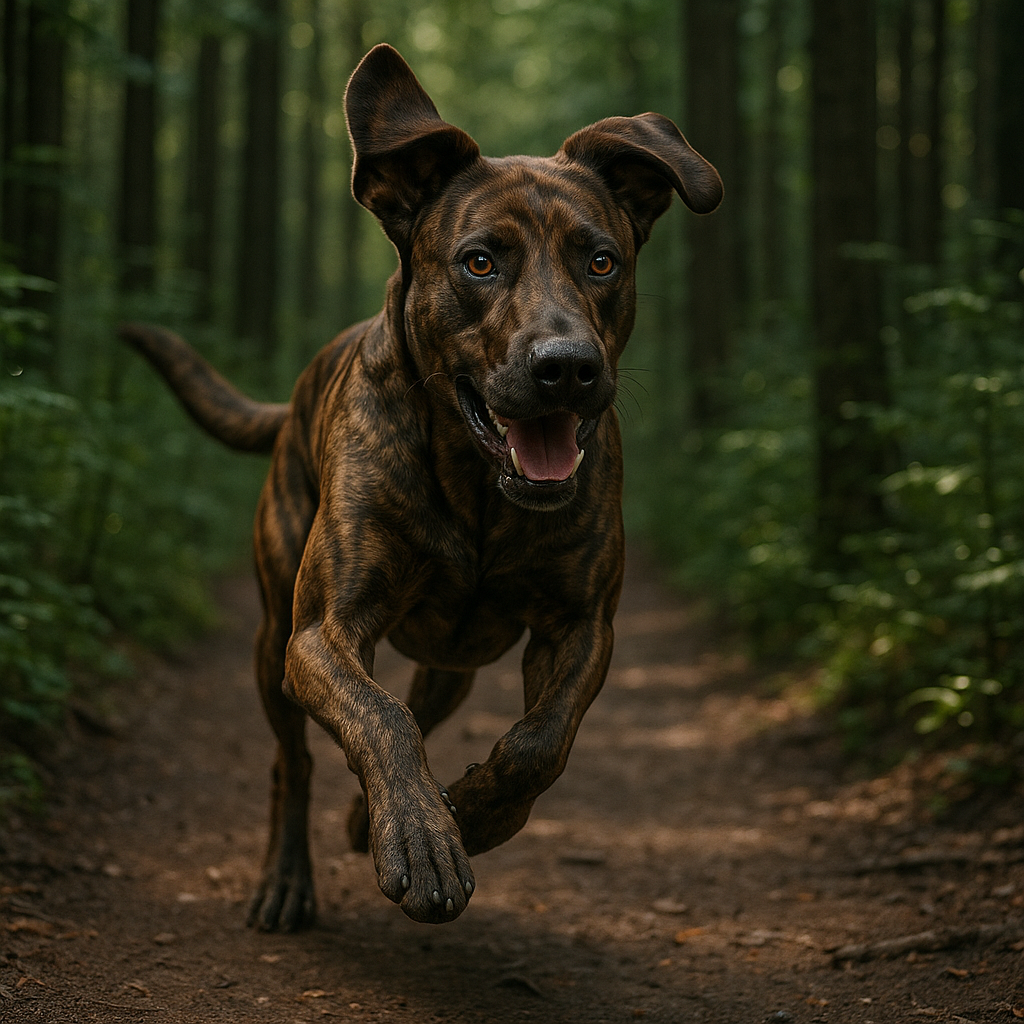
Medium to large in size, the Plott Hound stands out with its short, dense coat, often brindle with subtle stripes. The chest is powerful, the chest deep, and the loins well muscled. The ears are drooping, medium-sized, giving its face an expression both attentive and gentle. This silhouette combines robustness and agility: every muscle seems ready to contract to deliver a sudden burst of speed when the scent of game is detected.
Musculature and Endurance
The true physical signature is the density of the muscle mass. The legs are long without being thin, sufficient to ensure a wide and regular stride. The hips and back support prolonged efforts, even on rough terrain. It is this anatomical structure that allows the Plott Hound to pursue a boar for hours without faltering, while maintaining an elegant gait. At home, this dog still maintains a calm, almost aristocratic demeanor.
Temperament and Behavior
A Will of Iron
When hunting, the Plott Hound shows almost fearless courage. It often attacks prey larger than itself, pursuing its goal with remarkable tenacity. Outside of this context, it proves to be calm, sometimes even composed, with a great capacity for adaptation. Who would think that a relentless hunter can turn into a gentle and attentive family dog as soon as it returns home?
Interaction with the Family
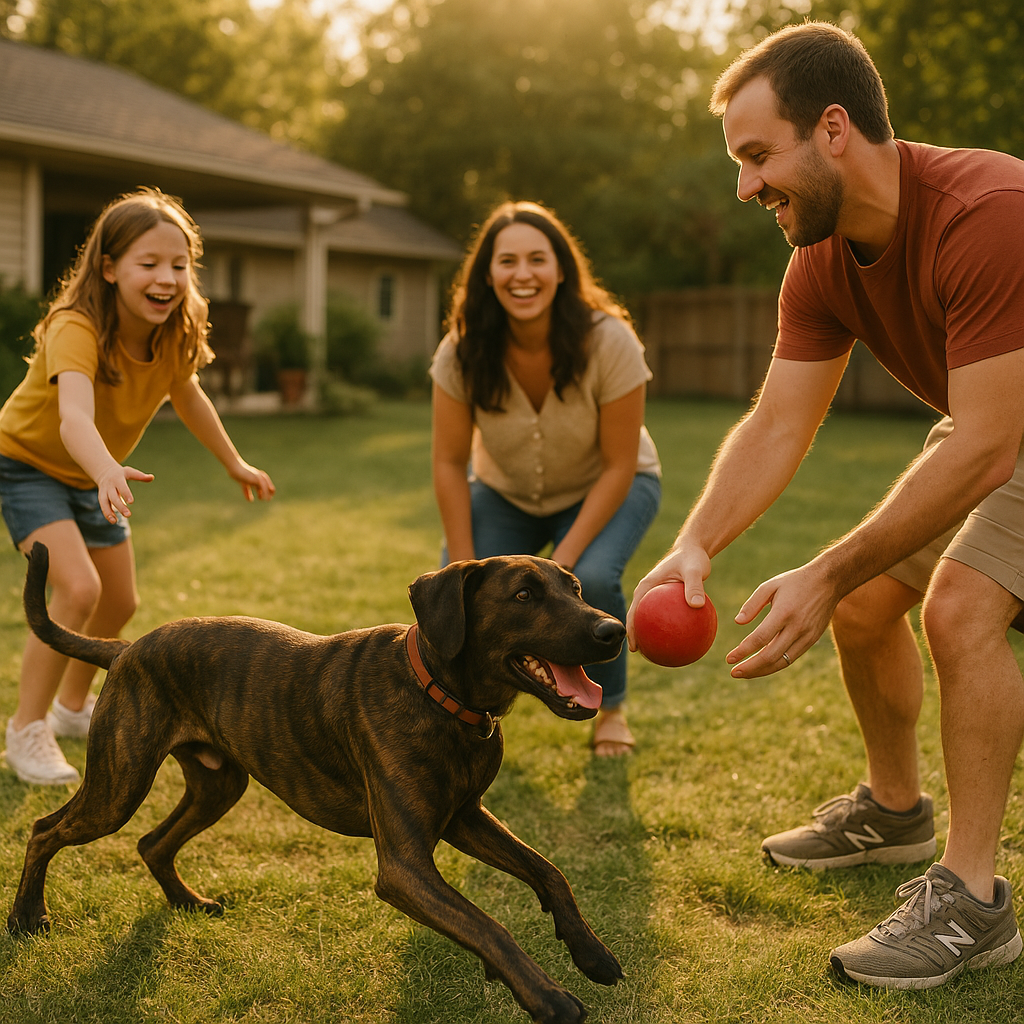
With children, this dog knows how to modulate its energy. It willingly accepts play but also knows how to settle by your side for a cuddle session. Its attachment is deep: it protects its own without unnecessary aggression, yet it is not afraid to raise the alarm. However, its instinct puts it on alert as soon as something worries it, which can result in vigorous barking. Early socialization and clear guidelines allow it to distinguish a real threat from just a breeze.
Hunting Instincts and Exercise Needs
No panic if your plan does not include tracking big game: a Plott Hound can very well find fulfillment in various canine activities. Hiking, canicross, or tracking on leisure trails provide the necessary adrenaline. Without this, it risks channeling its energy into destructive behaviors. Therefore, plan for at least one to two outings of an hour each per day, or more if you live in the countryside.
Training and Education
Training the Plott Hound is based on mutual trust and consistency. It responds better to a firm but gentle approach, as its intelligence quickly picks up on inconsistencies. Here are some tips to guide your method:
- Positive reinforcement: reward good reactions with treats or petting.
- Recall exercises: start in a closed space, then gradually increase the distance.
- Mental stimulation: scent games, food puzzles.
- Socialization: meetings with different dogs and people from a very young age.
- Managing barking: redirect attention rather than punishing directly.
In practice, short but regular sessions are dedicated to maintaining concentration. The ideal is to combine physical exercises and cognitive challenges to avoid boredom. Its intelligence allows it to learn quickly, provided the approaches vary.
Care and Health
Short coat, certainly, but no question of skipping weekly brushing: it limits hair loss and stimulates skin circulation. Here is an overview of points to watch:
| Health Problem | Signs to Detect | Prevention/Care |
|---|---|---|
| Patellar dislocation | Limping, reluctance to jump | Maintain an optimal weight, annual veterinary check-ups |
| Ear infections | Head shaking, scratching | Regularly clean the ears, check for moisture |
| Skin problems | Redness, hair loss | Mild shampoo, parasite control |
On the dietary level, an active Plott Hound requires a ration rich in quality proteins. High-end kibble, adapted to its age and activity level, forms a solid base. Supplement with about 5% cooked vegetables for fiber and micronutrients.
Living with a Plott Hound
Before adopting, ask yourself the right questions: do you have enough outdoor space? Are you ready to invest time in daily exercise? If yes, life with a Plott Hound becomes a festival of companionship: he thrives by your side, accompanies you on your expeditions, and, believe it or not, knows how to be reasonable during calmer days.
- In a country house: ideal for exploiting his taste for adventure.
- In an urban environment: feasible if you provide several long walks per day.
- Co-habitation with other animals: possible after gradual socialization.
- Annual budget: veterinary care, food, and canine activities.
FAQ
What size can an adult Plott Hound reach?
A male generally measures between 51 and 64 cm at the withers, while the female is rather between 48 and 60 cm.
Is the Plott Hound suitable for beginners?
It is possible to start without experience, provided that one is rigorous about exercise and training, ideally with the help of a dog trainer.
At what age does it start hunting?
Initiation can begin between 6 and 8 months, but full tracking ability develops in the adult, around 18 months.