
| Key Points | Details to Remember |
|---|---|
| 🐩 Origins | France and Germany in the 16th-17th centuries |
| ✨ Character | Intelligent, lively, and social |
| ❤️ Relationship | Strong attachment to the family |
| 🧴 Maintenance | Daily brushing and regular grooming |
| 🩺 Health | Longevity of 12 to 15 years, prone to ear infections |
| 🏡 Suitable | Apartments as well as houses with gardens |

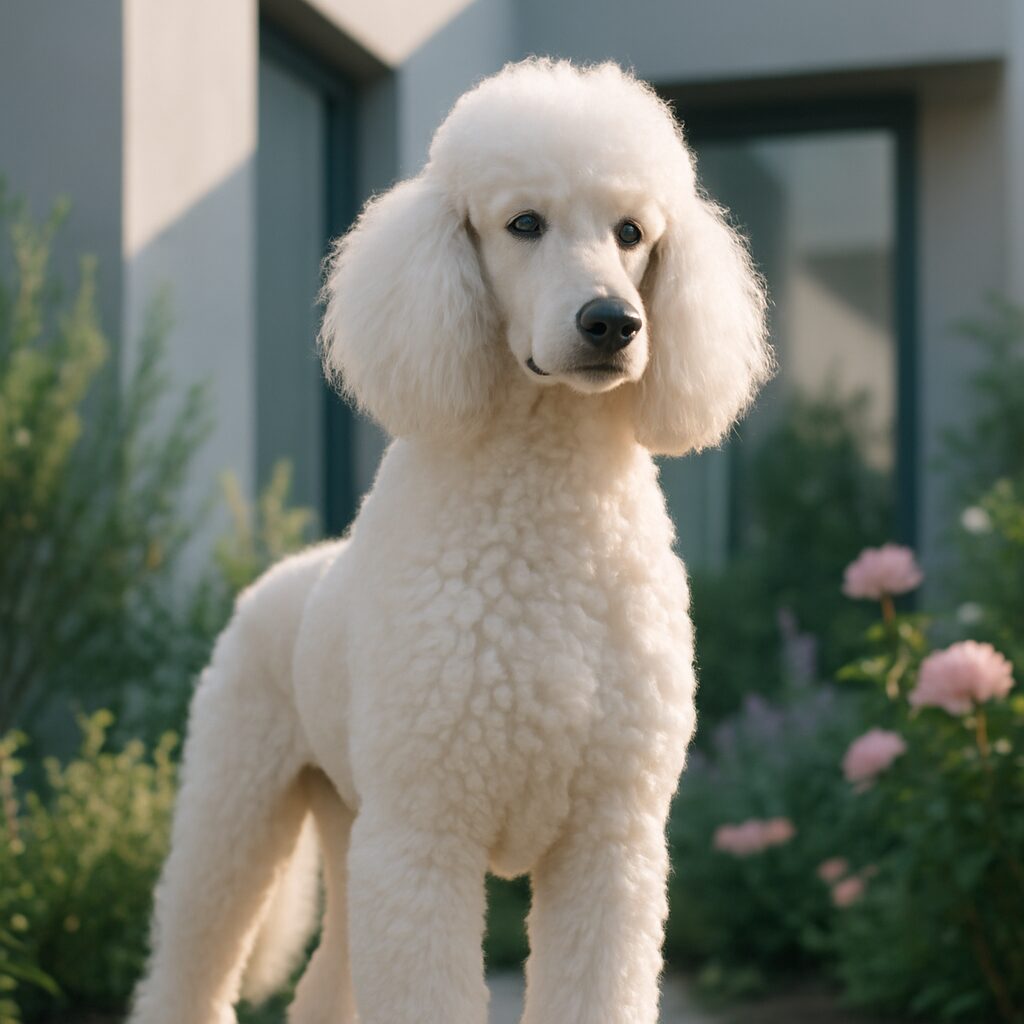
The Royal Poodle embodies a fascinating balance between a sophisticated silhouette and lively spirit. Originally a hunter of aquatic species, it has evolved into a distinguished companion, favored for its subtle personality and refined appearance. Yet behind those impeccable curls hides a dog as playful as it is curious, ready to surprise with its observational skills and ability to read everyone’s mood. This article guides you through its history, character, and essential care to live harmoniously with this true canine aristocrat.
History and Origins
One might think the Royal Poodle was born in a grooming salon: in reality, its ancestors roamed European shores to retrieve game fallen into the water. As early as the 16th century, illustrations already show curly-coated dogs used for duck hunting in France and Germany. Their robustness and scent quickly charmed nobles, then city dwellers seeking an animal as elegant as it was useful. Over the centuries, breeding refined the size and appearance, giving rise to several categories — Medium, Miniature, Toy — with the Royal remaining the largest, measuring up to 60 cm at the withers.
Physical Appearance

Structure and Proportions
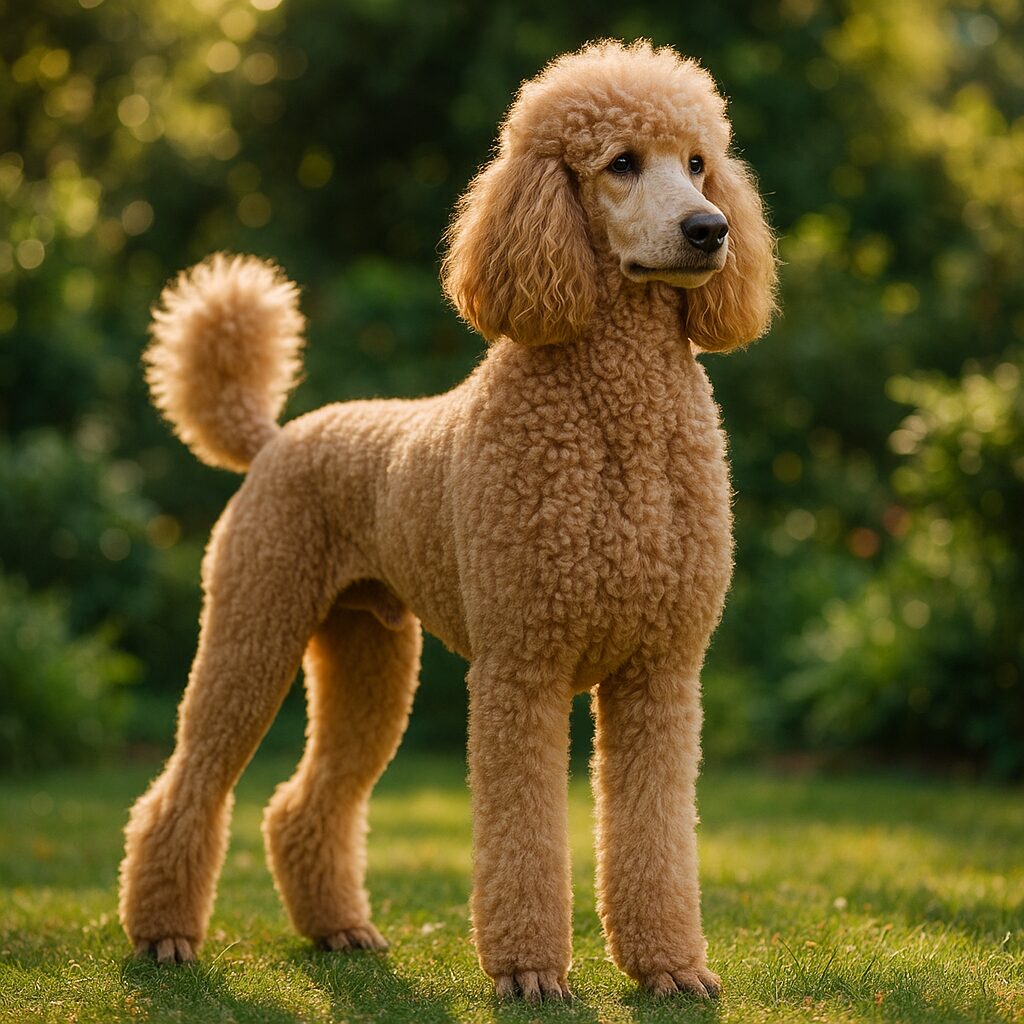
The Royal Poodle stands out with a well-proportioned body where the backline remains straight and the chest moderately developed. Its slender silhouette reflects a toned musculature, neither too thin nor too bulky. Straight limbs ensure a natural presence at the trot; in shows, this head carriage worthy of its aristocratic ancestors is often highlighted by the so-called “continental” or “lion” clip.
Coat and Colors
In truth, it’s not so simple to keep its coat impeccable: these tight curls require constant attention. Whether black, gray, white, or chocolate, the hair renews continuously. Without regular brushing, it mats and loses its vitality. Breeders speak of “silky texture” when the coat shines under the light, a sign of rigorous care and good nutrition.
Temperament and Intelligence
A Remarkable Liveliness of Mind
The Royal Poodle is among the most intelligent dog breeds: it quickly understands commands and shows willingness during obedience games. Just offer it a stimulating activity — searching for hidden toys, simplified agility courses — to see it thrive. This ability to find new solutions also makes it an excellent therapy dog, capable of analyzing emotions and responding gently.
Sociable and adaptable
This curly elegance is not synonymous with coldness: on the contrary, the Royal forms strong bonds with the whole family. Children will appreciate his legendary patience, while he knows how to be less energetic when the household calls for calm and relaxation. In the presence of other animals, his pack mentality allows him to get along with dogs, cats, or even birds, provided early socialization has been established.
Care and maintenance
Brushing and grooming
To prevent the curls from forming knots, brushing at least two to three times a week is planned. Suitable tools — wide-toothed comb, slicker brush — allow detangling without pulling. Every two months, the intervention of a professional groomer offers not only an aesthetic cut but also a thorough inspection of the ears, a frequent source of infections in this breed.
Physical and stimulating activity
Indoors, puzzle games and kibble-dispensing toys keep the Royal Poodle’s mind alert. Outdoors, a varied course will keep him fit without rushing him: short runs, forest walks, or even swimming if you are lucky enough to live near a body of water. An under-stimulated dog can develop anxiety or destructive behaviors.
Education and socialization
Positive methods
The secret to successful training lies in reward and consistency. Clicker training, for example, capitalizes on his associative memory: each good behavior is immediately marked. Frequent but short fifteen-minute sessions are enough to maintain his interest without boring him.

Early socialization
From the moment he arrives at home, the environment is introduced gradually: city noises, presence of other dogs, handling of paws and ears. This gentle exposure allows the dog to remain calm later, even in the face of unusual noise or an unexpected visitor. Without socialization, he may become fearful or overly protective.
Health and longevity
Predispositions and screening
The Royal has some vulnerabilities, notably ear infections and, more rarely, certain forms of hip dysplasia. Regular check-ups at the veterinarian — cardiac ultrasound, orthopedic examination — ensure early management. Genetic screening, when available for the subject in question, is strongly recommended before any mating.
Balanced nutrition
A diet rich in quality proteins and essential fatty acids promotes a shiny coat and healthy skin. Each dog has its own needs: age, daily activity, and medical history influence the quantity and composition of the food bowl. Low carbohydrate sources are avoided, and omega-3 supplements are favored to limit joint inflammation with age.
Living with a Royal Poodle
With family and children
The Royal Poodle integrates easily into a lively household. His patience and gentleness make him an ideal play companion for the youngest, provided sudden movements are monitored. Initiating mutual respect from the first months lays the foundation for harmonious cohabitation.
Housing and Environment
Whether it is an apartment in the city or a house with a garden, the Royal adapts provided it benefits from daily exercise. A secured outdoor space proves to be an asset for moments of freedom, but a weekly hike easily compensates for a more confined living space.
Frequently Asked Questions
What is the price of a Royal Poodle?
The cost of a puppy ranges between €1,200 and €2,500, depending on the lineage, health tests, and the breeder’s prestige. It is advisable to favor responsible breeding to avoid genetic problems.
At what age does training begin?
From 8 weeks old, the period for learning good manners can start. Short, playful, and rewarded sessions ensure better results.
How to prevent knots in the coat?
Regular brushing, combined with suitable shampoos and careful drying, limits the formation of mats. Synthetic coats covering the back during wet outings can also help.
Is the Royal Poodle suitable for seniors?
Its loyalty and measured temperament make it pleasant even for an older owner, provided they benefit from adapted daily walks.