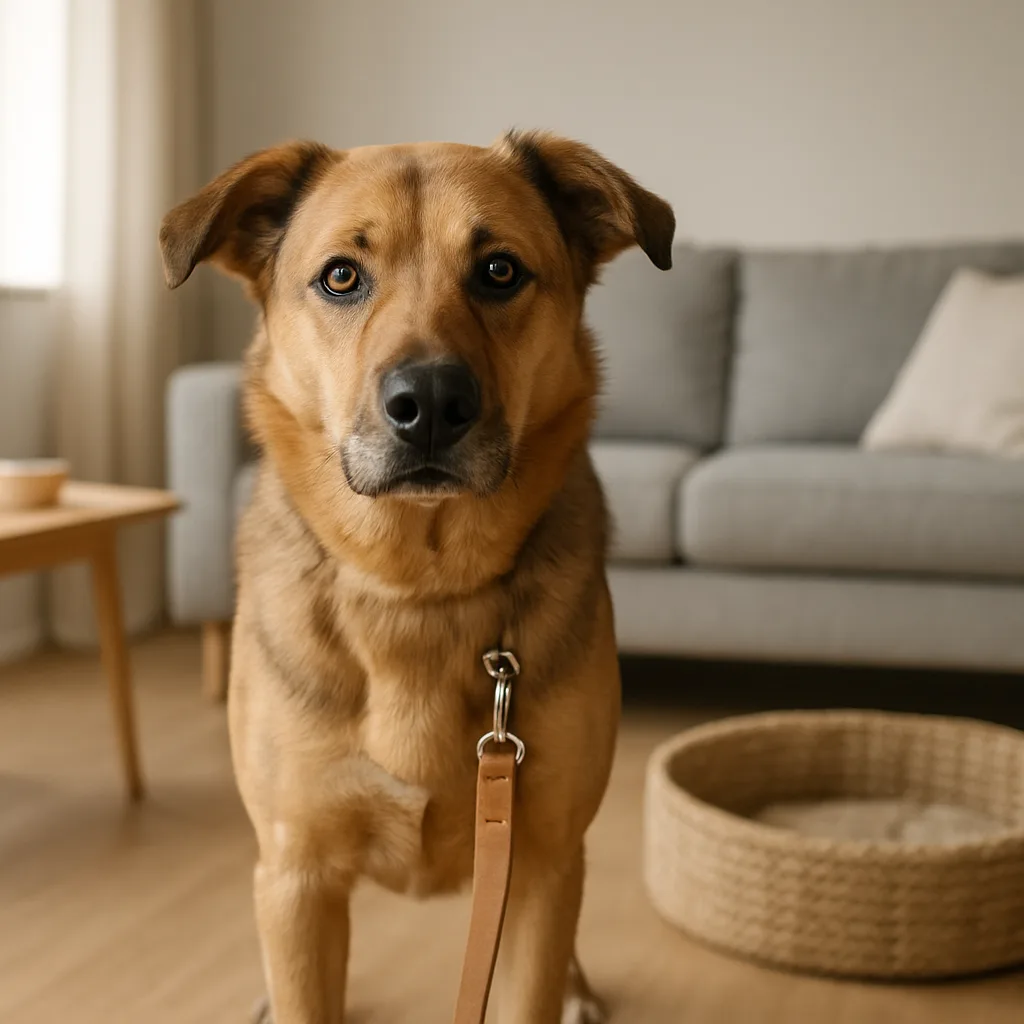
| 📌 | Definition: adopting a dog means welcoming an animal into a thoughtful environment, with checks, documents, and proper preparation of the home. |
| 🧭 | Key steps: choose the right organization, meet the dog, prepare the file, sign the documents, then organize the arrival at home. |
| 🏠 | Place of adoption: SPA, shelter, association, foundation, or, more rarely, transfer between individuals with mandatory documents. |
| 💶 | Budget: often count on 150 to 350 € adoption fees, then about 60 to 150 € per month depending on the size and needs of the dog. |
| 📄 | Obligations: certificate of commitment and knowledge, identification, transfer certificate, and, depending on the case, health record or proof of vaccination. |
| ⏳ | Adaptation time: the first days require calm, routine, and observation; balance often builds over several weeks. |
Adopting a dog: the complete guide to successfully navigating each step without mistakes
Adopting a dog is not just about finding an animal to love: it is about choosing a companion compatible with your lifestyle, budget, and housing. The right approach is to proceed step by step, verifying documents, the dog’s health status, and your ability to welcome it long-term.
In France, you can adopt through the SPA, a shelter, an association, or, more rarely, through a private individual transferring a dog. Procedures vary depending on the organization, but one rule remains the same: responsible adoption is prepared before the first contact, not after.
Why adopting a dog requires real reflection
Before starting, you must accept a simple reality: adopting a dog is a daily commitment. Food, walks, training, veterinary care, vacations, absences, unforeseen events… a dog is not chosen like an object or a passing crush. The decision must consider your housing, schedule, children, other animals, and budget.
The most often underestimated point is time. A puppy requires a lot of learning, but an adult dog can also have a history of stress, fear, or poor socialization. In both cases, success depends less on “goodwill” than on the household’s consistency and the quality of the transition.
“Adopting a dog means organizing your life around its essential needs: safety, stability, care, and presence.”
Basic principle shared by veterinary behaviorists
Where to adopt a dog in France?
The easiest way to adopt a dog in a shelter is through a recognized organization: SPA, associative shelter, animal protection foundation, or a serious matchmaking platform. You can also find a dog to give away through a private individual, but vigilance must be maximal regarding identification, paperwork, and health status.

Main adoption options
| Structure | What it offers | Points to check |
|---|---|---|
| SPA | Dogs of all ages, often monitored, identified and offered for adoption with a clear framework. | Visiting conditions, adoption fees, compatibility with your household. |
| Associative shelter | Human support, knowledge of the dog’s character and advice on its profile. | Application process, response time, veterinary status of the dog. |
| Recognized foundation | Detailed sheets, search by criteria and visibility on several partner shelters. | Geographical filters, actual availability, follow-up after adoption. |
| Private individual / dog to give away | Sometimes faster transfer, with direct exchanges with the previous owner. | Transfer certificate, identification, health record, behavioral history. |
How to choose the right structure?
- If you are a beginner, favor a structure that takes the time to assess your household.
- If you are looking for a specific dog, use a platform that allows search by department or region.
- If you adopt a dog that is already fearful or sensitive, ask for an in-depth exchange with the shelter team.
- If you go through a private individual, always ask for proof of identification and transfer documents.
Among useful resources, we can mention the SPA, the platform Seconde Chance, the 30 Millions Friends Foundation and, depending on the regions, serious local associations. For official rules, also consult Service-Public and the Ministry of Agriculture.
“The right shelter is not only the one that has a dog available: it is the one that helps you verify real compatibility with your household.”
Practical field advice
What are the steps to adopt a dog?
The steps to adopt a dog almost always follow the same logic: identify a reliable structure, prepare a small file, meet the animal, ask the right questions, then sign the documents before welcoming it. The exact framework depends on the shelter, but legal requirements and common-sense checks remain very similar.

The 6 steps to follow
- Choose the structure: shelter, SPA, association, or serious private individual.
- Prepare your file: identity, address, lifestyle, possible references.
- Meet the dog: observe its behavior, comfort level, and reactions.
- Check the documents: transfer certificate, identification, health record, certificate of commitment and knowledge.
- Organize the departure: secure transport, ready equipment, first veterinary appointment if necessary.
- Establish a routine: meals, outings, rest, and stable landmarks from the first day.
Documents to prepare or request
| Document | What it is for | When to request it |
|---|---|---|
| Identity document | Confirms your identity and your ability to formalize the adoption. | At the time of the file or signing. |
| Proof of residence | Allows the shelter to verify your place of residence. | Before final validation. |
| Certificate of commitment and knowledge | Regulatory obligation before acquiring a dog. | At least 7 days before adoption. |
| Transfer certificate | Formalizes the transfer of the dog, especially in case of donation or sale between private individuals. | The day the dog leaves. |
| Identification card / health record | Records the animal’s identity, vaccinations, and basic follow-up. | At the time of handing over the animal. |
“The certificate of commitment and knowledge is signed before acquiring the dog, with a minimum delay of 7 days.”
French regulatory framework
How much does adopting a dog cost?
The dog adoption budget depends on the chosen structure, the animal’s age, and its health condition. In a shelter, fees often cover part of the care already provided; in private adoption, the listed price may be zero, but veterinary and material expenses remain very real.
Budget to plan: from the first day to the first month
| Item | Realistic estimate | What it covers |
|---|---|---|
| Adoption fees | 150 to 350 € | Contribution to shelter costs, identification, vaccines, sometimes sterilization. |
| Starting equipment | 120 to 250 € | Bed, bowls, leash, harness, collar, cushion, toys, brushes. |
| Initial veterinary expenses | 50 to 250 € | Initial check-up, vaccine booster, antiparasitics, follow-up advice. |
| Ongoing monthly budget | 60 to 150 € | Food, antiparasitics, minor health expenses, maintenance. |
In practice, a household can therefore plan 300 to 800 € initially, then a recurring budget that increases if the dog is large, sporty, elderly, or medically sensitive. A puppy often costs more the first year, because learning, boosters, and sometimes later sterilization must be added.
“The real cost of a dog does not stop at adoption fees: it begins with its arrival.”
Useful reminder to avoid impulsive adoptions
How to prepare the house before the dog arrives?
To prepare for the arrival of a dog, the goal is simple: create a calm, secure, and predictable environment. The dog must find a space of its own, fixed landmarks, and equipment already set up before its arrival. A well-prepared house reduces stress, facilitates learning, and limits mistakes in the first hours.

Checklist of essential equipment
- A comfortable bed placed in a quiet corner.
- Two bowls: one for water, one for food.
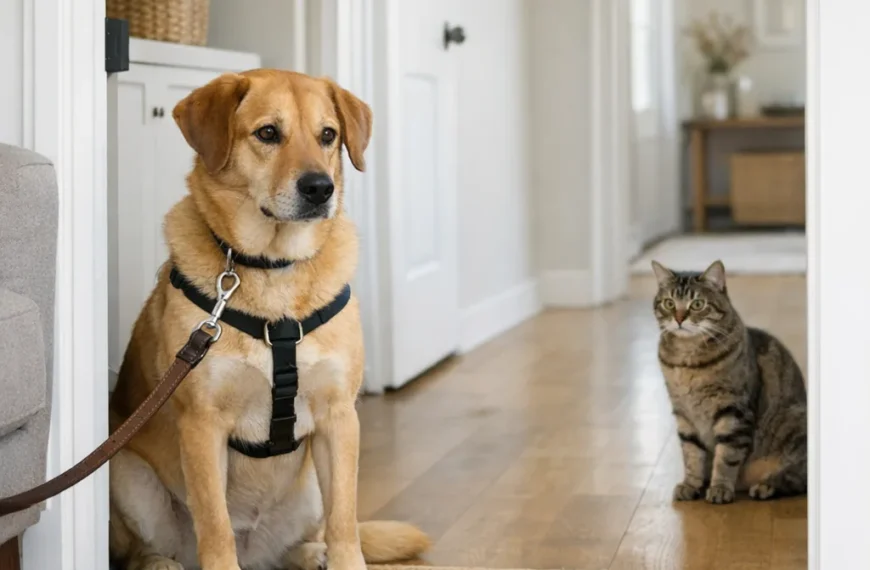
- A sturdy leash and a suitable harness.
- A collar with a tag if necessary.
- Waste bags, simple toys, and training treats.
- A cleaning product suitable for accidents.
- A secure means of transport for car trips.
What to avoid at the beginning
- Many visits on the first day.
- Overly intense games and constant stimulation.
- Sudden changes in diet.
- Access to the whole house without supervision.
The first days with an adopted dog
The first days with a dog are often decisive. The dog does not yet understand where it is or what is expected of it. You must therefore help it observe, rest, and discover its environment without pressure. The goal is not to succeed immediately in everything, but to establish a reassuring foundation.
The right pace over 72 hours
- Day 1: calm journey, settling in, water available, short outing, few contacts.
- Day 2: first habits, same schedules, observation of needs and sleep.
- Day 3: start of educational landmarks, walking on a leash, learning cleanliness.
If the dog does not eat right away or seems reserved, it is not necessarily worrying. However, if it shows signs of pain, vomiting, unusual aggression, or prolonged panic, you should seek a veterinarian’s advice quickly. For a very anxious dog, the support of a behaviorist can also be useful.
Puppy or adult dog: which to choose?
Puppy or adult dog? The right answer mainly depends on your experience, available time, and tolerance for the unexpected. The puppy offers an almost blank slate, but requires more availability. The adult dog is often more readable because its temperament is already visible, which reassures many households.
Quick comparison
| Criterion | Puppy | Adult dog |
|---|---|---|
| Education | Almost entirely to be built. | Already advanced or partly acquired. |
| Time required | High, especially the first months. | Often more stable, but depends on its history. |
| Predictability | Character still evolving. | More readable temperament, thus a more concrete choice. |
| First dog | Possible, but more demanding. | Often more reassuring to start with. |
For adopting a dog in an apartment, age alone is not enough to decide. A large calm dog can live very well in an apartment, whereas a small very nervous dog may be more difficult to manage. The real criteria remain energy, tolerance for solitude, barking level, and ability to settle down.
Questions to Ask Before Adopting a Dog
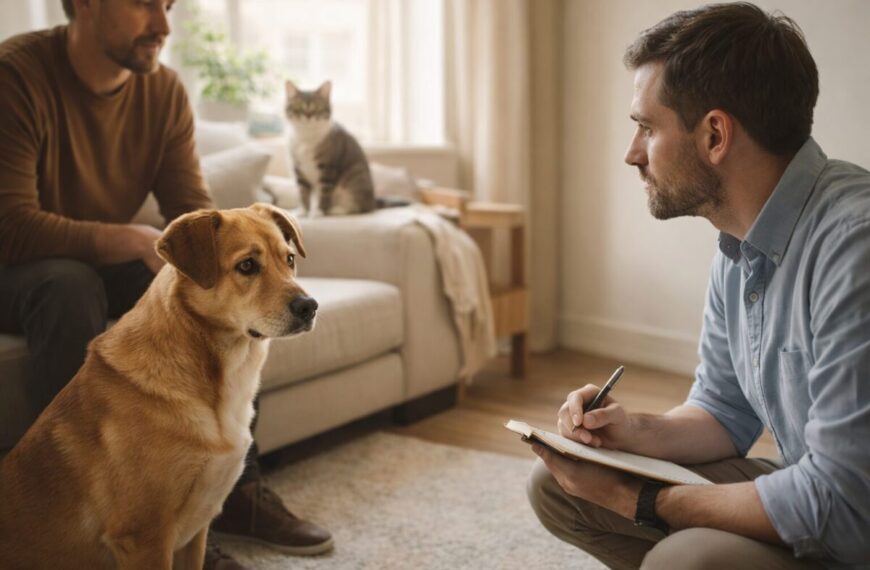
Before signing, ask concrete questions. They help you avoid unpleasant surprises and show the shelter that your approach is serious. Always inquire about the dog’s past, health, behavior, socialization, and daily needs. A good shelter will gladly provide detailed answers.
Useful Questions List
- What is its exact or estimated age?
- Is it identified, vaccinated, sterilized?
- How does it react to children, other dogs, and cats?
- Can it tolerate being alone?
- Is it house-trained, fearful, prone to running away, barking, or destructive?
- What is its ideal walking routine?
- Has it ever lived in an apartment or a house?
These questions are especially important if you live with children, already have another pet, or are looking for your first dog. In an already busy household, behavioral compatibility matters as much as spontaneous affection.
After Adoption: Veterinary Follow-up and Adjustment
After adoption, it is important to strengthen the dog’s health and emotional balance. A first veterinary check-up is often recommended within the following days, especially if the shelter’s information is incomplete or if the dog is changing environments for the first time. It is also a good time to discuss diet, deworming, antiparasitics, and vaccination schedule.
Good Practices for the First Weeks
- Maintain the same diet for a few days before any transition.
- Introduce dietary changes over 5 to 7 days.
- Reserve a fixed and undisturbed resting area.
- Start basic training: recall, leash walking, house training.
- Observe behavior without multiplying new experiences.
“An adopted dog is not ‘fixed’ in 48 hours: it feels secure first, then gradually calms down.”
Practical advice often repeated by veterinarians and trainers
If difficulties persist, do not hesitate to seek help. A veterinarian can rule out medical causes, while a behaviorist can help structure learning. This is especially useful for an anxious, reactive, poorly socialized dog or one recently coming out of a difficult background.
Common Mistakes to Avoid When Adopting a Dog
The most common mistakes do not come from lack of love, but from insufficient preparation. Many people fall for a dog without measuring the time, costs, or behavioral needs. Others want to rush the first days and unintentionally create stress or misunderstanding.
Most Frequent Pitfalls
- Adopting on a whim after a single meeting.
- Choosing a dog solely because it is “cute.”
- Underestimating veterinary costs and monthly budget.
- Forgetting to check documents and identification.
- Believing a puppy will necessarily be easier than an adult dog.
- Multiplying visits and stimuli immediately upon arrival at home.
The best prevention is patience. Take the time to compare, ask questions, reread documents, and organize the home. If a shelter or seller pressures you to decide immediately, it is a warning sign.
FAQ on Adopting a Dog
What documents are necessary to adopt a dog?
You will generally be asked for an ID, sometimes proof of address, and especially the commitment and knowledge certificate signed at least 7 days before adoption. Depending on the organization, you will also receive a transfer certificate, the identification card, and the health record.
How much does it cost to adopt a dog from a shelter?
Fees vary, but you often need to budget between €150 and €350. The amount depends on the dog’s age, care already provided, and the shelter’s policy. Then add initial supplies and a veterinary check-up budget.
Can you adopt a dog in an apartment?
Yes, provided you choose a dog compatible with your lifestyle. A calm dog capable of being alone for a few hours can live very well in an apartment. The most important thing is to plan regular outings, stable landmarks, and enough mental stimulation.
Should you choose a puppy or an adult dog?
If you are a beginner, the adult dog is often easier to understand because its character is already visible. The puppy may be suitable if you have a lot of time for training. The best choice mainly depends on your availability, your children, and your other pets.
What to do in the first days after adoption?
Keep a simple routine, limit visits, offer a quiet spot, and observe the dog without forcing it. A calm trip, a resting space, and regular schedules are the best allies for the first days with an adopted dog.
What to do if the dog seems stressed or anxious?
Start by securing the environment and maintaining stable habits. If the stress persists, consult a veterinarian to rule out a medical cause, then a behaviorist if needed. It is better to act early than to let a difficulty settle in.
Adopting a dog means building a lasting relationship with an animal that will need landmarks, care, and patience. If you proceed step by step, with the right documents and proper preparation, you greatly increase your chances of a calm and responsible adoption.