| Key Points | Details to Remember |
|---|---|
| 🐕 Origin | North Carolina, USA, German lineages |
| 🎯 Use | Hound specialized in large and small game |
| 💪 Morphology | Muscular, solid bone structure, agile gait |
| 🧠 Temperament | Determined, protective, sociable with good guidance |
| 🏃 Activity | Requires long walks and canine sports |
| 🩹 Health | Sensitive to joint problems, regular veterinary follow-up |

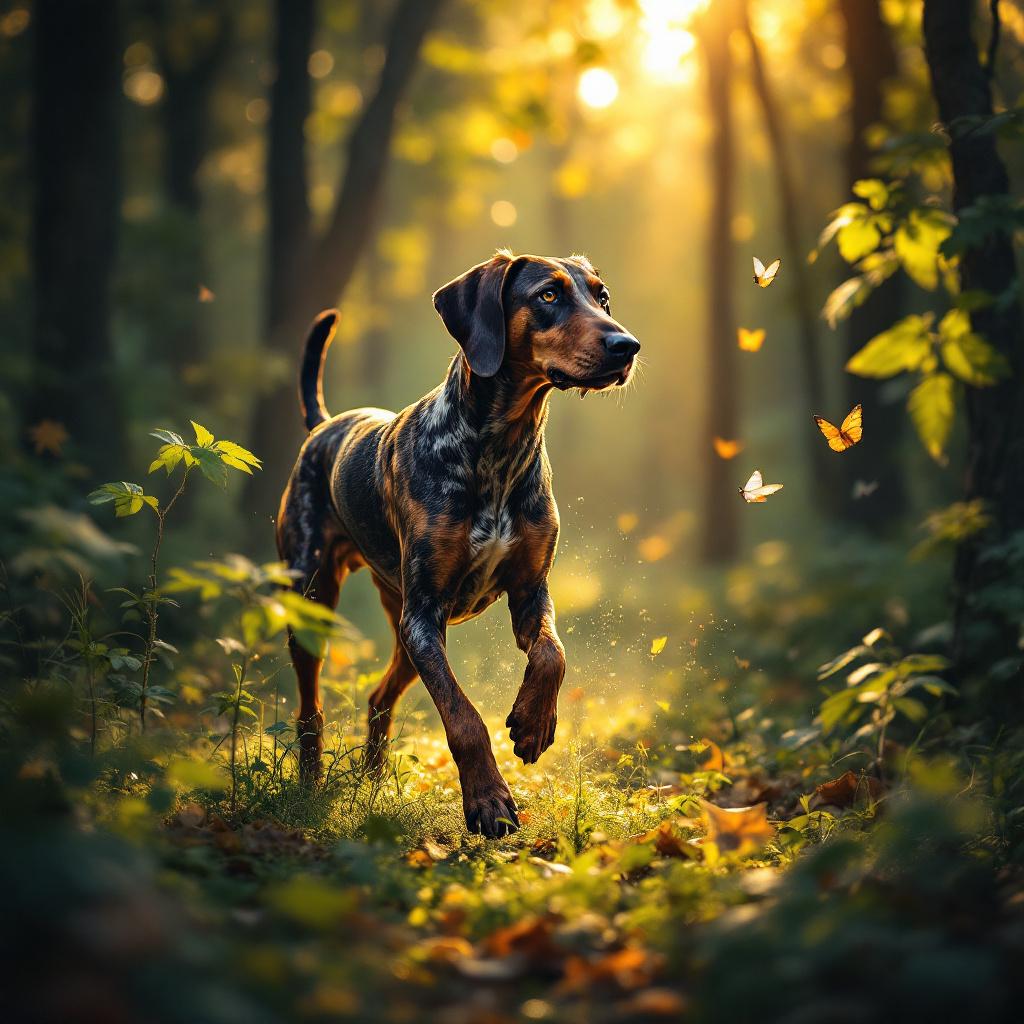
Occasionally, one encounters exceptional canine profiles; the Plott Hound is one of them. Halfway between the robustness of an athlete and the finesse of a tracker, it embodies the game hunter par excellence. In this article, you will learn all about its history, character, as well as the keys to living harmoniously with this dog of strong temperament.
Origin and History of the Plott Hound
From the Forests of Germany to the Mountains of Carolina
In the 18th century, the ancestors of the Plott Hound were already roaming the wooded regions of Germany to track boars and deer. Brothers Johannes and George Plott imported these dogs to North Carolina in 1750, welcoming a milder climate but equally rugged terrain. The dog adapted, gained endurance, and developed a clear voice to signal its catch.
Recognition and Selective Breeding
Over time, local breeders sought to stabilize the breed, maintaining the athletic appearance and the ability to track game over long distances. By 1880, the Plott Hound made a name for itself among American mastiffs. In 1886, the founding of the Plott Hound Association in the United States laid the foundation for a standard still respected today.
Physical Characteristics
Size, Weight, and Proportions
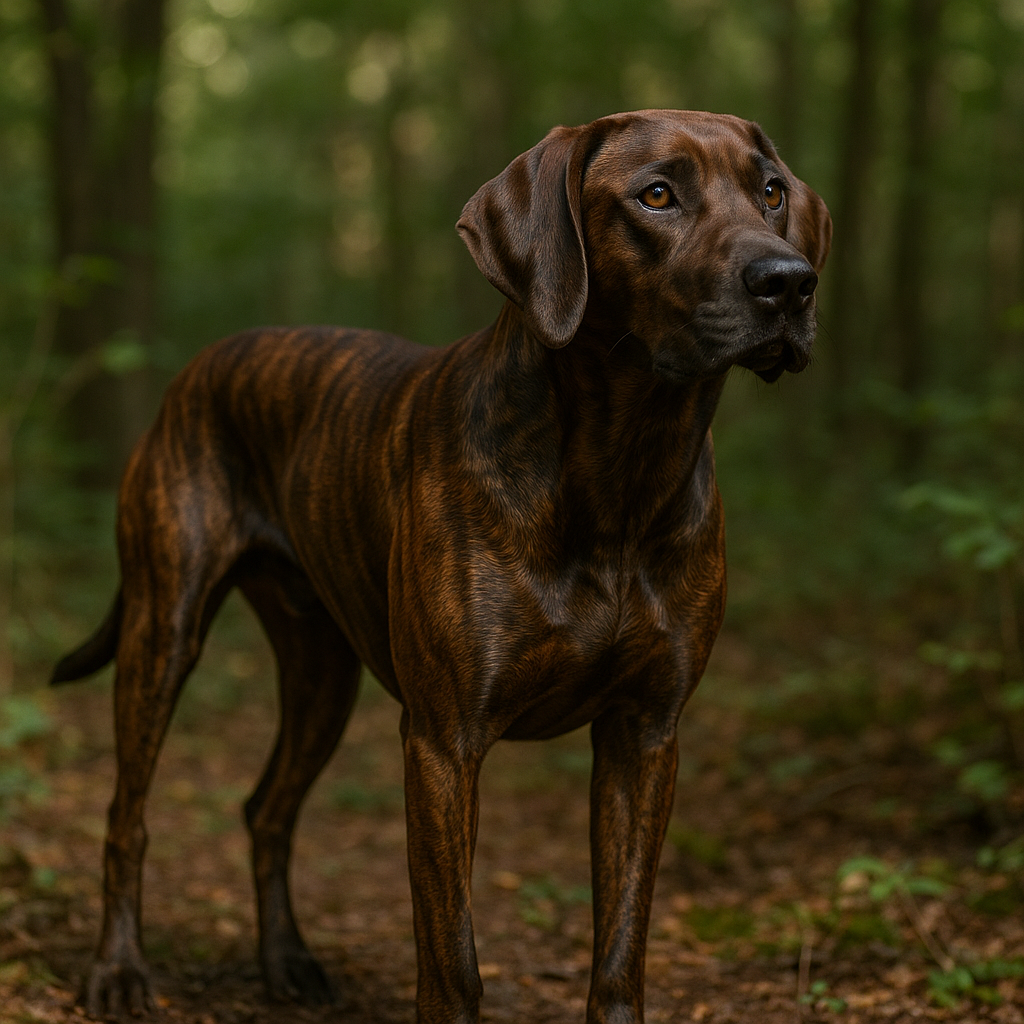
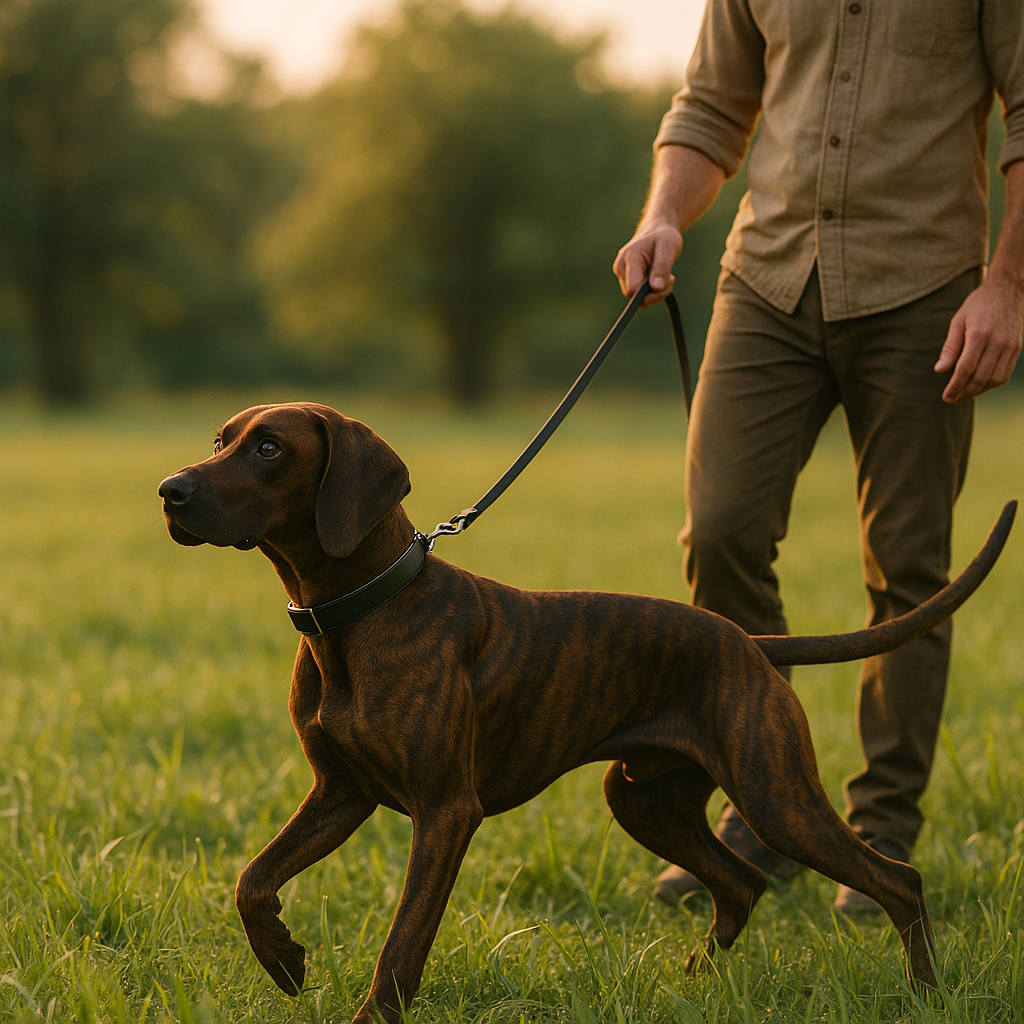
The Plott Hound typically measures 46 to 61 cm at the withers. Males weigh between 25 and 32 kg, females slightly less. Its proportions remain well balanced: a broad chest to support breathing, solid limbs for endurance, and a tail carried straight or slightly curved.
Coat, Colors, and Texture
Its short, dense, and shiny coat invites stroking. Mainly brindle coats in dark brown or black are found, sometimes sprinkled with sable markings. This fine texture sheds rain well and protects against light scratches.
| Characteristic | Average Value |
|---|---|
| Height (male) | 51–61 cm |
| Height (female) | 46–56 cm |
| Weight | 25–32 kg |
| Life Expectancy | 10–14 years |
| Coat | Short, dense |
Temperament and Behavior
Hunter Instincts and Communication
The Plott Hound has retained an impressive tracking ability. Its clear and resonant voice carries over several hundred meters, an asset for signaling the presence of game to its handler or other dogs. It is sometimes described as a tireless and focused companion, capable of covering a vast territory without rest.
Pack Sense and Relationship with the Family
Within the home, this dog likes to integrate into a stable group. Its loyalty is expressed through constant vigilance, without developing gratuitous aggression. With well-behaved children, it shows itself to be protective and patient. Visits from strangers can awaken its guarding spirit, but early socialization quickly calms it.
Education and Training
Respectful and Consistent Approach
One might think that this dog swears only by hunting, yet it responds very well to positive methods. Rewards, games, and words of encouragement facilitate learning. The important thing is to give meaning to the exercises, varying the pleasures: agility courses to improve its reflexes, playful tracking to stimulate its nose.
Common Challenges
The only real drawback is its stubborn character. Without a clear framework, it risks “taking the lead” of the pack and ignoring recalls. Therefore, anticipate outings alongside initiation to heel walking, directed search exercises, and impulse control games.
Health and Care
Pathologies to Watch
Mostly robust, the Plott Hound can nevertheless suffer from hip dysplasia or eye problems such as entropion. Regular veterinary check-ups are essential. A suitable diet, with controlled carbohydrate and fat intake, prevents weight gain and relieves the joints.
Daily Maintenance
Its coat requires little maintenance: a weekly brushing is enough to remove dead hair and dirt. Do not neglect nail trimming and ear checks, especially for an active dog that likes to slip through vegetation.
Physical Activity and Needs
Without daily exercise, you will quickly see boredom and frustration arise. Plan at least one to one and a half hours of intense outings, combined with obedience or tracking sessions. The Plott Hound also excels in canicross or treibball, sports where it uses its scent and endurance.
The Plott Hound as a Companion Dog
Some imagine that such a dog could not live in an apartment. In reality, a spacious home and an available owner can largely meet its needs. The essential thing remains mental and physical stimulation: a simple bowl filled with kibble will not satisfy this energetic dog.
FAQ
- Who is the Plott Hound suited for?
Active households who love sporting challenges and outdoor life. - Is it easy to live with in a family?
Yes, provided there is early socialization and firm but kind guidance. - How to prevent dysplasia?
Maintain an optimal weight, avoid excessive jumping, and offer varied activities. - Which exercise to prioritize?
Tracking, canicross, agility, and long hikes to channel its energy. - What diet to choose?
A diet rich in animal proteins, without excess cereals, to support its musculature.