| Key Points | Details to Remember |
|---|---|
| 🐕 Definition | Versatile Italian pointing dog |
| 🌍 Origins | Roots in Piedmont and Lombardy |
| 🐾 Morphology | Robust build and coarse coat |
| ❤️ Character | Exemplary gentleness and patience |
| 🎯 Use | Tracking, retrieving, and companionship |
| ⚖️ Maintenance | Regular brushing and need for exercise |
| 🏡 Family life | Social and protective |

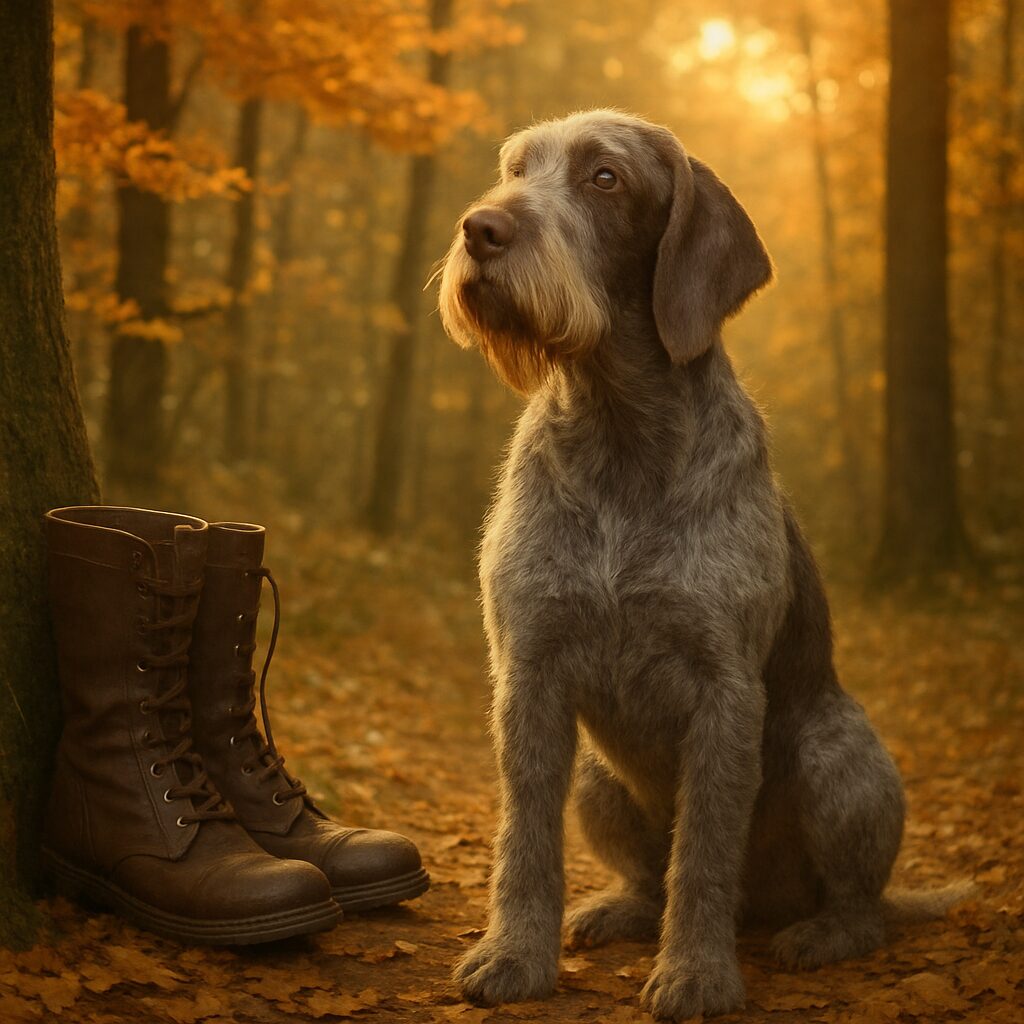
The Spinone Italiano fascinates with its unique appearance: a bushy beard framing a gentle gaze, drooping ears, and a sturdy look. Beyond its atypical physique, this dog embodies an Italian hunting tradition, combining versatility and affectionate character. It is less known than other pointing dogs, yet its balanced temperament makes it an exceptional companion, both in the wild and in a loving home. Let’s explore together its origins, care, skills, and the place it can hold in your daily life.
1. Origins and History of the Spinone Italiano
Birth of an Ancient Breed
The earliest traces of dogs resembling the Spinone date back to ancient Rome. Frescoes and mosaics already depict a molossus with a shaggy beard, used to track game. Selection resumed in the Middle Ages, notably in the Piedmont and Lombardy regions, where the hilly terrain demanded a powerful and enduring dog. At the time, it was not uncommon for this dog to serve both as a pointing and retrieving dog in wetland areas, thanks to its robustness against cold water and its keen nose.
Gradual Recognition
The International Cynological Federation officially recognized the breed in 1955, after passionate breeders had gathered sometimes scattered bloodlines. The standard then emphasized the hard and coarse coat, the straight muzzle, and the head with a gentle expression. This recognition paved the way for controlled dissemination, preserving the original qualities of this bearded hunter.
2. Morphology and Physical Characteristics
Silhouette and General Appearance
The Spinone displays a solid build, with a broad chest and muscular legs. Its gait is heavy and balanced, demonstrating unwavering endurance. The dimensions are respectively 60 to 70 cm at the withers for males and 58 to 66 cm for females, with a weight ranging between 30 and 45 kg. This stature allows it to move without fatigue over uneven terrain.
Coat and Colors
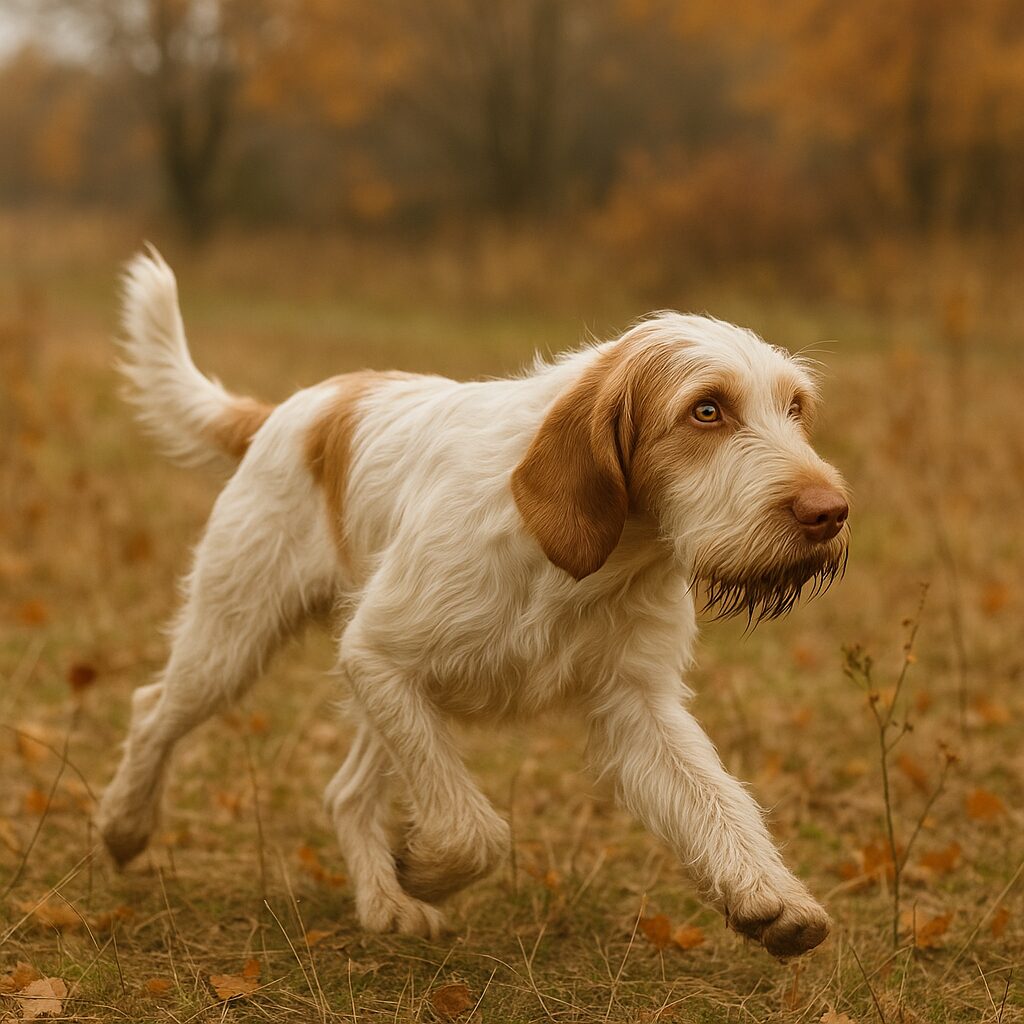
Its coat consists of a dense undercoat and a rough topcoat, especially on the head, where a full beard and thick eyebrows provide protection against brambles. The coats are mostly mottled gray, spotted white, orange, or lemon, always with clear markings. Weekly brushing is sufficient, but combing before and after each hunting outing ensures the absence of knots.
3. Temperament and Personality
A Tender Heart Behind the Robust Appearance
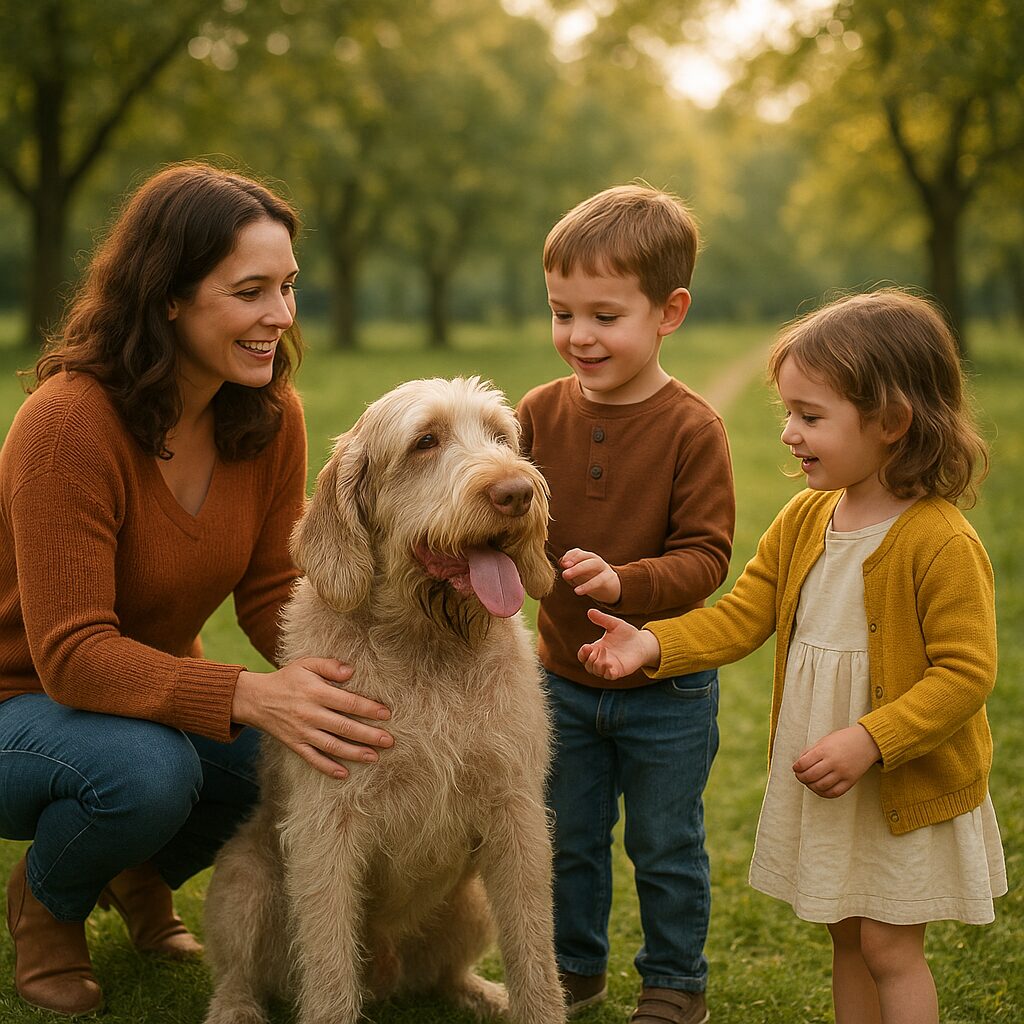
Despite its giant bearded appearance, the Spinone is above all a sensitive and affectionate dog. It develops a strong attachment to its pack, whether other dogs or its human family. The patience it shows with children is remarkable: it tolerates somewhat rough play and makes sure not to jostle them.
Hunting dog and daily companion
Versatile, he excels in tracking plaster, blood tracking, or waterfowl hunting. But outside the hunting season, his gentleness is expressed through a genuine need to feel integrated and useful. Without activity, he can get bored and develop destructive behaviors. Hence the importance of alternating dynamic walks, retrieving games, and moments of bonding at home.
4. Education and training
First steps and socialization
Socialization must begin before 4 months: meeting strangers, introduction to other animals, first traffic noises. The Spinone, curious but sensitive, needs playful exercises not to shut down when faced with the unknown. Tracking games and treats motivate his willing nature without frustration.
Learning methods
- Positive reinforcement: verbal praise and rewards help consolidate obedience.
- Progressive steps: work on a long leash before recall without constraint.
- Retrieving games: alternating between release and recall to stimulate his natural instinct.
At this stage, one can even compare his approach to that of an English Pointer: in both breeds, the will to search and the pleasure of retrieving combine with pragmatic intelligence.
5. Daily life and care
Physical activity
The Spinone demands at least 1h30 of active walking per day. Hunting is not mandatory: canicross, sport tracking, or even swimming will satisfy his need for effort. Staying fit also helps prevent obesity and joint problems.
Health and longevity
With a life expectancy of 10 to 12 years, he is generally robust, but some conditions require vigilance:
- Hip dysplasia: watch for early signs of limping.
- Ear infections: floppy ears to check and clean regularly.
- Blinking spasms: eye monitoring during budding season.
A quality diet, adapted to his size and activity, plays a key role in prevention.
6. Spinone in the family and compatibility
With children and other animals
Capable of switching from energetic play to a quiet nap near his loved ones, the Spinone develops genuine empathy. He quickly understands family codes and instinctively protects the most vulnerable. In the presence of other dogs, his sociable profile avoids conflicts, provided there is a gradual introduction.
Choosing the right environment
More rural than urban, he thrives in a home with a secure garden and access to nature. In an apartment, a very active and available owner can compensate for the lack of space, provided multiple outings and varied stimulations are ensured.
FAQ on the Spinone Italiano
| Question | Answer |
|---|---|
| What is the level of coat maintenance? | Weekly brushing and combing after each outing ensure it stays tangle-free. |
| Is it suitable for apartment living? | Possible provided there are long walks and daily stimulating activities. |
| How to successfully socialize it? | Increase encounters from a very young age and gradually expose to noises. |
| What is its life expectancy? | On average 10 to 12 years, provided good hygiene and veterinary follow-up. |
| Is it suitable for beginners? | Yes, if the owner is willing to learn the basics of positive training and to dedicate time. |