| Key points | Details to remember |
|---|---|
| 🐶 Origin | Raised in Germany for versatile hunting |
| 🏹 Skills | Pointing and retrieving hunter, very enduring |
| 🧰 Maintenance | Little daily care but regular brushing |
| 🧠 Temperament | Intelligent, independent, but loyal to its family |
| 🏃 Exercise | Needs sustained and varied activity |
| ⚕️ Health | Robust but watch for dysplasias and eyes |

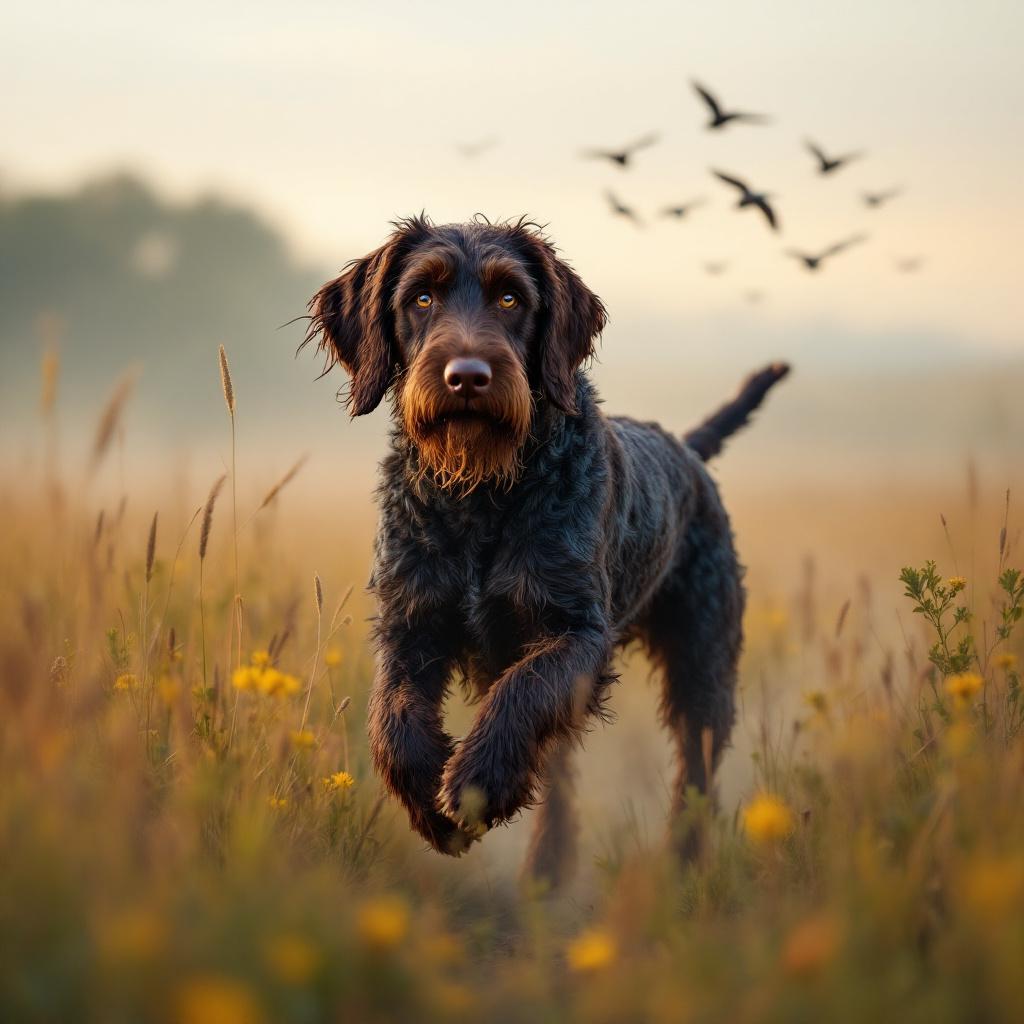
The German Wirehaired Pointer — often called the German roughhaired griffon — immediately presents a utilitarian silhouette: bearded muzzle, coarse coat, and athletic bearing. This dog is anything but decorative: it was shaped to keep pace in demanding hunting conditions, combining a keen nose, pointing ability, and physical endurance. If you are looking for a companion capable of following long outings, facing wet thickets, and working as a team with a hunter, it deserves serious consideration. Here, I explain its history, what it requires daily, how to prepare it for hunting, and what it implies when keeping it as a family dog.
History and role: why “bearded” and useful
The German roughhaired griffon was born in the 19th century from the ambition to create a versatile dog: an animal capable of scenting, pointing, retrieving, and resisting the elements. Breeders crossed various types — German pointing dogs, possibly rustic spaniels and local griffons — to obtain a protective coat and solid bone structure. The term “bearded” is not trivial: the beard and eyebrows provide protection against brambles and prevent water from going directly into the nose when the dog digs or passes through dense bushes.
The role in the field
Designed to be a versatile hunting tool, it excels on waterfowl as well as small terrestrial game. It combines the clear point of the pointing dog and the ability to retrieve. Its hardiness allows it to work for long periods without excessive fatigue, hence its nickname “natural endurance.” In practice, it is used in drives, hunting in front of the hunter, and duck searching in marshes. This mix of skills also makes it prized by hunters who want a single dog capable of fulfilling several tasks.
Appearance and coat: the wardrobe of a working dog
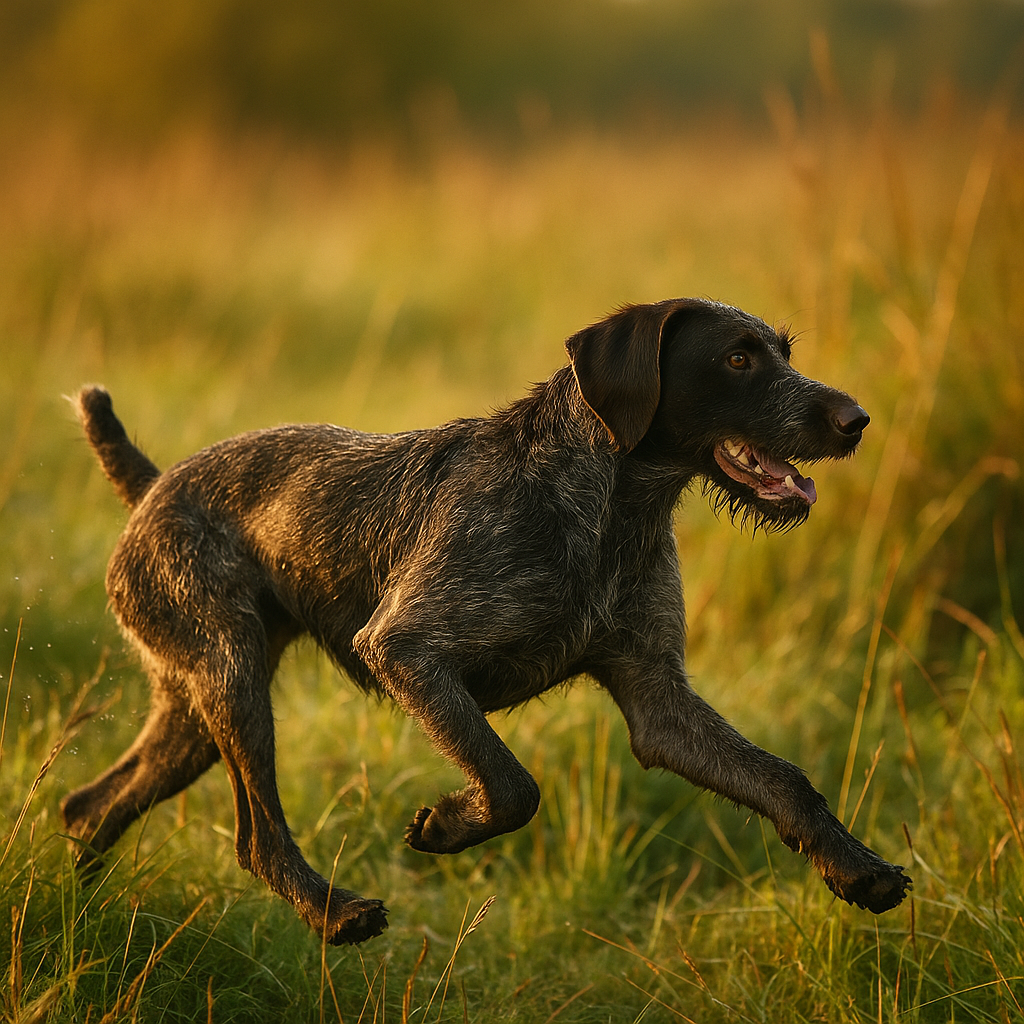
Visually, the GWP is immediately recognizable: athletic build, deep chest, tail often carried straight. But it is the coat that catches the eye: dense, hard, and fringed on the ears, mustache, and legs. This coat protects against bad weather and reduces superficial injuries in the wild. The insulating undercoat keeps warmth in winter, while the outer layer repels water and dirt.
Coat maintenance does not require sophisticated daily grooming, but it demands a routine: brushing to remove burrs and knots, checking the ears, and inspecting the paw pads after outings. The coat is rarely removed in large patches; rather, its texture is maintained and fringes are trimmed if necessary. Shaving is to be avoided: removing the protective layer exposes the skin and ruins the practical qualities of the coat.
Colors and Standards
The classic shades range from brown to roan (a mix of gray and brown), often with white markings. The standard values solidity and harmony: no eccentricity in type, more efficiency. Working breeders tend to prioritize the functionality of the build over pure aesthetics.
Character and Behavior: Independent but Loyal
One might think that a working dog is solely focused on its task; in reality, the German Wirehaired Pointer shows a range of attachments: strong hunting instinct, curiosity, and a genuine affectionate relationship with its handler. It is attentive, sometimes stubborn, and requires firm, consistent, and positive training.
- Socialization: it gets along well in a family if socialized early, but poorly tolerates prolonged boredom.
- Intelligence: lively and willing, it quickly understands expectations but also likes to take initiatives.
- Hunting behavior: keen nose, pointing instinct, tendency to follow the trail if released without command.
Compatibility with Family Life
The Griffon suits an active family that offers long walks, jogging, or retrieving games. For a sedentary household, it risks developing hyperactivity, destructive behavior, or vocalizations. On the other hand, its attachment is deep: it willingly protects and accompanies, especially if implicitly involved in regular and varied activities.

Education and Training: Effective Methods
Training the GWP requires consistency and imagination. Punishment is useless; it is better to build a relationship based on rewards and short but frequent sessions. This dog likes to work towards a clear goal: when offered exercises with object retrieval, scent games, or various courses, it shows dedication. A gentle leash and strong recall listening are essential, especially in hunting areas where maintaining attention saves the day.
Specific Hunting Work
For hunting preparation, training must combine:
- pointing and staying still exercises;
- nose work on different scents;
- retrieving in varied terrain;
- water approach and familiarization with shooting.
Many hunters alternate sessions in fields, woods, and on water to maintain versatility. If you hunt in a group, accustom the dog early to noise and human gestures: this limits panic reactions and maximizes cooperation.
Health and Longevity: Vigilance on a Few Points
Generally robust, the GWP often lives between 10 and 13 years. However, certain conditions require monitoring: hip dysplasia, hereditary eye problems, and sometimes joint issues related to sustained effort. Regular veterinary screening, X-rays for dysplasia in breeding dogs, and ophthalmological follow-up are prudent measures.
| Aspect | Prevention / Advice |
|---|---|
| Hips | X-rays before breeding, weight control |
| Eyes | Examinations by a specialized veterinary ophthalmologist |
| Joints | Adapted diet and gradual exercise |
| Parasites | Preventive treatments depending on the region |
Nutrition and Physical Condition
To support its activity, the griffon requires a quality caloric intake: sufficient proteins, appropriate lipids, and micronutrients for the joints. The rationing varies according to the life stage and effort: a dog in a period of intensive hunting will need richer portions and strict water intake. Avoid drastic weight variations: excess mass burdens the joints and reduces endurance.
Useful Supplements
Glucosamine, chondroprotectors, or omega-3 fatty acids can be considered in agreement with the veterinarian, especially for dogs subjected to long working seasons. But these supplements do not replace overall management: rest, balanced diet, and alternating efforts remain the foundation.
Choosing a Puppy or an Adult: What to Prioritize?
If your goal is hunting, select a breeding focused on work: health checks, behavioral tests, and especially lines whose parents are used in the field. A well-socialized puppy is easier to integrate, but an adult already trained can prove more reliable for a short-term season. Ask to see the parents, their behavior with game, their retrieve, and their recall ability.
Questions to Ask the Breeder
- What health certificates are available for the parents?
- How are the puppies socialized (noises, children, cars)?
- Are there any work tests or hunting titles in the lineage?
- What is the temperament of the parents in the presence of herds or other dogs?
Comparing with Other Pointing Dogs
Compared to other pointing breeds, the Griffon often lies between robustness and versatility. For example, the English pointer excels in speed and elegant carriage; the griffon compensates with greater hardiness and the ability to operate in more hostile environments. If you already have experience with an English pointer, you will notice the difference in temperament and endurance: the griffon is generally better suited to long days and wet conditions.
Living with a German Wirehaired Pointer: Practical Advice
Organize the dog’s life around regular exercise and mental stimulation: tracking games, obstacle courses, and varied obedience training. A heated kennel may be suitable outdoors, but the ideal remains human presence: this dog thrives on collaboration and activity.
- Plan at least one hour of sustained activity per day.
- Multiple short training sessions rather than one long one.
- Monitor signs of fatigue during prolonged outings.
- Perform regular checks of paws and ears after each outing.
FAQ
What is the ideal space for a German Wirehaired Pointer?
A fenced garden is a plus, but the key is activity: without regular and varied outings, it quickly gets bored. An apartment can be suitable if you compensate with intense daily exercises.
Is it easy to train for recall?
Recall requires work and consistency, especially if the dog is following a scent. Positive reinforcement, lures, and systematically rewarded recalls work well; training must start young and remain consistent.
Should its coat be clipped?
No, clipping is not recommended: it removes the natural protection. Regular maintenance (brushing, light stripping) is enough to keep the coat in good condition.
Is it compatible with other animals?
With early socialization, it can live with other dogs and cats; however, the hunting instinct must be carefully managed around unsupervised small animals.