| Key Points | Details to Remember |
|---|---|
| 🧭 Origin | Originating from Estonia, descended from local hunting lines |
| 🎯 Use | Versatile hunting dog, appreciated for wooded terrain |
| 🧠 Temperament | Stable, balanced with humans and peers |
| 💪 Morphology | Muscular yet agile, suited for long outings |
| 📚 Education | Receptive to learning, requires consistency and activities |
| 🩺 Health | Generally healthy, requires regular veterinary follow-up |

The Estonian Hound remains somewhat unknown outside the Baltic countries, yet it offers a rare combination: a natural aptitude for hunting, physical endurance for difficult terrain, and a remarkably stable temperament. Hunting dogs are often imagined as hyper nervous, but this Estonian builder combines energy and control; it works methodically rather than nervously. If you are looking for a reliable field companion who also knows how to be calm at home, this detailed portrait will help you understand its needs, daily life, and pitfalls to avoid during training.
History and Origin
The origins of the Estonian Hound trace back to local canine populations in Estonia, shaped by decades of hunting in forests and marshes. It is not an imported breed with an old and pompous standard: it is the product of pragmatic selection made by hunters who prioritized endurance, strength, and scent. In the past, these dogs accompanied modest teams, tracking small and large game, and selection was based on efficiency rather than appearance. As a result, the modern standard retains an authenticity focused on use.
Recent Evolution and Recognition
Official recognition has helped spread the breed beyond borders, but the Estonian Hound has kept its utilitarian spirit. Cynological clubs in Europe have enabled lineage exchanges and shows while preserving working qualities. Even today, most responsible breeders ensure the breed is not turned into a mere show dog: hunting instinct and robustness remain priorities.
Morphology and Standard
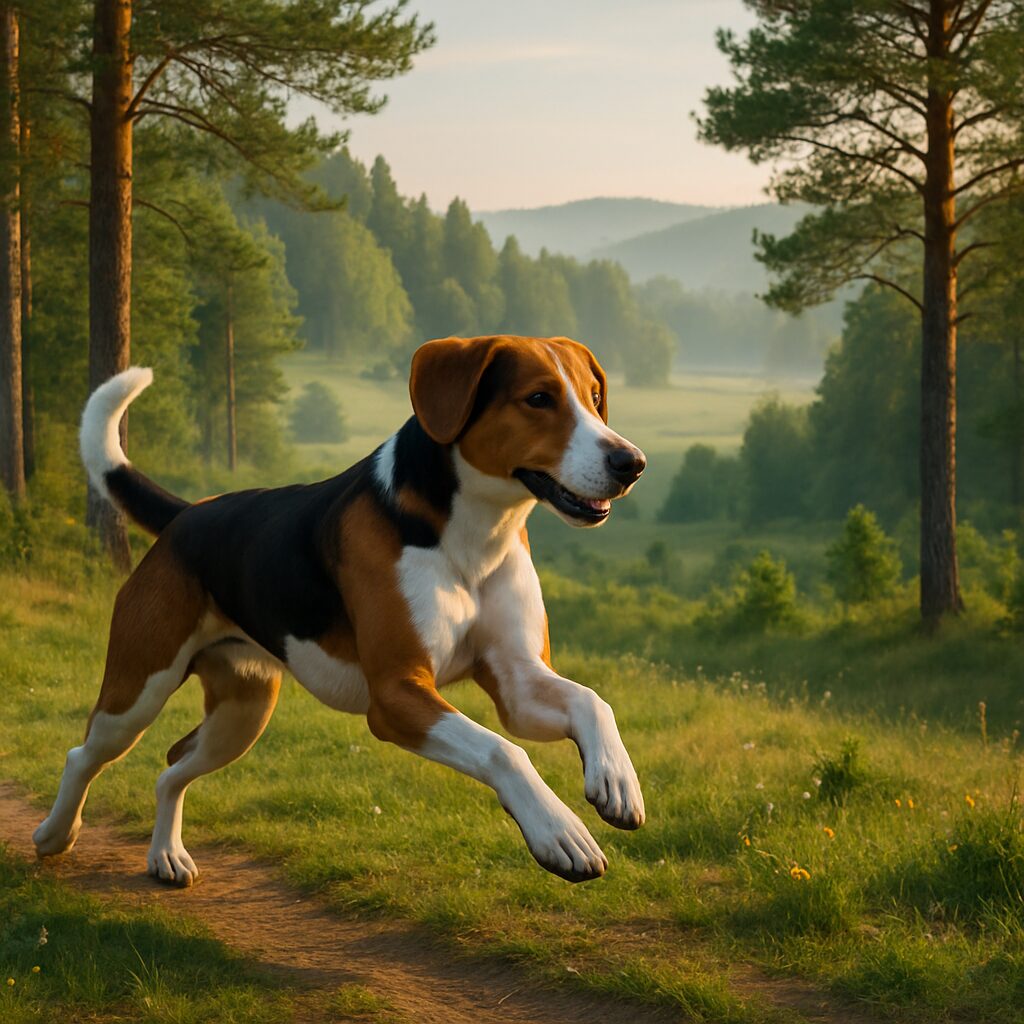
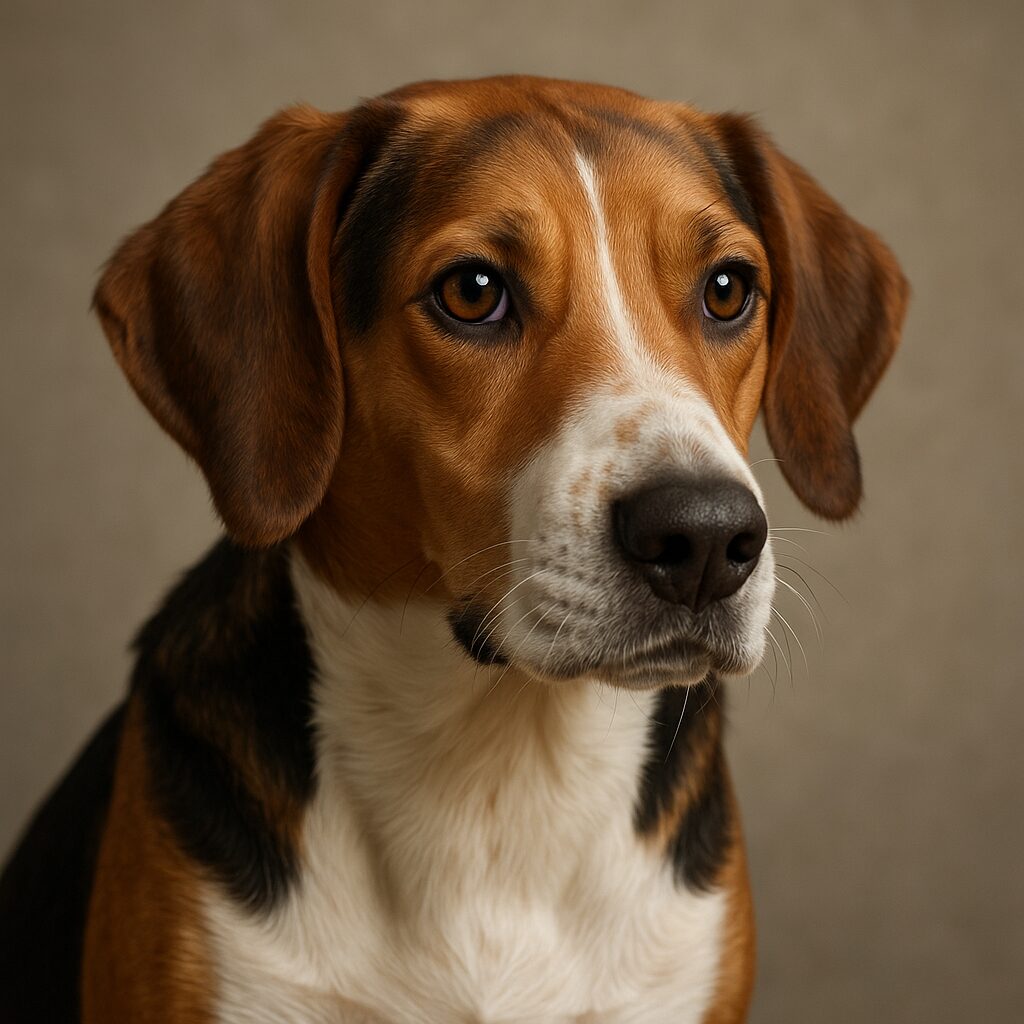
Visually, the Estonian Hound is not spectacular in the sense of show breeds; its beauty is functional. It has a solid bone structure, proportioned limbs, a chest developed for endurance, and an expressive head with a powerful muzzle. The coat is generally short to medium length, designed to resist bad weather and undergrowth. Weight and size vary according to lines, but the overall impression is of an athletic dog, with an efficient rather than elegant gait.
| Trait | Detail |
|---|---|
| Weight | About 20–30 kg depending on the individual |
| Height | From 50 to 60 cm at the withers depending on sex |
| Coat | Varied colors, often a mix of black, brown, and tan |
| Gait | Supple, capable of long strides |
Temperament: stability and work ethic
The trait most often highlighted by users of the Estonian Hound is its stability. Unlike some hunting dogs with hyper-exuberant temperaments, this one is measured: it can unleash great energy while hunting, but then returns to calm behavior. This emotional modulation is due to selective breeding: dogs capable of long days without losing their composure have been favored. However, “stable” does not mean passive; appropriate stimulation is necessary.
Human and social relationships
With its human family, the Estonian Hound often establishes deep and loyal bonds. It appreciates the presence of children when training has been anticipated, and most individuals tolerate domestic life well. Towards other dogs, it can be sociable but also focused on work; early socialization in life remains essential to avoid any behavioral exclusivity. Experienced hunters will tell you that it manages group pressure well and is not the type for gratuitous fighting.
Training and activity needs
This dog requires firm but gentle training: it learns quickly and responds well to positive reinforcement. Like many hunting dogs, it needs purpose and goals. Basic obedience is not always enough; it thrives when offered activities that exploit its scenting ability and problem-solving skills. Leash training, recall exercises, and search games are all tools to channel its energy.
- Long outings: at least one sustained daily outing, ideally in varied terrain.
- Mental stimulation: scent games, obstacle courses, learning signals.
- Routines: consistency in rules and rewards to build confidence.
Methodologically, it is relevant to alternate endurance sessions and concentration exercises. Short but frequent sessions, combined with food rewards, yield better results than sporadic and intense training.
Health and care
Overall robust, the Estonian Hound is not exempt from the recommended health checks for active breeds. Serious breeders conduct orthopedic assessments and genetic evaluations to prevent hereditary diseases. Due to its use, the musculoskeletal system deserves particular attention: hip and elbow checks, complemented by appropriate nutrition, remain priorities.
Daily care
The coat requires moderate maintenance: regular brushing to remove dead hair and check for parasites after outings. The ears, often exposed to moisture during hunts in marshes, must be checked to prevent infections. Finally, dental brushing and vaccination follow-up are essential preventive measures to maintain a serene longevity.
Use in hunting and abilities
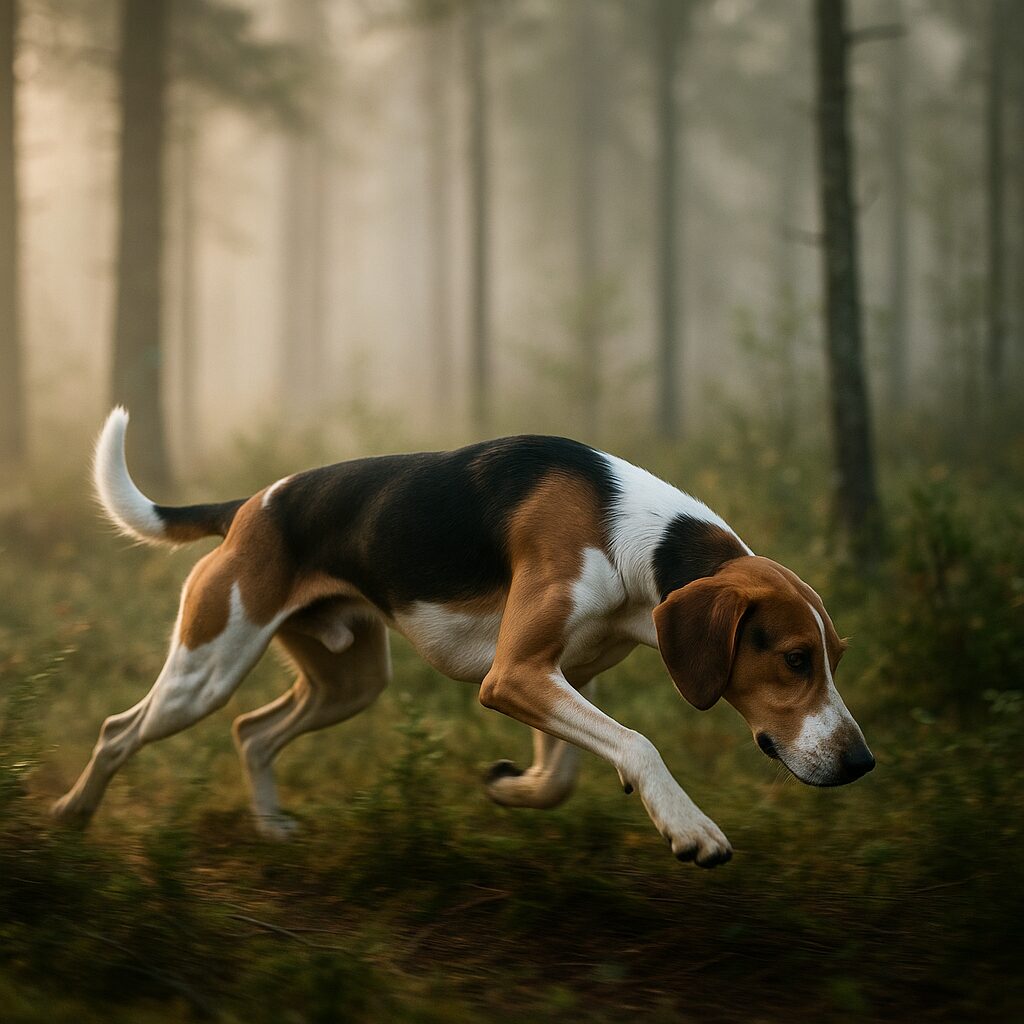
In the field, the Estonian Hound reveals its qualities: powerful scent, endurance, and ability to work in varied environments (thickets, marshes, dense forests). It is methodical, searching probable areas and often returning with precise information for its handler. This behavior makes it particularly appreciated for small game, but also for more demanding prospecting.
For hunters who like versatile dogs, this profile is close to some European breeds selected for their ability to combine scent and tenacity. Conversely, if you prefer retrieving activities, other types such as certain retrievers or water dogs will be more suitable.
Experienced breeders and handlers sometimes compare the Estonian Hound to sturdy dogs like some European farm dogs, highlighting the complementarity between strength and gentleness of character; this recalls the qualities sought in working breeds such as the Bouvier des Flandres for robustness, without confusing the uses.
Adoption: who is it suitable for?
This dog is suitable for active families, regular hunters, or households ready to invest time in physical and mental activities. It can adapt to family life, provided its exercise needs are met. It is not the best option for a sedentary owner or for housing without access to spaces to run. For those looking for a dog that is both calm daily and efficient in the field, it is an excellent compromise.
- For hunters: reliable partner, low tendency to wander.
- For sporty families: loyal companion, enjoys hiking.
- To avoid: apartments without frequent outings, novice owners unable to ensure stimulation and supervision.
Practical advice before purchase
Visit the breeder, observe the parents working if possible, check health certificates and ask for references. A good breeder will provide clear information on lineage history, tests performed, and the puppies’ socialization environment. Finally, prepare financially: suitable food, equipment, veterinary follow-ups, and possibly training or hunting work courses.
Comparatively, if you hesitate between several working breeds, it is useful to test the dog’s reaction to different stimuli. Some dogs, like playful red retrievers or fast pointers, will offer very different dynamics: the Estonian Hound stands out for its consistency rather than pure exuberance.
FAQ
What is the energy level of the Estonian Hound?
It has a high energy level during outings, with real endurance capacity, but it can remain calm at home after sufficient exercise.
Is it suitable for apartment living?
It can live in an apartment, only if the owner commits to providing at least two long daily walks and regular mental stimulation.
Is it easy to train for a beginner?
It is receptive to learning, but a novice should learn about positive and regular methods; the help of a dog trainer is recommended for optimal results.
Are there any specific health problems related to the breed?
The breed is generally healthy, but orthopedic checks and monitoring of ears and teeth are necessary. Responsible breeders conduct screenings before breeding.