
| Key Points | Details to Remember |
|---|---|
| 🐕 Definition | American dog excellent swimmer and retriever |
| 📏 Size & weight | 50–66 cm at the withers, 25–36 kg depending on sex |
| 🎨 Coat | Unique density and waterproofing, shades of brown |
| ❤️ Temperament | Loyal, protective, sometimes stubborn |
| 🌊 Aquatic abilities | Passion for water, remarkable endurance |

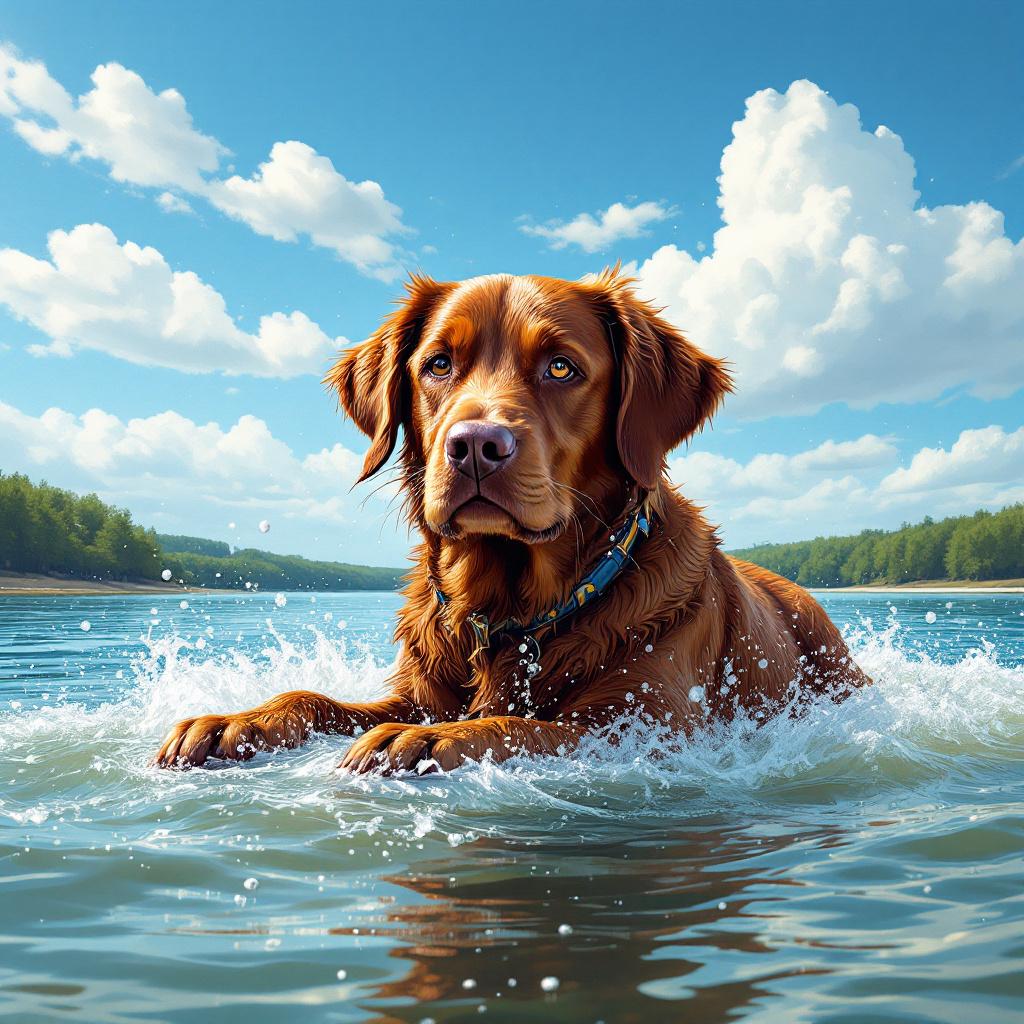
The Chesapeake Bay Retriever (or “Chessie”) embodies the idea of a sturdy dog, equally at ease on land and amid the waves. In this profile, we explore its maritime origins, physique built for immersion, frank character, and thirst for aquatic activities. Get ready to discover a companion that combines strength, intelligence, and loyalty — a true canine all-terrain vehicle.
Origins and history of the breed
Legend has it that two dogs rescued from a shipwreck near the Maryland coast in the early 19th century are at the origin of the breed. In reality, several lines of retrievers from England and Scotland crossed with local dogs, giving birth to a dog with a dense coat, capable of braving the icy waters of Chesapeake Bay.
As waterfowl hunting activities developed, breeders sought to enhance endurance and cold resistance. The Chessie, praised for its tenacity, became the preferred partner of water hunters, while maintaining a protective character towards its family.
Morphology and physical characteristics

Silhouette and proportions
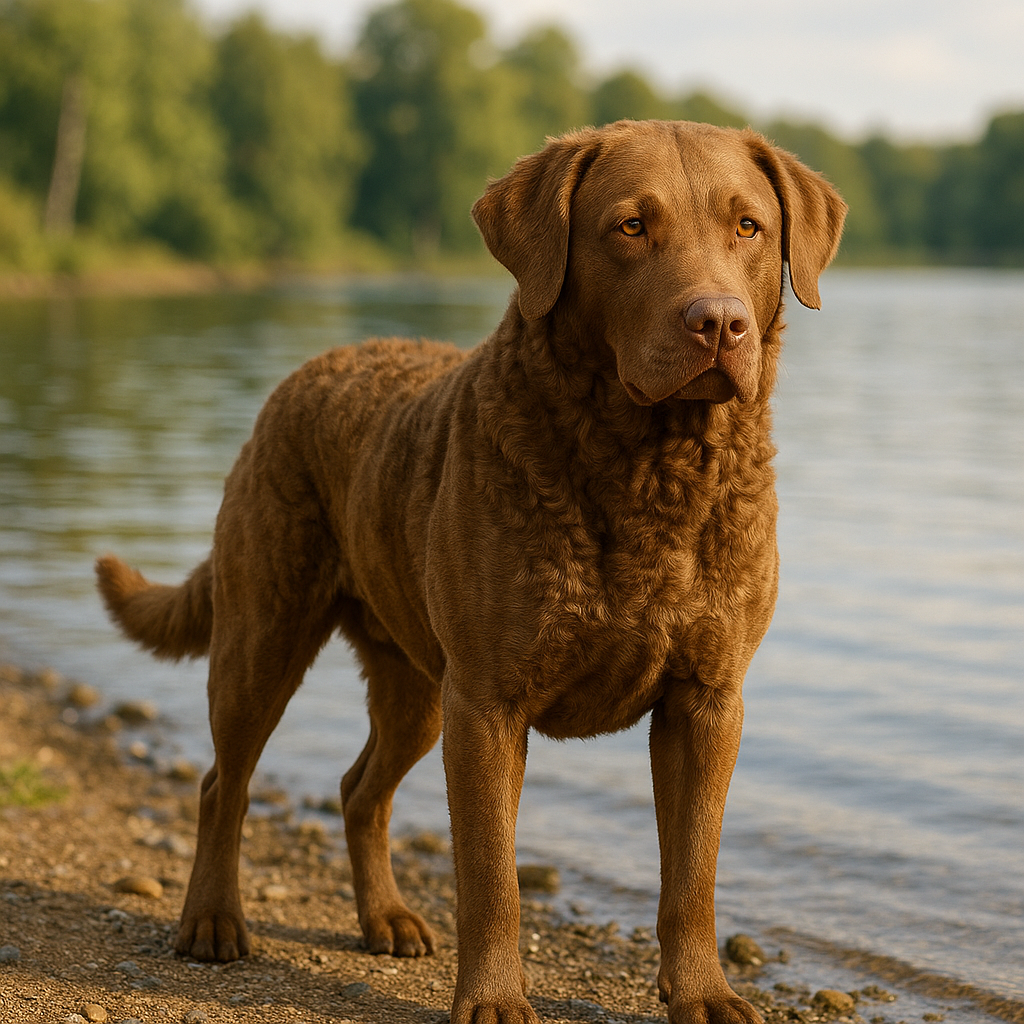
The Chessie has a massive yet harmonious body. The muscular neck extends to a straight and solid back, supported by sturdy limbs. Its spacious chest promotes efficient breathing during intense efforts. One notices a fluid, almost airy gait, betraying a design perfect for endurance.
Waterproof coat
At first glance, its fur may appear rough, almost bristly, but it hides an astonishing density. The outer layer repels water while the insulating undercoat retains heat. Depending on the lighting, one perceives reflections ranging from sandy brown to dark chocolate, giving the Chessie a natural camouflage in wetland areas.
Size and weight standards
| Sex | Height at withers | Average weight |
|---|---|---|
| Male | 56–66 cm | 29–36 kg |
| Female | 51–61 cm | 25–32 kg |
Temperament and training
The Chessie likes to keep an eye on you. Both protective and discreet, it bonds with one person or an entire family, without ever being intrusive. Its intelligence shows in its ability to solve problems, but it is also a dog that can get bored if not given enough challenges.
Early Socialization
It is essential to start socialization at the youngest age possible. Exposing the puppy to varied environments, different noises, and encounters with other dogs prevents it from becoming wary or reserved in adulthood. A walk in the forest, a visit to a dog playground, or a dog show help develop its balance.
Adapted Training
- Patience and consistency: the Chessie learns quickly but may test your calmness.
- Positive reinforcement: fond of rewards, it responds well to encouragement.
- Mental stimulation: tracking games, learning simple tricks, are highly recommended.
Water Activities and Skills
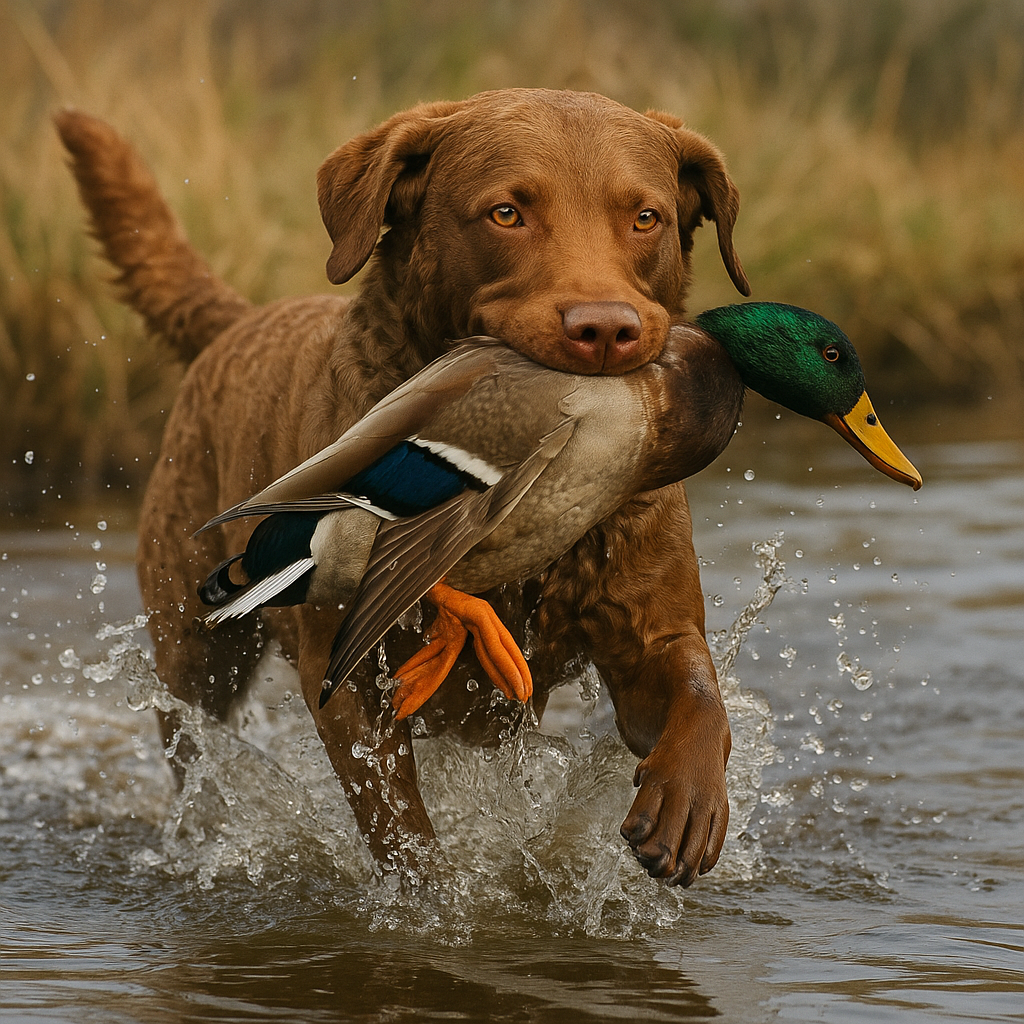
This retriever lives for water. If you ignore a nearby lake or river, the dog will not fail to remind you of its existence with an impromptu dive or a retrieval of an underwater toy.
Retrieval Training
We generally start by familiarizing the young dog with a floating toy, then gradually increase the retrieval distance. The goal is to create a reflex: as soon as the object is thrown, the Chessie sets off without hesitation, resurfaces, and retrieves confidently. Between sessions, plan a short recovery to avoid muscle fatigue.
Other Canine Sports
- Canicross: its strength suits harness running.
- Tracking: natural scenting ability, endurance, the Chessie excels at following a trail.
- Treasure hunt: this game enhances its sense of direction and stimulates its mind.
Care and Health
Despite its robustness, the Chessie deserves regular monitoring. Its coat must be brushed to remove dead hair and debris, especially after swims. Bathing only when necessary, as washing too often alters the protective layer.
Diet and Weight
To maintain its condition, precisely measure its ration. An overweight dog will lose aquatic performance and may develop joint issues. Opt for a diet rich in quality proteins, with omega-3 fatty acids to support skin and coat.
Health and Predispositions
- Hip and elbow dysplasia: screening recommended before breeding.
- Eye diseases: tests by a veterinary ophthalmologist to rule out hereditary defects.
- Skin problems: dry thoroughly after each swim to prevent infections.
Choosing a Chesapeake Bay Retriever
Before falling for this aquatic companion, make sure you have time for the activities it demands. An active household, with regular access to a body of water, will allow it to thrive. In an apartment, it risks boredom and expressing its energy through barking or destruction.
Visiting the breeder, meeting the parents, and observing the puppies’ behavior offers a valuable insight into their sociability and temperament. A good breeder will guide you, offer health checks, and support your first steps with your future Chessie.
FAQ
Is the Chesapeake Bay Retriever suitable for families with children?
Yes, it is generally gentle and protective with the young ones, provided it is socialized early and learns gentleness in object retrieval.
What is the required daily energy level?
Count at least two hours of sustained activity, including some time in water or with retrieval games.
Can it live in a hot climate?
The dense coat protects it better from cold than heat. In hot climates, ensure a shaded area and plenty of fresh water.
Does the Chessie shed a lot?
It does not shed dramatically, but weekly brushing limits hair accumulation and maintains the undercoat.