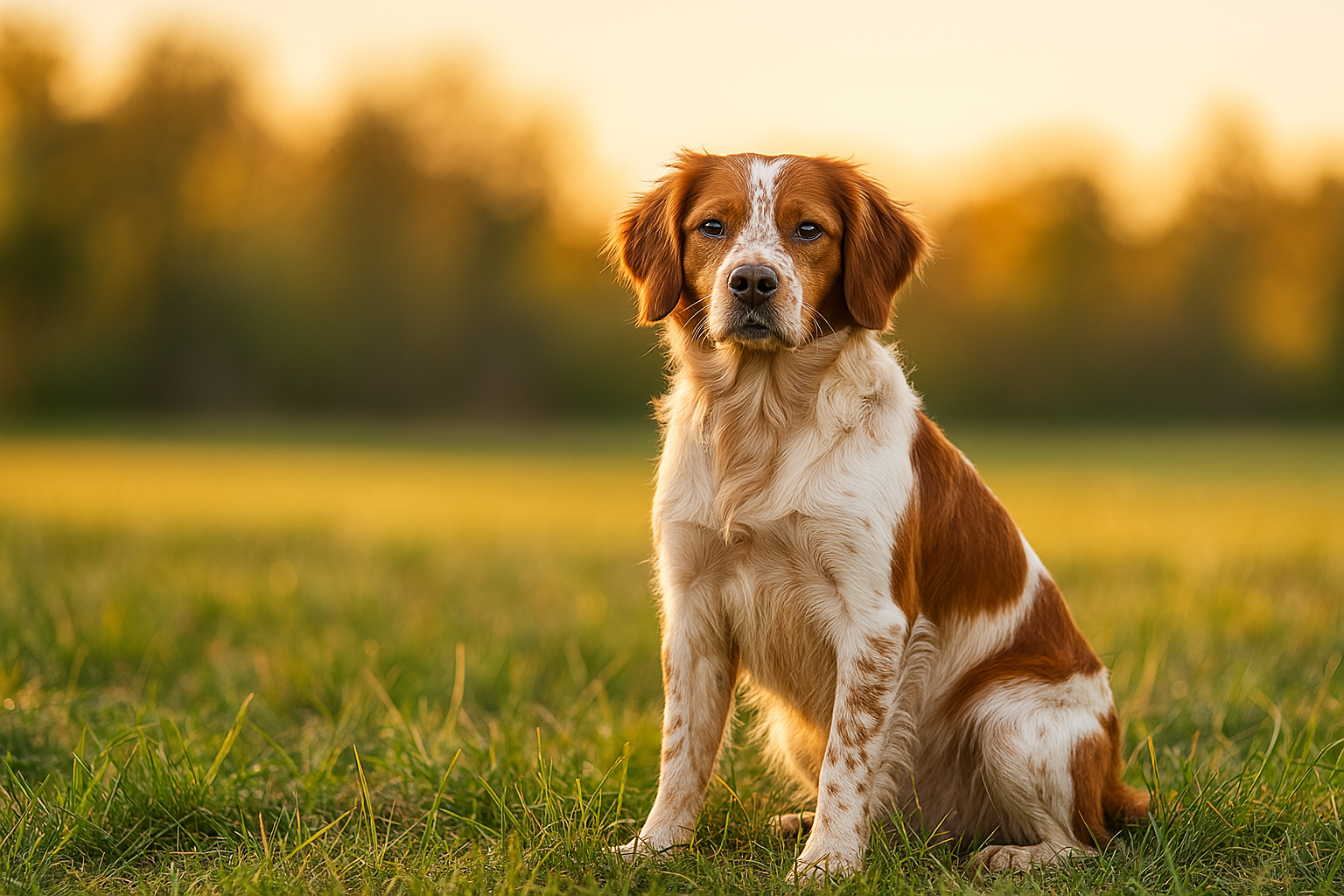

The Brittany Spaniel is one of France’s hunting pride, particularly appreciated for its hunting qualities and great sociability. Originating from Brittany, this medium-sized dog is passionate about outdoor activities, always ready to share dynamic moments with its family. Thanks to its versatility and friendly character, it also brings happiness to many households that do not practice hunting. Let’s discover together this great athlete with a Breton soul!
General Presentation
The Brittany Spaniel is a medium-sized dog (about 46 to 52 cm at the withers) weighing between 13 and 18 kg. Its coat can be white and orange, white and black, white and brown, sometimes with speckles or spots. It sports an expressive head, medium-length ears, and a rather short tail (sometimes naturally absent in some).
Originating from the Brittany region, it was historically used for hunting woodcock and partridge, standing out for its excellent search, passion for the terrain, and versatility (pointing dog). Its life expectancy varies from 12 to 14 years, depending on its lifestyle and care.
Character and Behavior
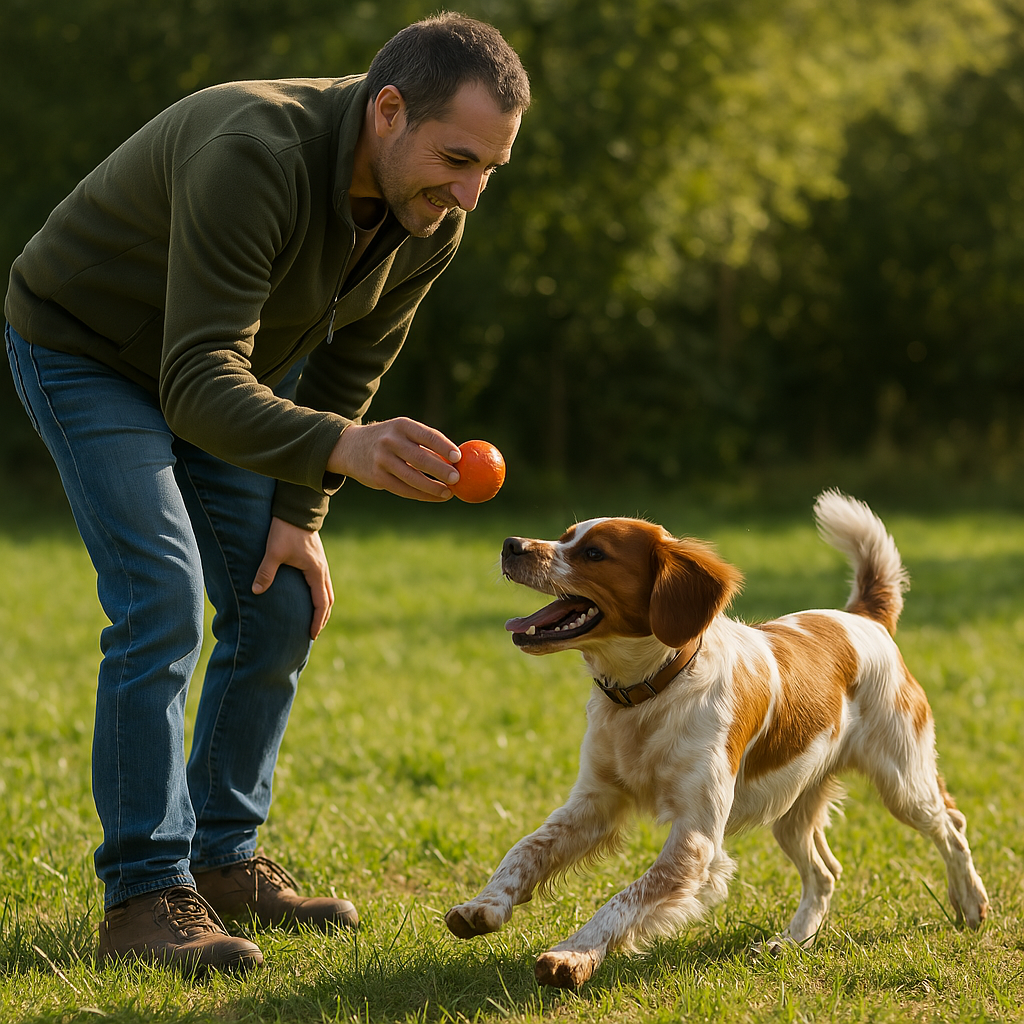
The Brittany Spaniel is known for its joy of life, enthusiasm, and strong family sense. It loves being in contact with humans and often shows itself to be very affectionate, even clingy. If well socialized, it generally gets along well with children and other animals.
In terms of hunting, it is active, fast, and passionate, with a great need to expend energy. Even if you do not hunt, it remains an energetic dog that enjoys long walks, throwing or search games, and all opportunities to explore the great outdoors.
Did you know? The Brittany Spaniel is one of the few French breeds to enjoy strong popularity abroad, especially in the United States, where it is called “Brittany.”
Physical and Mental Needs
As a hunting dog, the Brittany Spaniel needs to expend energy:
- Long walks or hikes (at least 1 hour per day)
- Throwing games, canicross, or mini-agility to channel its energy
- Mental stimulation: learning commands, searching for treats
- Regular social contacts: it does not like prolonged solitude
A frustrated or inactive Brittany Spaniel can become a barker, escape artist, or dig everywhere to compensate for boredom. It is better to anticipate and offer it an active lifestyle.
Health & Genetic Predispositions
The Brittany Spaniel is known to be robust but presents some risks:
| Problem | Symptoms | Prevention |
|---|---|---|
| Hip dysplasia | Limping, stiffness | Moderate exercise as a puppy, responsible breeding |
| Ear infections | Scratching, shaking head, unpleasant odor | Regular ear checks and cleaning (droopy ears) |
| Eye problems (cataract, PRA) | Blurred vision, decreased sight | Genetic tests, veterinary monitoring |
If you practice hunting, regularly check its paws (thorns, etc.) after outings. Annual veterinary check-ups are recommended to monitor its overall good health.
Recommended Diet
The Brittany Spaniel, an active dog, requires an appropriate energy intake:
- “Active dog” or “medium breed” premium kibble
- Adjust the ration according to the frequency and intensity of exercise
- Divide into 2 meals to avoid an overly full stomach before or after exertion
- Ensure sufficient hydration, especially in hot weather or after hunting
Monitoring its weight remains important: even if energetic, some individuals can gain weight if they do not exercise enough.
Coat Maintenance / Grooming
The Brittany Spaniel’s coat is medium-length, silky, sometimes slightly wavy:
- Brush 1 to 2 times a week to remove dead hair and prevent tangles
- Occasional bath (every 2-3 months) or after a muddy outing
- Check ears (risk of otitis), especially if it has hair at the entrance of the canal
- Trim excess hair around the paws if needed (especially if you go into brushy terrain)
After hunting trips or hikes, a quick check-up (for ticks, foxtails, etc.) is always recommended.
Favorite Activities
- Hunting (for enthusiasts): excels in seeking, pointing, and retrieving game
- Hiking and wide open spaces: perfect for a dog so close to nature
- Dog sports: canicross, agility, tracking, etc., to channel its energy
- Throwing games: ball, frisbee, or retrieving objects from water
Ideal for What Type of Owner?
The Brittany Spaniel is suited to dynamic people who love nature, ready to offer it long outings and a warm family life. It is also very suitable for hunters wanting a dog close to them, or simply for sporty owners who enjoy hiking.
On the other hand, if you are often absent or reluctant to go out, the Brittany Spaniel may get bored and develop troublesome behaviors (barking, destruction). It prefers the outdoors to sedentary apartment life, although it can adapt if you are truly available.
Recommended Products
For your Brittany Spaniel to thrive:
- “Active dog” kibble: perfect to support its energy expenditure
- Sturdy harness or collar: according to your preference, but prioritize comfort
- Anti-tick products: pipettes, collars, since it rummages in vegetation
- Throwing toys: balls, frisbees, to feed its retrieving instinct
Note: a small first aid kit (foxtail tweezers, etc.) can be handy if you hike often.
FAQ & Anecdotes
Is it a good family dog without hunting?
Yes, provided you give him enough outings and activities. He adapts well as long as his need to expend energy and sniff around is met.
Is he a barker?
He can be if he is bored or notices an intruder. Good training and distractions limit excessive barking.
Breton anecdote
Some claim that the Brittany Spaniel descends from an ancient bird dog or “bird dog,” already described in the Middle Ages in Brittany, renowned for its pointing skills on feathered game.
In short, the Brittany Spaniel is an endearing, energetic, and versatile dog, perfect for active owners, whether they hunt or not. With good socialization, exercise, and a stimulating environment, you will find in him a joyful, affectionate companion, always ready to go on an adventure. Ready to give in to the crazy charm of this lively Breton? 🏅