| Key points | Details to remember |
|---|---|
| 🐾 Definition | Working dog originating from Flanders. |
| 🌱 Origins | Established in the 19th century as a herd guardian. |
| 💪 Characteristics | Massive body and thick coat requiring specific care. |
| 🧠 Temperament | Loyal, protective and sometimes reserved with strangers. |
| 🚜 Role | Versatile farm assistant: guardian, pack carrier, and draft team member. |
| ✂ Care | Regular grooming and daily exercise are imperative. |

You have probably already noticed this massive dog, with a noble bearing and alert gaze, moving around farms or pulling a cart during rural festivals. The Bouvier des Flandres embodies the quintessence of the agricultural companion: robust, versatile, and endowed with a strong character. More than just a herding dog, it has adapted to contemporary needs while preserving the genetic heritage that allows it to brave the elements and perform demanding tasks. Let us explore together its origins, physical traits, behavior, and the role it continues to play in the farming world.
Origins and history of the Bouvier des Flandres
In the heart of the 19th century, in the Flemish regions of Belgium and northern France, a dog bred for daily labor was born. Resulting from crosses between local mastiffs and German shepherds, the Bouvier des Flandres served a dual purpose: guarding livestock and performing draft tasks. It was in farms, in contact with dairy cows and draft horses, that it built its reputation. Quickly, its ability to work in all weather conditions, powerful musculature, and keen intelligence attracted the attention of farmers, charmed by this “great friend” capable of executing precise orders while remaining autonomous.
Physical characteristics
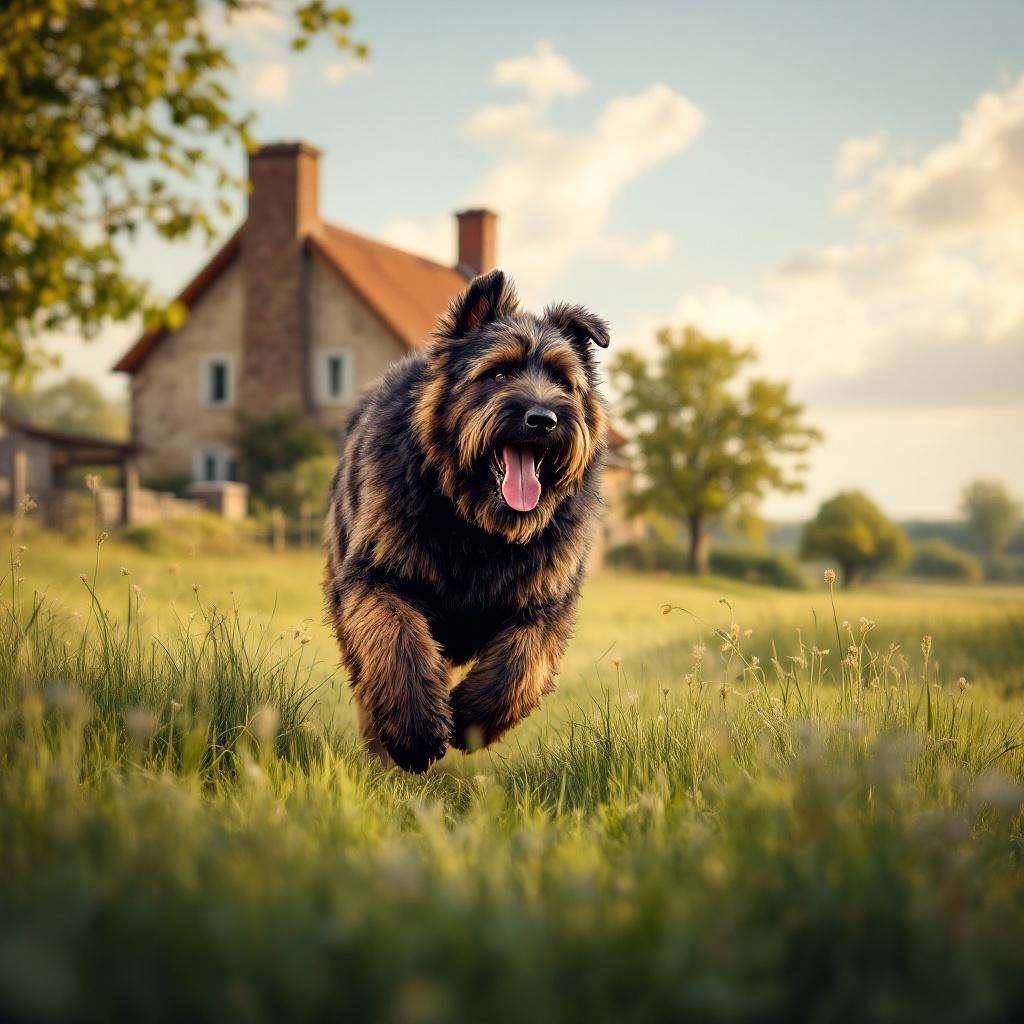
The gaze of the Bouvier des Flandres, often hidden behind a thick beard, expresses a certain gravity; one can read there the determination that has allowed the breed to endure through the centuries. Its height ranges between 62 and 68 cm for males, slightly less for females, and its weight can reach 45 kg, distributed in a compact body with strong limbs. The coat, double and slightly wavy, effectively protects against cold and moisture. In practice, this coat requires careful brushing at least twice a week to prevent knots and promote air circulation to the skin.
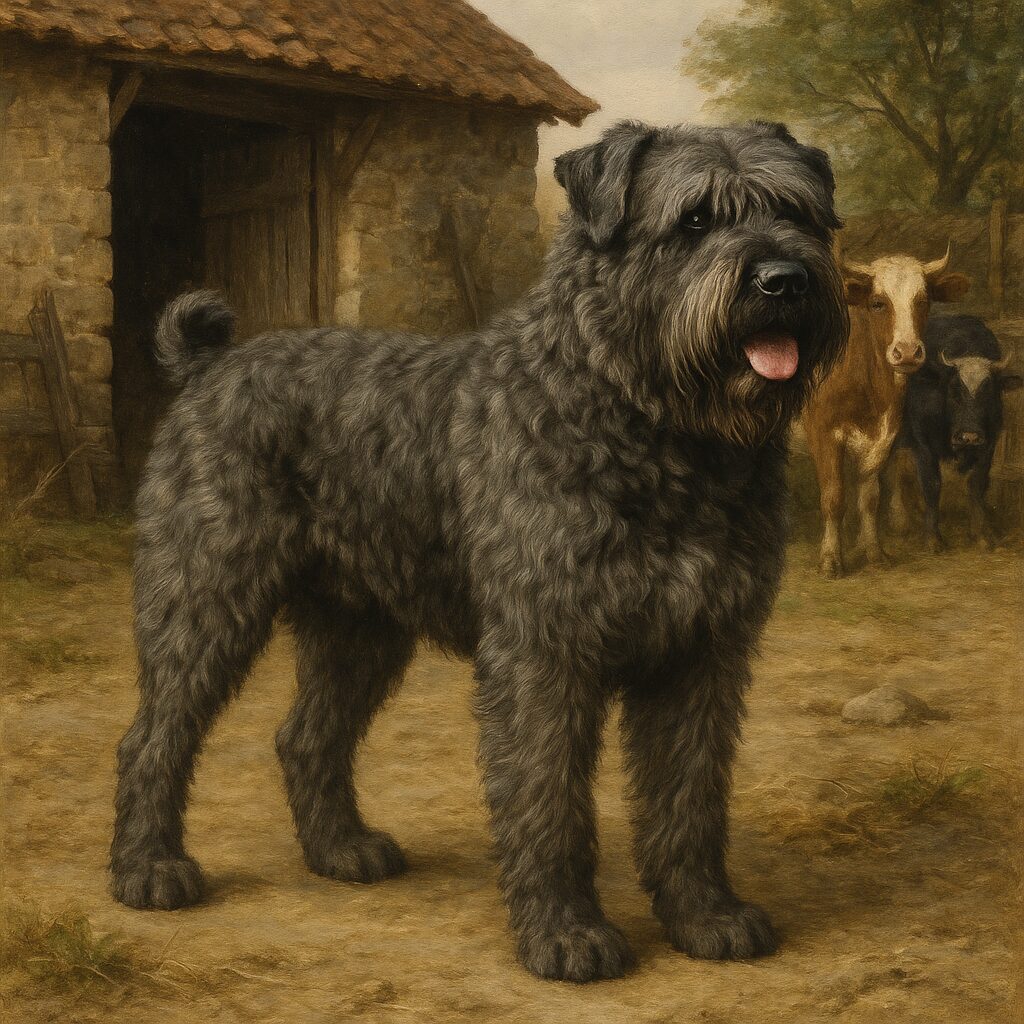
The accepted colors range from tawny charcoal to mouse gray, sometimes up to uniform black. These shades contribute to the good camouflage of the subjects in meadows or orchards, a quality appreciated when guarding herds. Each coat variety may present a dark mask, enhancing the dog’s expression of vigilance.
Temperament and behavior
Contrary to appearances, the Bouvier des Flandres is not an aggressive molosser. Loyal to his family, he develops a strong bond with his owners and naturally shows protectiveness towards children. One might think that such a size implies clumsiness, but in reality, this dog shows surprising gentleness, provided he has received consistent training from a young age. However, he remains reserved towards strangers and may adopt a wary attitude if intrusion into his space is pushed too far.
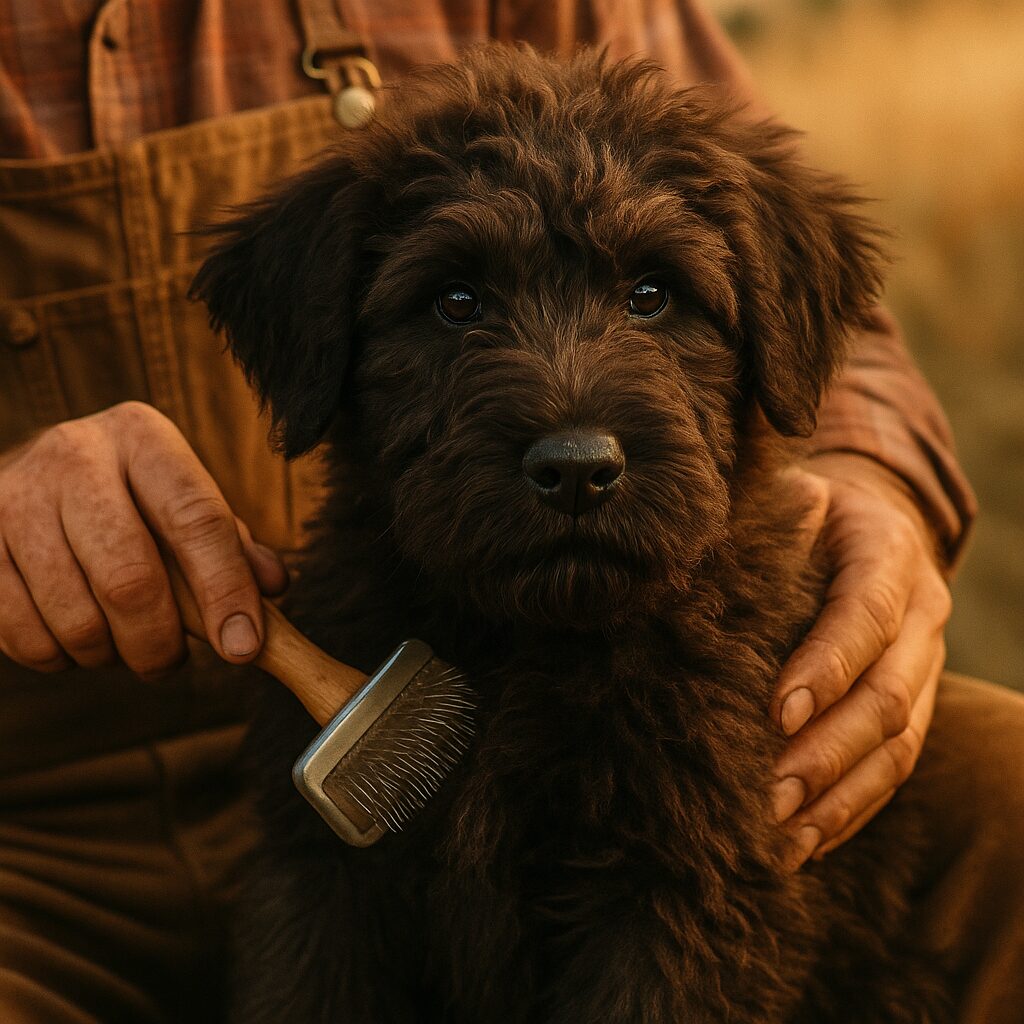
This breed has a great capacity for learning, particularly when it comes to concrete tasks – pulling, surveillance, or even search. Nevertheless, boredom is his worst enemy: under-stimulated, he can develop destructive behaviors. An environment rich in activities and play sessions stimulating the intellect are all levers to channel his energy and strengthen the bond with his owner.
The role of the Bouvier des Flandres on the farm
In an agricultural context, the Bouvier des Flandres has long held the role of herd guardian. His robustness allows him to roam vast pastures, manage cattle, and repel potential predators. Moreover, his strength has proven valuable for light pulling: tires, small carts, or harvesting equipment can thus be moved without mechanical effort.
- Surveillance: quick alert at the slightest suspicious movement.
- Pulling: load carrying on varied terrains.
- Companionship: reassuring presence for the livestock.
- Assistance: search and rescue in case of an injured animal.
More recently, Bouviers have appeared engaged in animal mediation, introduced to isolated people in rural areas or in educational farms, where they illustrate traditional work and weave a unique social bond.
Care and specific needs
A healthy Bouvier des Flandres is distinguished by a quality diet, adapted to his activity level. Rich in proteins and reasonably dosed in carbohydrates, it helps maintain his muscle mass without promoting overweight. Omega-3 supplements support the coat and joints, particularly stressed in a dog of this build.
- Daily exercise: at least one hour of active walking or work.
- Grooming: bi-weekly brushing and a visit to the groomer every 3-4 months.
- Dental care: regular brushing to limit tartar and bad breath.
- Medical check-ups: monitoring hip dysplasia and eye problems.
Care will also be taken to arrange a secure outdoor space, both so that he can patrol freely and to prevent risks of escape or excessive licking in an environment that is too confined.
Breeding and Selection
Bouvier des Flandres breeders strive to reconcile the breed standard with a healthy temperament. Screening tests for dysplasia and eye examinations are required before breeding. The choice of bloodlines favors dynamic subjects with a balanced mind, capable of passing on their endurance and adaptability. Beyond agricultural performance, modern selection increasingly incorporates socialization to reduce excessive wariness and promote the use of this dog in urban or semi-urban settings.
“A well-bred Bouvier is a faithful companion, ready to take on the challenges of the farm as well as daily life.”
FAQ about the Bouvier des Flandres
- What is the life expectancy? Expect 10 to 12 years on average.
- Is it suitable for children? Yes, thanks to its kindness, provided there is supervision.
- Can it live in an apartment? In theory, but it requires a lot of exercise and a stimulating environment.
- Is the breed rare? Quite, especially outside the Flemish and French regions.
- What sports can be practiced with it? Trekking, carting, tracking, and canicross.