| Key Points | Details to Remember |
|---|---|
| 🐶 Origin | Raised in Australia for herding livestock |
| ⚡ Endurance | Capable of running for several hours without weakening |
| 🧠 Intelligence | Learns quickly and adapts to various situations |
| 🎯 Uses | Versatile in farming and canine sports |
| 🔧 Activity | Requires intense daily exercise |
| 👍 Companion | Loyal and attached to an active family |

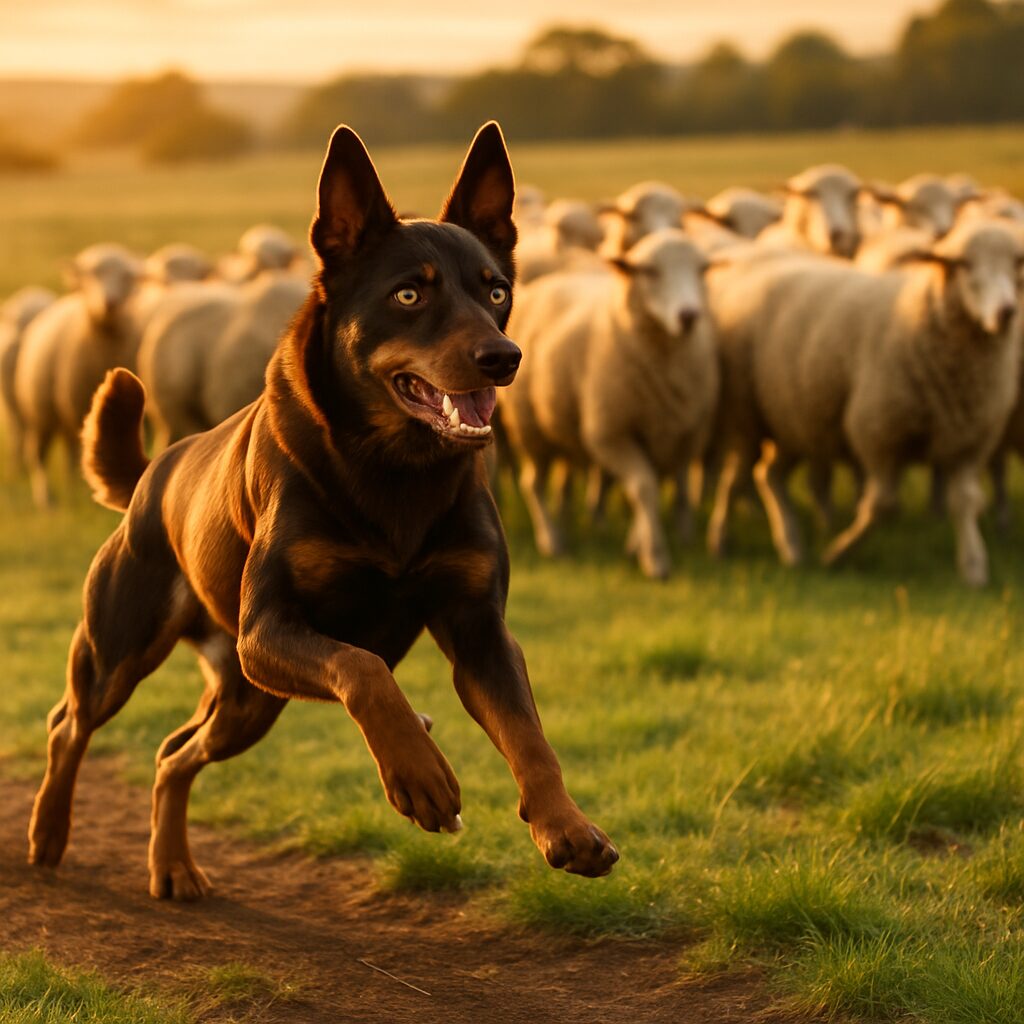
In the imagination of the Australian shepherd, the Australian Kelpie often appears as a tireless athlete. More than just a farm dog, it stands out for its ability to cover impressive distances, rivaling some long-distance runners. Through this portrait, you will understand what makes it a true marathoner of the herd: its genealogy, morphology, character, and the challenges it faces every day.
Genesis and Heritage of the Kelpie
Its story begins in the 19th century, when Australian breeders crossed British working dogs with local breeds. The goal was not aesthetic, but purely functional: to obtain a canine capable of taming often unruly livestock, under harsh climate and on vast terrains. Witnesses of the time describe a lively dog, ready to leap across entire hectares without ever slowing down.
From Scottish Pastures to Australian Plains
One might think that the Australian Kelpie descends directly from the old Scottish shepherd. In reality, several British lineages – including some collies and black shepherd dogs – intertwine to form this breed. The arrival in Australia transformed this crossbreed into an enduring athlete: extreme heat, distances to cover, and herd maneuverability gradually evolved its silhouette and temperament, to the form we know today.
Physiology Adapted to Endurance
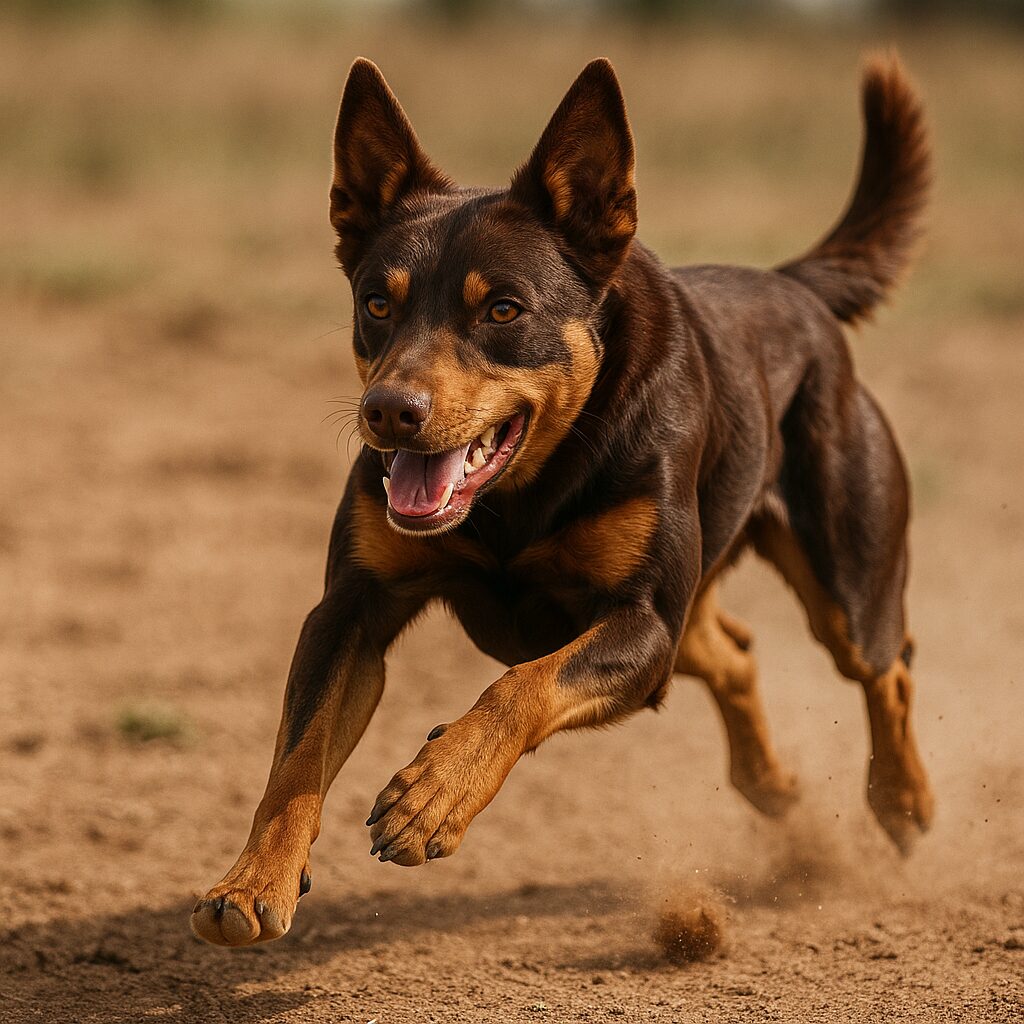
The slender silhouette and muscular limbs immediately betray a nature designed for running. Under the pink skin, a dense carpet of slow-twitch muscle fibers allows quick recovery and sustained effort. In contrast to canine sprinters, the Kelpie develops high tone without seeking explosive power, but rather efficiency over duration.
Morphology and Thermoregulation
Its double coat, short but insulating, plays a crucial role in thermal regulation: the undercoat retains coolness, while the outer coat repels dust and insects. The upright and mobile ears provide continuous air sweeping, like a ventilation system that is both sensitive and effective in dispelling thermal overload.
Cardiorespiratory Capacity
The Kelpie’s heart beats at a moderate pace even when its strides accelerate. Veterinary studies show a ventricular ejection volume above average and lungs capable of exchanging oxygen at a high rate. In line with its role as a herding dog, it restores its breath in moments, ready to resume at a trot or a gallop.
Character and Herd Intelligence
A Kelpie without a herd to guide risks going in circles. Rather than a placid temperament, it cultivates an almost professional concentration. Every undisciplined lamb triggers in it a repertoire of silent signals: an intense look, a head movement, sometimes a slight bark. This form of silent communication illustrates a deep social intelligence, shaped by a constant need to act.
Natural Instinct
In the field, the way it assesses a situation is almost like mental calculation. Rather than charging head down, it tests the livestock’s behavior with small advances and retreats. This taste for strategy, intrinsic to the breed, is also found in dog-sport competitions, where its ability to anticipate makes the difference.
Learning and Training
The Kelpie hates abstract commands. Practically, it learns better when involved in a series of concrete goals: gathering three sheep then five, circling an obstacle, or memorizing a handling routine. An abundance of toys does not have the same impact as a structured work session, where it can reuse this innate forager instinct.
This Athlete Among Dogs
When compared to other working dogs, such as the Border Collie, the difference lies in the longevity of effort. The Border excels in explosiveness, the Kelpie in tenacity. On courses over 20 kilometers, observers note that it comfortably maintains a steady pace, without signs of marked fatigue.
Marathoner on Varied Terrain
Rocks, moorland, tall grass, the Kelpie adapts to changing surfaces like a musician to a complex score. Its pads, accustomed to roughness, cushion each step. Its hind legs follow the movement without faltering, even when the terrain requires repeatedly crossing small rocky slopes.
Comparison with Other Working Breeds
More massive than the Whippet but leaner than the Husky, it occupies a unique physical niche. Unlike a Malinois, its endurance is accompanied by a finer effort management, without emotional transformers that push it to excess or hesitation. This harmony between liveliness of mind and perseverance is its main asset.
Daily Life and Well-being
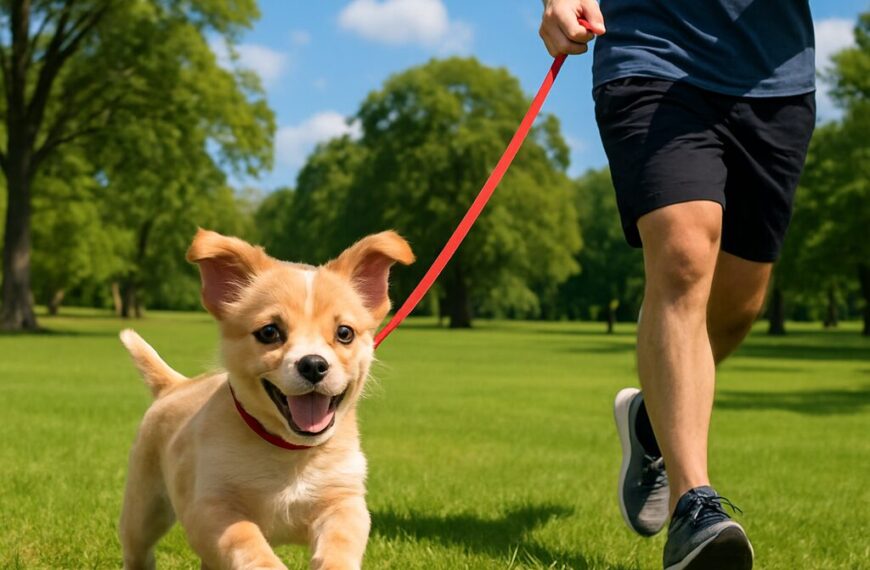
In a family context, one must accommodate its need for stimulation. A 200 m² garden will not be enough to exhaust its energy: rather come with a flexible activity program, between jogging, cani-cross, or chase games. Without physical and mental challenge, the Kelpie resorts to barking or ingenious explorations in search of occupations.
Nutritional Needs
Its metabolism, calibrated for effort, requires a balanced intake of quality proteins and easily mobilizable lipids. You will opt for a ration graduated according to the intensity of the work: sports kibble during grazing seasons, a lighter version during rest periods.
Exercise and Mental Stimulation
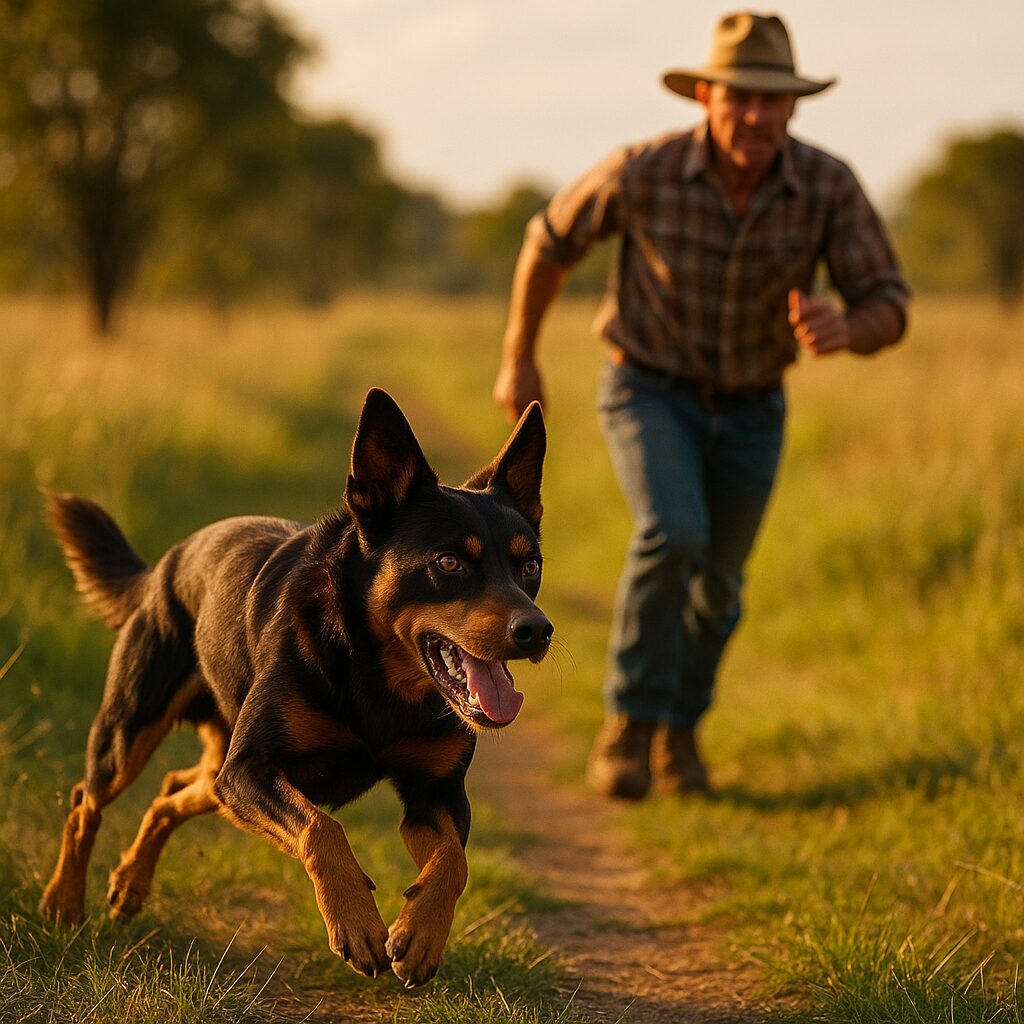
Beyond the walk, throwing a frisbee over long distances or searching for markers in a field proves particularly beneficial. It is often noted that combining a cognitive challenge (obedience sequence or mini agility course) with running strengthens the owner-dog bond and exhausts both body and mind.
FAQ
- What is the average lifespan of an Australian Kelpie?
- It generally reaches 12 to 15 years, provided regular veterinary follow-up is respected and its diet is adapted to its activity.
- Can it live in an apartment?
- Theoretically possible, but only if it benefits from intense and varied outings several times a day to satisfy its natural energy.
- What temperament with children?
- It adopts a protective and active role, enjoying dynamic games. However, early socialization avoids overly marked “guard” behaviors.
- Is a large and fenced area necessary?
- A secure space remains preferable, but the important thing is the quality of the exercises. A training schedule compensates for a small space.