
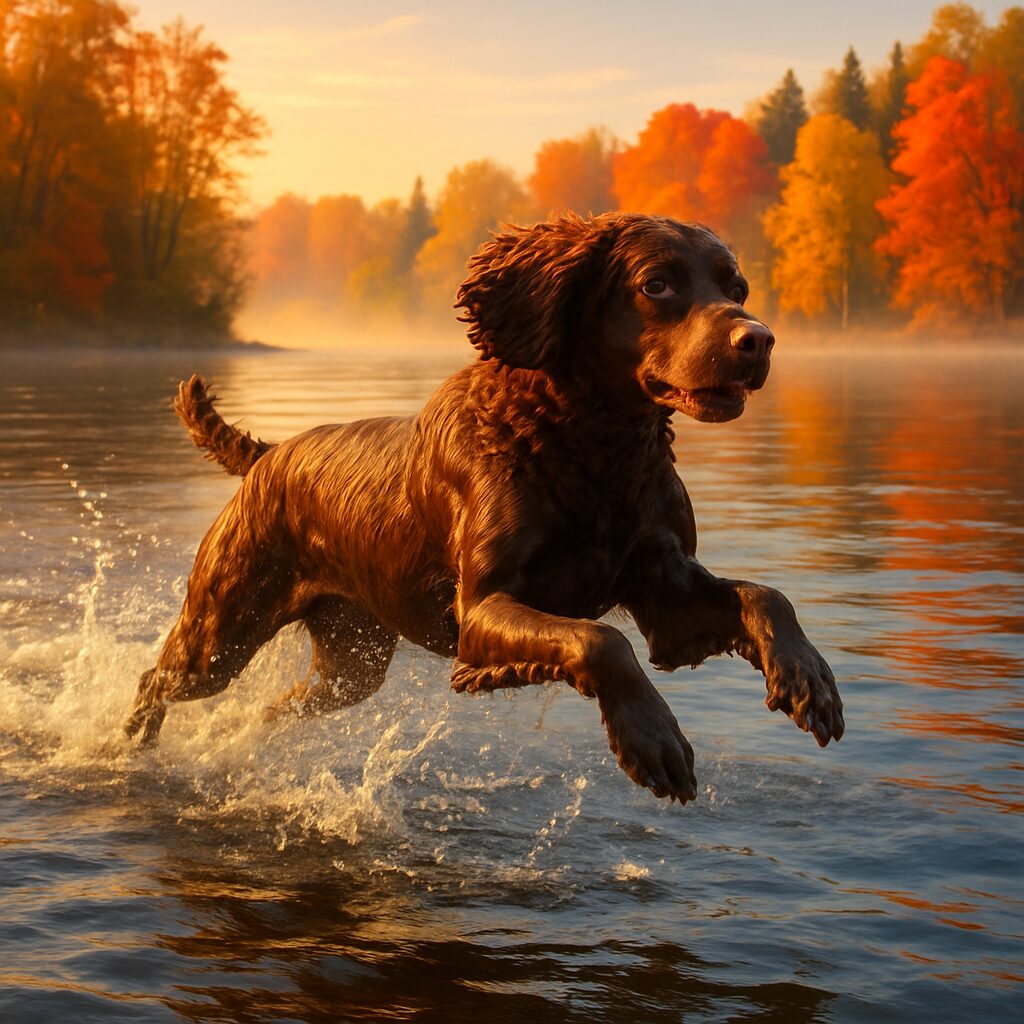
| Key Points | Details to Remember |
|---|---|
| 🐶 Origin | Originated in the Great Lakes regions for waterfowl hunting |
| 🌊 Abilities | Versatile water dog, good swimmer and reliable retriever |
| 📏 Morphology | Medium size, curly and dense coat, compact musculature |
| 🧠 Temperament | Friendly, alert, sometimes reserved with strangers |
| ⚕️ Health | Robust but watch out for joint and eye problems |
| 🏡 Daily life | Needs exercise, ideal for active families and aquatic activities |

The American Water Spaniel (AWS) occupies a special niche among water dogs: born in the marshes and shores of the Great Lakes, it combines the qualities of an efficient retriever and a versatile spaniel. Rather unknown outside the United States, it nevertheless appeals to hunters and active families looking for a sturdy, intuitive companion attached to its environment. Here, we break down its history, physique, character, real needs, and precautions to take if you consider adopting one.
Birth and historical role
The genetic journey of the American Water Spaniel reflects a reasoned tinkering: British water dogs brought by settlers, mixed with local dogs, were selected to withstand harsh winters and to track waterfowl in marshy areas. It is conceived as a hunting tool developed in the field rather than an aesthetic standard imposed by shows. Its mission: to locate, pursue, and retrieve ducks and geese, often in muddy conditions where other breeds struggle.
Why “Great Lakes retriever”?
This nickname is no accident: it summarizes the dog’s regional specialization. The marshes, bays, and shores of Wisconsin and Michigan shaped a breed that excels in mixed terrain — cold water, dense vegetation, damp nights. The term “retriever” emphasizes its retrieving ability, but its versatility also includes alertness and tracking qualities inherited from spaniels.
Appearance and practical standards

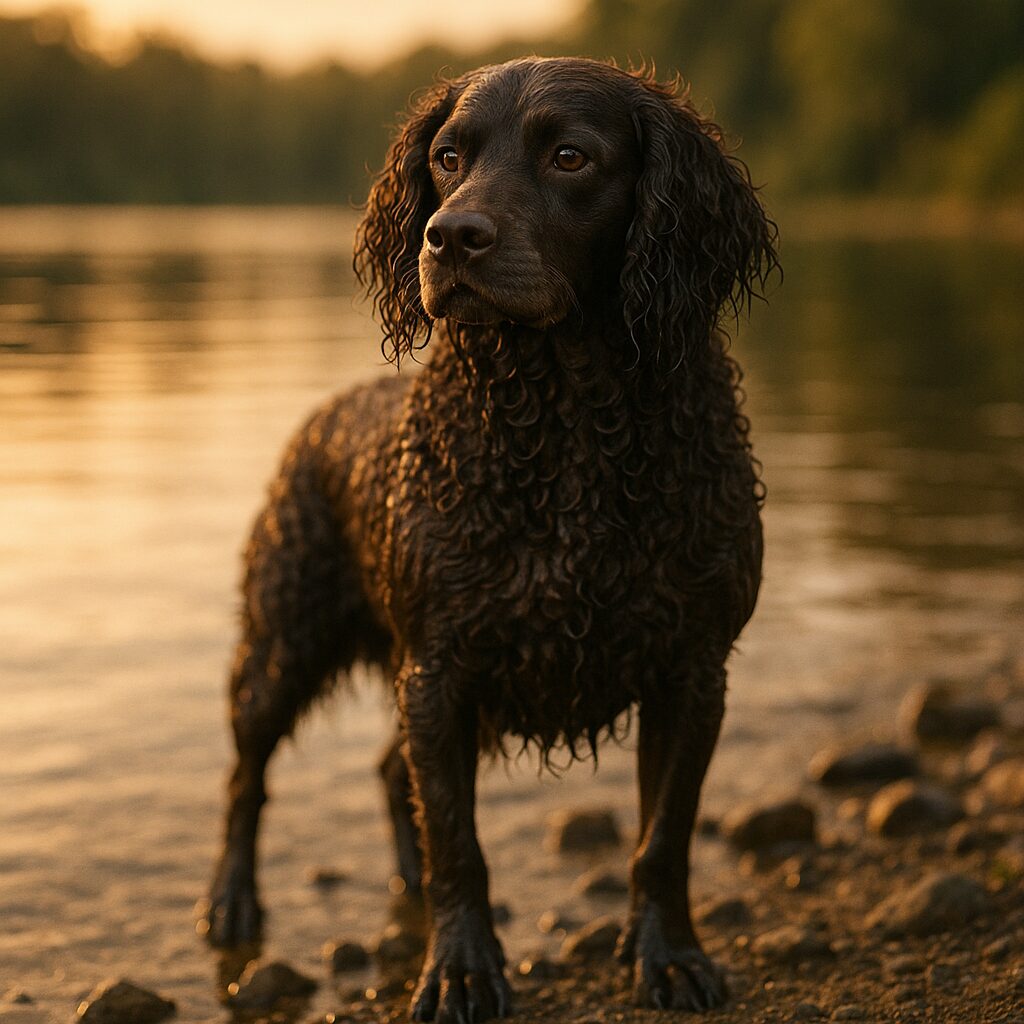
The AWS has a compact, muscular silhouette, adapted to repeated exertion. Its coat is often curly or wavy, with a resistant undercoat that repels water and protects against the cold. Colors range from liver to black through brown, rarely uniform, sometimes with white markings.
| Characteristic | Details |
|---|---|
| Size | About 38–46 cm at the withers |
| Weight | From 16 to 27 kg depending on sex and morphology |
| Coat | Dense, curly or wavy hair, shades from brown to black |
| Life expectancy | Generally 10–13 years |
Coat maintenance
Contrary to popular belief, its maintenance is not excessive: weekly brushing is sufficient during calm periods, increased during shedding and after hunting season. The curls sometimes trap debris and algae; rinsing with clear water after swimming in salty or stagnant water prevents irritation and persistent odors. Also remember to regularly check the ears, often prominent and moist after swimming.
Temperament and Daily Behavior
The AWS shows measured energy: it loves water and long outings, but it also knows how to be calm at home if its physical needs are met. It generally shows a strong attachment to its family, a lively curiosity, and a surprising adaptability. Its hunting instincts can drive it to chase birds or small animals, so it is best to work on recall from a very young age.
- Socialization: friendly with children, it tolerates family life well but requires early socialization to avoid shyness around strangers.
- Intelligence: sharp, it learns quickly through rewards; it can also test limits if intellectual exercise is lacking.
- Alertness: a good watchdog without being aggressive; it signals rather than attacks.
Compatibility with Urban Life
One might think the breed is poorly suited to city life; in reality, with long and varied walks and sufficient stimulation, the AWS can live in an apartment. The decisive criterion remains activity: without swimming, hunting, or canine work, it risks channeling its energy through barking or destruction.
Training, Activities, and Stimulation
Training the American Water Spaniel requires consistency and functional play. Classic obedience exercises should be combined with water activities, retrieving objects, and search courses. Canine sports (obedience, hunting, rally) are perfectly suitable as they engage its intellect and physical ability.
- Recall and retrieving: essential for a dog predisposed to hunting.
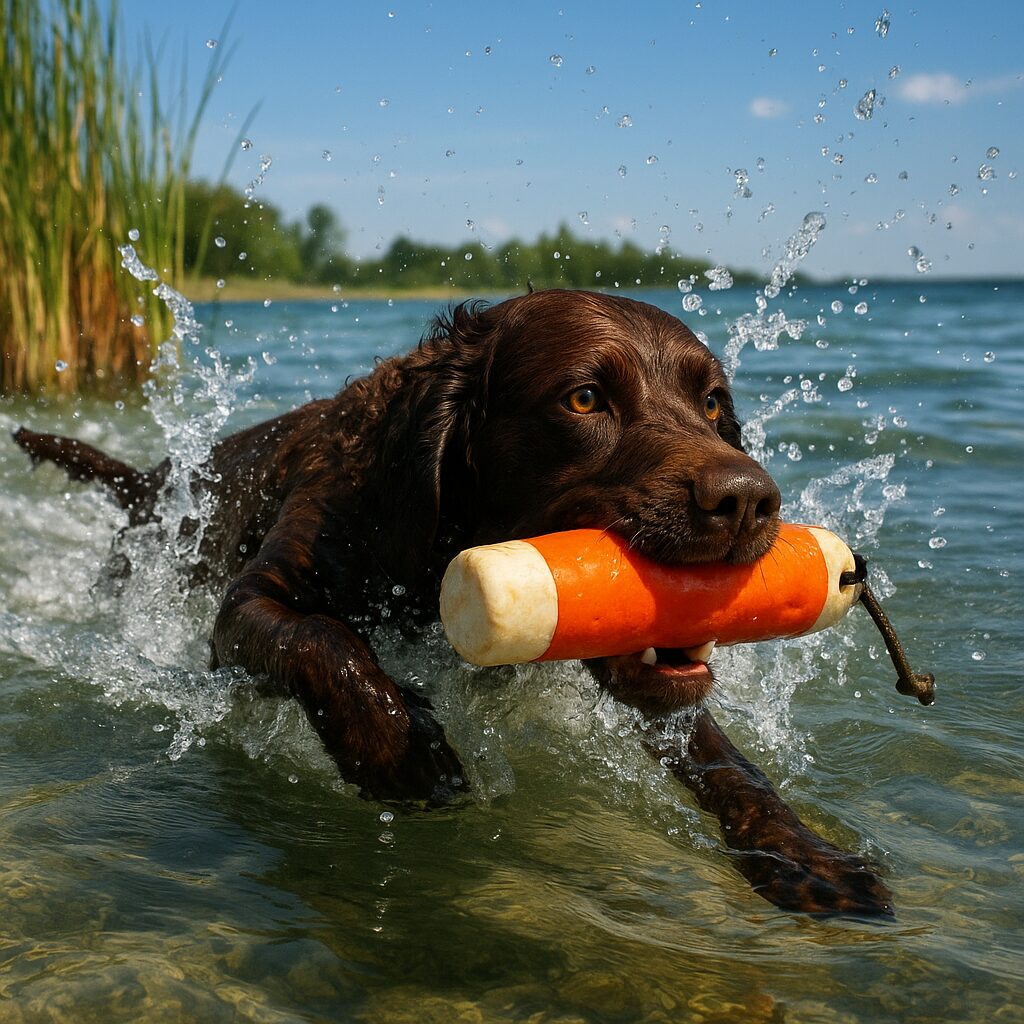
- Water games: fetch on water, supervised swimming, controlled diving.
- Mental stimulation: scent games, hide and seek, and loose leash exercises.
Practical Training Tips
Work in short positive sessions; avoid harshness: this dog responds poorly to excessive force. Use food rewards and water toys to reinforce retrieving behaviors. Incorporate real-life situations (boat outings, exposure to other birds) to generalize obedience.
Health: What to Watch For
The American Water Spaniel is generally robust, the result of selection focused on functionality. Nevertheless, certain conditions recur in the lines: hip dysplasia, eye problems (cataracts, entropion), and skin sensitivities related to prolonged moisture. Regular veterinary follow-up and genetic testing of breeders significantly reduce these risks.
| Potential Problem | Prevention / Management |
|---|---|
| Hip dysplasia | X-rays for breeder selection, maintaining optimal weight |
| Eye conditions | Regular ophthalmological checks, genetic screening if possible |
| Ear infections | Cleaning after swimming, drying ear canals, veterinary checks |
Breeding, Adoption, and Availability
The American Water Spaniel is not as widespread as other water dogs; choosing a responsible breeder is therefore essential. Prefer organizations that provide a health history, breeding tests, and offer early socialization. Adopting an adult can be an excellent option if you want to avoid the puppy phase and benefit from an already trained dog.
- Questions to ask the breeder: health test results, breeding conditions, temperament of the parents.
- Adoption: behavior assessment criteria, compatibility with your lifestyle.
Budget to Plan For
Beyond the purchase or adoption price, consider veterinary fees, quality food, aquatic activity equipment, and insurance costs if you want health coverage. An active and well-cared-for dog will have fewer unexpected expenses but requires a regular time investment.
Quick Comparison with Other Water Dogs
Compared to the Labrador or Chesapeake Bay Retriever, the American Water Spaniel remains smaller, sometimes livelier, and often better suited to tight marshy areas. It offers an alternative for those who want a capable water dog without the size of a large retriever. Its sociability and adaptability also make it a more manageable family companion for some households.
FAQ — Frequently Asked Questions
What level of activity is necessary?
The ideal: one to two hours of sustained activity per day, including aquatic exercises or retrieving games.
Is the AWS good with children?
Yes, it often shows patience and protectiveness, provided interactions are supervised and the animal is socialized early.
Does it shed a lot?
Shedding occurs but remains moderate. Regular brushing limits deposits and tangles.
Is it suitable for modern hunting?
Absolutely: it retains retrieving and scenting skills useful for waterfowl hunting, especially in marshy terrain.
Final Tips for a Good Start
If you choose an American Water Spaniel, immediately plan exercise solutions, a progressive training plan, and appropriate veterinary follow-up. Consider investing in a few accessories: a life jacket for swimming in the sea or lakes, a dummy for training, and a care kit for wet skin. In the long term, the relationship with this dog is built on trust, consistency, and stimulation; in return, it offers loyalty, enthusiasm, and a true love of water.
Practical Resources (List)
- Meetings of specialized dog clubs to share water exercises
- Training courses focused on retrieving and hunting
- Health insurance adapted to active breeds