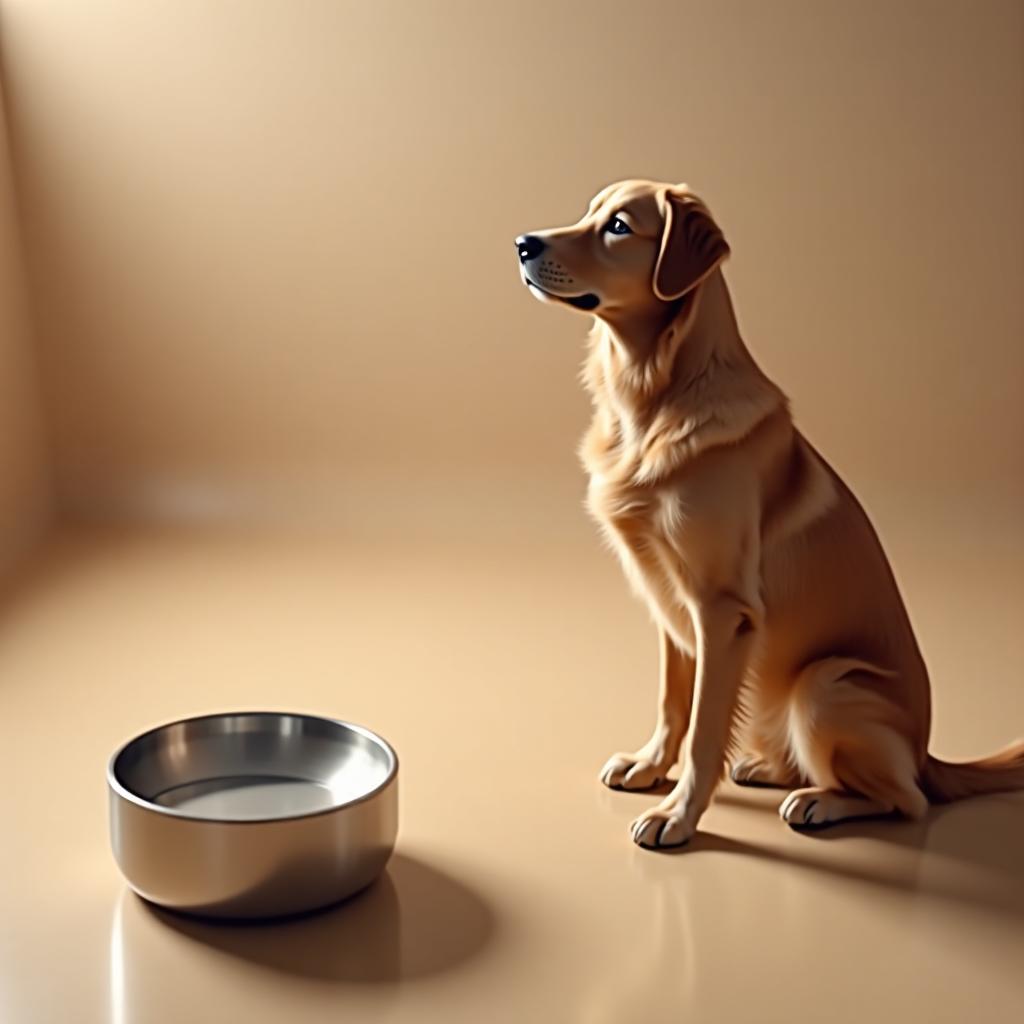

Few moments are more satisfying than a dog devouring its bowl… except when it swallows everything in seconds, risking bloat and digestive discomfort. Faced with this behavior, stainless steel anti-greedy bowls stand out for their robustness and effectiveness in slowing down the eating pace. But how to select the most suitable model? Between shapes, textures, heights, and capacities, each component plays a key role in preventing veterinary emergencies.
In brief
🐾 Durable stainless steel: rust-resistant material, shock-resistant and easy to clean.
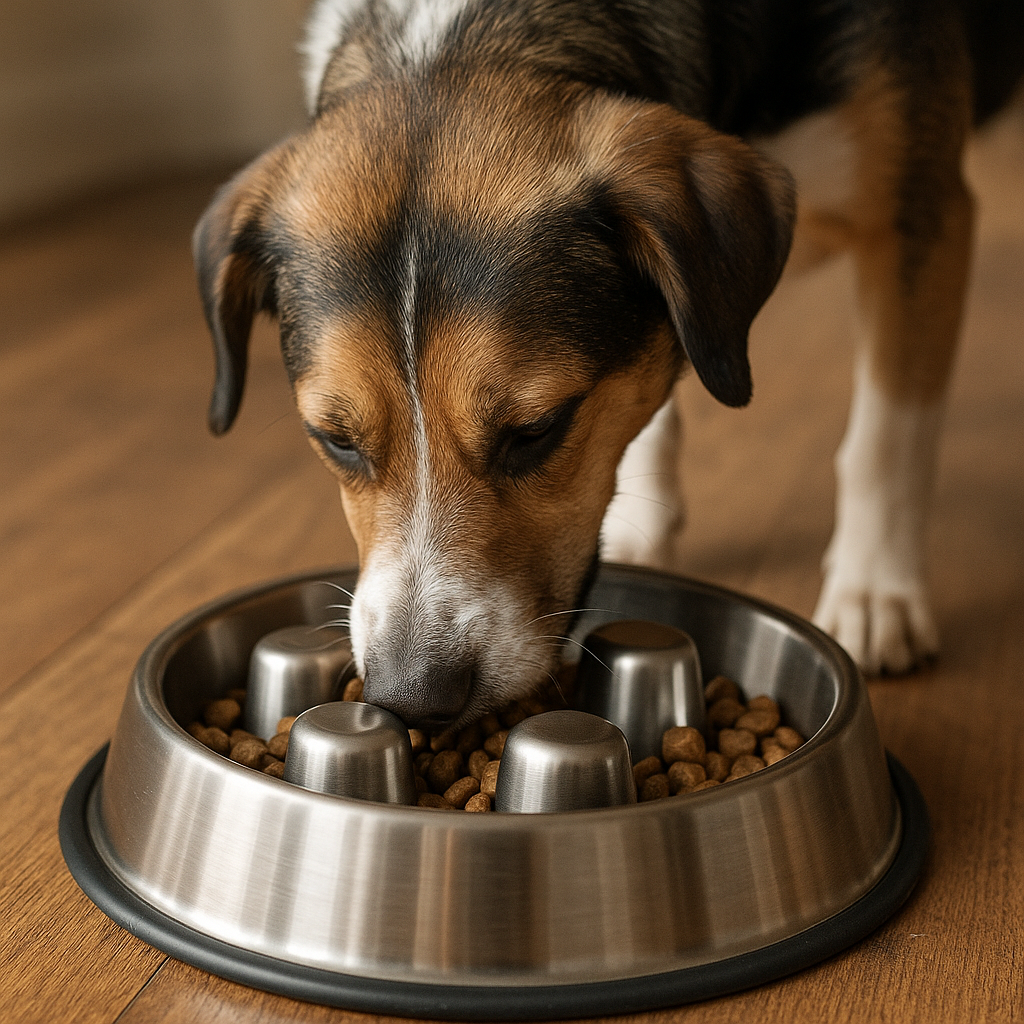
⏱️ Meal slowing: obstacles, reliefs and walls designed to force the dog to “bite” the food.
📏 Personalized choice: different shapes (mazes, central cones, alveoli) according to size and feeding style.
🧼 Optimized hygiene: dishwasher safe, smooth surface without corners, antibacterial.
Why use a stainless steel anti-greedy bowl?
When a dog gulps down food too quickly, it inhales air along with its kibble or pâté: the risks of bloating increase, digestion becomes complicated, and in extreme cases, bloat threatens. Stainless steel, thanks to its strength and chemical inertness, is perfectly suited for complex shapes and reliefs fixed into the bowl’s structure. This cascading or labyrinthine technology forces the animal to chew or manipulate its food, slowing ingestion and limiting swallowed air.
Advantages of stainless steel material
- Durability: does not deform, withstands scratching and biting without chipping.
- Hygiene: non-porous surface, few deposits, naturally antibacterial.
- Maintenance: dishwasher compatible, quick drying.
- Longevity: economic benefits in the long term, unlike plastic which scratches.
How does a bowl slow down the eating pace?
The principle is simple: the more difficult access to food is, the more cautiously the dog nibbles each bite. There are three main types of mechanisms:
- Central obstacles: cone or fixed piece in the middle that forces eating around it.
- Reliefs and ridges: grooves, alveoli or mazes creating small reservoirs to fill with each nose nudge.
- Irregular shapes: raised edges and valleys to vary the curvature level and feeding challenge.
Criteria for choosing a stainless steel anti-greedy bowl
Several parameters influence the effectiveness and adaptation to your companion: its size, build, and even chewing style. These bowls can also be paired with essential accessories to enrich your dog’s environment and vary the pleasures.
Shape and height
Small dogs, like French Bulldogs, do not have the same reach as a Labrador. A bowl that is too wide causes them to spread their legs or contort themselves, stressing their spine. Conversely, giant breeds appreciate an elevated model to protect their cervical posture.
Textured surface or fixed obstacles
Bowls with pronounced relief are suitable for rough dogs who bash the bowl to grab their food. More finely carved models appeal to those who nibble delicately. In all cases, stainless steel offers the precision cutting necessary to engrave effective patterns without sharp edges.
Comparison of flagship models
Here is an overview of four slow stainless steel bowls, sorted by popularity and features.
| Model | Capacity | Type of obstacles | Indicative price |
|---|---|---|---|
| Slow&Steady 1.0 | 700 ml | Central cone + concentric rings | €29.90 |
| InoxLabyrinth | 1 L | Complex labyrinth | €34.50 |
| Mâchouille Lab | 500 ml | Wavy ridges and hollowed zones | €26.00 |
| FitBowl Élévation | 800 ml | Elevated irregular surface | €32.00 |
Maintenance and hygiene
Stainless steel withstands the dishwasher, but a simple sponge wipe is often enough: particles do not get stuck thanks to the ultra-smooth surface. However, avoid overly rough abrasive pads, which eventually dull the shiny finish. Dry immediately to limit any water marks and preserve oxidation resistance.
In practice: installation and testing
- Placement: choose a quiet corner, without drafts or frequent traffic.
- Transition: gently introduce the new bowl, starting with less important meals (treats, small snacks).
- Monitoring: observe the dog’s reaction, adjust the position or type of obstacle if frustration is too high.
- Reevaluation: after one week, note the average meal time; ideally, it should increase from 2 minutes to 8–12 minutes.
FAQ
- Can an anti-gulp bowl definitively prevent gastric torsion?
- It significantly reduces the risk by limiting swallowed air and bloating, but does not eliminate it: hydration and monitoring remain essential.
- What maintenance is required for a stainless steel bowl?
- A simple wash with soapy water or in the dishwasher is sufficient. Dry it immediately to preserve the shine.
- My dog does not accept the new bowl, what should I do?
- Introduce it gradually, mixing old and new meals, then gradually increasing the proportion.