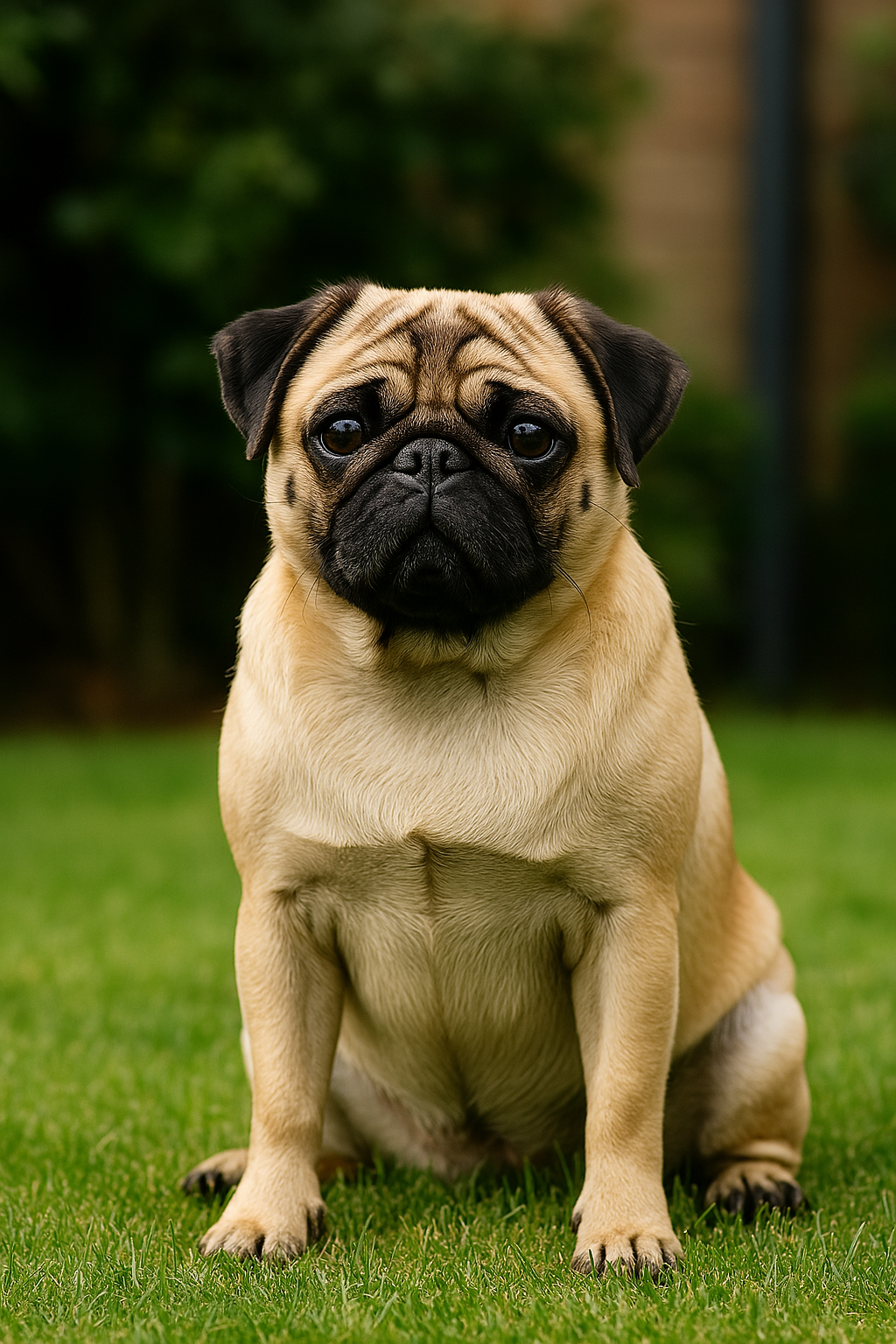

The Pug, also called “Pug” in English-speaking countries, is a small brachycephalic dog known for its short muzzle, large expressive eyes, and funny facial expressions. Originating from China, it has conquered the world thanks to its affectionate character and a look that is both funny and endearing. In this article, we present this mini-molossus who loves to curl up on its owner’s lap!
General Presentation
The Pug generally measures between 25 and 30 cm at the withers, weighing between 6 and 8 kg. Its coat is short and can be of different colors (fawn, black, silver…), often with a black mask on the face. Its flattened muzzle and large eyes give it a unique look, which makes many small dog lovers fall for it.
Originating from China, it was highly appreciated at the imperial court, then spread to Europe thanks to trade exchanges. Its life expectancy ranges around 12 to 14 years, provided its breathing and weight are monitored, two sensitive points for this brachycephalic breed.
Character and Behavior
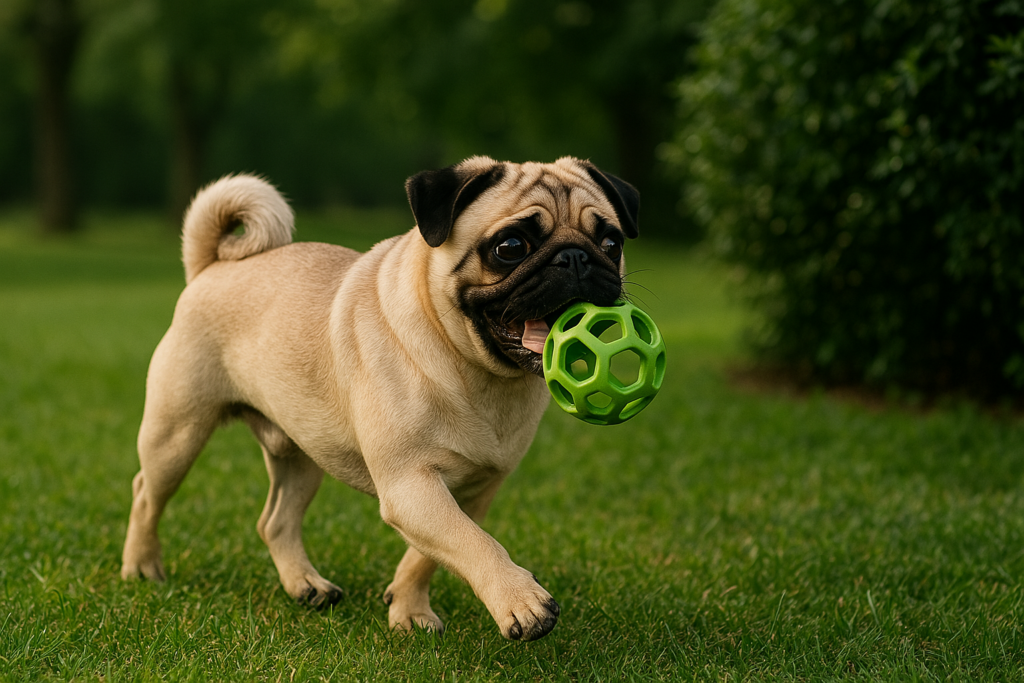
The Pug is known for its gentleness, playful side, and great need for cuddles. It loves to be as close as possible to its owner (even on their lap!), does not like solitude much, and often shows itself to be very sociable with strangers or other animals.
Its tendency to be clingy makes it easy to live with, even if it can be a bit stubborn or act like an adorable clown to get what it wants. It barks little, preferring to express its joy in a comical way (small grunts, sighs, etc.).
Did you know? In the past, the Pug was highly prized by European nobility, especially in the Netherlands, where it is said to have become the mascot of the House of Orange.
Physical and Mental Needs
The Pug is not a great athlete but still needs regular outings to maintain its weight and morale:
- Light walks (15-30 minutes) several times a day
- Indoor games: ball, squeaky toy, mini hide-and-seek
- Socialization moments with other dogs (it is often very friendly)
- Basic training: simple commands, small tricks (it likes to clown around)
It does not tolerate heat and intense exercise well, so caution in summer. The Pug is better suited to indoor life, in a calm and loving home.
Health & Genetic Predispositions
Like all brachycephalic dogs, the Pug can suffer from respiratory problems and heat intolerance:
| Problem | Symptoms | Prevention |
|---|---|---|
| Difficulty breathing (brachycephalic syndrome) | Snoring, shortness of breath, snorting | Limit exertion in high heat, monitor weight |
| Eye problems | Red eyes, irritations, ulcers | Vet check-ups, eye hygiene, beware of shocks |
| Overweight | Shortness of breath, difficulty moving | Proper diet, moderate but regular exercise |
Additionally, its prominent eyes are more exposed to injuries. Veterinary follow-up is therefore recommended to detect any eye problems early.
Recommended Diet
The Pug has a solid appetite, but a less active metabolism than a sporty dog:
- Choose “small breed” kibble, possibly “light” if prone to gaining weight
- Weigh the portion to avoid overfeeding
- Divide into 2 daily meals
- Limit treats (or opt for light versions)
An overweight Pug can suffer more quickly from shortness of breath and joint problems. So be vigilant!
Coat care / grooming
With its short and dense coat, the Pug is easy to groom, but it still sheds quite a bit:
- Brush 2 to 3 times a week (or more during shedding season)
- Occasional bath (every 2-3 months) or if really dirty
- Clean facial folds (risk of moisture or irritation)
- Check ears and nails regularly
A grooming mitt or a soft brush is enough to keep its coat shiny and remove dead hair.
Favorite activities
- Short walks: perfect for sniffing and socializing
- Indoor games: plush toys, small noisy toys, hide and seek
- Cuddle sessions: the Pug loves being on your lap or close to you
- Light training: a few commands, but without overdoing it
Ideal for what type of owner?
The Pug is well suited for people who enjoy apartment or quiet house living, ready to accept a “velcro dog.” It can live with children, other animals, and does not require long sporty hikes.
On the other hand, if you are looking for a great athlete or a deterrent guard dog, this is not the right choice. The Pug is better at following you everywhere with good humor, provided you avoid overexerting it and monitor the ambient temperature.
Recommended products
Some essentials for your Pug:
- “Small breed” or “light” kibble: to avoid weight gain
- Comfortable harness: less pressure on its fragile trachea
- Wipes for facial folds: prevent moisture or dirt buildup
- Soft brushes: for quick and regular grooming
Tip: during hot weather, make sure to provide a cool and well-ventilated place, as well as constant access to fresh water.
FAQ & Anecdotes
Does the Pug snore a lot?
Yes, due to its short muzzle (brachycephaly). Expect snoring or grunting during its sleep, but nothing dangerous, it’s rather funny (unless you are a very light sleeper).
Can it live with a bigger dog?
In general, yes: the Pug is sociable and enjoys company. You just need to make sure the other dog isn’t too rough, as he is more fragile.
Royal Anecdote
It is said that a Pug once saved the life of Prince William of Orange by barking to wake him during a surprise attack. Since then, the Pug was elevated to the status of mascot of the Court of Orange!
In short, the Pug is a small brachycephalic companion, funny, clingy, and full of charm. With gentle training, regular outings (but not too intense), and monitoring of weight and temperature, he will make a perfect “couch roommate,” ready to follow you everywhere you go. Ready to fall for this little clown with the flat muzzle? 🐾