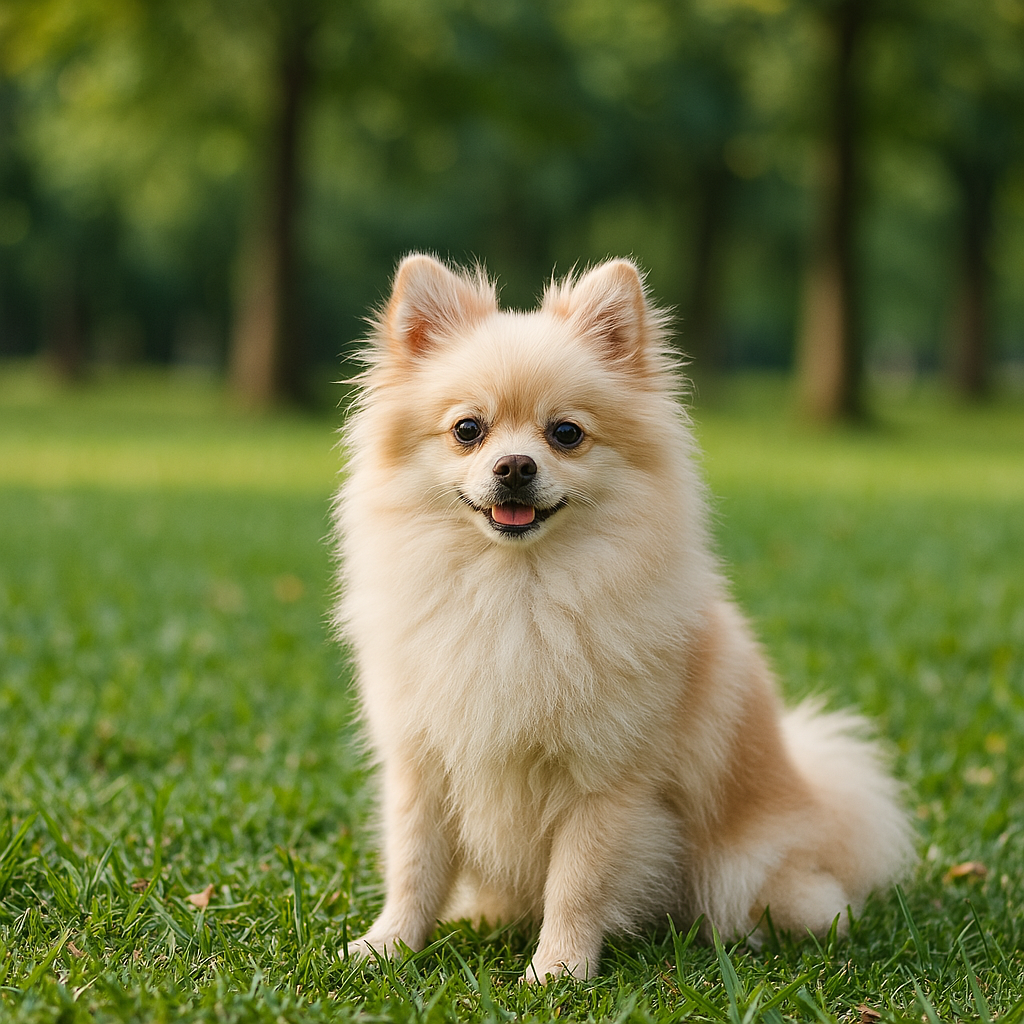

The Miniature Spitz, or Pomeranian, is a small dog that does not go unnoticed thanks to its ultra fluffy silhouette and contagious energy. Originating from a region located between Germany and Poland (Pomerania), this mini-spitz attracts all eyes with its mischievous look and voluminous coat. In this article, you will discover everything about this “mini-lion” who loves to party with its owners!
General Presentation
The Miniature Spitz is part of the German Spitz family, of which it is the smallest variety (about 21 cm at the withers, weighing 1.5 to 3.5 kg). Its coat is double: a dense undercoat and a long outer coat, which gives it this “puffed up” appearance. The colors can vary (orange, cream, black, white, etc.).
Despite its miniature size, it has great self-confidence and likes to be noticed. Its life expectancy generally ranges from 12 to 16 years. It is often compared to a small living plush toy, making it a very popular dog among “mini companion” enthusiasts.

Character and Behavior
Lively, cheerful, and sometimes a bit clownish, the Miniature Spitz loves being in the spotlight. It is close to its family and can be protective despite its tiny size, not hesitating to bark to warn of a suspicious presence. This is actually one of the points to watch: it can be a barker if not taught to calm down on command.
It is rather sociable with humans but can be a bit reserved or wary of strangers. Good socialization from puppyhood is recommended to prevent it from becoming too “noisy” or fearful. It can live with other animals if accustomed early, although it often prefers to be the star of the household!
Did you know? Several celebrities have adopted Miniature Spitz dogs, including singer Ariana Grande, further boosting the popularity of this “pocket” breed.
Physical and Mental Needs
Despite its plush toy appearance, the Miniature Spitz remains an active and curious dog. It enjoys:
- Short daily walks (or a small garden to explore)
- Various games (ball throwing, ropes, etc.) to expend its energy
- Fun obedience exercises (it likes to learn and show what it can do)
- Regular presence, as it does not like being left alone for too long
It does not need huge sports sessions like a Border Collie, but it still needs distraction and novelty to avoid boredom (and excessive barking).
Health & Genetic Predispositions
The Miniature Spitz is robust for its size but may encounter some particular issues:
| Problem | Symptoms | Prevention |
|---|---|---|
| Patellar dislocation | Intermittent limping, leg held up | Avoid jumping too high, weight control |
| Fragile trachea (tracheal collapse) | Coughing, breathing difficulty | Harness instead of collar, avoid overweight |
| Dental problems | Tartar, bad breath | Regular brushing, suitable kibble |
On the respiratory side, he can be sensitive in case of high heat or too intense exercise. So we make sure not to push him beyond his limits and to avoid extreme temperatures.
Recommended Diet
The Miniature Spitz often has a voracious appetite despite his small size, and can gain weight quite quickly:
- Choose good quality kibble, special for small breeds
- Weigh portions and follow the manufacturer’s recommendations
- Limit treats, especially if he is a bit of the household star
- Ensure sufficient hydration (fresh water available at all times)
A harness is preferable to a collar to avoid pressure on the throat, especially if the trachea is fragile.
Coat Care / Grooming
The Pomeranian has a thick coat, which requires a minimum of maintenance:
- Brush 2 to 3 times a week (or more during shedding periods) to remove dead hair
- Bath every 2-3 months (or as needed), followed by thorough drying to avoid moisture
- Carefully detangle behind the ears and around the rear
- Check the nails, as he does not always wear them down enough indoors
With regular brushing, his coat will remain airy and silky. It is also an opportunity to monitor the condition of his skin (redness, parasites, etc.).
Favorite Activities
- City walks: he loves exploring and being admired by passersby
- Indoor games: ball or plush toy throwing is perfect for him
- Mini-agility: some Miniature Spitz do well on adapted courses
- Dog dancing: yes, they can learn small synchronized tricks
Ideal for What Type of Owner?
The Miniature Spitz is well suited to people living in apartments, provided he has regular outings and sufficient interactions. He demands attention and can become “clingy,” so it’s better to enjoy having him underfoot!
On the other hand, if you are looking for a very calm and quiet dog, beware: this little clown can be quite barky, especially if he detects a noise or an intruder. Early education and regular socialization reduce these little excesses of zeal.
Recommended Products
To pamper your Miniature Spitz:
- Small breed kibble: adapted to his jaw and activity level
- Light harness: to protect his trachea
- Detangling brush/comb: essential for maintaining its voluminous coat
- Various toys: balls, plush toys, puzzles, to satisfy its desire to play
Tip: a small nail clipper or a regular appointment with the groomer can help keep the nails at the right length.
FAQ & Anecdotes
Does the Miniature Spitz shed a lot?
Yes, especially during shedding season. Regular brushing is essential to remove dead hair and avoid finding it all over the house.
Can it tolerate being alone?
It is quite dependent on its owner and may struggle with long absences, which is why it’s important to leave toys and allow time for socialization. Otherwise, barking and anxiety may arise.
Historical anecdote
It is said that Queen Victoria of England was a great fan of Miniature Spitz dogs, helping to make them a highly sought-after luxury dog in her time.
In summary, the Miniature Spitz (Pomeranian) is a miniature dog full of cheerfulness and confidence, who loves to be pampered and clown around for its owners. With proper training to manage potential barking and regular grooming to maintain its coat, you will enjoy a companion as funny as it is endearing. Ready to fall for this mini ball of fur? 🐾