
The Maltese Bichon is one of the most beloved companion dogs in the world. With its immaculate white coat and sparkling eyes, it exudes incredible charm. Originating from the Mediterranean (Malta is often cited as its cradle), this refined little companion loves being the center of attention and shows unwavering loyalty to its owner. In this article, we tell you everything about this canine mini-jewel!
General Presentation
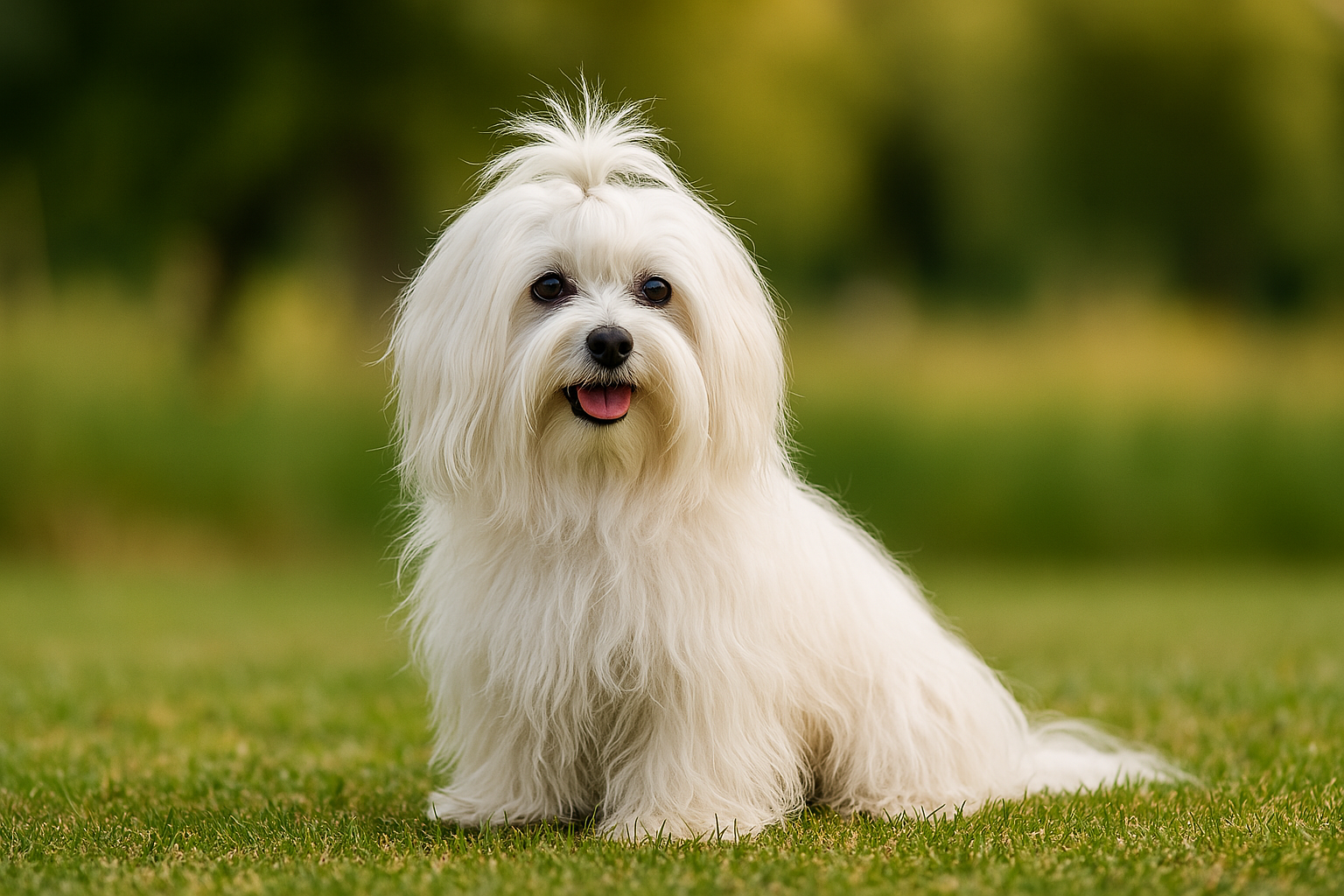
Small in size (between 20 and 25 cm at the withers) with a weight ranging from 3 to 4 kg, the Maltese Bichon is easily recognizable by its long, white, silky fur. Its skull is slightly domed, its ears drooping, and its black nose contrasts nicely with the pure white of its coat.
Historically, it can be found in Antiquity, already mentioned as a “little luxury dog” appreciated by Roman or Greek ladies. Its longevity is quite good, ranging from 12 to 15 years, sometimes more, if its hygiene and diet are well cared for.
Character and Behavior
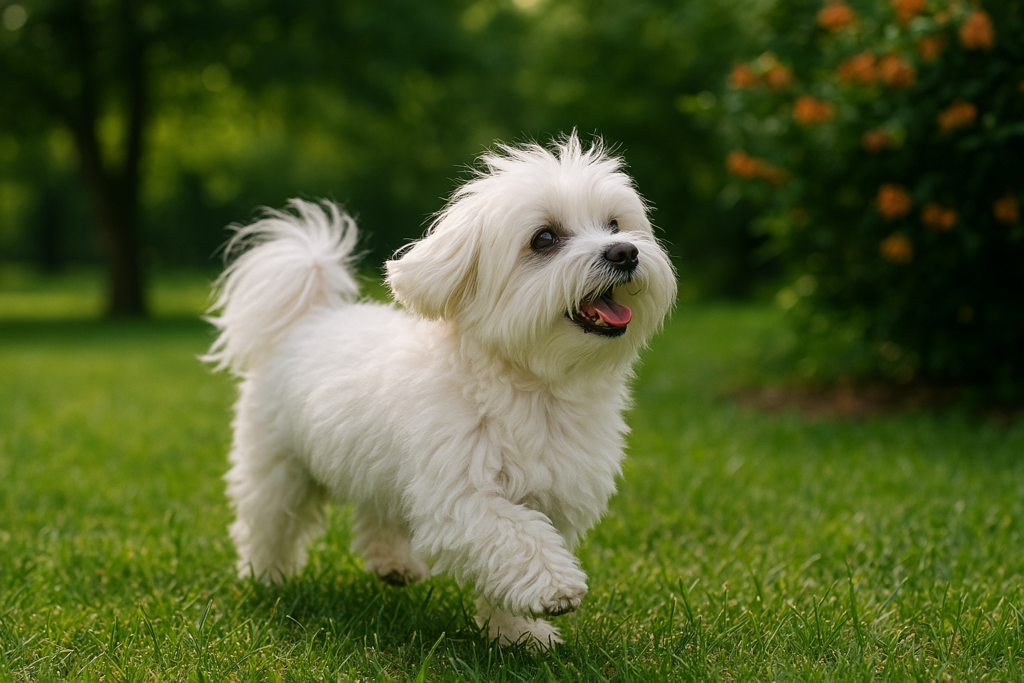
The Maltese Bichon is known for its gentleness, playful nature, and intelligence. It loves cuddles and does not hesitate to seek attention by following its owner everywhere. If well socialized, it is friendly with other dogs and can live with cats without any problem.
However, be careful not to spoil it too much: it can quickly develop a little “diva” side or a king-dog syndrome if it feels it is running the show at home. A gentle but firm education is recommended to avoid excessive barking or possessiveness towards the owner.
Did you know? Some claim that the Maltese Bichon accompanied Phoenician or Greek sailors, thus crossing the Mediterranean and spreading its popularity across several continents.
Physical and Mental Needs
Although it is a small dog, the Maltese Bichon needs to expend a minimum of energy:
- Regular walks (2-3 per day), even if they can be short
- Indoor games (ball throwing, plush toy, rope) to let off steam
- Mental stimulation: learning small tricks, basic commands
- Social contacts: it loves meeting people, children, or other dogs
Its main wish? To stay close to its owner, as it does not like solitude. A Maltese Bichon left alone too often may bark out of boredom or become anxious.
Health & Genetic Predispositions
The Maltese Bichon is considered robust but may have some vulnerabilities:
| Problem | Symptoms | Prevention |
|---|---|---|
| Dental problems | Tartar, bad breath | Brushing, suitable kibble, vet scaling |
| Patellar luxation | Intermittent limping | Avoid excessive jumping, weight control |
| Eye irritations | Watery eyes, yellowed hairs under the eyes | Regular cleaning, trimming hair near the eyes |
The eyes and teeth are two sensitive points in this breed, hence the importance of daily (or very regular) hygiene. Weight must also be monitored, as a “chubby” Bichon can develop joint problems.
Recommended Diet
For a healthy Maltese Bichon:
- Prefer “small breed” kibble, easier to chew
- Follow the recommended portions, even if it means weighing the ration
- Divide into 2 meals per day to avoid gluttony
- Limit fatty or sugary treats (a small fruit or a “light” treat as an alternative)
Its size should not make you forget that it can quickly gain weight if given too many “little extras.” Vigilance is necessary, especially if it is not very active.
Coat Care / Grooming
The long white coat of the Maltese Bichon requires meticulous care:
- Daily brushing (or every other day) to prevent tangles
- Bath every 2-3 weeks (or more if needed), with a gentle shampoo and conditioner
- Careful drying to avoid moisture that can cause irritations
- Trimming the hair under the eyes to prevent brown tear stains
Some owners choose a shorter cut (like a “puppy cut”) to reduce grooming time while keeping the charm of the Maltese Bichon.
Favorite Activities
- Leisurely walks: perfect for sniffing and discovering new places
- Indoor games: ball throwing, small rope, intelligence games
- Mini-agility: some obstacles adapted to its size for fun
- Cuddle sessions: because it loves being pampered (maybe too much, sometimes)
Ideal for What Type of Owner?
The Maltese Bichon suits people who enjoy indoor living (apartment or house) and are ready to devote time to grooming. It gets along well with families, seniors, or anyone looking for a small sociable and charming dog.
However, if you are often absent and cannot offer daily cuddles or regular care, the Maltese Bichon may feel abandoned. Human presence is almost essential for its balance.
Recommended Products
To pamper your Maltese Bichon:
- “Small breed” kibble: easy to chew, with suitable nutrients
- Detangling brush and comb: a must-have to preserve its coat
- Special white coat shampoo: to maintain the brightness of its coat
- Hair accessories: small elastics or barrettes to clear the eyes
Note: a visit to the groomer can be considered every 4 to 8 weeks, depending on the desired cut length and the time you can dedicate at home.
FAQ & Anecdotes
Does the Maltese Bichon shed a lot?
He sheds very little, especially compared to other breeds. His coat grows constantly, somewhat like human hair, so brushing and trimming replace the “shedding.”
Is he noisy?
He may bark to signal a noise or demand attention, but it remains moderate if his training is well done. Avoiding giving in to all his whims reduces the risk of a “king-dog” barker.
Historical anecdote
It is said that Queen Elizabeth I of England greatly appreciated this breed, owning several specimens. The ladies of the court also loved him as an “ornamental dog.”
In summary, the Maltese Bichon is a small dog both elegant and full of tenderness, an excellent companion for anyone looking for a sweet, intelligent, and clingy four-legged friend (just the right amount). With a good dose of grooming, a minimum of exercise, and lots of affection, he will brighten your daily life with his presence. Ready to fall for this little canine gem? 🏆