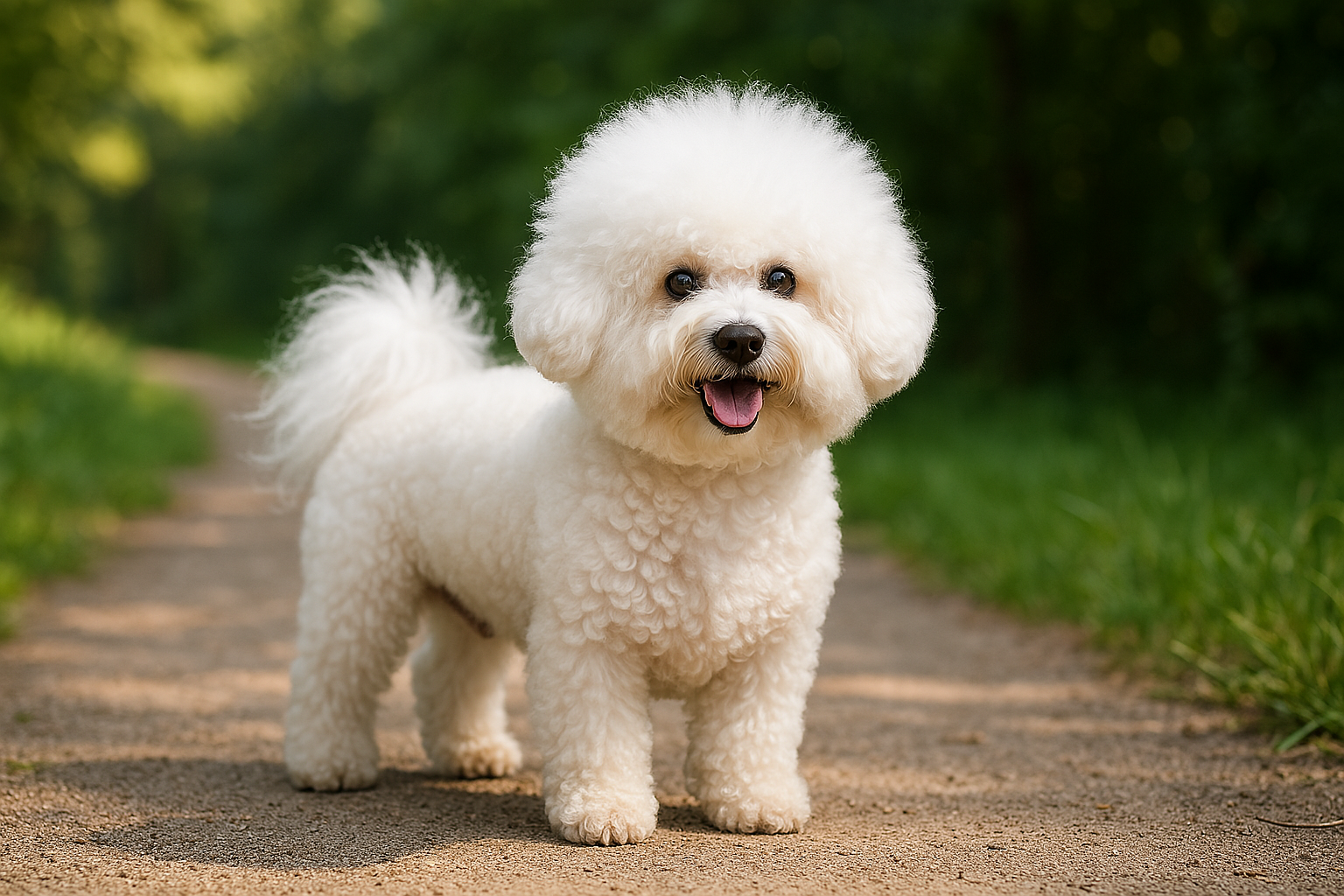

The Bichon Frisé is often described as a canine “little clown,” overflowing with affection and sporting a very recognizable white, curly coat. Originating from the Mediterranean, this charming little dog has won the hearts of many families around the world thanks to its joyful character, sociability, and great adaptability. In this article, we tell you everything about this adorable ball of fur!
General Presentation
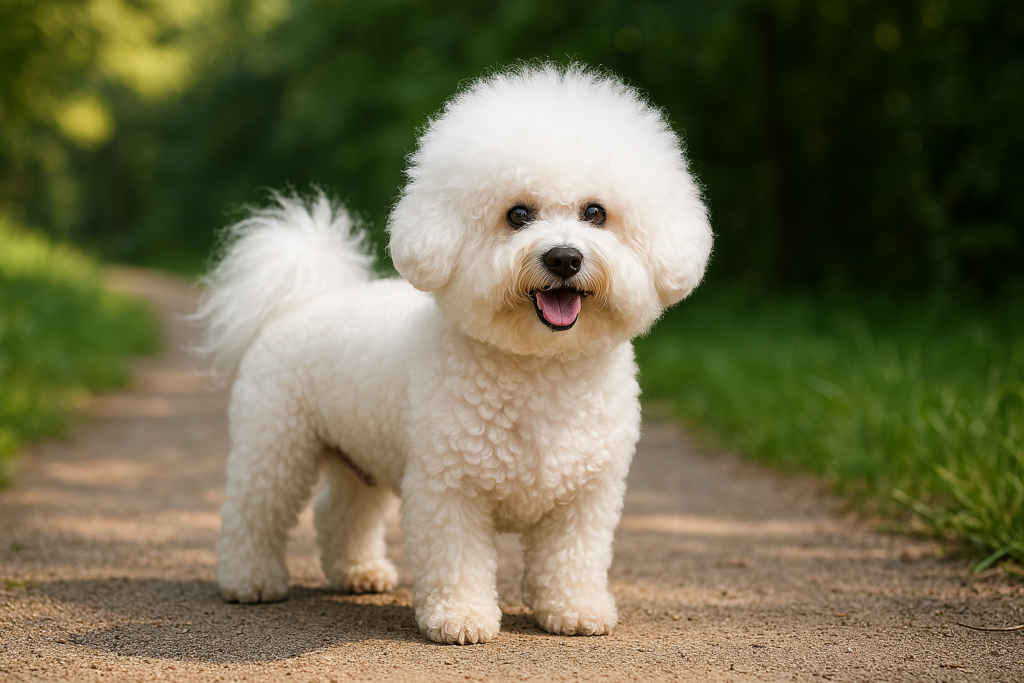
The Bichon Frisé measures about 25 to 30 cm at the withers, weighing between 3 and 6 kg. Its white, curly, and silky coat gives it an almost “cottony” appearance. Its dark and expressive eyes, as well as its black nose, nicely contrast with the brightness of its fur.
Often confused with other bichons (such as the Maltese Bichon), it is distinguished by its curly hair and a slightly shorter muzzle. Its life expectancy ranges between 12 and 15 years, a sign of good robustness despite its small size.
Character and Behavior

The Bichon Frisé is known for its cheerful, playful, and sociable temperament. Very attached to its owner, it loves to participate in family life and often shows friendliness towards children, strangers, and even other animals if it has been well socialized.
On the other hand, its clownish side can lead it to perform some antics to attract attention, or even bark if it is bored or does not receive enough stimulation. Gentle training combined with clear rules is recommended to prevent it from becoming too “clingy” or a “king dog.”
Did you know? The Bichon Frisé is believed to share common origins with the Maltese Bichon, the Bolognese Bichon, and other Mediterranean breeds, all appreciated at royal courts for their elegance and charming character.
Physical and Mental Needs
Although it is small in size, the Bichon Frisé is not a couch potato. It enjoys:
- Regular walks (short but frequent) to explore its environment
- Indoor games: ball throwing, tug-of-war, etc.
- Mental stimulation: learning tricks, mini agility
- Socialization moments: meeting other dogs, interacting with family
It does not tolerate prolonged solitude well. A Bichon Frisé left isolated too often may develop anxiety or excessive barking.
Health & Genetic Predispositions
The Bichon Frisé enjoys fairly good health but can encounter some issues:
| Problem | Symptoms | Prevention |
|---|---|---|
| Dental problems | Tartar, gingivitis, bad breath | Tooth brushing, suitable kibble, vet scaling |
| Patellar luxation | Limping, leg held up | Weight control, avoid excessive jumping |
| Skin allergies | Itching, redness, hair loss | Quality diet, vet follow-up if in doubt |
Moreover, its eyes and ears require particular attention, as moisture (after a bath, for example) can cause infections if not properly dried.
Recommended Diet
Like many small breed dogs, the Bichon Frisé can quickly gain weight if its portions are not controlled:
- Choose “small breed” kibble, possibly lightened if prone to gaining weight
- Divide the ration into 2 meals to avoid gluttony
- Limit treats (opt for light versions or small pieces of fruit/vegetables)
- Ensure it always has access to clean, fresh water
Monitoring its weight is essential to preserve its joints and overall health.
Coat Care / Grooming
The Bichon Frisé sports a curly, white, and dense coat that requires regular maintenance:
- Almost daily brushing to prevent knots and maintain volume
- Bath every 1 to 2 months (or more if needed), with a gentle shampoo
- Maintenance trimming every 6 to 8 weeks, unless you want to show it in a show (more thorough grooming)
- Thoroughly dry its coat after the bath to avoid moisture
Additionally, a visit to the groomer can be useful for a characteristic “bichon” cut, if you like its look with perfectly curled hair.
Favorite Activities
- Urban walks: it loves trotting proudly in the city or neighborhood
- Indoor games: mini fetch, canine puzzles, etc.
- Adapted agility: some Bichon Frisés have fun on small courses
- Fun training: learning “fun” tricks to surprise friends
Ideal for What Type of Owner?
The Bichon Frisé suits people looking for a sociable, cuddly, and playful dog, without requiring long sporty hikes. It adapts well to apartment living, provided it receives attention and regular outings.
If you don’t like grooming or are often absent, it might be complicated: this breed requires thorough maintenance and does not like prolonged solitude. However, if you are ready to brush, bathe, and pamper this little clown, you will form an inseparable duo!
Recommended Products
To pamper your Bichon Frisé:
- “Small breed” kibble: formulated for dogs of this size
- Detangling brush and comb: a must for maintaining its curls
- Gentle shampoo special for white/curly coat: preserve shine and volume
- Comfortable collar or harness: reduce pressure on its neck
Note: regular visits to the groomer can make coat management easier if you don’t have time to do it yourself.
FAQ & Anecdotes
Is the Bichon Frisé hypoallergenic?
It is often considered “hypoallergenic” (it sheds very little hair), but no breed is 100% hypoallergenic. Reactions vary greatly among allergic individuals.
Is it suitable for children?
Yes, overall, he loves to play and receive cuddles. You just need to teach children to respect him, as he is still a small dog (fragile if they are too rough).
Italian anecdote
The Bichon Frisé was particularly popular among the Italian nobility of the Renaissance, where it was regularly depicted in paintings alongside the ladies of the court.
In summary, the Bichon Frisé is a bundle of good cheer, sweetness, and contained energy in a small curly body. It will require serious grooming, a caring presence, and a few daily outings, but will reward you well with its adorable expressions and contagious zest for life. Ready to welcome this little “curly clown” into your life? 🐾