| Key points | Details to remember |
|---|---|
| 🐾 Definition | Nordic hunting dog with a dense grey coat |
| 🌍 Origins | Vikings and Scandinavian tribes, over 4,000 years of history |
| ❤️ Character | Loyal, independent and lively |
| 🛁 Care | Regular brushing and intense physical activity |
| 🏋️ Activities | Hunting, hiking, canine sports |
| 👨👩👧👦 Family life | Affectionate companion for children and moderate solitude |

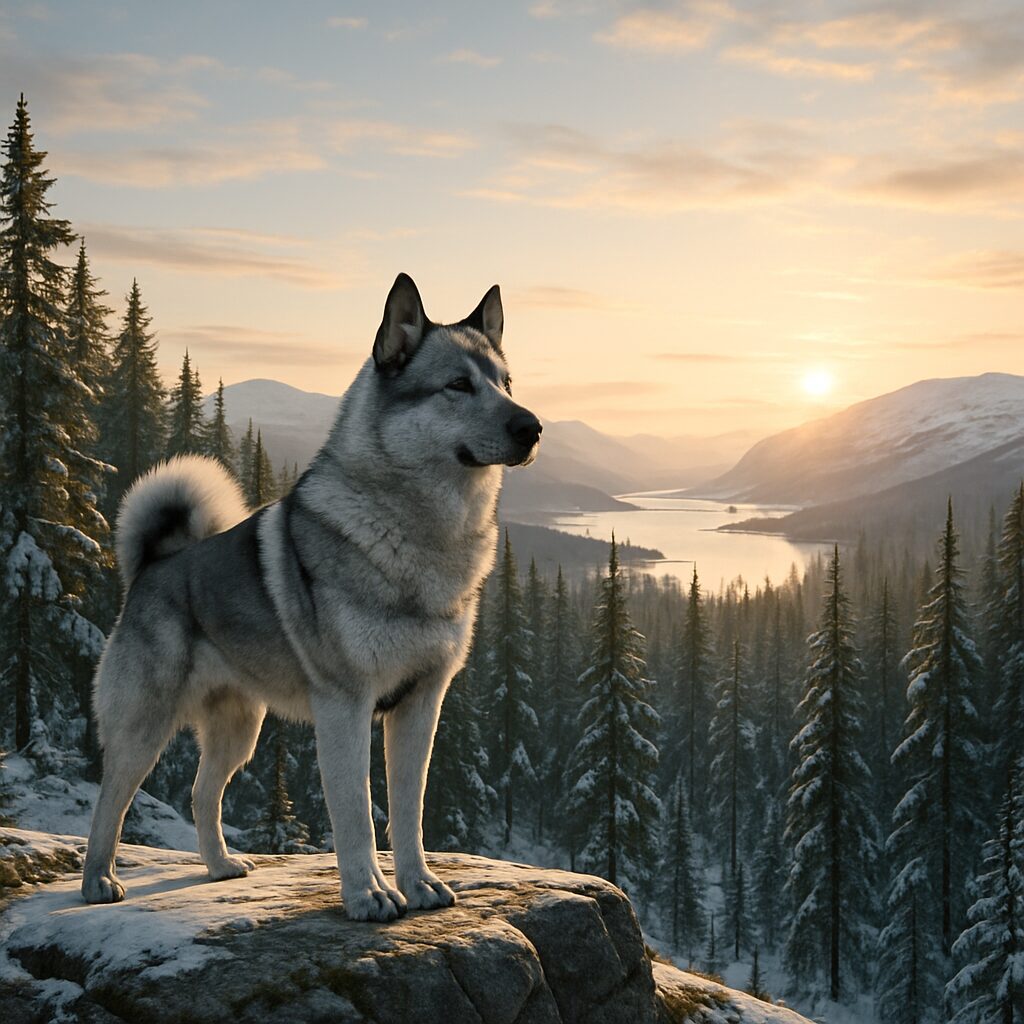
The Norwegian Elkhound intrigues with its proud bearing and characteristic grey coat. More than just a Nordic dog, it embodies an ancestral know-how that has crossed the centuries. Between Viking legends and modern walks, this cousin of the Spitz reveals itself to be both robust and endearing. If you are still hesitating to adopt this companion, let’s dive together into its world, where harsh cold and the warmth of home compose an unexpected union.
Origins and history of the Norwegian Elkhound
From Viking roots to official recognition
One might think this dog is recent: in truth, the Norwegian Elkhound dates back to the ancient Scandinavian peoples. Archaeological excavations uncover canine representations carved in stone, highlighting the central role of this animal in survival against large game. Gradually, this instinct as a hunter of the Moose (or “elk”) elevated it to the status of an indispensable companion for hunters. Towards the end of the 19th century, breeding was organized and, in 1897, the breed received its official standard in Norway.
Evolution in response to modern lifestyle
From forest trails to urban park paths, the Norwegian Elkhound has adapted. Formerly used to flush out Moose and protect isolated cabins, it now occupies a multiplied role: guard dog, partner in canine activities, or simple epicurean of family life. Despite this evolution, its sharp intelligence and need to work remain constants. An urban owner will have to manage its energy and offer mental challenges to avoid boredom and mischief.
Character and behavior

The hunter’s temperament
Attuned to the slightest crackle, the Norwegian Elkhound displays an almost supernatural attention. Its compact silhouette hides uncommon courage: when tracking prey, it adopts a supple and silent gait, ready to give the alert with a melodious howl rather than a simple bark. This ability to signal without fully frightening allows the hunter to approach discreetly. In a home, this same vigilance translates into a tendency to watch comings and goings, an asset for those who appreciate a canine sentinel.
Relationship with Family and Other Animals
Talkative and warm, he seeks human company without being clingy. Children find in him an tireless playmate, while adults appreciate his sense of nuance: he knows how to settle down when the atmosphere becomes studious or transform into an acrobat when a ball is set up in the garden. In the presence of cats or other dogs, his sociability can vary. Gradual training and early socialization help him harmoniously coexist with other species.
Care and Health
Grooming the Gray Coat
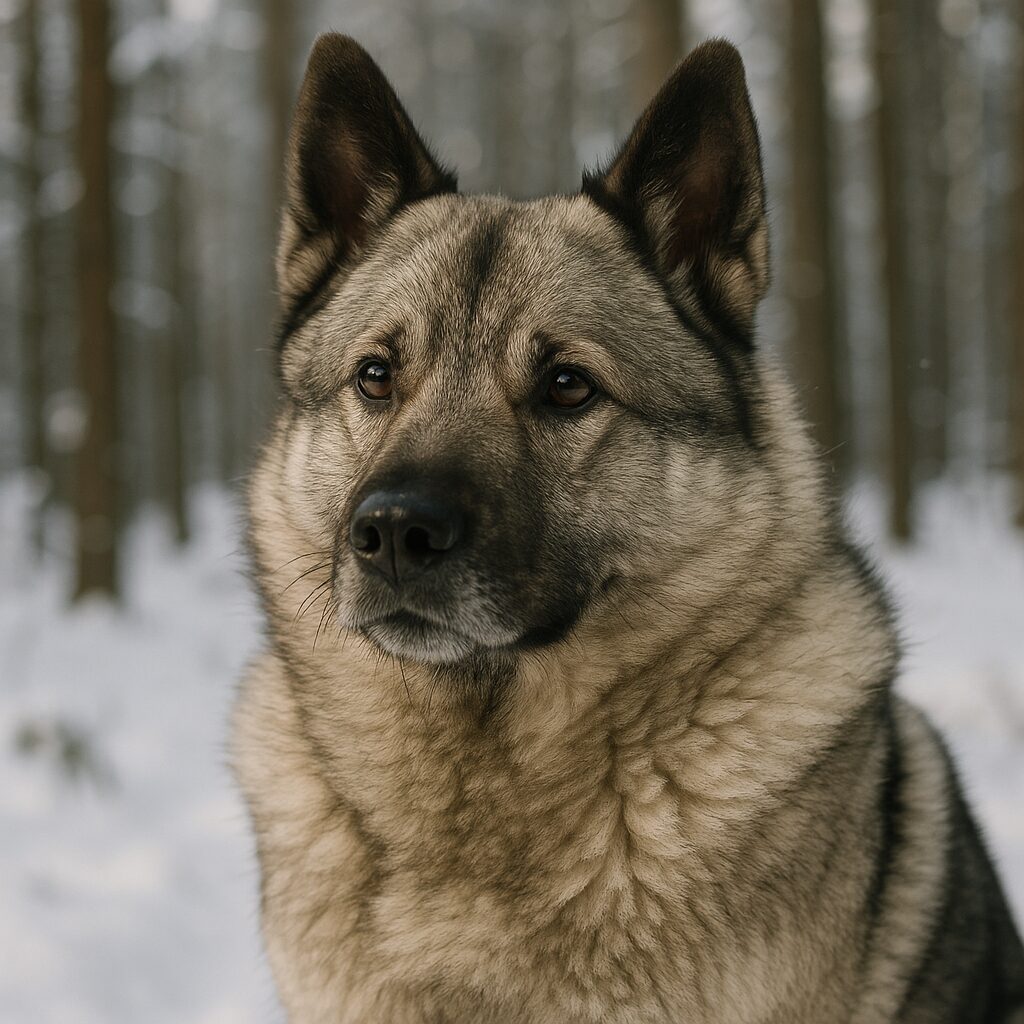
Looking closely at this fur, one grasps the complexity of the double coat: a dense and warm undercoat covered by slightly wavy guard hairs. Weekly brushing, or even twice weekly during the spring and autumn shedding seasons, is generally enough to preserve the silvery gray shine and limit stray hairs in the house. Some owners add a light detangling spray to facilitate the task, but it remains essential to respect the skin’s natural balance to prevent irritation.
Physical and Mental Exercise Requirements
A daily routine without challenge feels like a prison for this lively dog. More than just a simple walk, he enjoys steep hikes, tracking games, or agility courses. To stimulate his sense of smell, you can hide kibble in the garden or initiate search sessions indoors. Without this, the stored energy can result in excessive barking or digging indiscriminately in the soil.
Activities and Training
Hunting Techniques and Sense of Smell
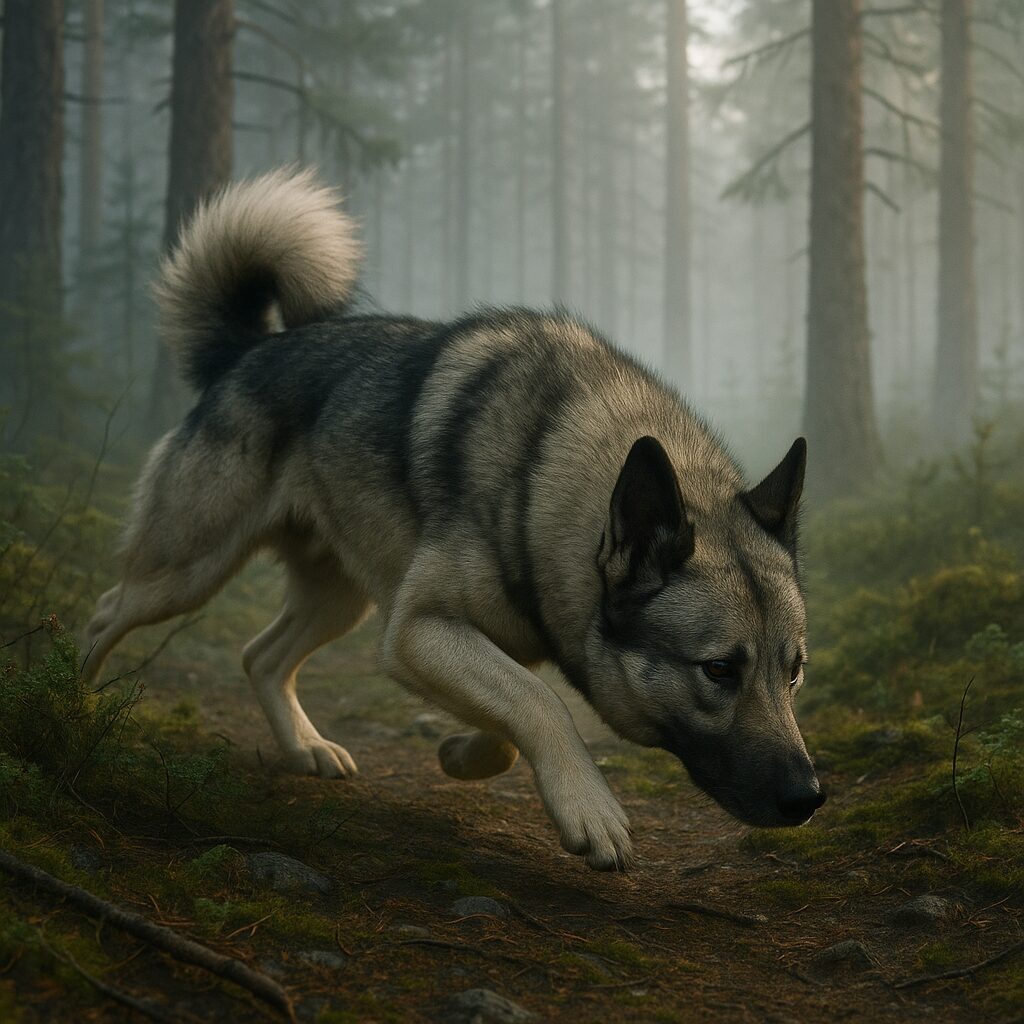
With a nose that sometimes rivals that of specialized breeds, he follows the trail of his prey by adapting his speed to the terrain. Experienced hunters recommend alternating sessions to work both stealth and localization by sound. Unlike some hunting dogs that bark relentlessly, the Norwegian Elkhound punctuates his pursuit with pauses and precise barks, as if to communicate the exact location of the animal to the hunter.
Training as a Companion Dog
Showing firmness and consistency during initial training helps establish a lasting bond. Basic commands (“sit,” “lie down,” “heel”) are quickly learned if positive reinforcement is used: treats, verbal praise, and firm petting. Early use of off-leash obedience closes the puppy phase and strengthens mutual trust. In truth, the key lies less in technique than in consistency: a word pronounced differently one day risks sowing confusion in his bright mind.
Choosing and Welcoming a Norwegian Elkhound
Breeder Selection and Criteria
To find a balanced specimen, it is better to favor a breeder registered with the breed club, able to present pedigrees and health results (hips, eyes). Observing the parents and siblings offers insight into temperament and physical constitution. Avoid offers that are too attractive or puppy trucks: these sources often hide problems of inbreeding or poor socialization.
Preparing the Home Environment
The Norwegian Elkhound requires accessible outdoor space, even if modest in size. A shaded area for the summer and a shelter in case of storms complete the setup. Indoors, a generously sized bed allows him to retreat when family activity reaches its peak. To reduce wear on the paw pads, simple protection during hikes on rough terrain is sufficient, as is a diet adapted to his level of exertion.
FAQ
- What is the lifespan of the Norwegian Elkhound?
He generally lives between 12 and 15 years, provided there is regular veterinary follow-up and quality nutrition. - What size does he reach at adulthood?
The male stands between 51 and 56 cm at the withers, the female ranging from 48 to 53 cm. - Is he suitable for apartment living?
With frequent and stimulating outings, he can acclimate, but daily access to a green space is recommended. - How to manage his hunting instinct in an urban environment?
Canine sports and playful tracking channel this energy while strengthening the owner-dog relationship. - What health issues should be monitored as a priority?
Attention is paid to hip dysplasia and eye infections; annual check-ups allow early detection of any imbalances.