

Can you really offer a good life to a dog without a garden? Absolutely. Living in an apartment with a dog is not only possible, but often more harmonious than one might think. Provided you adapt your daily routine, choose your companion well, and above all understand their real needs. This guide gives you all the keys for a happy balance between walls, corridors… and a wet nose. 🐾
🏠 Dog and apartment: a false opposition?
Many think a dog must have a garden to be happy. In reality, it’s not the size of the home that matters, but the quality of life you offer. A dog can thrive in an apartment if properly stimulated, respected, and understood. It’s not a passive garden animal, but an active partner in your daily life. And paradoxically, some dogs living in houses are walked far less than those in apartments! The essential? Regular outings, games, interaction, and a lifestyle rhythm consistent with their needs. No matter the space, what counts is the attention, love, and activities you share with them. A happy dog is a dog who lives fully by your side, regardless of square meters.
🐶 Which dog for which home?

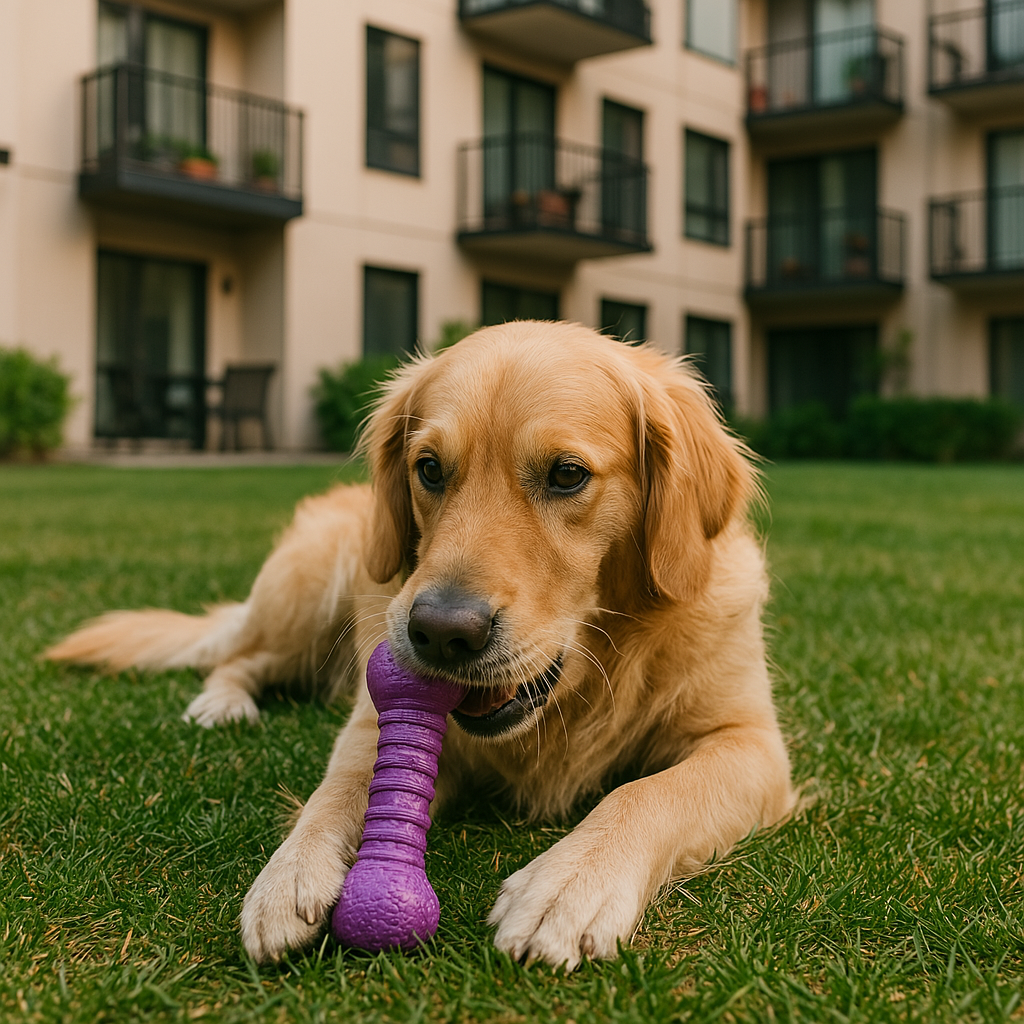
There is no “forbidden” breed in apartments, but some are better suited than others. What matters: energy level, need for mental stimulation, calm or nervous temperament, and ability to stay alone without anxiety. A greyhound can live very well in 40 m² if properly walked. Conversely, a Jack Russell in a house without activity can become hellish. Calm dogs, those who bark little, tolerate solitude, and are not very destructive are often better life companions in apartments. However, each dog is unique: it is mainly education, the owner’s availability, and lifestyle adaptation that make the difference. A balanced dog, whether living in a studio or in the countryside, is above all a dog that is understood and respected.
🚶 Outings and energy expenditure
No garden? No problem. But then, you have to compensate. Three outings a day are ideal, including at least one long walk (30 minutes to 1 hour). Vary the places, smells, and pace. Prioritize quality over a simple “quick dump.” Stairs, corridors, curbs are already physical activity! And if you work long hours? Consider a pet-sitter, a kind neighbor, or an organized group walk. The dog must be able to get fresh air, sniff, move… otherwise, it accumulates stress, gets bored, and may develop undesirable behaviors. Good organization and a bit of anticipation allow you to meet their needs, even without a garden, while strengthening your daily bond.
🧠 Stimulating your dog without a garden
Space is not a limit to stimulation. A dog can mentally tire itself out in 10 m² if you are creative. Snuffle mats, scent games, treat-dispensing toys, tricks (sit, spin, shake paw…) are real well-being boosters. You can also create mini courses, hide treats, do clicker training. Mental stimulation tires much more than a simple run! And it creates a calm, secure, and close relationship.
⚠️ Common problems (and how to avoid them)
- Barking: often linked to boredom or anxiety → enrich the environment, keep the dog occupied
- Destruction: lack of mental/physical expenditure → occupation games, regular walks
- Cleanliness: anticipate, praise outside, manage long absences with planned outings
- Loneliness: gradually get used to it, enrich the environment, leave soft music on
📊 Breeds compatible with apartment living
| Breed | Qualities | To watch out for |
|---|---|---|
| Pug | Calm, affectionate | Noisy breathing, heat |
| Cavalier King Charles | Discreet, sociable | Heart fragility |
| Whippet | Very calm indoors | Needs daily sprint |
| French Bulldog | Homebody, playful | Sensitive to heat |
| Miniature Poodle | Very adaptable, clean | Needs mental stimulation |
❓ FAQ
Is a dog unhappy living in an apartment?
Not at all, if it is well walked, stimulated, and respected. Some dogs living in houses get bored much more!
Can a large dog live in an apartment?
Yes, if it is calm and well trained. A greyhound or a Newfoundland can be much calmer than a small nervous dog.
How to avoid conflicts with neighbors?
Work on barking, secure doors, inform kindly, and anticipate noises (loud games during the day, not in the evening).
🗣️ Testimonial
“I’ve lived in a one-bedroom apartment with my Bichon for 4 years. He has his snuffle mats, fixed walking times, and he follows me everywhere. He has never destroyed anything, he is clean, and my neighbors don’t even know I have a dog!” — Camille, 29 years old
🛑 Common mistakes
- Choosing a dog only “for its size” without studying its temperament
- Thinking a small dog needs less activity
- Hoping the dog will “adapt on its own” to being alone
- Not enriching the indoor environment
🔚 Conclusion
Living with a dog in an apartment is not a hindrance, it’s a wonderful adventure. By adapting your daily life, being attentive to its needs, and cultivating a rich and joyful bond, you offer your dog much more than square meters: a life full of love, landmarks, and companionship. And between two walks, a nap against your feet remains its definition of happiness. 🐕🏙️
🛋️ Arranging your interior for a dog in an apartment
A dog needs landmarks, even in a small space. Set up a spot just for him: a soft bed, toys, a blanket with his scent. Avoid constant coming and going in this space so he feels safe there. Also think about safety: hide cables, avoid toxic plants, secure balconies. You can also create “play areas”: a scent zone, an enrichment mat, or even a mini tunnel for small dogs. It’s not the size that matters, but how you use the space. A well-thought-out environment mentally stimulates the dog, offers stable landmarks, and fully contributes to its overall well-being.
📆 Example of daily routine for a dog in an apartment
- 7:30 AM: pee break + short walk (10-15 min)
- 8:00 AM: little scent game or licking mat while you get ready
- 12:30 PM: main outing + playtime at the park or training session
- 3:00 PM: quiet time, nap, chew toy
- 6:30 PM: end-of-day walk (30-45 min)
- 8:30 PM: short indoor play session or relaxing cuddle
A predictable routine reassures the dog and helps avoid many problematic behaviors. Even in an apartment, the day can be rich and balanced!
🔊 Noise, slippery floors, neighborhood: specific challenges
Apartments can expose dogs to unusual noises: elevators, neighborhood voices, slamming doors, traffic. It is useful to desensitize the dog gradually: by leaving background sounds on, associating noises with treats, and avoiding overreacting yourself. The floor is another often overlooked point: tiles or hardwood can be slippery, causing stress or pain. A good non-slip mat in rest or passage areas is a simple but effective investment for their comfort and safety. This type of arrangement reduces the risk of slipping, protects joints, and reassures the most sensitive dogs. Acoustic and physical comfort is essential, especially in small spaces.
✨ The little-known advantages of apartment living
Less space, yes… but often more attention! The dog in an apartment spends more time with its humans, lives at their pace, goes out more often, and enjoys a real routine. It learns to manage frustration, stay calm, adapt to noises and social life. And it is often cleaner, better trained, and more emotionally “connected.” In short: proximity fosters complicity. What the dog loses in square meters, it often gains in quality of presence.