

| Key Points | Details to Remember |
|---|---|
| 📌 Definition | Crossbreed origin between Labrador Retriever and Poodle |
| ⚡ Energy | Daily activity essential to channel dynamism |
| 🐾 Coat | Hypoallergenic thanks to its silky and curly texture |
| 🎾 Games | Varied interactions: fetch, hide-and-seek, swimming |
| 🧼 Maintenance | Regular brushing and periodic professional grooming |
| 🏠 Adaptation | Family-friendly and compatible with daily urban life |

Among dog breeds that generate the most enthusiasm, the labradoodle holds a special place. Born from a thoughtful crossbreeding between the Labrador Retriever and the Poodle, this companion charms as much by its coat reputed to be “hypoallergenic” as by its playful temperament. In this article, we dive into its origins, its activity needs, and its famous soft coat that limits the spread of allergens.
Origins and Physical Description
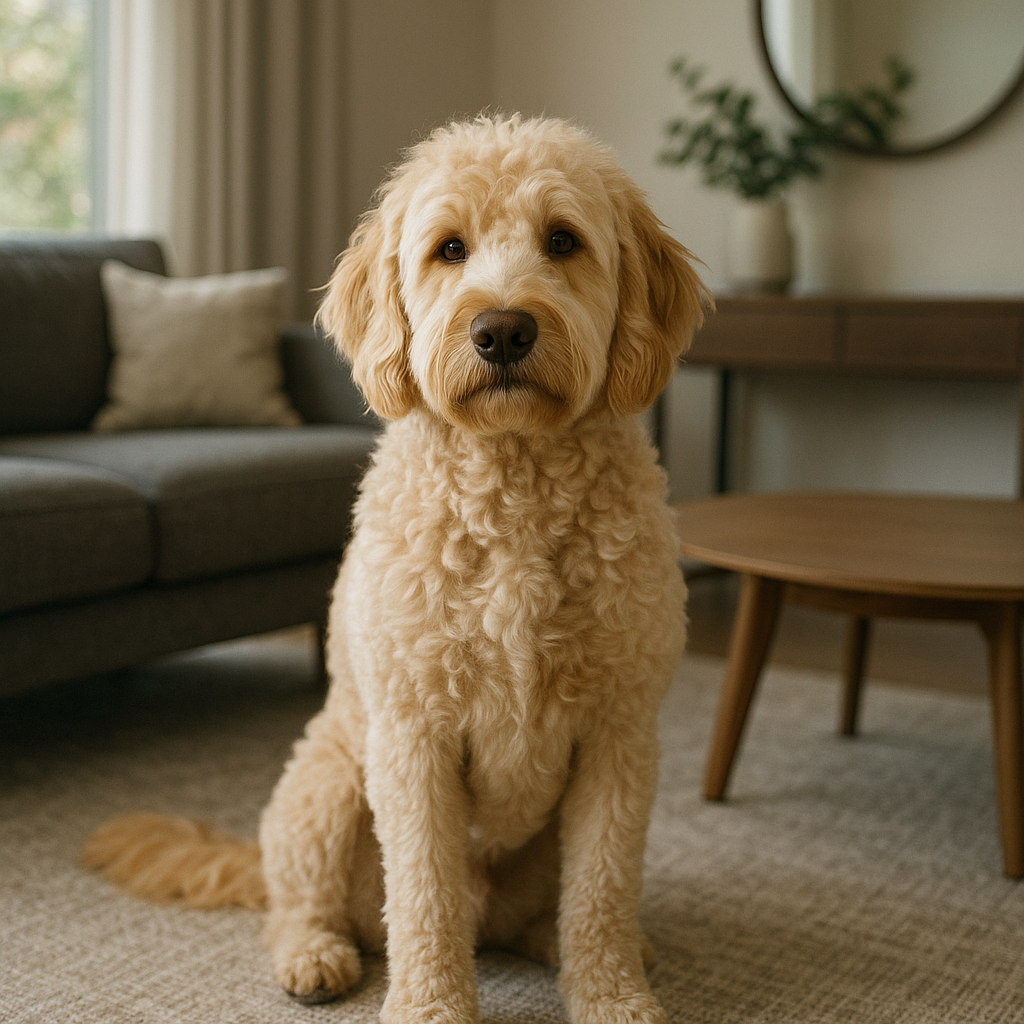
The labradoodle is born from a desire to combine the intelligence and sociability of the Labrador with the curliness and low shedding rate of the Poodle. Beyond a simple “hybrid dog,” it quickly becomes a full member of many families. Depending on the lines, its size generally ranges between 30 and 45 centimeters at the withers, and its weight can reach 25 to 30 kilograms.
Its appearance often reveals an expressive head, floppy ears, and a mischievous gaze. The variety of coats – cream, chocolate, black, or even mocha – illustrates the genetic diversity of the breed. Each individual develops a unique coat, sometimes wavy, sometimes almost curly, and always pleasant to the touch.
The Anti-Allergy Coat: Myth or Reality?
Coat Characteristics
It is called “hypoallergenic” because the labradoodle sheds fewer dead hairs and its fur retains more dander, which are responsible for allergic reactions. However, no dog can be completely free of allergens. The idea is that you breathe less canine skin dust when there is less hair shedding.
The texture varies according to the percentage of poodle genes. Some labradoodles have a very curly coat, close to poodles, while others have a slightly wavy coat. This difference directly affects the shedding rate but also the maintenance needs.
Maintenance and Brushing
The secret to a healthy coat lies in rigorous brushing two to three times a week. A detangling brush with long teeth and a metal comb with tight teeth are the two essential tools. For subjects with very curly hair, grooming in a salon every 8 to 12 weeks helps maintain a controlled length and avoid painful knots.
| Frequency | Tool | Objective |
|---|---|---|
| 2–3× per week | Detangler | Remove knots and dead hairs |
| 1× every 2 months | Professional salon | Trim the coat and maintain hygiene |
Playful energy and activity needs
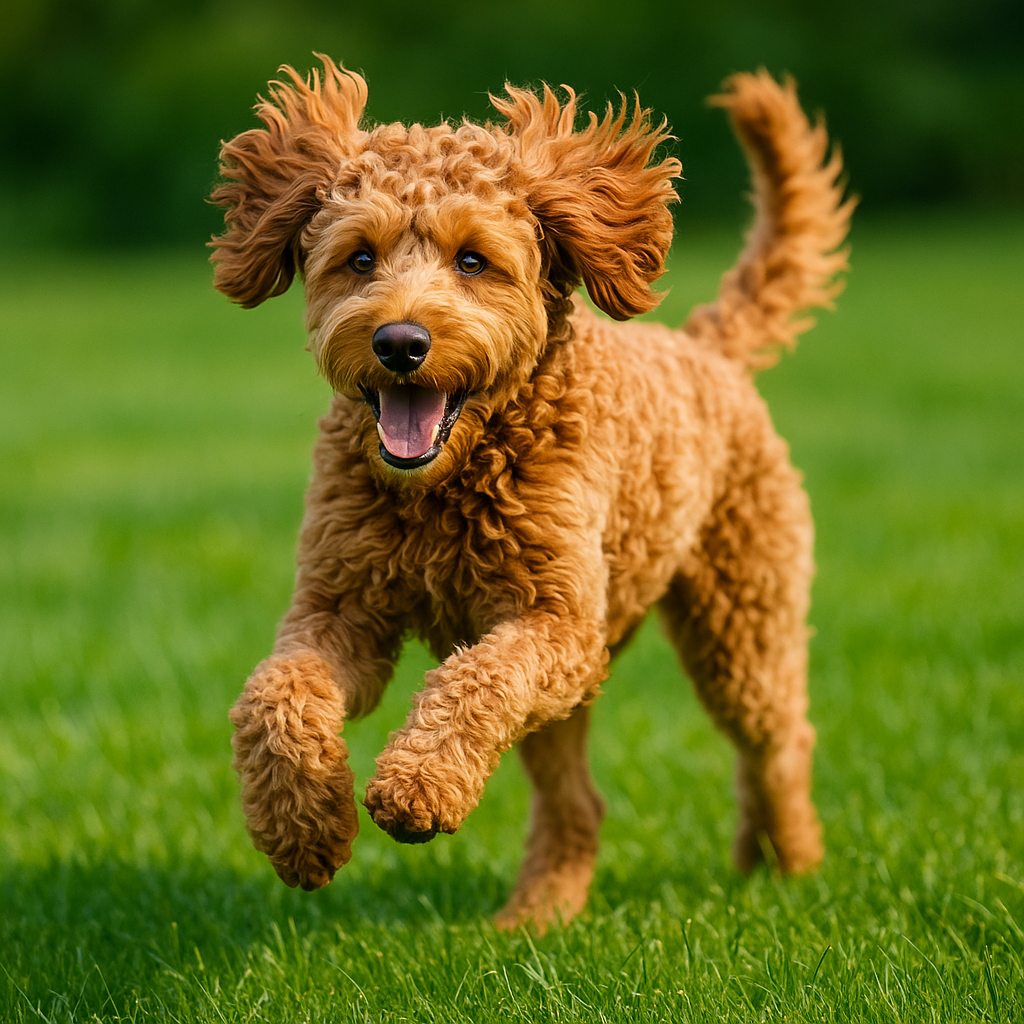
The labradoodle is not a couch dog by nature; it demands a daily dose of exercise to burn off its exuberance. Without this stimulation, it can develop inappropriate chewing behaviors or show signs of restlessness.
Recommended play sessions
- Ball or frisbee throwing: excellent for building endurance
- Hide and seek: stimulates its scenting ability and intelligence
- Water games: swimming in a lake or dog pool
- Agility course: simple hurdles and homemade slalom
By combining several activities throughout the week, you avoid monotony and strengthen the bond. The labradoodle is particularly receptive to games that combine reward and thinking.
Suitable canine sports
If you are looking for a more structured project, agility, flyball, or cani-cross are perfectly suited. These canine sports exploit its speed and appetite for effort. They also provide a precise framework to reinforce obedience and control impulses, while strengthening the owner-dog relationship.
Temperament and socialization
The charm of the labradoodle also lies in its open character: affectionate with the whole family, it proves patient with children and tolerant towards newcomers, whether human or four-legged companions. However, this sociability must be guided and channeled from the very first weeks.
“A curious puppy will become a balanced adult when it discovers the world without fear or overprotection.”
Socialization sessions between 2 and 4 months expose it to different environments: urban noises, encounters with strangers, varied surfaces (asphalt, grass, sand). These formative experiences reduce the risk of separation anxiety and promote its emotional well-being.
Training and practical tips
The intelligence of the canine requires gentle and consistent teaching. Physical punishments are to be avoided: they harm trust and can cause behavioral blockages. Instead, positive reinforcement is preferred.
- Use small treats to mark each success
- Establish a recall ritual with a brief and clear keyword
- Alternate leash walking exercises and mental discharge games
- Vary rewards (petting, toys, verbal praise)
Finally, consistency among all household members makes all the difference: clear and shared rules, even for occasional visitors.
Adaptation to family life
Whether living in a house with a garden or an apartment in the city, the labradoodle adjusts. The key lies in routine: morning outings, play sessions after work, and quiet moments indoors. In urban life without immediate green space, dog parks and regular walks compensate for the lack of a garden.
For households with children, care is taken to teach the youngest the gestures to adopt: approach the dog without sudden movements, respect its resting time, always accompany petting moments with voice. Thus, the labradoodle becomes a calm companion perfectly integrated into the family unit.
Frequently Asked Questions (FAQ)
- Is the labradoodle suitable for allergy sufferers?
It reduces exposure to dander thanks to limited shedding, but does not guarantee the complete absence of a reaction. - What size does it reach at adulthood?
On average 30–45 cm at the withers, depending on the initial size of the poodle and Labrador used for the crossbreeding. - Can it be left alone all day?
Not without arrangements: plan for a dog sitter, interactive toys, and play breaks to avoid boredom. - What is the average grooming cost?
Expect 50–70 € per visit to a professional groomer, depending on the length and condition of the coat. - Is it easy to train for a beginner?
Its eagerness to learn makes it a good student, provided the positive method is adopted from the start.