| Key Points | Details to Remember |
|---|---|
| 🐶 Definition | Dog with low allergenicity of fur |
| 🌿 Benefits | Reduces exposure to allergens and dander |
| ✂️ Coat Maintenance | Regular brushing and targeted care |
| 🐾 Morphology | Double coat, compact size |
| ❤️ Character | Affectionate, alert and sociable |
| 🏠 Indoor Life | Adapted to urban and family life |

Choosing a pet when you suffer from allergies can feel like a puzzle: some think they must give up the affection of a dog. Yet, some breeds prove to generate fewer allergens. The Toy Spitz, often called Pomer, is among these privileged companions. Behind its small ball of fur silhouette lie particularities that appeal both to allergy sufferers and busy urban families. This article explores in depth what makes the Pomer hypoallergenic, its care, character, and adaptation to daily life.
What is a hypoallergenic dog?
The term “hypoallergenic dog” has gained popularity but remains more marketing than scientific. It is used to designate breeds supposed to produce fewer allergens than their peers. In reality, no dog is completely free of proteins likely to trigger reactions: dander, saliva, or urine all contain allergens.
However, some specimens limit the dispersion of these particles thanks to the nature of their coat or their type of shedding. The term “hypoallergenic” implies a relative reduction in risk, not an absolute elimination. Better understanding the criteria involved allows for a more refined choice.
Criteria for hypoallergenic quality
- Type of hair: fine, tight, or single coat to retain dander.
- Shedding rate: reduced flow of dead hairs.
- Tendency to drool: less saliva, fewer projected allergens.
- Frequent maintenance: brushing and bathing reduce the amount of particles.
Limitations of this term
Despite commercial appeal, the absence of an international standard authorizing or regulating the “hypoallergenic” qualification makes the concept vague. Several veterinary studies emphasize individual variability: two Pomers can generate different levels of allergens. Environment, diet, and air quality also play an equally determining role.
The Toy Spitz (Pomer): portrait of a breed
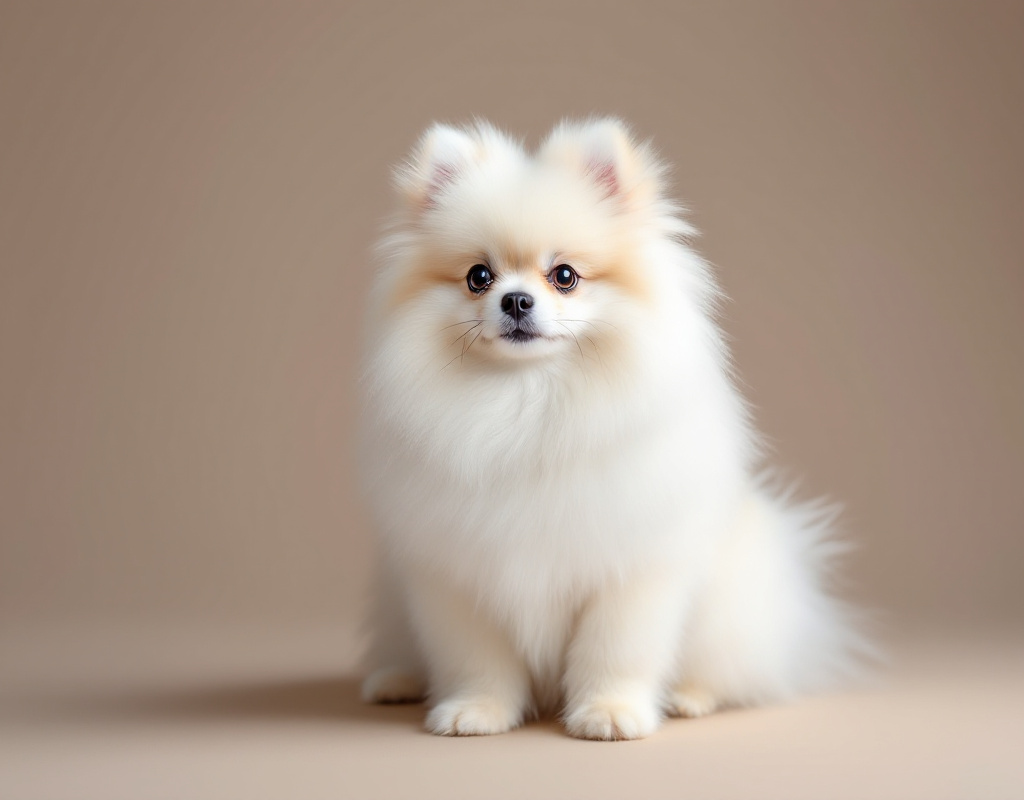
The Toy Spitz, often nicknamed Pomeranian or Pom, originates from the Pomerania region, in present-day Poland and Germany. The characters of Queen Victoria’s court in the 19th century popularized it with their elegant miniatures. Since then, the FCI standard has codified its reduced stature (20 to 28 cm) and weight (1.5 to 3 kg), while highlighting its lively and curious gait.
Behind its fox-like face, the Pomer hides a lively and independent temperament. Without being distant, it often prefers to make the first approach. Owners describe an alert companion, always ready to sound the alarm at the slightest unusual noise, making it an excellent watchdog.
Origins and History
If we trace back to its Nordic ancestors, they were sled dogs, sturdy and enduring. The aristocratic grace it is known for was developed later, when only the smallest and silkiest specimens were selected. At this stage, the Pomeranian becomes a lap dog, appreciated for its mini size and proud head carriage.
Morphology and Coat
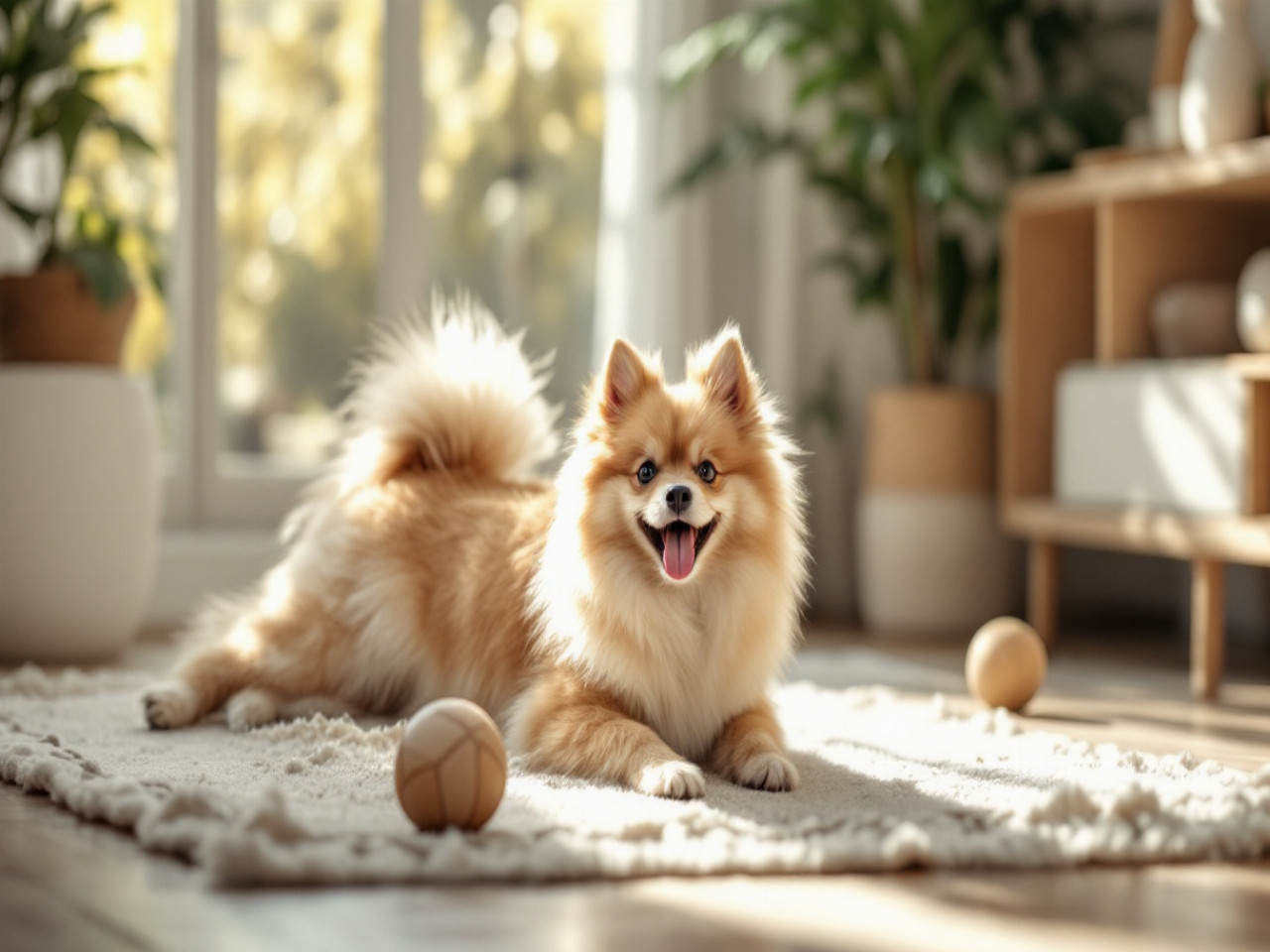
Its double coat consists of a dense, soft, and warm undercoat, topped by a longer, straight, and glossy outer coat. This double thickness forms a remarkable mane around the neck and a plume of tail that rests on the back. From a hypoallergenic standpoint, this type of coat offers an advantage: it traps some of the dander, limiting its dispersion.
Temperament and Sociability
On closer inspection, the Pomeranian is not a silent dog at all. It readily barks to greet a guest or signal movement. However, behind this reactivity lies a tender heart, ready to cuddle its favorite human. Well socialized, it gets along very well with children and other animals, provided it is introduced gradually and benefits from kind supervision.
Why is the Pomeranian Considered Hypoallergenic?
The main attribute of the Pomeranian in this category lies in its double coat equipped with a dense undercoat. This undercoat acts as a natural filter: the dander, those flakes of dead skin responsible for most allergic reactions, remain trapped there rather than floating freely in the room.
The Role of the Undercoat
On a daily basis, during brushing, it is primarily this undercoat that is removed. By methodically removing it, one prevents these particles from embedding in furniture or circulating in the ambient air. Without this operation, a simple brushing of the coat by the wind from an open window can disperse allergens.
Production of Dander and Saliva
While the amount of dander varies individually, the Pomeranian generally produces fewer of these particles than breeds with long, waterproof hair. Regarding saliva, the absence of excessive salivation also places it in the category of “clean dogs.” Note that a quality diet and appropriate health treatment (anti-parasitic and dermatological) limit skin irritation and overproduction of dander.
How to Care for Your Pomeranian to Limit Allergens?
Caring for the Pomeranian is not limited to a simple comb-through. It relies on a regular routine aimed at controlling shedding and preventing the accumulation of dander.
- Daily brushing with a fine-toothed metal brush
- Gentle baths every 4 to 6 weeks to eliminate residues
- Diet rich in omega-3 to strengthen the skin barrier
- Cleaning friction areas (folds and muzzle) to avoid irritations
- Weekly vacuuming with a HEPA filter in resting areas
- Air purifier in the main room to capture particles
| Day | Maintenance Task |
|---|---|
| Monday | Complete brushing and nail check |
| Wednesday | Wiping paws and wet areas |
| Friday | Cleaning ears and teeth |
| Sunday | Gentle bath if necessary and eye check |
Who is the Pomeranian Suitable For?
There is no perfect profile, but the Pomeranian proves particularly suitable:
Allergic and Asthmatic
Those who fear respiratory reactions find a compromise in this breed: a low level of allergens, provided the maintenance routine is kept up. However, regular follow-up with an allergist is still recommended to assess tolerance.
Urban Families and Seniors
In an urban environment, limited space does not hinder its well-being. Less demanding than a large dog, it is satisfied with short walks and a cozy corner. Seniors appreciate it for its size and alertness, without representing an excessive physical burden.
FAQ
Does the Miniature Spitz never shed its hair?
It molts twice a year more noticeably, but daily brushing limits hair loss on a daily basis.
Can a Pomeranian be left alone all day?
This dog poorly tolerates prolonged solitude. It prefers the presence of a human to feel reassured.
What budget should be planned for its maintenance?
Between professional grooming, quality food, and veterinary visits, expect 800 to 1,200 € per year on average.
Does the Pomeranian get along with children?
Yes, if it is accustomed from a very young age. Its small size, however, requires supervision to avoid falls.