| Key Points | Details to Remember |
|---|---|
| 🐶 Definition | Hungarian shepherd dog with a corded coat |
| 🎯 Temperament | Lively, playful and naturally vigilant |
| 🐾 Size and weight | 40–45 cm for about 11–15 kg |
| 🧼 Maintenance | Training and manual separation of dreadlocks |
| 🏃 Exercise | Agility, herding and long walks |
| 🔍 Vigilance | Guardian instinct and attentiveness |

The Puli fascinates at first glance with its fluffy cords, which spontaneously evoke the image of bouncing dreadlocks. But behind this unique appearance hides a dog brimming with energy, shaped by centuries of service to Hungarian shepherds. While some consider it mainly for its unique aesthetics, make no mistake: its ability to detect the slightest intruder and its need for stimulation make it a companion as demanding as it is endearing.
Origin and History of the Puli
One might think the Puli is recent, but its earliest traces date back several centuries. Imported from Turkey by the Magyar tribes during their migration to Eastern Europe, it quickly established itself as an ally of breeders. Its role? Guarding the herds, gathering the animals, and preventing any risk of predation. This lookout position has shaped in it a keen sense of protection, complemented by endurance allowing it to remain alert for long hours, even under blazing sun or in snowy pastures.
Morphology and Characteristic Coat
The corded coat: features and functions
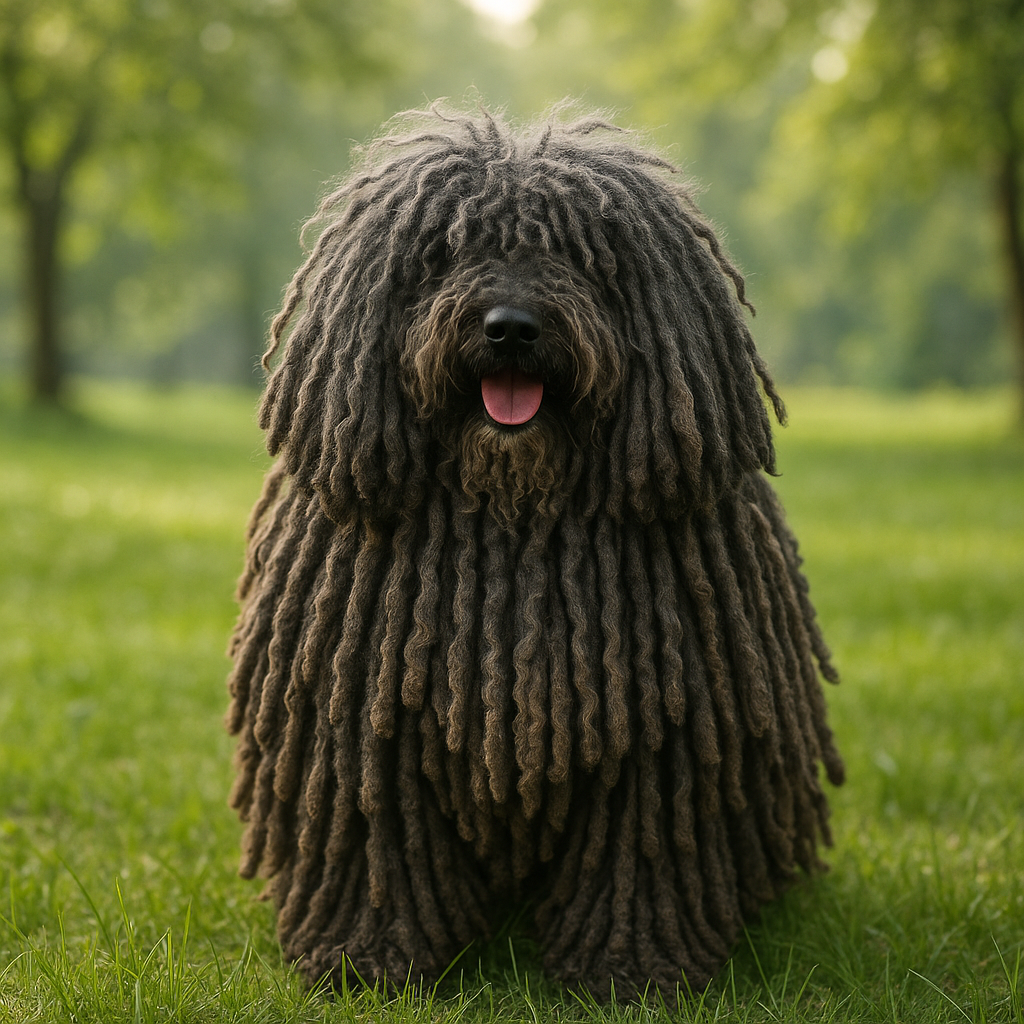
Unlike most breeds, the Puli does not see its undercoat turn into loose hairs: these gradually clump together to form cords that tighten over time. This configuration acts as a natural insulator, protecting against freezing cold and scorching heat. The funny hair bands also filter dust and moisture when the dog stays outside for long hours, a considerable asset for a farm dog.
Lively Temperament and Role of Vigilance
With the Puli, there’s no settling into an armchair without arousing its curiosity. Known for its lively spirit, it explores every corner and sounds the alarm as soon as a noise escapes its keen hearing. This ability to signal any foreign presence sometimes results in overflowing enthusiasm: its barking is triggered by the slightest suspicious movement, making it an effective guard dog but requiring patient training to channel its zeal.
Exercise and Mental Stimulation Needs
It’s not a couch companion. To stay balanced, the Puli demands daily outings of at least an hour, ideally sprinkled with varied activities. Leaving a Puli idle risks seeing it dig, chew, or exhaust itself chasing a piece of rope!
Recommended Activities
- Agility: its natural agility and desire to please make it an enthusiastic student.
- Herding: if you have access to a group of breeders, it’s an opportunity to reconnect with its original vocation.
- Search games: hiding treats in hay bales stimulates its scent and provides a mental routine.
Coat Maintenance and Specific Care
Many imagine that a Puli is brushed like a Labrador; in reality, each cord must be formed by hand. To avoid the formation of irreparable knots, it is necessary to regularly separate the locks, then clean the roots to prevent the proliferation of bacteria or fungi.
How to form and maintain the cords?
- After the initial growth, detangle the base of each lock with your fingers.
- Ensure to dry the coat thoroughly after bathing or rain.
- Avoid too frequent shampoos so as not to weaken the natural structure.
Frequency of Care
A weekly check is generally sufficient, provided each cord is gently separated. Every two to three months, a professional bath helps revive the texture without damaging the protective fibers of the coat.
Health and Life Expectancy
| Health Issue | Frequency | Prevention |
|---|---|---|
| Patellar luxation | Medium | Moderate exercise and weight control |
| Hyperestrogenism | Rare | Annual blood tests |
| Dermatoses | Possible | Regular inspection of the scalp |
| Spina bifida | Very rare | Veterinary monitoring from birth |
Generally robust, it lives on average 12 to 16 years. Teeth brushing and joint checks are part of the routine to avoid any long-term complications.
Comparison with Other Breeds with Special Coats
In the gallery of dogs with original manes, the Puli rubs shoulders with the Bedlington Terrier or the Komondor. More modestly, a certain Löwchen stands out for its little lion appearance, while the Puli opts for a wild, almost primitive look. Each coat demands its own method: while the Löwchen uses scissors to sculpt its “lion cut,” here the hand is used to encourage the cords to take shape.
FAQ
- What is the difference between Puli and Komondor?
- The Komondor is more massive, often reserved for guarding large herds, while the Puli maintains a more agile and light silhouette.
- Can you live in an apartment with a Puli?
- It is possible if you compensate with long walks and intense play sessions. Boredom is its worst enemy.
- Does the Puli shed its hair?
- It does not shed in the usual way, but old hairs can detach from the cords after careful brushing.
- How to train its alertness without it barking all the time?
- Work on basic commands and reward it when it is quiet on command. Consistency and patience are essential.