
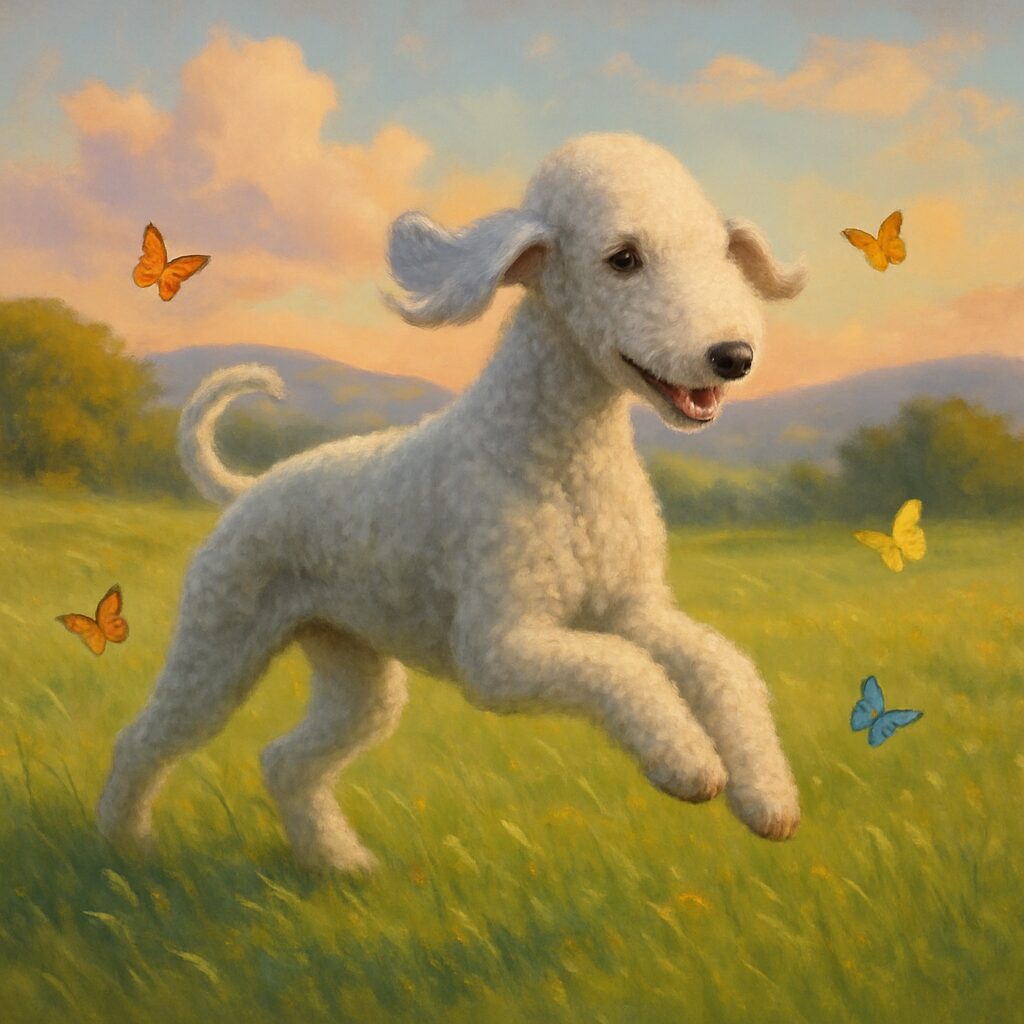
| Key Points | Details to Remember |
|---|---|
| 🐑 Definition | British purebred dog with a unique profile |
| ✨ Distinctive Look | Woolly coat resembling a lamb |
| ⚡ Temperament | Energetic, intelligent and curious |
| 🧼 Care | Frequent grooming and stylish trimming |
| 🎾 Activities | Agility, dynamic walks |
| ❤️ Social Life | Kindness with children and other dogs |
| ⚕️ Health | Life expectancy generally 12-14 years |

This small dog with the appearance of a lamb leaves no one indifferent. Its slender body, topped with a curly fleece, contrasts with its liveliness: you might think you’re dealing with a gentle sheep, but it’s a miniature athlete that greets you. Between the history of its breeding in Great Britain and its boundless energy, the Bedlington Terrier stands out as a breed apart, fascinating to watch and rewarding to train.
Origins and Breeding of the Bedlington Terrier
The genealogy of the Bedlington Terrier was woven in the 19th century in Northumberland County, England. Breeders were looking for a dog capable of hunting rodents and foxes while remaining agile. The result surprises with the shape of the skull and the drooping ears, likely inherited from the old lines of Whippet and local hunting dogs.
A unique profile shaped by man and nature
Before becoming a companion dog, the Bedlington helped control pests. Farmers appreciated its endurance and keen nose. Over time, its character softened: less inclined to wild confrontation than before, it gained sociability. British show competitions later standardized its woolly curves, creating this inimitable style that is recognized at first glance.
Appearance and Coat: Rustic Elegance

You may observe many dogs, but few combine fine bone structure and the look of a mouflon. The Bedlington Terrier displays a narrow silhouette, sturdy legs, and a proud head carriage. But it is its coat that captivates: a mix of hard and soft hairs, extremely curly, requiring a distinctive cut.
The woolly fleece and its care
Unlike breeds with straight fur, the curly texture of the Bedlington traps less dirt but requires regular maintenance. Every 6 to 8 weeks, clipping favors a clean outline: the head is sculpted with ridges, the cranial crest left fuller. A weekly brushing session prevents the formation of mats.
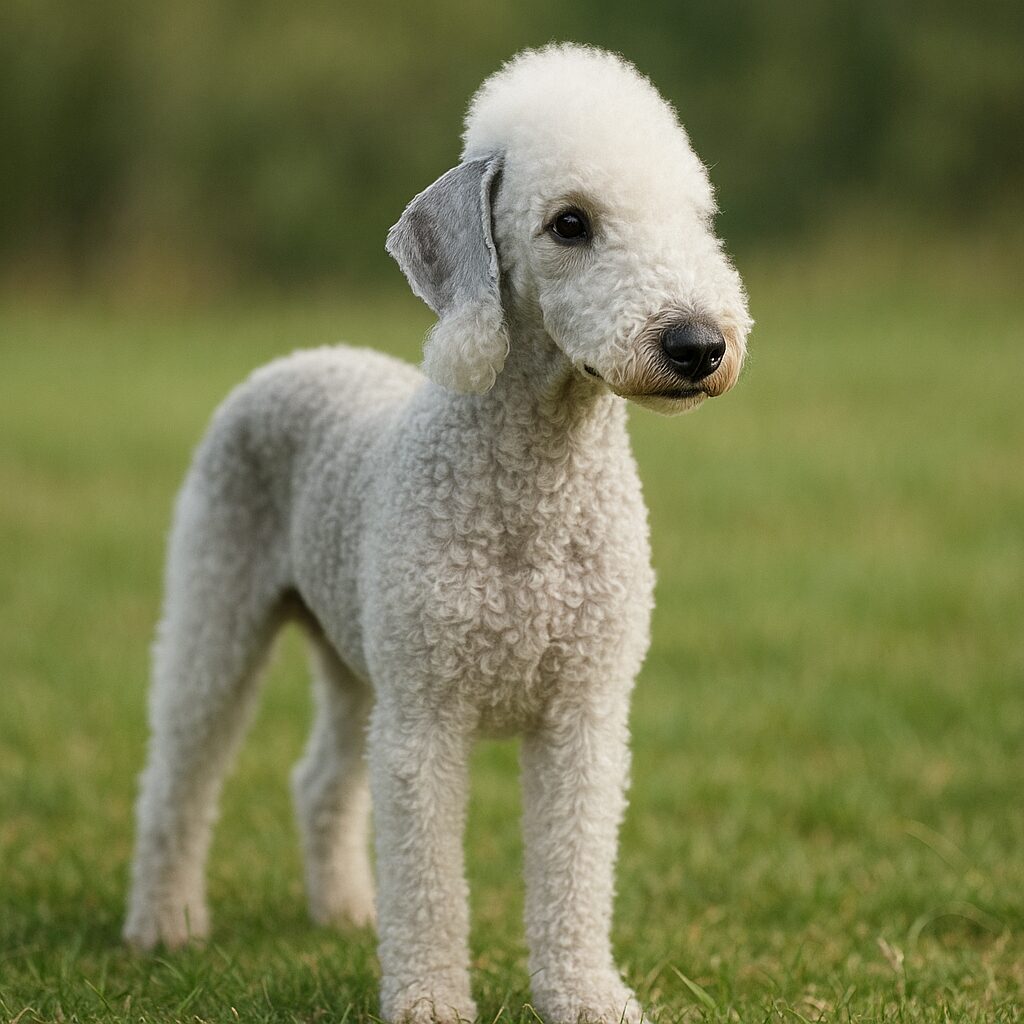
To illustrate the difference, compare its fleece to that of a Maltese whose longer hair requires daily brushing. The Bedlington remains rather hypoallergenic, an advantage if you fear allergies but do not prefer a “short-haired” dog like the Havanese.
Lively Temperament and Intrepid Character
Do not be fooled by its calm head carriage: the Bedlington is a ball of energy ready to leap. Its intelligence is expressed through a surprising quickness in learning, combined with a constant curiosity.
Curiosity and Independence
One might think that this breed obediently follows all commands, but in reality, the dog can be stubborn. However, it appreciates novelty and mental stimulation. Puzzle toys and scent sessions are among its favorite hobbies. Keep challenges for it, otherwise it will invent its own by rummaging through the garden !
Relationship with Children and Other Companions
The Bedlington Terrier generally gets along well with children, but a toddler’s clumsiness can hurt it: contacts must be supervised. With its peers, early socialization limits tendencies toward dominance and chasing. Gentle athletes like the Löwchen will find in it a jogging partner available in all seasons.
Activities and Exercise: Stimulating Body and Mind
Without sufficient activity, this lively temperament quickly slips into anxiety and boredom. An hour of brisk walking, enhanced with throwing games, is enough to channel its impulses. Agility courses wonderfully exploit its natural ease.
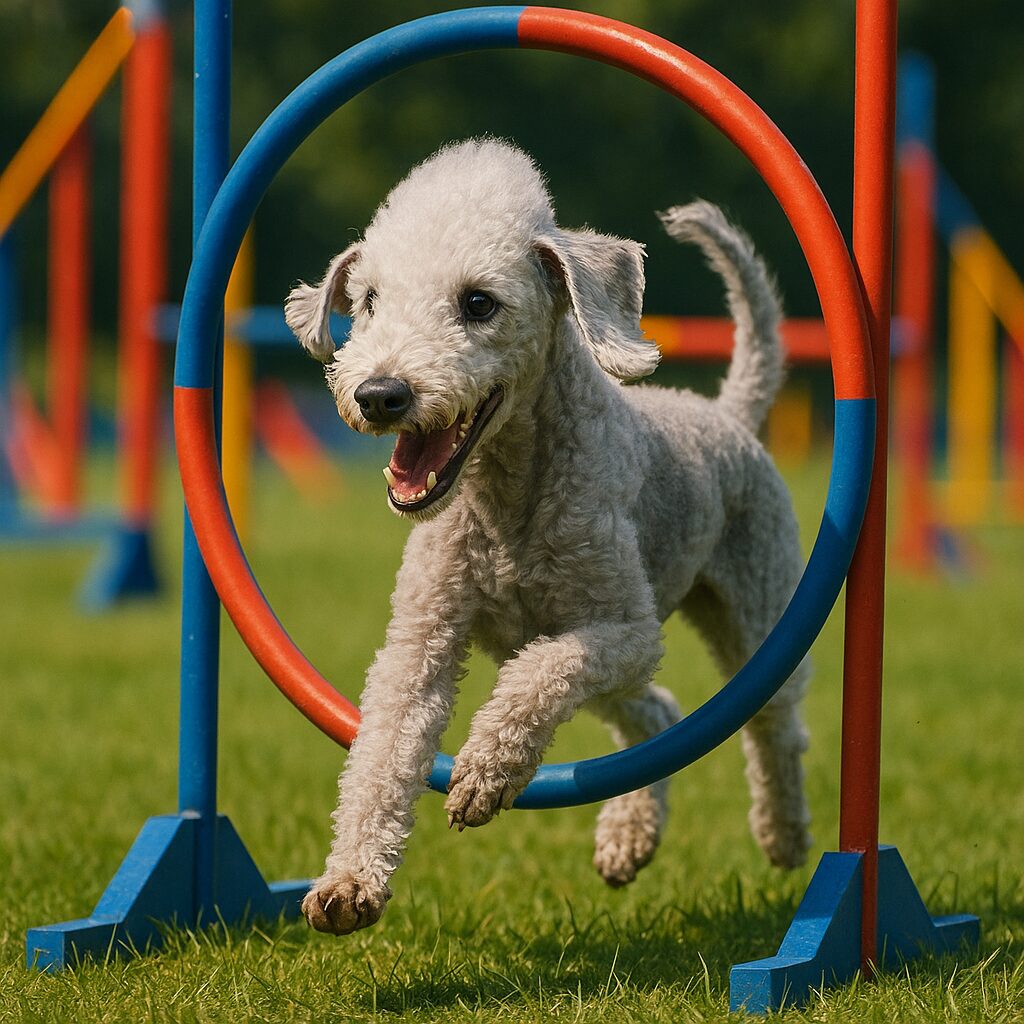
On an agility field, its “V”-shaped morphology proves formidable: slaloms, jumps, and tunnels do not resist it. You can also introduce canicross or simple stationary pulling training, under supervision, to avoid sprains.
Health and Longevity: What You Need to Know
This dog enjoys an average lifespan of 12 to 14 years. Some individuals easily exceed these limits, provided they have regular veterinary follow-up.
Sensitivity to Hereditary Diseases
Medullary myopathy, well known in the Bedlington, appears in mild or severe forms. Genetic tests allow checking predisposition before adoption. Other possible conditions: patellar luxation, eye diseases. Stay alert to signs of limping and consult quickly.
Education and Socialization: Keys to Success
Enriching its daily life from a very young age is essential. The Bedlington Terrier, quickly receptive, responds confidently to positive education methods.
Recommended Methods and Tools
- Positive reinforcement: treats, petting, and encouraging voice
- Obedience games to strengthen the master-dog bond
- Sniffing exercises to stimulate the sense of smell
Adapting Socialization
Exposing the puppy to a varied environment (noises, crowds, other species) helps prevent anxiety. Dog parks are perfect, as are sessions with a dog trainer.
Choosing and Adopting a Bedlington Terrier
You can go through a recognized breeder, member of the breed club. Verify that your future companions have passed the recommended screenings. If you prefer a shelter, count on luck and patience ; but many of these dogs deserve a second chance.
Budget and Equipment
The purchase cost ranges around 1,200 to 1,800 €, depending on the lineage. Expect 50 to 70 € monthly for quality food, grooming, and veterinary visits.
FAQ
- What size does a Bedlington Terrier reach?
- Generally, males measure 38 to 41 cm at the withers, females slightly less, with an average weight of 8 to 10 kg.
- Is the Bedlington Terrier suitable for apartment living?
- Yes, provided it gets good daily exercise. In the city, choose a fairly quiet neighborhood to limit noise stress.
- At what age should training begin?
- From the puppy’s arrival, around 8 weeks, with short and playful sessions.
- Is this breed fragile?
- As long as veterinary recommendations are followed, the Bedlington shows good overall robustness.
- What range of activities is offered?
- Agility, canicross, tracking, intelligence games, it all depends on your availability and desires.