

| Key points | Details to remember |
|---|---|
| 🐾 Definition | Immunomodulator targeting the JAK1 cytokine to calm itching. |
| 💊 Mode of action | Selective blocking of skin inflammation within a few hours. |
| ⚖️ Benefits | Rapid relief and improved quality of life. |
| 🔍 Risks | Increased risk of infections and blood abnormalities. |
| 🛑 Alternatives | Antihistamines, corticosteroids, or targeted therapies. |
| 📊 Monitoring | Regular exams to detect side effects. |

Your dog scratches relentlessly, wounds develop, and you are considering Apoquel as a miracle solution. In reality, this medication provides quick relief but raises many questions: how far can we trust this molecule? What are its real advantages and pitfalls? Between promises of comfort and possible complications, I offer you a nuanced overview to understand whether, for your companion, Apoquel becomes a boon or a long-term risk.
What is Apoquel? Origin and veterinary use
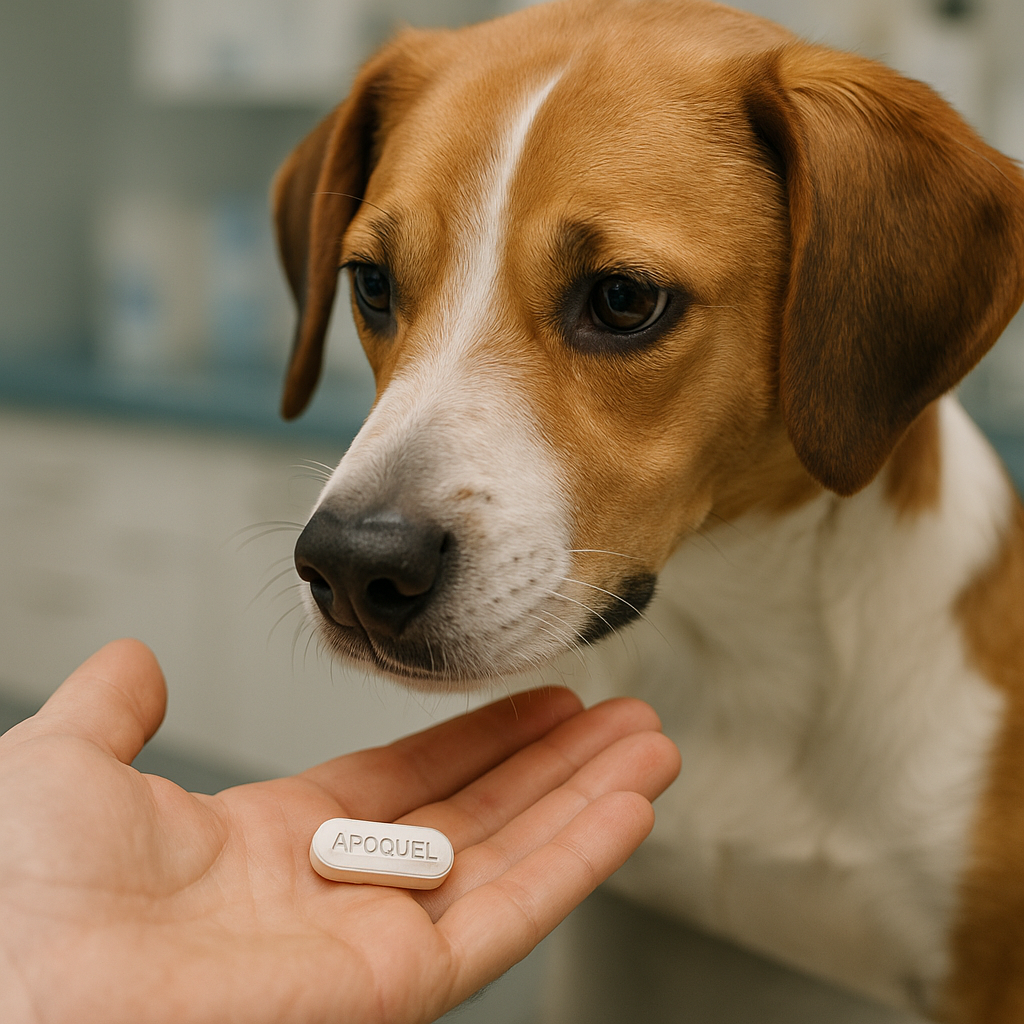
Apoquel, or oclacitinib, appeared in veterinary prescriptions in 2013. Designed to very precisely target the JAK enzymes involved in transmitting inflammatory signals, it positions itself as a foundational treatment for chronic pruritus and canine atopic dermatitis. Within a few hours, the animal feels less urge to scratch, and at home, frantic scratching gives way to a cleaner coat and skin that regains its color.
Official indications
- Moderate to severe allergic pruritus.
- Atopic dermatitis in dogs.
- Short-term (sprint) or maintenance treatment depending on tolerance.
Dosage and administration
The recommended dose is around 0.4–0.6 mg/kg per day during the initial, most critical phase, then gradually reduced. This strategy aims to stabilize the animal before limiting intake. Note: tablets are preferably given morning and evening, with effectiveness relying on regular dosing. Any abrupt interruption can trigger pruritus more intensely than before treatment.
Mechanism of action and expected benefits

Unlike corticosteroids, which act downstream of inflammation, Apoquel blocks the JAK1/JAK3 pathway upstream, stopping the cascade of cytokines responsible for itching. Thought of as a key in a molecular lock, oclacitinib prevents receptor phosphorylation, thus limiting interleukin production. Result: an anti-itch effect often noticeable after just a few hours.

Improvement in quality of life
Less scratching also means fewer lesions, secondary infections, and social stress for your dog, who can resume playing. In the long term, a better owner-animal relationship is often noted, as skin flare-ups disrupt everyone’s sleep.
Comparison with Other Treatments
Antihistamines sometimes provide a boost, but their effectiveness remains limited. Corticosteroids are more powerful but come with metabolic risks.
One can also consider an antiparasitic solution like Bravecto in parallel, especially if fleas worsen the itching.
Risks and Side Effects: The Hidden Side of the Protocol
Every coin has its flip side. By targeting the immune system, Apoquel can weaken defenses against bacteria and fungi. Cases of worsening dermatophytosis and urinary infections have been reported. More rarely, some blood abnormalities (decrease in white blood cells, thrombocytopenia) require regular monitoring for early detection.
Signs to Watch For
- Unexplained fever or lethargy.
- Newly appearing localized scratching.
- Changes in appetite and behavior.
- Appearance of behavioral signs of stress, often confused with pain.
Long-Term Impact
There is still a lack of hindsight over several years of use. In some dogs, repeated exposure could contribute to immune deficiency. To date, nothing proves an increase in tumors, but caution remains advisable.
Apoquel or Alternatives: Which Choice for Your Companion?
No protocol suits everyone. Before starting, a precise diagnosis (food, environmental, parasitic allergies) is essential. Alternatives exist:
- Low-dose or intermittent corticosteroids.
- Antihistamines as adjuncts.
- More recent targeted therapies (anti-IL-31).
- Management of diet and domestic allergens.
Each of these options should be discussed with your veterinarian, depending on the severity of symptoms, age, and history of your dog.
Practical Recommendations for Owners
1. Regular Monitoring
- Check-up visits every three months for blood tests.
- Daily observation of general condition and behavior.
2. Hygiene and Prevention
- Mild non-medicated baths to eliminate allergens and bacteria.
- Regular cleaning of bedding and environment.
3. Logbook
Keeping a record of doses, dates, and reactions helps refine the protocol. You will note crisis days, possible relapses, and the evolution of itching.
FAQ
Is Apoquel compatible with another antiparasitic treatment?
Yes, it can be prescribed alongside an antiparasitic like Bravecto; these two protocols do not interfere and protect the animal from fleas, which are often responsible for skin inflammations.
How long before seeing an effect on itching?
Relief can occur as soon as two hours after the first dose, but it is recommended to wait three to five days to assess the maximum response.
Can Apoquel be given to a puppy?
Use is not recommended in animals under one year old, as their immune system is still developing.