
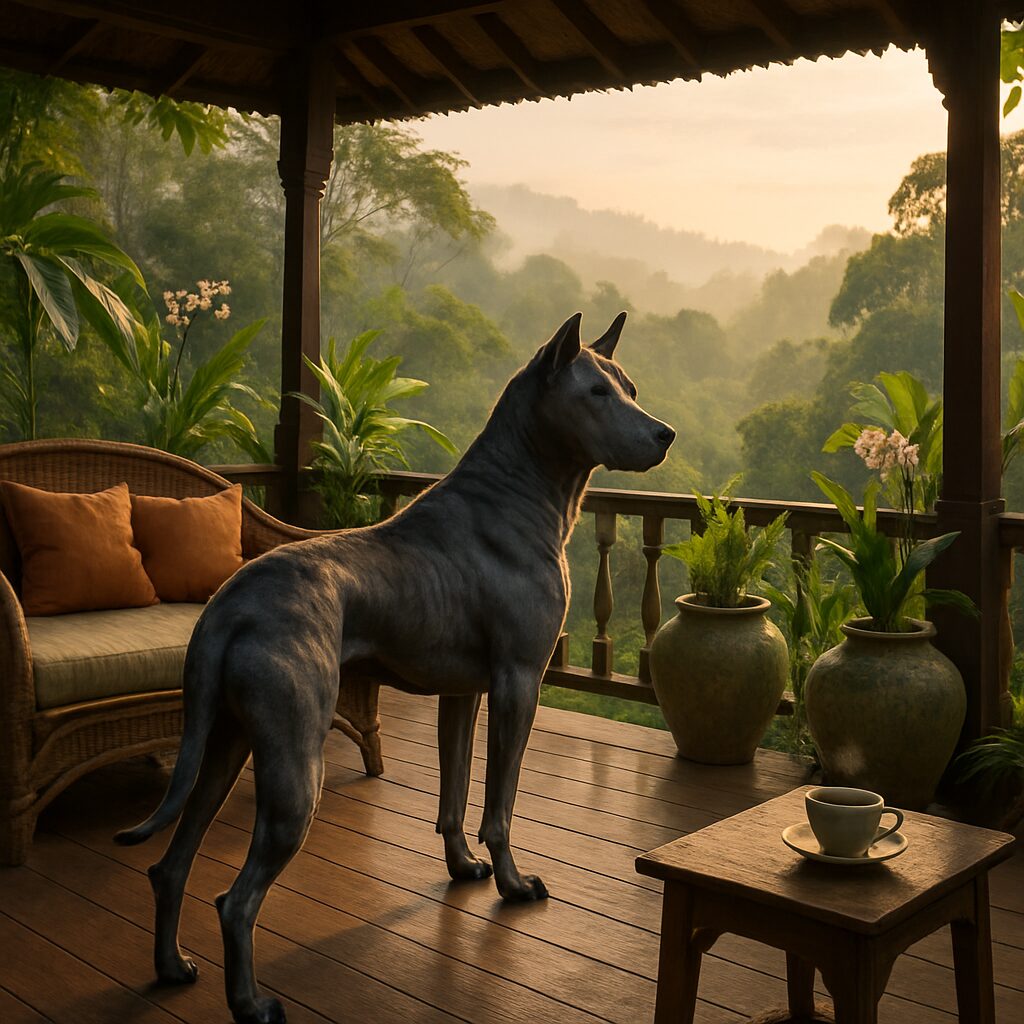
| Key Points | Details to Remember |
|---|---|
| 📜 Definition | Rarity and uniqueness of the Thai Ridgeback, a primitive dog |
| 🌍 Origin | Roots in the rural areas of Southeast Asia |
| 💪 Physical | Ridge formed by reversed hairs along the back |
| 🧠 Temperament | Loyalty, vigilance, and strong personality |
| ⚕️ Health | General robustness, few genetic predispositions |
| 🏃♂️ Activity | Requirement for regular exercise and mental stimulation |

The Thai Ridgeback fascinates as much by its athletic appearance as by its unusual dorsal ridge, unique among dogs. Born to hunt and protect, it now takes owners on a demanding adventure, where loyalty goes hand in hand with independence. Let’s explore together its history, morphology, character, and the keys to living harmoniously with this extraordinary companion.
Origin and History of the Thai Ridgeback
Its earliest traces date back several centuries, in the Golden Triangle of the Kingdom of Thailand. Cultivated as a hunting and alert dog, the Thai Ridgeback evolved in perfect symbiosis with farmers and local elites. With almost no external crossbreeding, it has retained a very characteristic profile, unchanged despite the rise of Western breeders in the 20th century.
At the time, these dogs worked in packs to contain various game, ranging from wild boar to panther, then played the role of mountain dog among hill populations. Their reputation as clever and enduring protectors crossed borders, eventually attracting enthusiasts in Europe and the United States.
Remarkable Morphology and Silhouette

The Famous Dorsal Ridge
The ridge, or “ridge,” is formed by a double row of hairs growing forward, creating a clear pattern along the back. This unique genetic feature gives it its name and symbolizes the purity of the lineage. The absence of skin folds and prominent muscles enhance the feline impression it gives when moving, supple and light.

Body and Physical Details
Medium-sized (between 50 and 60 cm at the withers), this dog shows a wedge-shaped head, erect and mobile ears, as well as a thin tail, often saber-shaped. Its coat, short and dense, can come in several colors – sable, black, blue-gray, or red – always enhanced by the ridge. A deep chest, solid legs, and compact feet are noted: a set built for speed and endurance in humid heat.
Temperament and Guarding Instincts
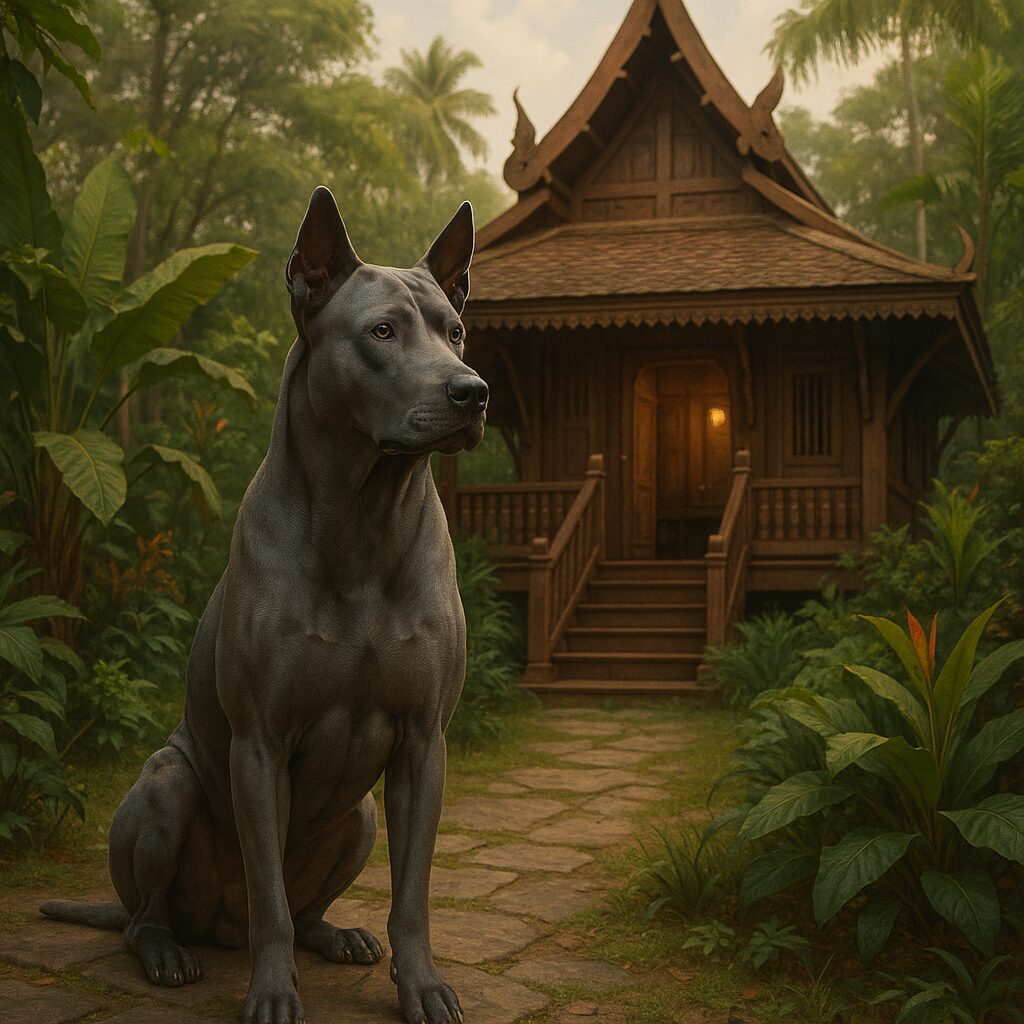
Capable of true independence of mind, the Thai Ridgeback does not submit to blind obedience. However, it remains very attached to its home and vigilant against any intrusion. When it spots a stranger, it positions itself silently, tensing its muscles and staring intensely, ready to alert or act if necessary.
In this respect, it stands out in the landscape of guard dogs by its lack of gratuitous aggression: it chooses its moments, reacts to the context, then quickly returns to calm behavior as soon as the threat recedes.
Socialization and Sensitivity
Despite its confidence, it can be reserved with children or other animals if the introduction has not been gradual. Regular encounters and varied experiences will prevent exaggerations: a Ridgeback well exposed from a young age then proves to be balanced, curious, and often playful.
Training, Needs, and Exercise
The watchword is consistency. Far from rigid training, rewards and intellectual challenges are favored. The use of obstacles, scent games, and an agility course will engage its body and mind without unnecessary tension.
- Establish daily routines to channel its energy.
- Offer scent games, true to its hunter heritage.
- Alternate between long walks, sprints, and calm cuddle sessions.
“With the Thai Ridgeback, training is a dialogue: it learns through desire, not coercion.”
Health, Diet, and Care
It is a robust breed, rarely prone to common hereditary diseases. However, a few points deserve attention:
- Weight monitoring to avoid joint strain.
- Regular parasite control, especially in tropical climates.
- Annual dental visits, as the powerful jaw accumulates tartar.
Regarding diet, a regimen rich in quality proteins and supplemented with omega-3 proves wise. The thin skin of some variants sometimes requires targeted fatty acid intake to maintain a shiny coat and a good skin barrier.
Living with a Thai Ridgeback
It does not tolerate prolonged isolation: a home where there is movement, conversation, and shared activities and rest suits it perfectly. Apartments require discipline and varied outings, while a house with a secure outdoor space better meets its motor needs.
In an active family, it bonds with everyone: children, teenagers, or seniors. Its presence brings a melody of tranquility reinforced by its always attentive gaze.
Frequently Asked Questions
Does the Thai Ridgeback tolerate heat well?
Yes, its short coat and athletic build allow it to withstand hot and humid climates, provided it has fresh water and breaks in the shade.
Is it a dog suitable for beginners?
Truly independent-minded, the Thai Ridgeback requires a patient and consistent approach. A beginner owner can succeed by attending dog training classes and increasing playful learning situations.
What is its life expectancy?
The average is between 12 and 14 years, provided its diet is balanced and its physical activity remains sufficient.



