| Key points | Details to remember |
|---|---|
| 🐶 Definition | Guard dog of imposing size, born from the crossing of the Mastiff and the English Bulldog. |
| 📜 Origins | United Kingdom in the 19th century; mission: to protect estates against poachers. |
| 💪 Characteristics | Remarkable strength and endurance, massive neck and nape. |
| 🧘 Temperament | Naturally calm, very attached to its family, endowed with a keen sense of protection. |
| 🏡 Maintenance | Regular brushing, balanced diet and moderate exercise. |
| 👪 Family life | Gets along well with children, requires consistent socialization and training. |

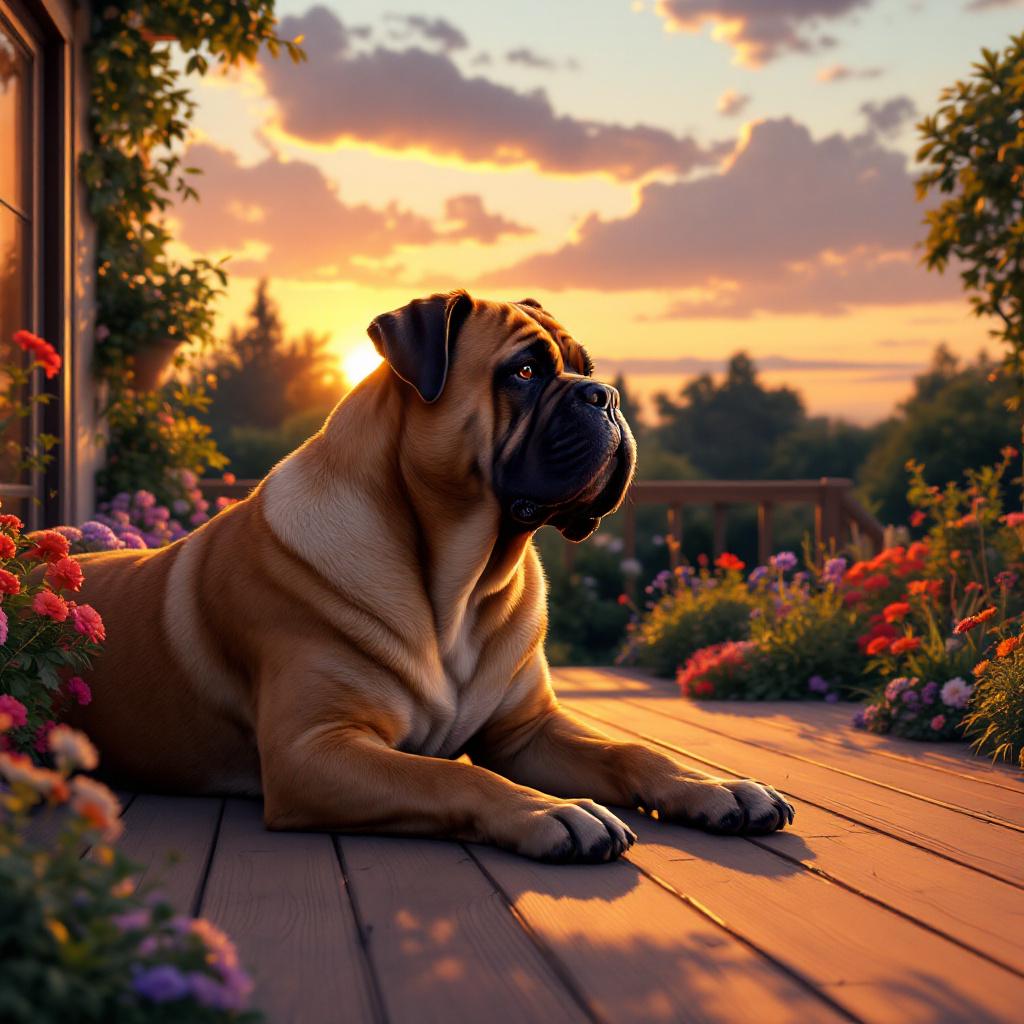
With its massive silhouette and attentive gaze, the Bullmastiff immediately asserts itself as a protector with a tender heart. Born to watch over English estates, it has retained this guardian vocation while developing a surprisingly calm temperament. Behind its imposing stature, it reveals itself as a faithful companion, attentive to the emotions of those around it. This article immerses you in the world of this gentle giant: history, morphology, behavior, essential needs, and practical advice for welcoming it into your home.
Origins and historical role
In the 19th century, night hunting and poaching were real scourges for landowners. British nobility then imagined a dog capable of deterring without aggression: the cross between the powerful Mastiff and the English Bulldog gave birth to the Bullmastiff. Tasked with surprising intruders, it had to rely on its strength to control the wrongdoer without resorting to a devastating bite. This precise mission shaped both its muscular physique and its sense of restraint.
From estate dog to family companion
Gradually, its popularity extended from guarding service to more modest households. It earned a special place among families seeking a protective yet gentle dog. Today, it alternates between city and rural life, adapted as well to a spacious property as to a large suburban house, provided it finds a daily dose of exercise and affection.
Morphology and physical attributes

Size and proportions
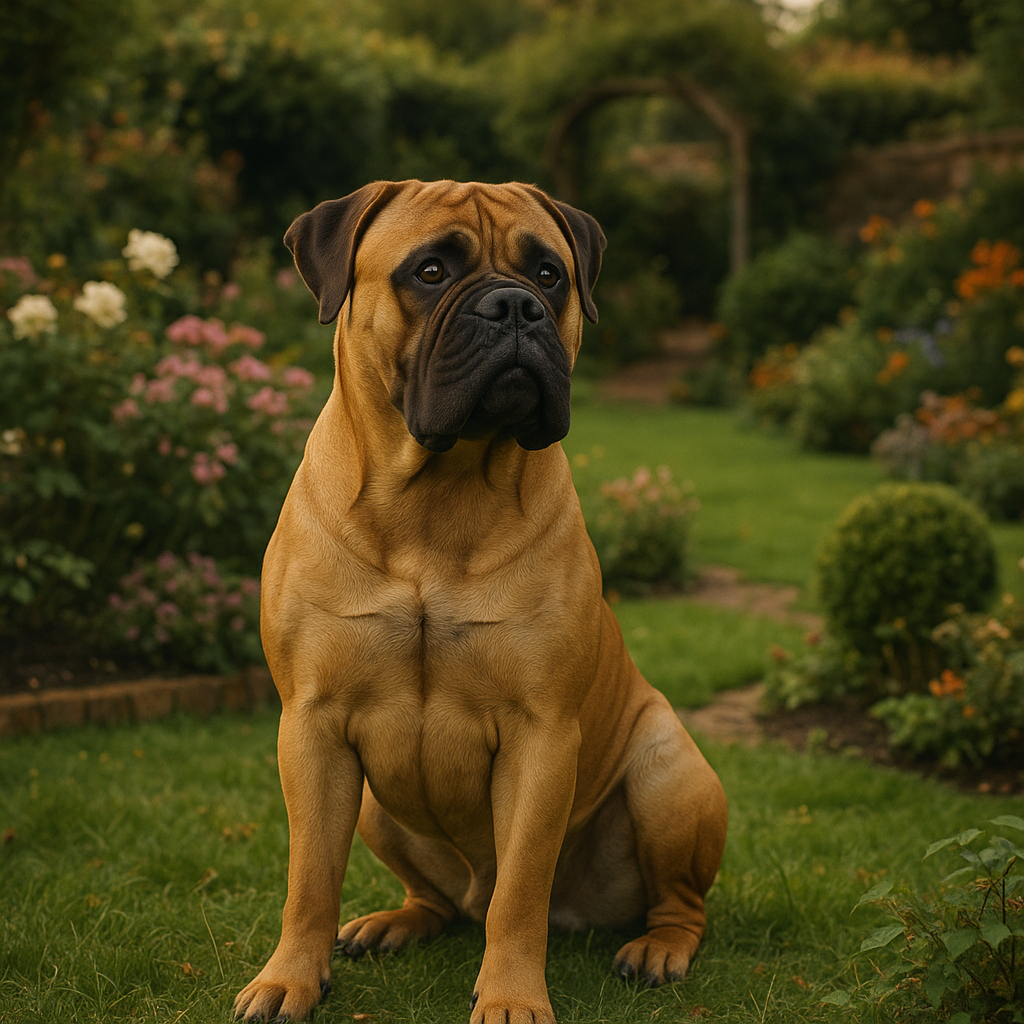
This giant generally reaches 61 to 69 cm at the withers for males and 56 to 64 cm for females. Endowed with a massive bone structure, its powerful neck supports a square and broad head. Despite this imposing build, its gait remains fluid: when it moves, one perceives a surprising balance between power and ease.
Coat, Color, and Care
The coat is short, dense, and shiny, requiring weekly brushing to remove dead hairs. The shades range from light fawn to dark brindle; a black face frames the muzzle in a sumptuous mask. This minimalist appearance makes grooming easier, but facial fold care should not be neglected to prevent irritations.
Temperament: a Protective Calm
One might think that a large dog is necessarily intimidating on a daily basis. In reality, the Bullmastiff displays a rare balance between nobility and serenity. Its first reaction to a stranger is neither aggression nor fear, but rather measured wariness. It observes, evaluates, then intervenes only if the situation requires it.
Relations with Family and Children
This gentle mastiff develops a very strong bond with the youngest. It tolerates their spontaneous games well, provided they have learned some simple rules of mutual respect. With elderly people, it adopts a protective stance and watches over the well-being of those who move less. Its reassuring presence is appreciated both by city dwellers and lovers of country life.
Interaction with Strangers and Other Animals
In the park, it can be reserved towards its peers; gradual socialization is essential. Generally, it tolerates living with other dogs of similar size, provided each has acquired a basic obedience foundation. With farm animals, it retains a watchful instinct, sometimes misinterpreted as hunting. Patient guidance limits any risk of conflict.
Training and Socialization
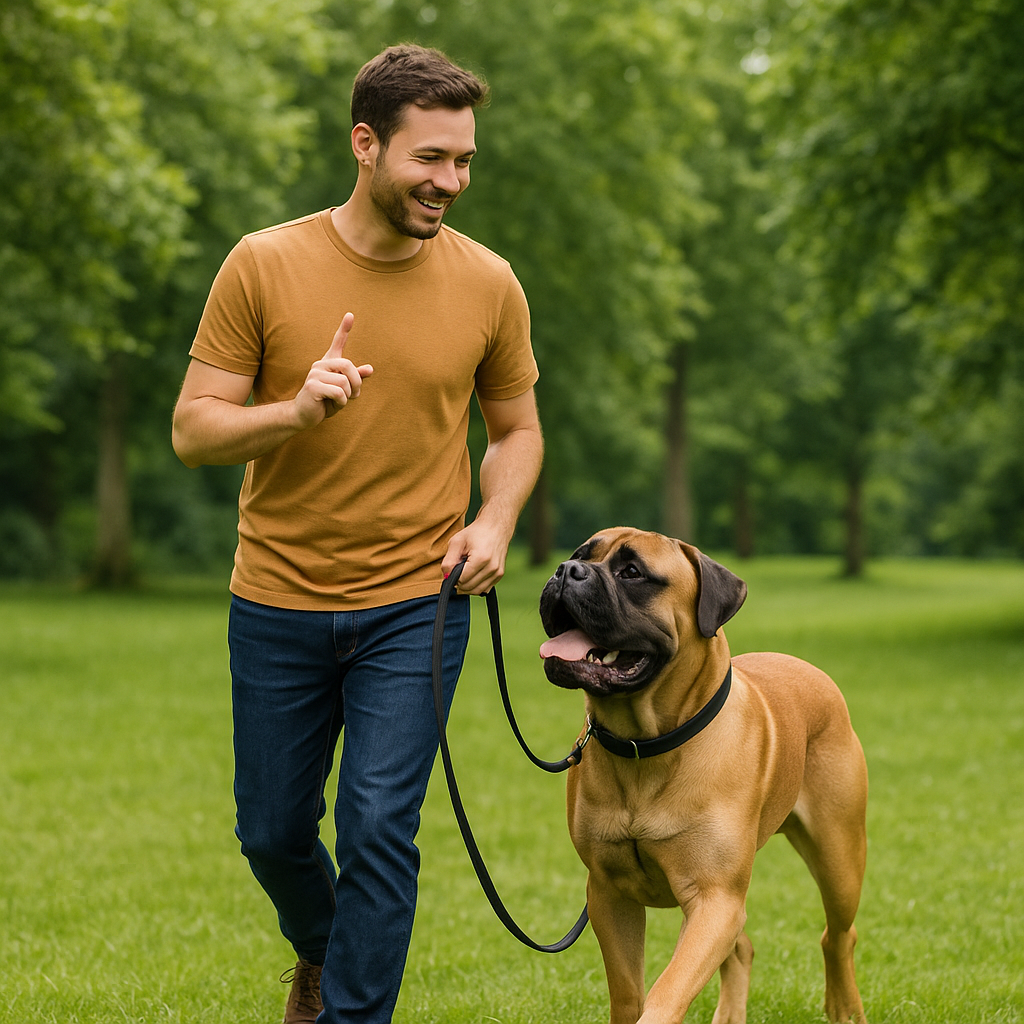
The Bullmastiff is not a rebellious dog, but its size demands firm training from a young age. Without resorting to harshness, it appreciates a clear framework and consistent instructions. A gentle voice, combined with consistency in enforcing commands, promotes quick learning.
- Basic obedience: sit, lie down, recall are the foundations.
- Leash walking: without excessive pulling, thanks to rewards.
- Frustration management: mental stimulation games to channel its energy.
- Gradual socialization: regular meetings, exposure to various environments.
- Family consistency: all members must apply the same rules.
Physical Activity and Care
Its exercise needs are moderate: two daily walks of 30 to 45 minutes are sufficient, complemented by thoughtful play sessions. Occasional runs and hikes suit the more athletic, without excessively stressing its joints. Indoors, a simple tug-of-war game or food puzzles maintain its mental fitness.
| Care | Frequency |
|---|---|
| Coat brushing | 1 to 2 times per week |
| Cleaning of folds | 3 times per week |
| Dental check | 2 times per week |
| Nail trimming | Once a month |
| Veterinary visit | 1 to 2 times per year |
Food must be of high quality, adapted to a large breed dog: a progressive ration to protect growth, balanced in proteins and calcium. Common problems, such as hip dysplasia or gastric torsions, require regular monitoring and serious veterinary consultations.
Choosing Your Bullmastiff
From a Serious Breeder
The selection of a breeder is based on transparency: access to pedigrees, visits to the facilities, and discussion about the lineage. A passionate contact will provide information on health tests, puppy socialization conditions, and post-adoption advice. Written guarantees, especially regarding dysplasia, are a sign of professionalism.
Rescue and Adoption
Some shelters welcome adult or senior Bullmastiffs, sometimes awaiting re-acclimation to family life. Experience shows that these dogs, already trained, demonstrate deep gratitude when they find a stable home. Adoption often includes support to facilitate integration and adaptation.
Frequently Asked Questions
What temperament does a Bullmastiff have?
The Bullmastiff displays a rare serenity among large dogs: calm, vigilant, and very attached to its family, it remains cautious with strangers while avoiding confrontation unless necessary.
How to maintain its short coat?
A weekly brushing is sufficient to remove dead hairs and stimulate skin circulation. The facial folds deserve particular attention: a gentle cleaning with a canine lotion prevents irritations.
What exercise is suitable for a Bullmastiff?
Two moderate daily walks, complemented by intelligence games or gentle hikes. Activities that are too intense during the growth period should be avoided to preserve its joints.
At what age does training begin?
As soon as arrival at home, around 8 weeks, it is possible to introduce basic commands. Progressive and consistent training, with rewards, ensures a calm learning process.