
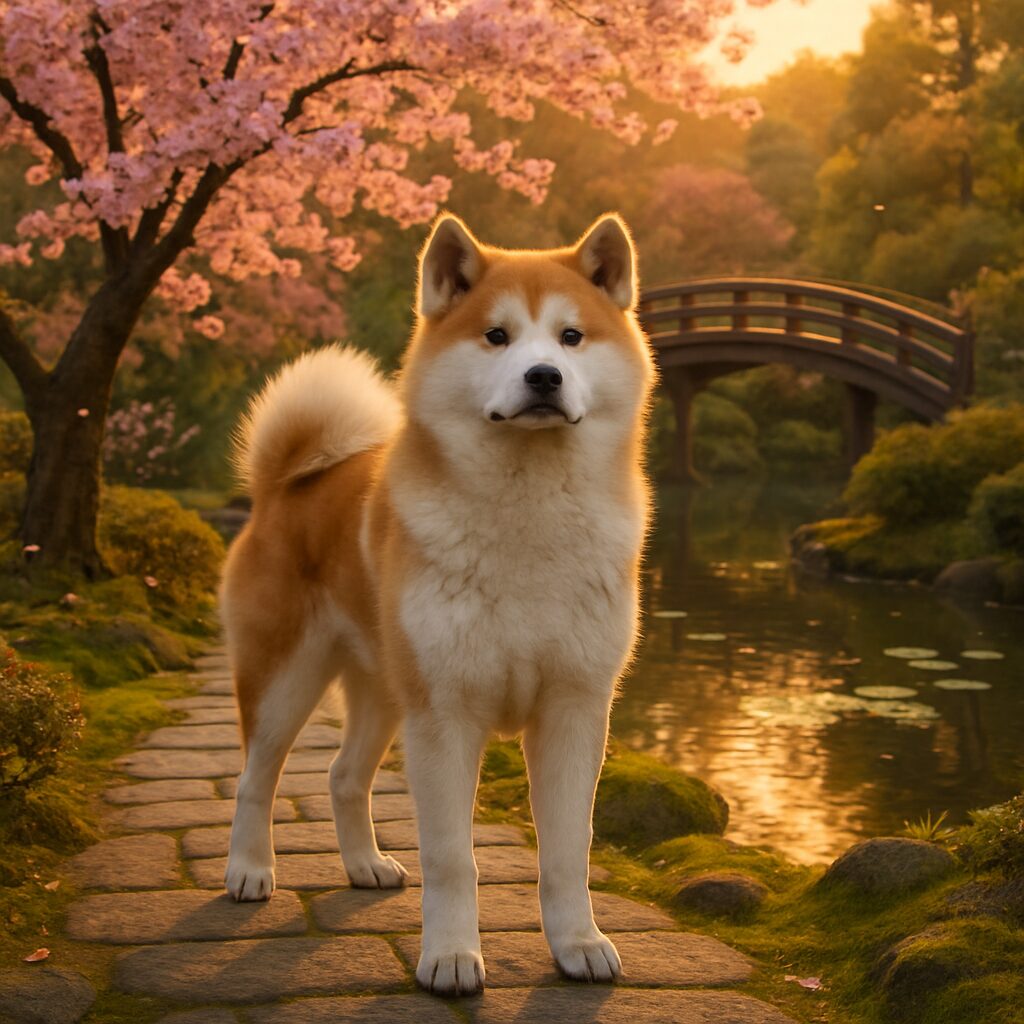
| Key Points | Details to Remember |
|---|---|
| 🐾 Definition | Large Japanese breed, known for its powerful silhouette and elegant bearing. |
| 🏯 Origins | Raised in Japan for hunting and protection, a cultural and historical symbol. |
| 🧭 Character | Faithful, independent, sometimes reserved with strangers, loyal to its family. |
| ⚕️ Health | Monitor dysplasias, autoimmune diseases, and weight; regular veterinary check-ups recommended. |
| 📋 Education | Early socialization and consistency in training to channel independence. |
| 🏡 Daily life | Moderate exercise, regular brushing, and space for mental stimulation. |

The Akita Inu embodies both understated elegance and quiet strength. Originating from northern Japan, it is often seen as the living portrait of loyalty: a dog that chooses its family and devotes unwavering loyalty to it. But reducing the Akita to a mere symbol would overlook its complexity. A hunting dog, guard dog, and today, a demanding household companion, it requires understanding and adaptation. This article aims to explore its origins, appearance, behavior, as well as practical advice for living well with an Akita, whether you are a future adopter or already committed to this shared path.
Origins and history: between icy shores and legends
The earliest traces of dogs resembling the Akita date back centuries in Japan. These dogs came from the mountainous northern provinces, where the harsh climate and nature shaped a robust and autonomous animal. Originally, they were used to hunt boar and bear; their size and courage made the difference. Over time, the breed was codified, especially in modern times, and the Akita became a national symbol, almost sacred for certain regions.
It is interesting to note that the Akita is not just a simple working tool: its history intertwines with human stories. Statues, poems, and local tales recount dogs that protected families or accompanied travelers. This aura of nobility contributed to its popularity, while making its selection rigorous: lineages have been preserved to maintain a certain physical and behavioral standard.
Morphology and standard: contained power

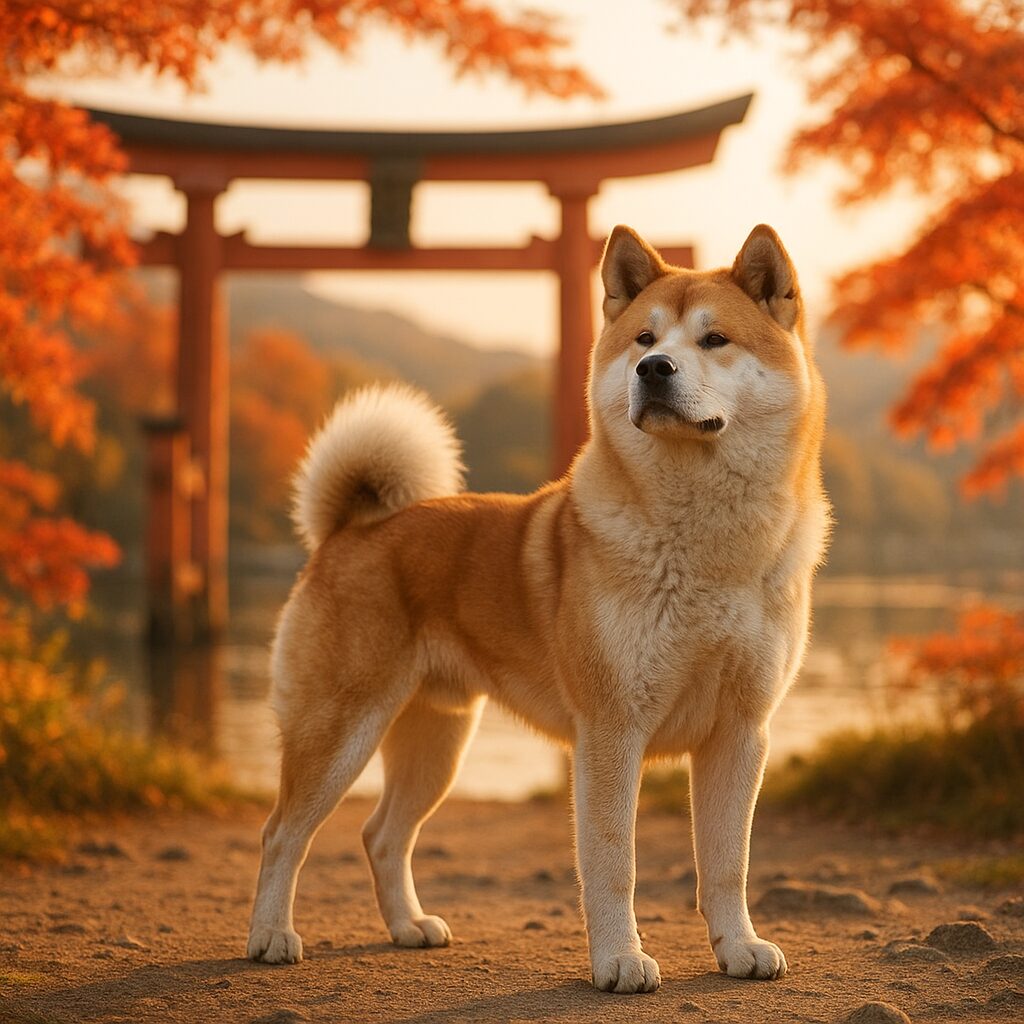
The Akita displays a massive silhouette without heaviness. Its head is broad, its almond-shaped eyes express silent attention, and its triangular ears stand erect, ready to catch the slightest signal. The coat is double: a dense undercoat that protects against the cold, and a straighter outer coat. Colors range from sesame (fawn coat mixed with black) to pure white and brindle. These variations do not change the overall appearance, which always remains harmonious.
| Characteristic | Detail |
|---|---|
| Size (male) | About 64–70 cm at the withers |
| Size (female) | About 58–64 cm at the withers |
| Weight | Variable depending on size, generally 35–55 kg |
| Coat | Double coat: thick undercoat, straight topcoat |
Quick comparison with other northern breeds
The Akita might be mistaken for a Spitz or a Husky at first glance, but the Akita stands out by its heavier build and measured gait. Where the Husky seeks interaction and activity, the Akita often displays an aristocratic reserve: it does not constantly demand attention, but commands respect through its presence. This nuance is essential when choosing the breed that fits your lifestyle.
Character: thoughtful loyalty rather than demonstration
Saying that the Akita is “faithful” remains a useful simplification but is insufficient. Its loyalty is selective: it forms a deep bond with its family, sometimes becoming a vigilant, even exclusive protector. With strangers, it often shows reserve, calmly assessing the situation before acting. This caution, far from being aggression, reflects a well-calibrated social intelligence.
- Independent: it tolerates solitude better than many, but if neglected, behavioral problems can develop.
- Protective: its loyalty can translate into excessive vigilance if socialization is deficient.
- Calm: it enjoys quiet moments and often respects family rhythms.
In practice, living with an Akita requires accepting a less demonstrative relationship based more on mutual respect. If you are looking for a constantly demonstrative dog, the Akita may surprise you; however, if you appreciate a calm and reliable presence, it will satisfy you.
Training and socialization: building trust
Training an Akita starts early. Socialization during the first months is crucial to prevent it from becoming too wary of strangers or other dogs. This does not mean overstimulation: varied experiences should be introduced progressively and positively, always allowing the animal to express its comfort.
The method must be based on consistency and positive reinforcement. The Akita respects calm authority rather than overt dominance. Clear and consistent rules, combined with appropriate rewards, encourage obedience. Leash training is an important focus: well-managed, the Akita becomes a pleasant walking companion; poorly managed, it can impose its strength daily.
Practical training tips
- Start basic obedience (sit, lie down, recall) from the first months.
- Include impulse control exercises, such as waiting before eating.
- Gradually expose it to noises, vehicles, and people to avoid hypervigilance.
- Plan short but regular sessions: the Akita does not like excessive repetition.
Health, life expectancy, and issues to watch
The Akita is generally robust, but some conditions deserve special attention. Hip dysplasia is among the orthopedic concerns, especially in heavier individuals. Additionally, the breed shows a predisposition to certain autoimmune and skin diseases, which sometimes manifest as inflammatory reactions or hair loss.
| Potential Problem | Signs / Prevention |
|---|---|
| Hip dysplasia | Monitor limping, limit sudden exercise during growth, veterinary screening |
| Autoimmune diseases | Regular blood tests, consultation in case of fatigue or hair loss |
| Dermatological problems | Examine itching, redness, treatments adapted according to the cause |
The average life expectancy is around 10 to 13 years. A diet adapted to the life stage, controlled weight, and regular check-ups at the veterinarian increase the chances of a peaceful old age. Finally, sterilization and reproduction management must be carefully considered, in connection with a responsible breeder or a veterinarian, to preserve the quality of the bloodlines.
Daily life: maintenance, exercise and adaptation
The Akita requires pragmatic maintenance. Regular brushing, at least weekly and more frequent during shedding, prevents tangles and limits the amount of hair in the house. Excessive bathing is not necessary: the natural protection of its coat must be preserved. Regarding food, prioritize quality food, adapted to weight and activity to prevent obesity.
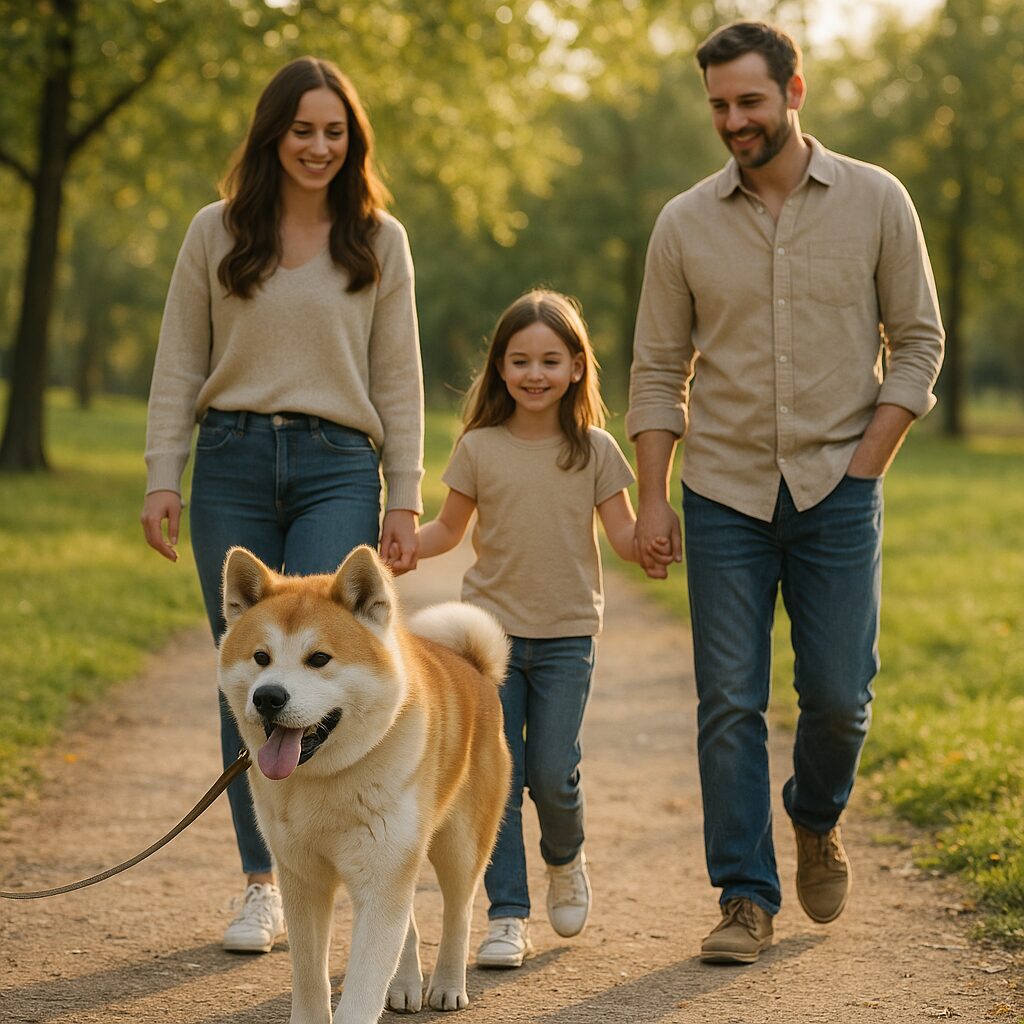
For exercise, the Akita does not require intense daily efforts like some working breeds, but regular walks and opportunities for mental stimulation are essential. Scent games, light agility courses, and free play sessions in a closed space help maintain physical and mental fitness.
Home arrangement
- A fenced garden is a real advantage; in an apartment, compensate with more frequent outings.
- Provide a comfortable bed and a quiet space where it can retreat.
- Be careful with cohabitation with other small animals: the hunting instinct may persist.
Choosing a puppy or an adult: criteria and ethics
When looking for an Akita, favor a breeder who performs health tests on the parents and socializes the puppies in a family environment. Ask for screening certificates for dysplasia, medical history, and information on the temperament of the bloodlines. A good breeder will ask you as many questions as you ask them: this is a sign that they truly care about the puppies’ future.
Adopting an adult can be an excellent option if you want a dog with an already established character. In this case, take the time to observe its behavior in context, visit several environments, and discuss its past. The important thing is to establish a gradual relationship to gain the animal’s trust.
FAQ — Frequently Asked Questions
Here are practical answers to the most common questions about the Akita.
Is the Akita suitable for a family with children?
Yes, when properly socialized; it can be protective and patient, but supervision remains necessary to avoid the clumsiness of young children.
Can it live in an apartment?
Possible if outings are sufficient and varied. The Akita prefers spaces where it can move around, but compensates well in housing provided its needs are respected.
Is it an aggressive breed?
No, not by nature. The Akita can be reserved or distant, but aggression often appears following poor socialization or unsuitable living conditions.
How often should grooming be done?
Weekly brushing, intensified during the two annual heavy shedding periods. Occasional bathing as needed.
In summary: who is the Akita and why adopt one?
The Akita Inu is a dog with a noble temperament: it values loyalty and reserve more than constant displays of affection. You will choose this breed if you appreciate a loyal companion, capable of a strong presence without being intrusive. Its beauty, guarding qualities, and adaptability make it a remarkable companion, provided you offer consistent training, thoughtful socialization, and regular veterinary care.
Practical resources and checklist before adoption
- Check the health tests of the parents (dysplasia, blood tests).
- Observe the puppy’s behavior: curiosity, sociability, reaction to noise.
- Prepare the home: quiet space, bedding, appropriate bowls.
- Plan for a reference veterinarian for follow-up from arrival.
Additional FAQ
- Feeding: choose quality proteins, adjust portions according to activity.
- Travel: gradually get used to transportation, secure the space in the car.
- Health insurance: strongly recommended to limit the impact of costs in case of hereditary disease.